Ad. When you purchase through links we provide, we may receive an affiliate commission. Here's how it works.
Best Hub for Home Automation in 2026
TL;DR: The best hub for home automation for most users is Home Assistant Green: it processes every automation locally on your network, never sends your data to the cloud, and connects to hundreds of thousands of devices (manufacturer claim) with no subscription required. If you want local control without the setup overhead, Homey Pro (2026) is the next best option.
Quick Picks
- Home Assistant Green: best overall for local control and privacy; works across all technical levels once configured
- Hubitat Elevation C-8 Pro: best for large homes with Z-Wave long-range requirements and complex automation rules
- Homey Pro (2026): best for non-coders who want local-first control with the widest protocol support in one box
- Google TV Streamer (4K): best for Google households who want their streaming box to double as a smart home hub
- eero Pro 6E: best for whole-home Thread and Matter coverage built into your Wi-Fi
- Amazon Echo Hub: best for Alexa-first homes that want a wall-mounted touchscreen dashboard
- Aqara Hub M3: best for Aqara ecosystem builders who need Matter bridging and IR blasting in one device
- Aeotec Smart Home Hub: best for multi-protocol flexibility
Key Takeaways
- Home Assistant Green processes 100% of your automations locally: routines run even when your internet is down, with no subscription required
- The Hubitat Elevation C-8 Pro supports Z-Wave 800 Long Range, rated by Hubitat’s own documentation at up to 1.5 miles theoretical (less in practical use): the strongest Z-Wave coverage of any smart home hub in this roundup
- Amazon Echo Hub processes Alexa voice commands in the cloud, like most Echo devices; a March 2025 change removed local voice processing from three other Echo models, but Echo Hub wasn’t among them
- The Aqara Hub M3’s Zigbee radio only pairs with Aqara-brand devices; IKEA, Sonoff, and other third-party Zigbee devices are not supported natively
- Matter certification does not mean plug-and-play: your hub must act as a Matter controller, not just a bridge, to run automations locally
Choosing a hub for home automation is really a question about trust: how much are you willing to depend on a company’s servers staying up, their privacy policies staying honest, and their product line staying supported? This guide cuts through the ecosystem noise and tells you which of the seven leading smart home hubs actually fits your setup, and which trade-offs you’ll be living with long-term.
If you’re also looking to protect your data across your whole setup, our guide to smart home security and privacy covers the broader picture.
What Does a Hub for Home Automation Actually Do?
A home automation hub is the central processor that connects your smart devices and runs your automations: the logic that tells your lights to turn off when you leave, or your thermostat to drop two degrees when the bedroom motion sensor goes quiet. Climate control is one of the most common hub use cases. If you have not yet picked one, see our guide to the best smart thermostat to pair with your setup.
Without a hub, your devices live in separate apps and can’t talk to each other. You end up with five apps, five accounts, and no actual automation, just remote controls.
The hub is also where your data lives. Some hubs process everything locally on your network. Others route every command through company servers in the cloud. That distinction matters more than any spec sheet, especially as privacy regulations tighten and smart home companies get acquired, pivot, or shut down.
Quick Protocol Glossary
- Zigbee: a low-power mesh protocol for sensors, bulbs, and switches; devices form a self-healing network but require a Zigbee coordinator (your hub or a USB dongle)
- Z-Wave: a dedicated smart home mesh protocol on a separate RF band from Wi-Fi, with less interference and excellent reliability for locks and leak sensors; see how modern standards complement it
- Thread: a modern IP-based mesh protocol designed for low-power IoT devices; the networking layer that runs underneath Matter
- Matter: the universal smart home standard backed by Apple, Google, Amazon, and Samsung that lets devices from different brands work together; requires a Matter controller hub to function locally
- Hub vs. bridge: a hub processes and runs your automations; a bridge only translates one protocol into another and passes commands through to the cloud. A device that only “bridges” Matter, for example, won’t run automations locally even if it’s Matter-certified.
- Thread border router: a device that connects your Thread mesh network to your Wi-Fi and the internet. Thread devices need at least one border router on the network to communicate with your phone, a voice assistant, or anything outside the mesh; a feature already built into three hubs in this guide: the Google TV Streamer, eero Pro 6E, and Aqara Hub M3.
If you are still deciding which protocol fits your home, our Zigbee vs Z-Wave vs Matter full comparison breaks down range, interference, ecosystem size, and future-proofing side by side.
The 8 Best Smart Home Hubs in 2026 At a Glance
| Hub | Best For | Key Protocols | Local Processing | Setup Level | EHC Score |
|---|---|---|---|---|---|
| Home Assistant Green | Privacy + maximum integrations | Zigbee*, Z-Wave*, Thread*, Matter, Wi-Fi, BT | 100% local | Intermediate | 8.2 |
| Hubitat Elevation C-8 Pro | Large homes, Z-Wave power users | Zigbee, Z-Wave 800 LR, Matter, BT, Wi-Fi, LAN | 100% local | Advanced | 7.7 |
| Homey Pro (2026) | Non-coders, widest protocol range | Zigbee, Z-Wave, Thread, Matter, BT, IR, 433 MHz, Wi-Fi | Primarily local | Beginner–Int. | 8.3 |
| Google TV Streamer (4K) | Google ecosystem, TV + hub combo | Thread, Matter, Wi-Fi | Hybrid (mostly cloud) | Beginner | 5.5 |
| eero Pro 6E | Whole-home Thread coverage | Thread, Matter, Zigbee, Wi-Fi | Hybrid (routing local, automations cloud) | Beginner | 7.0 |
| Amazon Echo Hub | Alexa homes, dashboard users | Zigbee, Thread, Matter, BT, Wi-Fi, Sidewalk | Hybrid (cloud voice) | Beginner | 6.9 |
| Aqara Hub M3 | Aqara ecosystem, HomeKit users | Zigbee (Aqara-only), Thread, Matter, BT, Wi-Fi, IR | Edge-local | Beginner–Int. | 7.7 |
| Aeotec Smart Home Hub | Multi-protocol flexibility | Z-Wave Plus, Zigbee, Thread, Matter, Wi-Fi | Hybrid (SmartThings cloud) | Beginner | 6.9 |
* Requires separate USB dongle purchase (sold separately).
Home Assistant Green: Best Overall for Local Control

Home Assistant Green
- 💡 EASIEST WAY TO GET STARTED WITH HOME ASSISTANT – With Home Assistant already installed, it only…
- ✅ OFFICIAL – This official Home Assistant hardware is built and supported by Nabu Casa, the team…
- 🏡 DESIGNED FOR THE HOME – The small, fanless, and silent design packs a quad-core processor, 32GB of…
Home Assistant Green is a compact hub that arrives pre-loaded with Home Assistant OS. Plug it into Ethernet, power it on, and you have a locally processed smart home brain that connects to 1,000+ integrations and hundreds of thousands of devices (manufacturer claim), all running on your network.
Home Assistant Green is the only hub in this roundup that processes every automation locally by default, with no cloud dependency and no subscription required.
| EverydayHomeComfort Score | Home Assistant Green |
|---|---|
| Protocol & Device Support (30%) | 9.5 / 10 |
| Local Control & Privacy (25%) | 10 / 10 |
| Ecosystem Compatibility (20%) | 6.0 / 10 |
| Ease of Use (15%) | 6.0 / 10 |
| Running Cost & Upkeep (10%) | 7.5 / 10 |
| Overall Rating | 8.2 / 10 |
Why we picked it:
- 100% local processing: automations run even when your internet is down
- 1,000+ integrations supporting hundreds of thousands of devices (manufacturer claim), including reach other hubs in this list can’t match
- Open-source platform with active development and a community of over one million users
Real-world scenario: You’re a working parent with a toddler. You set up a routine that locks all doors, dims the lights, and starts a white noise machine when the bedroom motion sensor goes quiet after 8 PM. It runs every night without fail, and Amazon never hears about it.
Pros:
- True local autonomy with no subscription needed for core use
- Largest integration library of any home automation hub
- Runs on roughly 3W (manufacturer claim): minimal power draw
- Open-source platform with active development and a community of 2 million+ users (manufacturer claim, up from one million in 2024)
Cons:
- No built-in radios: a separate Zigbee dongle and/or Z-Wave stick is required for those protocols
- Initial setup takes 1–3 hours for a non-technical user
- Some integrations require YAML configuration
Best for: Privacy-conscious users, busy professionals who want to set it and forget it once configured, and anyone who refuses to hand their home data to a third-party cloud.
Pairs naturally with our guide to end-to-end encryption if you want to lock down remote access too.
Hubitat Elevation C-8 Pro: Best for Large Properties

Hubitat Elevation C-8 Pro
- LOCAL PROCESSING FOR INSTANT RESPONSE: The Hubitat Elevation C-8 Pro runs automations directly on the…
- WORKS WITH ALEXA, GOOGLE HOME, AND APPLE HOMEKIT: Connect your preferred voice assistant and start…
- MULTI-PROTOCOL SUPPORT WITH EXTENDED RANGE: A single hub covers Matter 1.5, Z-Wave 800 Series with Long…
The Hubitat Elevation C-8 Pro is the most capable local-only hub for users who need range, reliability, and automation depth, without ever routing data through the cloud.
The Hubitat Elevation C-8 Pro supports Z-Wave 800 Long Range with external antennas, rated by Hubitat at up to 1.5 miles theoretical range (expect less in real-world use): the strongest Z-Wave coverage of any smart home hub in this roundup.
| EverydayHomeComfort Score | Hubitat Elevation C-8 Pro |
|---|---|
| Protocol & Device Support (30%) | 8.5 / 10 |
| Local Control & Privacy (25%) | 10 / 10 |
| Ecosystem Compatibility (20%) | 6.0 / 10 |
| Ease of Use (15%) | 4.0 / 10 |
| Running Cost & Upkeep (10%) | 8.5 / 10 |
| Overall Rating | 7.7 / 10 |
Why we picked it:
- Z-Wave 800 Long Range with external antennas: covers large properties and detached garages that other hubs can’t reach
- 100% local processing with no cloud required for automations
- Matter 1.5 controller support (per Hubitat’s official release notes) alongside Zigbee, Bluetooth, and LAN integrations
Real-world scenario: You own a 3,500 sq ft home with Z-Wave smart locks on every door, leak sensors in the basement, and motion-triggered lighting across three floors. The C-8 Pro ties all of it together with local automation rules that fire near-instantly, with or without internet.
Pros:
- Best Z-Wave range of any hub reviewed (Z-Wave 800 LR, external antennas)
- Fully local automation that doesn’t depend on Hubitat’s cloud servers
- Compatible with 1,000+ devices across 100+ brands (manufacturer claim)
- Matter 1.5 controller built in, confirmed in Hubitat’s release notes
Cons:
- Web UI is outdated and unintuitive; expect a real learning curve
- Slower to configure than Homey Pro
- Customer support quality can be inconsistent
Best for: Premium homeowners with large properties, existing Z-Wave ecosystems, and the patience to invest in setup. This is the power user’s local hub.
Homey Pro (2026): Best for Non-Coders Who Want Local Control
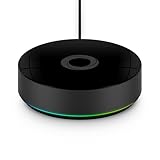
Homey Pro (2026)
- YOUR HOME CONNECTED: Bring all your smart home devices together with Homey Pro and experience a home that…
- YOUR HOME, YOUR RULES: Make all your devices work together seamlessly with Homey Flow. Switch your entire…
- THE BRANDS YOU LOVE: Homey Pro works with over 50,000 devices from more than 1,000 brands. Connect…
Homey Pro (2026) doubles the RAM of the previous generation to 4GB, letting it run well over 100 Homey Apps without slowing down as your smart home grows.
It keeps the same eight-protocol radio stack: Matter, Thread, Zigbee, Z-Wave, Bluetooth LE, 433 MHz, Infrared, and Wi-Fi.
Homey itself treats the 2026 and Early 2023 models as the same generation, with identical feature updates through at least June 2031: the 2026 version’s real upgrade is RAM headroom, not new radio capability.
| EverydayHomeComfort Score | Homey Pro (2026) |
|---|---|
| Protocol & Device Support (30%) | 10 / 10 |
| Local Control & Privacy (25%) | 8.5 / 10 |
| Ecosystem Compatibility (20%) | 6.0 / 10 |
| Ease of Use (15%) | 9.0 / 10 |
| Running Cost & Upkeep (10%) | 6.0 / 10 |
| Overall Rating | 8.3 / 10 |
Why we picked it:
- Widest protocol stack of any hub reviewed: eight wireless technologies in one box, per Homey’s own specifications
- 4GB of RAM, double the previous generation, for real headroom as you add devices and automations
- Standalone operation with minimal cloud dependency
Real-world scenario: You want the broadest possible protocol coverage in a single hub, plus enough headroom that adding dozens of devices and automations over the next few years won’t slow it down.
Homey Pro (2026) is built for exactly that, with no coding required.
If you’re starting from scratch instead of inheriting someone else’s setup, our guide to the best smart bulbs compares which models pair with a hub versus which ones work straight out of the box.
Pros:
- Widest protocol support of any hub in this roundup: Matter, Thread, Zigbee, Z-Wave, Bluetooth LE, 433 MHz, Infrared, and Wi-Fi
- 4GB RAM, double the previous generation, for more headroom as your smart home grows
- Beautiful, beginner-friendly mobile app
Cons:
- Higher upfront cost than other local-first hubs
- Released recently, so long-term field reliability data is still limited compared to the Early 2023 model’s multi-year track record
- Community-built apps can become unmaintained
Best for: Busy professionals and parents who want local control without learning any code, want the most future headroom for a growing smart home, and don’t mind paying more upfront for it.
Google TV Streamer (4K): Best for Google Ecosystem Households

Google TV Streamer (4K)
- The Google TV Streamer (4K) delivers your favorite entertainment quickly, easily, and personalized to…
- HDMI 2.1 cable required (sold separately)
- See movies and TV shows from all your services right from your home screen[2]; and find new things to…
$149.99

Check Today’s Price on Amazon
The Google TV Streamer (4K) is Google’s current smart home entry point, doubling as your streaming box and a Matter/Thread hub. The trade-off: it has to stay plugged into a TV via HDMI, so it’s not a standalone puck like some other hubs here, and it has no dedicated Zigbee radio.
| EverydayHomeComfort Score | Google TV Streamer (4K) |
|---|---|
| Protocol & Device Support (30%) | 4.0 / 10 |
| Local Control & Privacy (25%) | 4.5 / 10 |
| Ecosystem Compatibility (20%) | 7.0 / 10 |
| Ease of Use (15%) | 8.5 / 10 |
| Running Cost & Upkeep (10%) | 5.0 / 10 |
| Overall Rating | 5.5 / 10 |
Why we picked it:
- Built-in Thread border router and Matter controller support out of the box
- Dedicated Home panel controls lights, thermostats, cameras, and other compatible devices without leaving what you’re watching
- Backed by active Google hardware support, unlike the now-discontinued Nest Hub line
Real-world scenario: You already have a TV in the living room and a handful of Matter or Thread devices. You want one box that streams Netflix and runs your smart home without buying a separate hub. The Google TV Streamer handles both from the same remote.
Pros:
- Doubles as a genuine 4K/HDR/Dolby Vision streaming box, not just a smart home accessory
- Built-in Thread border router works with today’s Matter standard out of the box
- Voice remote with Google Assistant included, no extra hardware needed
- 32GB of onboard storage
Cons:
- No Zigbee or Z-Wave radio, only bridges Thread/Matter devices, narrower than the Samsung Station it replaces
- Must stay connected to a TV via HDMI, not a standalone hub you can tuck in a closet or hallway
- Most Google Assistant voice features still route through the cloud and drop during an internet outage
Best for: Google-ecosystem households who already want a streaming box and would rather it double as their smart home hub than buy a separate device.
If you’re also planning to add a video doorbell, check our roundup of the best video doorbells without a subscription; look for Matter or Google Home compatibility if you’re pairing it with this hub.
Not sure whether to build your hub around Alexa or Google Home? Read our full comparison before you commit to a hub ecosystem.
eero Pro 6E: Best for Whole-Home Thread Coverage

eero Pro 6E
- EERO’S FIRST Wi-Fi 6E ROUTER – eero Pro 6E supports fast speeds and direct access to the new 6 GHz band…
- WIRED SPEEDS, WITHOUT THE WIRES – Game, work, or stream reliably with eero Pro 6E.*
- EASILY EXPAND YOUR SYSTEM – Use any single eero as a gateway to replace your current router, or add it to…
$199.99
Check Today’s Price on Amazon
The eero Pro 6E runs your Wi-Fi while acting as a Thread border router and Matter controller, so Thread and Matter devices join the network without a separate hub box. It suits homes that need reliable smart-home radio coverage in every room, not just one.
| EverydayHomeComfort Score | eero Pro 6E |
|---|---|
| Protocol & Device Support (30%) | 6.5 / 10 |
| Local Control & Privacy (25%) | 4.5 / 10 |
| Ecosystem Compatibility (20%) | 9.5 / 10 |
| Ease of Use (15%) | 9.5 / 10 |
| Running Cost & Upkeep (10%) | 5.5 / 10 |
| Overall Rating | 7.0 / 10 |
Why we picked it:
- Thread border router and Matter controller built into a mesh Wi-Fi system, so smart-home radios and internet share one device
- Each eero unit you add extends Thread coverage, which removes the dead zones a single-room hub creates
- Setup runs through the eero app in minutes, with no separate smart-home configuration step
Real-world scenario: Your Thread sensors keep dropping because one hub in the living room cannot reach the far bedrooms. You move to a two or three piece eero Pro 6E system, and every unit works as a Thread border router, so coverage spans the whole house.
Pros:
- Thread border router and Matter controller with whole-home mesh coverage
- Three-year warranty and consistently in stock
- Works alongside Alexa, Google Home, and Apple Home through Matter
- Replaces your router, so it adds no extra box
Cons:
- No local automation engine of its own, so rules run in the cloud
- Zigbee support is limited and tied to Alexa, not open Zigbee
- No Z-Wave, so Z-Wave locks and sensors need a separate hub
- Some routing features require the paid eero Plus subscription
Best for: Homes that want Thread and Matter coverage in every room, built into the router, without adding a separate hub box.
Amazon Echo Hub: Best for Alexa-First Homes

Amazon Echo Hub
- Echo Hub — An easy-to-use smart home control panel redesigned for your home. Arrange controls on your…
- Customize your dashboard — Arrange devices into sections and resize them to focus on what matters most…
- Reimagined for your home – With an Alexa+ and compatible Ring subscription (sold separately), get Ring…
$179.99
Check Today’s Price on Amazon
The Echo Hub is an 8-inch wall-mounted touchscreen that acts as a Zigbee coordinator, Thread border router, Matter controller, and Alexa dashboard in one device: the most capable hardware Amazon has released for home automation.
To get the most out of it, read our full walkthrough on how to set up a smart home with Alexa.
Amazon Echo Hub has always processed Alexa voice commands in the cloud, with no local option; a March 2025 change removed local processing from three other Echo models, but Echo Hub wasn’t one of them.
| EverydayHomeComfort Score | Amazon Echo Hub |
|---|---|
| Protocol & Device Support (30%) | 8.5 / 10 |
| Local Control & Privacy (25%) | 3.0 / 10 |
| Ecosystem Compatibility (20%) | 8.0 / 10 |
| Ease of Use (15%) | 9.0 / 10 |
| Running Cost & Upkeep (10%) | 6.0 / 10 |
| Overall Rating | 6.9 / 10 |
Why we picked it:
- 140,000+ Alexa-compatible devices: the largest device ecosystem of any hub in this roundup
- 8-inch touchscreen for camera views, widget dashboards, and room controls
- PoE or USB-C power makes clean wall mounting practical in any room
Real-world scenario: You’re all-in on Alexa: Echo speakers in every room, Ring cameras at the door, and a growing collection of Zigbee sensors. The Echo Hub gives you a central dashboard and Zigbee coordinator that ties everything together.
Pros:
- Largest compatible device ecosystem (140,000+ devices)
- Intuitive touchscreen dashboard with widget and camera support
- Built-in Zigbee, Thread, and Matter in a single panel-mount device
- Great value for the hardware offered
Cons:
- All Alexa voice commands now route to the cloud; local voice processing was removed March 2025
- Automation Routines require active internet to trigger
- No Z-Wave support
- Amazon has faced regulatory action over data and privacy practices (FTC fine, 2023)
Best for: Alexa-committed households and users who want a visual dashboard and rely on voice commands, and who are comfortable with cloud-based voice processing.
Aqara Hub M3: Best for Aqara Ecosystem Builders
Sale

Aqara Hub M3
- [Multi-Protocol Hub with Matter Bridge] The M3 is a versatile hub supporting Aqara Zigbee and Thread…
- [Edge Compatibilities and Local Automations] The M3 serves as an Edge Hub, prioritizing local control and…
- [Smart IR Blaster with Feedback and Learning] The 360°IR blaster not only sends commands but also…
$139.99
Check Today’s Price on Amazon
The Aqara Hub M3 packs PoE, dual-band Wi-Fi, Thread border router, Matter controller, 360° IR blaster, and 8 GB (manufacturer claim) of local encrypted storage into a palm-sized device. One critical limitation applies before you buy.
The Aqara Hub M3‘s Zigbee radio only pairs with Aqara-brand devices: it will not connect IKEA Tradfri, Sonoff, or other third-party Zigbee sensors, despite being marketed as a Zigbee hub.
| EverydayHomeComfort Score | Aqara Hub M3 |
|---|---|
| Protocol & Device Support (30%) | 6.0 / 10 |
| Local Control & Privacy (25%) | 9.0 / 10 |
| Ecosystem Compatibility (20%) | 8.0 / 10 |
| Ease of Use (15%) | 8.0 / 10 |
| Running Cost & Upkeep (10%) | 8.5 / 10 |
| Overall Rating | 7.7 / 10 |
Why we picked it:
- Thread border router + Matter controller: bridges Aqara devices into Apple Home, Google Home, and Alexa without a separate hub
- 360° IR blaster with feedback confirmation for legacy TV and AV control: a capability no other hub in this roundup offers at this level
- 8 GB on-device end-to-end encrypted storage (manufacturer claim) for local automation data, no mandatory cloud
Real-world scenario: You’ve built your setup around Aqara sensors, locks, and curtain motors, and you want them all in Apple Home. The M3 bridges everything locally and doubles as the IR remote for your living room AV stack: one PoE cable, no adapters, no clutter.
Pros:
- PoE support for clean, cable-free wall installation
- IR blaster covers legacy AV gear that other hubs can’t control
- Strong native integration with Apple HomeKit and Home Assistant
- Privacy-forward design: no microphone, no camera, local encrypted storage
Cons:
- Zigbee is Aqara-brand-only: third-party Zigbee devices (IKEA, Sonoff, Philips Hue natively) will not pair
- No Z-Wave support
- Best value only if you’re already building an Aqara device ecosystem
Best for: Aqara ecosystem builders, HomeKit users who need a Matter bridge, and anyone who needs IR blasting alongside smart home automation.
Aeotec Smart Home Hub: Best for Multi-Protocol Flexibility
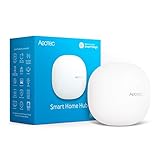
Aeotec Smart Home Hub
- Connect & control your smart home — Easily link thousands of compatible devices from leading brands to…
- Automate your routines — Build custom automations using the SmartThings app to coordinate lights…
- Set up, manage, and automate devices using the SmartThings app on Android, iOS, or iPadOS. Works with…
The Aeotec Smart Home Hub packs Z-Wave Plus, Zigbee, Thread, and Matter into one box, and doubles as a certified SmartThings hub. It’s the only current-generation Aeotec hub that still includes Z-Wave: the newer Hub 2 replaces it but drops Z-Wave entirely.
The Aeotec Smart Home Hub requires the SmartThings app and a broadband internet connection to operate, so it is not a local-first hub like Home Assistant Green or Hubitat Elevation.
| EverydayHomeComfort Score | Aeotec Smart Home Hub |
|---|---|
| Protocol & Device Support (30%) | 8.0 / 10 |
| Local Control & Privacy (25%) | 3.5 / 10 |
| Ecosystem Compatibility (20%) | 8.0 / 10 |
| Ease of Use (15%) | 8.0 / 10 |
| Running Cost & Upkeep (10%) | 8.0 / 10 |
| Overall Rating | 6.9 / 10 |
Why we picked it:
- Four radios in one box: Z-Wave Plus, Zigbee, a Thread border router, and a Matter controller; no other pick in this roundup covers this many protocols without dropping one
- Supports up to 100 Zigbee and 100 Z-Wave devices natively, per Aeotec’s own technical specifications
- Built-in Ethernet port for a wired connection, reducing Wi-Fi congestion for a hub coordinating dozens of devices
Real-world scenario: You already own a mix of Z-Wave door locks and Zigbee sensors from different brands, and you don’t want to replace either. The Aeotec Smart Home Hub is one of the few current hubs that still speaks both languages natively, plus Thread and Matter for whatever you add next.
Pros:
- Only current Aeotec hub with Z-Wave, Zigbee, Thread, and Matter all in one device
- Acts as a Thread border router out of the box
- SmartThings ecosystem brings Alexa and Google Assistant compatibility built in
Cons:
- Requires the SmartThings app and a broadband connection: not a local-first, offline-capable hub
- Zigbee and Z-Wave device counts are capped at 100 each, per Aeotec’s specifications
- The newer Hub 2 (V4) replaces it in Aeotec’s lineup but drops Z-Wave entirely
Best for: Households with an existing mix of Z-Wave and Zigbee devices who want one hub instead of two, and who don’t mind a cloud-connected setup.
Best Smart Home Hub With a Screen
Not every home automation hub needs a screen, but if you want to see camera feeds, widget dashboards, or room controls at a glance, only one hub in this roundup includes one.
The Amazon Echo Hub packs an 8-inch touchscreen directly into the hub itself, instead of requiring a separate smart display.
Among the eight hubs in this roundup, the Amazon Echo Hub is the only one with a built-in touchscreen; the rest rely on a phone app for visual control.
If you want a screen without committing to a full smart home hub, dedicated smart displays like the Amazon Echo Show or Google Nest Hub can serve that role on their own.
They don’t coordinate Zigbee, Z-Wave, Thread, or Matter devices the way a dedicated hub does, so pair one with a hub from this list rather than expecting it to replace one.
Common Mistakes When Choosing a Hub for Home Automation
- Assuming Matter means everything works together. Matter is a great standard, but your hub needs to act as a Matter controller, not just a bridge (see the protocol glossary above), to run automations locally.
Always verify: does this hub process Matter automations on my network?
The Connectivity Standards Alliance Matter specification explains the distinction. - Buying a cloud-dependent hub and assuming it’ll stay that way. In March 2025, Amazon removed local voice processing from three specific Echo models (Echo Dot 4th Gen, Echo Show 10, Echo Show 15) with no grandfathering.
Google shut down its ‘Works with Nest’ program in 2019, forcing anyone using it onto Google Home with reduced third-party support.
Cloud-dependent hubs are subject to policy changes you cannot control, and if your internet goes down, your automations stop entirely: lights stay on, locks don’t follow schedules, and motion-triggered alerts go quiet until your connection restores. - Ignoring legacy protocol compatibility before buying. If you already own Zigbee sensors or Z-Wave locks, your hub must support those protocols natively.
The Google TV Streamer and eero Pro 6E have no Z-Wave radio, and the Streamer has no Zigbee either.
Check your existing device list before you commit — buy the Streamer with existing Zigbee or Z-Wave devices and you’ll need a separate hub for those, or replace that hardware. - Treating all Zigbee hubs as equal. The Aqara Hub M3 only pairs with Aqara-brand Zigbee devices.
It will not connect IKEA Tradfri, Sonoff, or Philips Hue natively — expect it to, and your existing bulbs and sensors simply won’t appear in the app.
Open Zigbee coordination requires a hub like Home Assistant Green (with a dongle) or Hubitat. - Underestimating setup time for local-first hubs. Home Assistant Green and Hubitat require real setup investment — 1 to 3 hours minimum, more if you’re adding Zigbee or Z-Wave.
That time is the price of local control, and skipping the budgeting leaves you with a capable hub that sits unconfigured, since it requires deliberate setup that a Google TV Streamer or Echo Hub does not.
Budget it before day one.
How We Research
We analyzed specs across all seven hubs using manufacturer documentation, official press materials, and community forums including the Home Assistant forums, Hubitat forums, and Homey Community. Protocol support claims were cross-referenced against independent third-party documentation from the Connectivity Standards Alliance and the Thread Group. Privacy analysis draws on publicly available regulatory filings and official policy announcements, including Amazon’s March 2025 local processing removal. NIST cybersecurity guidance informed our privacy hierarchy. For our full method and scoring rubric, see our review methodology.
Update history:
15 September 2026: replaced the Homey Pro (Early 2023) pick with Homey Pro (2026), added Aeotec Smart Home Hub as an 8th pick.
For a broader view of what we cover at EverydayHomeComfort, visit our Smart Home Guide, including our coverage of smart device reviews and devices that work without internet for a fully offline-capable home.
Choose Your Hub for Home Automation in 60 Seconds
| Your priority | Buy |
|---|---|
| Zero cloud dependency | Home Assistant Green |
| Large home, Z-Wave devices | Hubitat Elevation C-8 Pro |
| Max protocols, no code | Homey Pro (2026) |
| Streaming + smart home in one | Google TV Streamer |
| Thread/Matter in every room | eero Pro 6E |
| All-in on Alexa | Amazon Echo Hub |
| Aqara + HomeKit | Aqara Hub M3 |
| Z-Wave + Zigbee in one box | Aeotec Smart Home Hub |
Who This Is For / Not For
This guide is for you if:
- You want to understand the real privacy and reliability trade-offs of each hub, not just the feature checklist
- You have existing Zigbee, Z-Wave, or legacy devices and need to know which hub actually connects them
- You’re a busy professional or homeowner who wants to set up your automation once and not touch it again
- You’re moving toward a more private, locally-processed smart home and need a clear starting point
This is NOT for you if:
- You want a single app that controls everything with zero setup: no hub in this list is fully hands-off from day one
- You’re comparing voice assistant quality between Alexa, Siri, and Google: that’s a different decision from choosing a hub
Frequently Asked Questions
Do I still need a hub if all my devices are Matter-certified?
Matter simplifies compatibility but doesn’t eliminate the need for a hub. You still need a Matter controller: a hub that processes and coordinates your automations locally. Without one, Matter devices from different brands can’t trigger each other automatically. They just respond to individual app commands, which isn’t automation.
What is the difference between a Matter controller and a Matter bridge?
A Matter controller runs automations: it receives device states, evaluates rules, and sends commands, all locally. A Matter bridge translates non-Matter devices (like Zigbee sensors) into the Matter ecosystem so a controller can see them. A hub can be both, but if it’s only a bridge, it can’t run automations on its own. Home Assistant, Hubitat, and Homey Pro are controllers. Aqara M3 acts as both a controller and a bridge.
Which hub works best if I already have Zigbee and Z-Wave devices?
Home Assistant Green (with a Zigbee USB dongle and Z-Wave stick) or Hubitat Elevation C-8 Pro. Both support open Zigbee and Z-Wave natively, process everything locally, and work with the broadest range of third-party devices. Avoid the Google TV Streamer (no Zigbee or Z-Wave), eero Pro 6E (no open Zigbee or Z-Wave), and Aqara M3 (Zigbee is Aqara-only) if you need both protocols.
What happens to my automations if my internet goes down?
It depends entirely on your hub. Home Assistant Green and Hubitat Elevation C-8 Pro run all automations 100% locally, internet outage has zero impact. Homey Pro also processes most automations locally. The Google TV Streamer and Amazon Echo Hub route most automations through the cloud, so they fail during outages. The eero Pro 6E has no local automation engine, so its automations depend on the cloud service running them.
Which home automation hub gives me the most privacy?
Home Assistant Green and Hubitat Elevation C-8 Pro process everything locally and send nothing to external servers by default; they are the most private options. Amazon Echo Hub is the least private: voice data is cloud-processed and Amazon has faced regulatory action for data practices.
The NIST smart home security guidance also recommends network segmentation as a baseline practice.
Does the eero Pro 6E run my smart-home automations by itself?
No.
It is a Thread border router and Matter controller, so it carries device traffic and lets Matter devices onto your network, but it has no rules engine. Your automations still run in Alexa, Apple Home, Google Home, or a dedicated hub like Home Assistant Green or Hubitat.
Does the Aqara Hub M3 work with third-party Zigbee devices like IKEA or Sonoff?
No.
The Aqara Hub M3’s Zigbee radio only pairs with Aqara-branded Zigbee devices. IKEA Tradfri, Sonoff, Third Reality, and other third-party Zigbee sensors and switches will not appear in the Aqara Home app. If you need open Zigbee support, where any Zigbee 3.0 device can pair, use Home Assistant Green with a Zigbee USB dongle or Hubitat Elevation C-8 Pro.
Which smart home hub has a screen?
Of the hubs in this guide, only the Amazon Echo Hub includes a built-in touchscreen (8 inches), used for camera views, widget dashboards, and room controls. The other hubs rely on a companion app instead.
Which smart home hub is best for SmartThings?
The Aeotec Smart Home Hub works directly as a SmartThings hub, supporting Z-Wave Plus, Zigbee, Thread, and Matter through the SmartThings app. It’s the only current-generation Aeotec hub that still includes Z-Wave alongside Matter.
Which smart home hub is best for Google Home?
The Google TV Streamer integrates natively with Google Home, backed by active Google hardware support, and includes a built-in Thread border router and Matter controller. It also doubles as a genuine 4K streaming box.
Do I need a Thread border router for Matter?
Not always, but most Matter-over-Thread devices need at least one Thread border router on your network to communicate. Three hubs in this guide include one built in: the Google TV Streamer, eero Pro 6E, and Aqara Hub M3.