Ad. When you purchase through links we provide, we may receive an affiliate commission. Here's how it works.
Best Robot Vacuum for Hardwood Floors in 2026
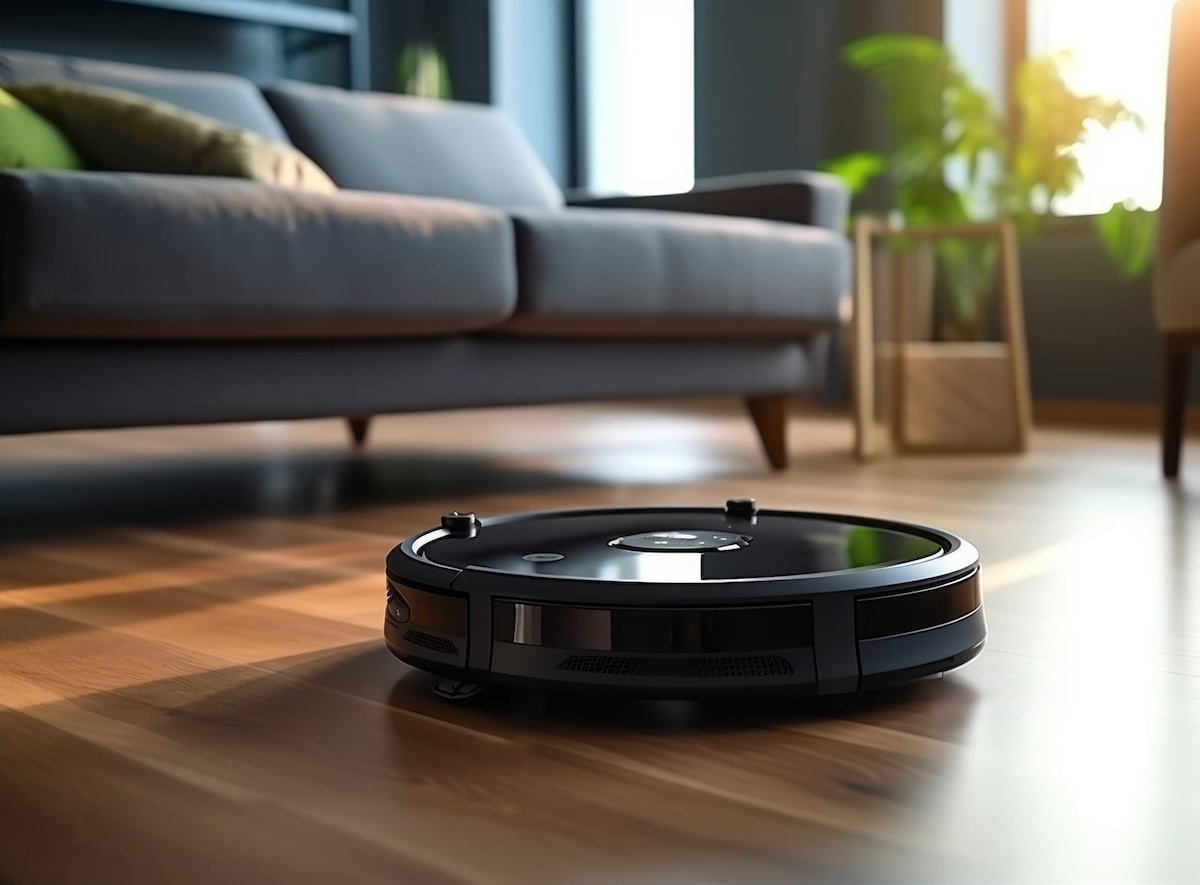
TL;DR: The best robot vacuum for hardwood floors in 2026 is the Roborock Saros 10R — 22,000 Pa suction, an ultra-slim 3.14-inch profile, and mop pads that auto-detach at the dock before any run involving carpet, eliminating the risk of wet-pad contact on your finish.
For large multi-level homes with high doorway thresholds, the Dreame X50 Ultra is the stronger pick.
Quick Picks
- Roborock Saros 10R: best overall for hardwood floor protection, with auto-detaching mop pads and best-in-class obstacle avoidance
- Dreame X50 Ultra: best for large or multi-level homes; extendable legs climb 60mm thresholds that stop every other robot on this list
- Roborock Qrevo Curv 2 Flow: best for wide-plank floors and baseboard edge cleaning, with a roller mop that reaches within 10 mm of walls and lifts 15 mm over rugs
- Ecovacs Deebot T30S Combo: best for homes that need one dock to handle both a floor robot and a handheld vacuum
- iRobot Roomba Plus 415 Combo: best for scrubbing dried-on marks from hardwood, with a SmartScrub back-and-forth mopping mode
Key Takeaways
- Robot vacuums scratch hardwood through grit trapped in rubber wheels, not through brush rolls, making wheel maintenance as important as brush choice
- The National Wood Flooring Association endorses robotic vacuums for daily hardwood maintenance, but only with water settings dialed in for your finish type
- Mop pad lift height is a floor-safety spec first, a carpet-convenience spec second: anything under 10mm risks dampening thick area rugs placed over hardwood
- Oil-finished and hand-scraped hardwood absorbs moisture directly; use the lowest water setting on any robot if your floors have a specialty finish
- All five picks use rubber roller brushes — the single most important specification for avoiding abrasion on hardwood floor surfaces
The best robot vacuum for hardwood floors isn’t about raw suction, it’s about not ruining the floors you paid to have.
Grit-filled wheels grinding across polyurethane finish, mop pads over-saturating oil-finished boards, side brushes flinging debris into the grain: these are the real failure modes most roundups never address.
We analyzed every major 2026 release and picked five robots that clean effectively without putting your floor investment at risk.
Why Hardwood Floors Demand a Different Robot Vacuum
Most robot vacuum roundups, including our best robot vacuum guide and our best robot vacuum for carpet picks, are built primarily around carpet performance.
Hardwood floors have different failure modes — and for homeowners who’ve invested in solid or engineered wood, those failures are expensive to fix.
- Micro-scratches from wheel grit.
Rubber wheels pick up fine grit from tile grout, concrete, and exterior thresholds.
Over hundreds of daily runs, that grit grinds into polyurethane finish in swirl patterns invisible until refinishing time.
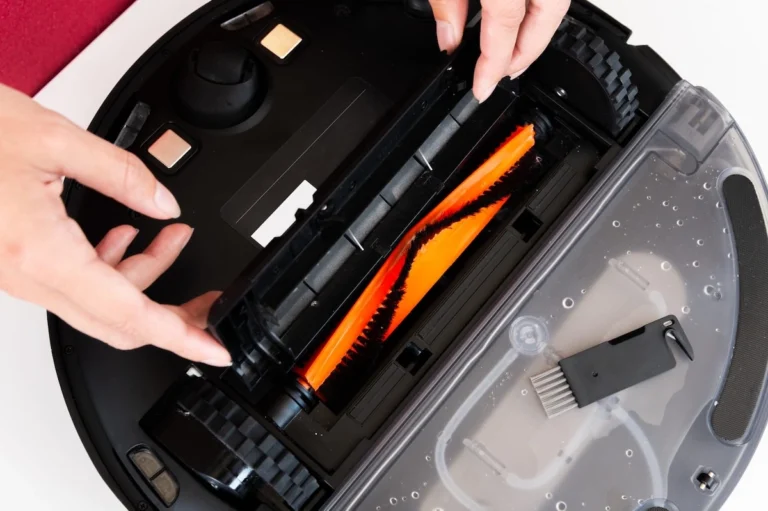
The fix: clean the robot’s wheels monthly and verify the robot uses rubber roller brushes, not bristle brushes. - Moisture damage from over-wet mopping.
Factory water settings are calibrated for tile and LVP, not hardwood.
On oil-finished or hand-scraped floors, even modest over-saturation causes wood cells to swell and eventually cup.
Set water levels per-room in the app on your first run — never leave them on default. - Area rug dampening from low mop lift.
A mop pad that lifts only 8–9mm may still contact thick pile rugs placed over hardwood, transferring moisture to the rug backing and the wood beneath.
Look for at least 10mm of lift — or full pad auto-detach.
Best Robot Vacuum for Hardwood Floors: Comparison Table
| Model | Best For | Suction | Mop Lift | Est. Annual Running Cost |
|---|---|---|---|---|
| Roborock Saros 10R | Best overall — floor safety + cleaning performance | 22,000 Pa | Pads auto-detach at dock | ~$55–75 (filters + pads) |
| Dreame X50 Ultra | Large homes, multi-level layouts | 20,000 Pa | 10.5 mm lift | ~$50–70 (filters + pads) |
| Roborock Qrevo Curv 2 Flow | Edge cleaning, wide-plank floors | 20,000 Pa (manufacturer claim) | 15 mm roller lift + Roller Shield | Roller mop every 1–3 months (manual) |
| Ecovacs Deebot T30S Combo | Floor robot + handheld in one dock | 11,000 Pa | 9 mm lift | ~$60–80 (bags + filters + pads) |
| iRobot Roomba Plus 415 Combo | Scrubbing stubborn marks from hardwood | 20,000 Pa | ~10 mm lift | ~$80–110 (bags + pads + filters) |
For a head-to-head look at how Roborock and Dreame approach hardwood safety across their full lineup, see our Roborock vs Dreame comparison.
Roborock Saros 10R: Best Overall

Roborock Saros 10R
- 𝟯.𝟭𝟰-𝗜𝗻𝗰𝗵 𝗨𝗹𝘁𝗿𝗮-𝗧𝗵𝗶𝗻 𝗗𝗲𝘀𝗶𝗴𝗻: The Roborock Saros 10R redefines home cleaning with its ultra-slim 3.14-inch profile…
- 𝗦𝘁𝗮𝗿𝗦𝗶𝗴𝗵𝘁 𝗔𝘂𝘁𝗼𝗻𝗼𝗺𝗼𝘂𝘀 𝗦𝘆𝘀𝘁𝗲𝗺 𝟮.𝟬: Experience smarter cleaning with advanced 3D sensing technology…
- 𝗣𝗼𝘄𝗲𝗿𝗳𝘂𝗹 𝗖𝗹𝗲𝗮𝗻𝗶𝗻𝗴 𝗦𝘆𝘀𝘁𝗲𝗺: With 22,000 Pa HyperForce suction, the Roborock Saros 10R effortlessly removes dirt…
The Roborock Saros 10R is Roborock’s 2026 flagship: 22,000 Pa suction, dual-transmitter solid-state LiDAR, and a Multifunctional Dock 4.0 that washes mop pads at 80°C and hot-air dries them after every run.
Why we picked it
- Before the Saros 10R starts any run involving carpet, it auto-detaches both mop pads at the dock — the only robot on this list where no wet material touches the floor surface during cross-room travel.
- StarSight Autonomous System 2.0: dual solid-state LiDAR transmitters + time-of-flight sensors + RGB camera — consistently rated first-in-class for obstacle detection, including cords and socks in low light
- 3.14-inch profile fits under furniture clearances that stop every other robot on this list
Real-world scenario:
You have 1,800 sq ft of wide-plank engineered oak, three area rugs, and a long-haired cat.
The Saros 10R runs nightly. It drops its mop pads at the dock before crossing any rug, vacuums and mops the hardwood zones with the per-room water level you set, then returns to be washed and dried.
You interact with it once every 4–6 weeks.
Pros
- Zero hair tangling — rubber brush roll + 22,000 Pa eliminates wrap entirely
- Full dock ecosystem: 80°C mop wash + hot-air dry + auto-empty + auto-refill
- 6,400 mAh battery handles large homes (~180+ minutes per charge)
- Roborock app: room-by-room suction and water control, SmartPlan auto-scheduling, obstacle photo log
Cons
- 270 ml dustbin is the smallest on this list — in a large home it stops mid-run to empty more often than competitors
- Early firmware had mop pad saturation inconsistency; later updates resolved it — verify current firmware on setup
- ~31% of users report occasional navigation quirks; typically resolved by redrawing room maps
Best for:
Homeowners with hardwood throughout, multiple area rugs, and a preference for fully hands-free maintenance over a 6-week cycle.
Also the strongest pick for homes with oil-finished or hand-scraped floors where zero moisture risk is non-negotiable.
Dreame X50 Ultra: Best for Large Homes
Sale

Dreame X50 Ultra
- 𝐂𝐫𝐨𝐬𝐬 𝐓𝐡𝐫𝐞𝐬𝐡𝐨𝐥𝐝𝐬 𝐚𝐧𝐝 𝐁𝐚𝐫𝐫𝐢𝐞𝐫𝐬: X50 Ultra utilizes robotic retractable legs to conquer door tracks, thresholds…
- 𝐄𝐚𝐬𝐢𝐥𝐲 𝐂𝐥𝐞𝐚𝐧 𝐔𝐧𝐝𝐞𝐫 𝐒𝐨𝐟𝐚𝐬 𝐚𝐧𝐝 𝐌𝐨𝐫𝐞: VersaLift Navigation lowers X50 Ultra height to 3.5 in, allowing it to…
- 𝐑𝐞𝐬𝐭𝐨𝐫𝐞 𝐘𝐨𝐮𝐫 𝐇𝐨𝐦𝐞 𝐰𝐢𝐭𝐡𝐨𝐮𝐭 𝐓𝐚𝐧𝐠𝐥𝐞𝐬: Tackle hair tangles by managing long hairs up to 11.8 in with the…
The Dreame X50 Ultra solves the problem every multi-level home runs into: the robot gets stuck at a doorway threshold and sits there until you manually carry it.
Its extendable robotic legs climb thresholds up to 60mm — no other robot on this list comes close.
Why we picked it
- The Dreame X50 Ultra’s extendable legs climb thresholds up to 60 mm, three times the capability of most competitors, making it the only pick here that crosses high doorway transitions without stopping.
- DuoBrush dual rubber rollers with near-zero hair tangling — critical for households with pets or long hair
- 20,000 Pa suction captures fine dust that settles into hardwood grain — the long-term enemy of floor finish
Real-world scenario:
Your home spans three levels with high-threshold transitions between hardwood, tile, and LVP. One dock, one schedule, three floors covered in a single run.
The X50 Ultra lifts its legs, steps over, and continues — no intervention required.
Pros
- 60 mm threshold climbing — handles transitions that are dead zones for every other robot
- 395 ml robot dustbin — largest on this list, fewest mid-run empties
- Full auto-base: hot-water mop wash + hot-air dry + auto-empty (3.2 L bag) + auto-refill — up to 100 days hands-free
Cons
- 70-minute battery runtime at max suction is the lowest of the group — recharge-and-resume required for large homes
- Early firmware had map instability and mid-job spinning — verify firmware version before relying on it for daily scheduling
- App connectivity has generated consistent user complaints — Dreame’s mobile software lags behind Roborock’s in reliability
If mopping temperature matters more than threshold-climbing, the Dreame X40 Ultra runs its dock at 158°F and is built specifically for sealed hardwood and tile; worth reading before you decide between the two Dreame options.
Best for:
Multi-level homes with high threshold transitions between floor types, where full-floor coverage in a single scheduled run matters more than per-charge runtime.
Roborock Qrevo Curv 2 Flow: Best for Edge Cleaning

Roborock Qrevo Curv 2 Flow
- 𝐒𝐩𝐢𝐫𝐚𝐅𝐥𝐨𝐰 𝐑𝐞𝐚𝐥-𝐓𝐢𝐦𝐞 𝐒𝐞𝐥𝐟-𝐂𝐥𝐞𝐚𝐧𝐢𝐧𝐠 𝐌𝐨𝐩: The robot vacuum delivers spotless floors with eight precise…
- 𝟐𝟎,𝟎𝟎𝟎 𝐏𝐚 𝐏𝐨𝐰𝐞𝐫𝐟𝐮𝐥 𝐒𝐮𝐜𝐭𝐢𝐨𝐧 & 𝐓𝐚𝐧𝐠𝐥𝐞-𝐅𝐫𝐞𝐞 𝐃𝐞𝐬𝐢𝐠𝐧: This robot vacuum and mop delivers…
- 𝐀𝐈-𝐏𝐨𝐰𝐞𝐫𝐞𝐝 𝐃𝐢𝐫𝐓𝐞𝐜𝐭 & 𝐃𝐫𝐲-𝐰𝐞𝐭 𝐒𝐭𝐫𝐚𝐭𝐞𝐠𝐲 𝐂𝐥𝐞𝐚𝐧𝐢𝐧𝐠: Equipped with intelligent sensors, the…
The Roborock Qrevo Curv 2 Flow targets one of hardwood’s most visible frustrations: the dust and grime line that builds up where planks meet baseboards.
Its Edge-Adaptive roller mop extends sideways to clean within 10 mm of walls, furniture, and chair legs (manufacturer claim).
It is the 2026 successor to the original Qrevo Curv, and it swaps spinning mop pads for a single 270 mm roller that is rinsed with fresh water and scraped while it runs (manufacturer claim).
Under the hood, the Roborock user manual lists a 14.4 V / 5,200 mAh battery and a separate on-board dirty water tank.
For the first-generation Curv design, see our Roborock Qrevo Curv S5X review
Why we picked it
- The Edge-Adaptive roller mop reaches within 10 mm of baseboards and furniture (manufacturer claim), so the dust line along wide-plank edges gets mopped, not just swept past
- The Curv 2 Flow lifts its roller up to 15 mm on carpet and drops a Roller Shield over it (manufacturer claim), the most clearance of the four lift-based picks on this list.
- SpiraFlow self-cleaning feeds fresh water onto the roller through eight hydration points while a scraper channels dirty water into the on-board tank (manufacturer claim), so you are not dragging yesterday’s grime across a finished floor
Real-world scenario:
You have 5-inch wide-plank white oak with an oil finish and three low-pile wool area rugs.
Dust lines along the baseboards are a constant source of frustration.
The Curv 2 Flow’s roller mop pushes out to those edges every run.
On the rugs, the roller lifts and the shield drops, so no damp surface touches the wool.
You set water output to its lowest level per room to protect the oil finish.
Pros
- Roller mop reaches within 10 mm of edges (manufacturer claim)
- 15 mm roller lift plus a physical Roller Shield on carpet (manufacturer claim)
- Roborock rates suction at 20,000 Pa, paired with a DuoDivide main brush and dual side brushes designed to resist hair tangles
- Roborock app with room-by-room cleaning and carpet no-go zones (per the user manual)
- 75°C hot-water roller wash, 55°C warm-air drying, and up to 65 days of auto-empty at the dock (manufacturer claims)
Cons
- At 11.9 cm tall (manufacturer claim), it will not fit under many low sofas and beds, and owner reviews flag this as the most common surprise.
- The roller mop needs replacing every 1–3 months and the main brushes every 6–12 months, per the user manual
- The manual advises against high-pile carpet, so set thick shag rugs as no-go zones
- Wi-Fi is 2.4 GHz only (user manual)
Best for:
Wide-plank hardwood homes where baseboard dust lines are a consistent frustration and area rugs need a mop that stays well clear of them.
Ecovacs Deebot T30S Combo: Best with Handheld Vacuum

Ecovacs Deebot T30S Combo
- Unbeatable 11,000Pa Suction Power – Experience a new level of clean with the DEEBOT T30S AI Care. Its powerful…
- TruEdge Adaptive Edge Mopping – Equipped with TruEdge Technology, the DEEBOT T30S AI Care excels in cleaning…
- AI Instant Re-mop – DEEBOT T30S AI Care identifies and targets noticeable floor stains. When encountering…
$880.13

Check Today’s Price on Amazon
The Ecovacs Deebot T30S Combo is the only robot vacuum on this list that ships with a handheld vacuum sharing the same dock — both auto-empty into the same bag.
For homes with stairs, upholstered furniture, and spots the floor robot physically can’t reach, this is a meaningful system advantage.
Why we picked it
- Dual auto-empty: both the floor robot and the handheld dock and empty automatically — one bag handles both tools
- TrueEdge adaptive mopping extends one disc toward wall edges, improving coverage in hardwood floor corners
- 200-minute battery runtime — one of the longest per-charge figures on this list
For Ecovacs’s current flagship with 50-level moisture control and a pressurized OZMO ROLLER built for hardwood, read our Ecovacs Deebot X9 Pro Omni review.
Real-world scenario:
Your home has two flights of stairs the floor robot can’t reach, a large sectional that sheds crumbs, and 1,400 sq ft of hardwood on the main level.
The T30S handles the floors on schedule.
When you need the stairs or the sofa done, the handheld is fully charged and emptied at the same dock.
One bag, one dock, two tools.
Pros
- Handheld vacuum in the same dock is a genuine value-add for homes with stairs or spot-cleaning needs
- Effective mopping — users report reliable removal of light-to-medium grime and dried marks on hardwood
- 200+ minute runtime covers large homes in a single charge
Cons
- The Ecovacs T30S Combo has the lowest mop lift on this list at 9 mm — if your area rugs have pile height over 5 mm, map them as no-mop zones in the app before your first run.
For a full brand comparison between Ecovacs and Roborock on mopping, navigation, and privacy, see our Roborock vs Ecovacs comparison. - Navigation and mapping accuracy rated below Roborock and Dreame — users report missing spots more often
- Auto-empty cycle reaches 78 dB — audibly louder than competitors; avoid scheduling during quiet hours
Best for:
Homes that have hardwood floors plus stairs or frequent upholstery spot-cleaning needs, where a companion handheld completes the system.
iRobot Roomba Plus 415 Combo: Best for Stubborn Marks

iRobot Roomba Plus 415 Combo
- FLOORS STAY CLEAN, BECAUSE MESSES NEVER GET A CHANCE TO BUILD UP. Vacuum and mop in one run with…
- BREAKS DOWN MESSES YOU’D NORMALLY HAVE TO SCRUB. SmartScrub applies extra pressure to tackle dried…
- CLEANS MORE OF YOUR HOME, INCLUDING WHERE DIRT COLLECTS. A 46% slimmer design* fits under more…
$599.00
Check Today’s Price on Amazon
The Roomba Plus 415 Combo is part of iRobot’s current LiDAR-based combo lineup, a meaningful upgrade from the camera-only models the brand relied on for years.
Its SmartScrub mode moves the robot in short back-and-forth strokes to remove dried-on marks from hardwood that a standard mop pass just smears.
Why we picked it
- SmartScrub — activates a 200 RPM back-and-forth scrubbing motion that removes dried food, sticky residue, and tracked-in mud; no other robot here does this on hardwood
- PerfectEdge extends one mop pad 18% closer to wall edges for reliable baseboard mopping coverage
- AutoWash dock with heated pad drying — pads are washed and dried at the station; 4 weeks per water fill
Real-world scenario:
You have kids who track mud and spilled juice onto hardwood floors on a daily basis.
A standard mop pass smears it.
The Roomba Plus 415 Combo detects the soiled area, activates SmartScrub, and scrubs back-and-forth until it’s gone — then continues the regular route.
You check in the morning: clean, no residue, no streaks.
Pros
- SmartScrub is the most effective dried-on-mess removal of the group — a genuine differentiator for active family homes
- LiDAR navigation is a significant improvement over previous camera-only Roomba models
- Heated pad drying at dock ensures pads don’t stay damp between runs, reducing mildew risk
Cons
- iRobot’s app is consistently rated as the worst software experience of the group — confusing interface, slow updates, reliability issues
- 7,000 Pa suction is the lowest of the five — adequate for daily hardwood maintenance but not a strong performer on thick carpet if your home has both
- Thick pile rugs can still receive some moisture even with pads raised — users with heavy area rugs over hardwood report occasional dampness at rug edges
Weighing Roborock against iRobot for a hardwood-first home?
Our Roborock vs iRobot brand comparison breaks down hard floor performance, mopping, and which brand holds up better over time.
Best for:
Active families with children or pets who need a robot that scrubs sticky messes off hardwood, not just wipe over them.
Common Mistakes When Buying a Robot Vacuum for Hardwood Floors
- Choosing based on Pa suction alone.
Pa ratings measure theoretical suction, not real-world hardwood floor performance.
On hard floors, brush roll type (rubber vs. bristle), wheel quality, and the robot’s ability to adjust suction height between floor types matter more than peak Pa. - Ignoring mop pad lift height.
A 9 mm lift may still dampen thick area rugs on every crossing.
Check the mop lift spec against your rug pile height.
When in doubt, create a no-mop zone over every area rug in the app before your first run. - Leaving the water volume on default.
Factory defaults are calibrated for tile.
On hardwood, go into the app and set each room’s water level to low or minimum before the first run.
Adjust up only if you see cleaning results need it. - Never cleaning the robot’s wheels.
Drive wheels accumulate grit over time.
On hardwood floors, that grit acts as an abrasive on every run.
Remove and clean the rear caster and main drive wheels monthly with a dry cloth. - Buying a robot tuned for carpet.
Some robots are optimized for deep carpet suction — high Pa, aggressive brush roll, no water level control.
These are poor fits for a hardwood floor robot vacuum.
Every pick on this list uses rubber rollers and per-room water control specifically because hardwood needs gentler handling.

What Happens If You Choose Wrong
- If you buy based on Pa suction alone → you’ll likely end up with a robot that performs well on carpet but scatters fine debris on hardwood and doesn’t modulate its settings between floor types
- If you ignore mop lift height → your area rugs will feel damp after every run, and over months you may see moisture staining or mold develop under rug backing where the pad made contact with the wood below
- If you leave the water level on default → you’ll see streaking on your hardwood finish; with oil-finished or wax floors you risk localized swelling and cupping that costs hundreds to refinish
- If you skip wheel maintenance → within 6–12 months of daily runs, swirl-pattern micro-scratches appear in raking light on high-gloss polyurethane finishes — a condition only sanding and refinishing can fix
How We Research
We analyzed specifications across 20+ 2026 robot vacuum models, cross-referenced user feedback from verified purchasers, reviewed manufacturer spec sheets and press documentation, and consulted the National Wood Flooring Association’s maintenance guidelines as the authoritative benchmark for floor-safe operation. No product on this list was selected on marketing claims — every pick reflects a floor-protection-first filter applied to the full 2026 market. We also reviewed our in-depth Dreame robot vacuum analysis for comparative context on Dreame’s hardware evolution.
For our full method and scoring rubric, see our review methodology.
Update history:
October 8, 2026: Replaced the Roborock Qrevo Curv with its successor, the Roborock Qrevo Curv 2 Flow, as our pick for edge cleaning.
Choose in 60 Seconds
- If you want the best robot vacuum for hardwood floors, with hardwood floor protection and fully hands-free maintenance → buy the Roborock Saros 10R
- If you have a large home with high-threshold doorway transitions between floor types → buy the Dreame X50 Ultra
- If baseboard dust lines on your wide-plank hardwood floors are your biggest frustration → buy the Roborock Qrevo Curv 2 Flow
- If you also need a handheld vacuum for stairs and upholstery → buy the Ecovacs Deebot T30S Combo
- If your hardwood floors regularly collect sticky messes or dried food → buy the iRobot Roomba Plus 415 Combo
Who This Is For / Not For
This is for you if:
- You have solid or engineered hardwood throughout most of your home
- You’ve invested in premium finishes — oil, wax, or high-gloss polyurethane — and want to protect them long-term
- You have thick area rugs over hardwood and need reliable mop avoidance
- You want a robot you can trust to run daily without supervision
- You’re willing to invest in quality upfront to avoid refinishing costs later
This is NOT for you if:
- Your home is primarily thick carpet — all five picks are optimized for hard floors and aren’t your best bet for deep carpet cleaning
- You want a simple, app-free robot — water level control via app is essential for hardwood use, and all five picks require it
- You’re looking for the cheapest option — floor-safe robot vacuums require rubber rollers, quality navigation, and controlled mopping, which places them in a higher tier
For more context on robot vacuum options across categories, see our guides to the best robot vacuums for pet hair, best robot vacuums for multiple floors, and best robot vacuums for thick carpet.
For daily hardwood care beyond the robot, see our how to clean hardwood floors guide.
For homes where noise is a concern, the best silent robot vacuums guide has additional options.
Browse the full range in our Vacuum Cleaners category or start from the EverydayHomeComfort home page.
Frequently Asked Questions
Yes — but not through the brush roll.
Modern robots use rubber rollers that flex on contact rather than scraping, so bristle-driven scratches are rare
The real risk is grit trapped in the robot’s rubber drive wheels.
Over hundreds of daily runs, fine particles from tile grout, concrete thresholds, and outdoor debris grind into polyurethane finish in circular patterns.
These micro-scratches are invisible at first and only show up in raking light — often not until the floor is due for refinishing.
The fix is simple: remove the robot’s wheels monthly and wipe them clean with a dry cloth.
All five robots on this list use rubber roller brushes for the main cleaning roll, which removes the bristle-scratch risk entirely.
The wheel-grit mechanism is the one variable you control through maintenance.
If your floors have a high-gloss polyurethane finish, schedule wheel cleaning every 3–4 weeks rather than monthly.
Mop lifting means the robot raises its pads off the floor surface when it detects carpet, but the pads remain attached to the robot and may retain residual moisture.
Mop detaching means the robot leaves the pads physically behind at its docking station before starting any run — so no wet material is ever on the robot when it crosses a rug or returns to the dock.
For hardwood floors with thick area rugs, mop detaching is the safer option.
The Roborock Saros 10R is the only model on this list with full pad auto-detach.
The other four use lift mechanisms: the Roborock Qrevo Curv 2 Flow lifts its roller up to 15 mm and covers it with a Roller Shield (manufacturer claim), Dreame X50 Ultra lifts 10.5 mm, iRobot Roomba Plus 415 lifts approximately 10 mm, and Ecovacs T30S Combo lifts 9 mm.
For rugs with pile height under 5 mm any of these work.
For thick wool rugs, the Curv 2 Flow’s lift and shield make it the safest lift-based option, and the Saros 10R’s full detach eliminates moisture risk entirely.
Less than the factory default.
Most combo robots ship with water settings calibrated for tile and LVP — not hardwood.
For polyurethane-finished hardwood, start at the lowest or second-lowest water level in the app.
For oil-finished or hand-scraped hardwood — which absorbs moisture directly rather than beading it — use the absolute lowest setting and limit mopping to 3–4 times per week rather than daily.
The NWFA recommends maintaining indoor relative humidity between 30–50% and cautions against excess moisture on wood floors.
The goal is a barely-damp mop pad that picks up surface grime — not a wet cleaning.
All five robots on this list allow per-room water level control in their apps, so you can set hardwood areas to low and tile areas to medium or high in the same cleaning run.
Yes, with two important adjustments.
First, set the mop water level to its absolute minimum.
Oil-finished floors have an open-grain finish that absorbs moisture directly rather than beading it on a surface coating the way polyurethane does.
Repeated over-saturation causes swelling, blotching, and finish breakdown that is not a surface issue — it is structural.
Second, limit mopping to twice a week and run vacuum-only mode on other days.
Hand-scraped hardwood has intentional surface variation; flat mop pads may skip the recesses in the grain texture.
All five picks on this list support independent vacuum-only scheduling separate from mopping runs.
If you’re unsure of your finish type, apply a drop of water: if it beads up, it’s polyurethane.
If it absorbs within seconds, treat it as oil or wax and use the lowest water setting on any robot vacuum for hardwood floors in your home.
Daily vacuuming and 3–4 mopping sessions per week is the right rhythm for most hardwood homes.
Daily vacuuming removes the fine dust and grit particles that act as abrasives when walked on — this single habit does more to extend the life of a hardwood finish than any other maintenance step.
Mopping every day is not necessary and increases cumulative moisture exposure.
The NWFA’s maintenance guidance supports daily dry cleaning — robotic or manual — as the most effective way to extend time between professional refinishing cycles.
All five robots on this list allow you to set separate vacuum-only and mop schedules in their apps.
Use this: vacuum daily, mop a few times per week.
Over 3–5 years, floors maintained this way will refinish on a longer cycle than floors cleaned weekly by hand.
The Roborock Saros 10R operates at approximately 52 dB(A) in quiet mopping mode — closer to a library (40 dB) than a normal conversation (60 dB).
The Ecovacs Deebot T30S Combo is the loudest of the group: its auto-empty dock cycle reaches 78 dB, comparable to a loud dishwasher.
The iRobot Roomba Plus 415 Combo’s AutoWash dock is also on the louder side during its auto-empty and wash cycle, similar to most auto-empty docks in this price range.”
For premium homes where noise matters, such as open-plan layouts, home offices, or households with sleeping occupants during cleaning hours, the Saros 10R is the right choice.
Schedule it to run in off-hours and you will rarely notice it.
The Roborock app also supports quiet-mode schedules that cap suction speed automatically.
For most hardwood homeowners, a combo robot vacuum-mop is the better long-term investment.
Daily dry vacuuming removes grit and dust effectively, but it doesn’t remove the oily film from foot traffic that builds up over time and dulls the floor finish — that film requires a light damp mop pass a few times per week.
All five picks on this list are combo units, and all of them allow vacuum-only scheduling when you don’t want mopping.
So you get both capabilities with no trade-off.
The exception is if you have specialty hardwood requiring a specific cleaning product incompatible with the robot’s water reservoir — in that case, a vacuum-only robot for daily use paired with manual mopping using your preferred product is a valid approach.
See our best vacuum mop combo guide for non-robotic options.
Modern side brushes use soft nylon filaments that flex on contact, not rigid bristles that scrape.
The actual risk is indirect: a side brush sweeps fine grit toward the robot’s center, where the drive wheels then roll over it.
The Roborock Qrevo Curv 2 Flow lifts its side brushes and main brush when it switches to mop-only mode for wet spills (manufacturer claim), so it does not sweep grit through a wet patch.
For standard hardwood, a well-maintained side brush on any modern robot is unlikely to cause visible scratches.
The higher-risk scenario is a worn brush with missing filaments, where the support arm starts making direct contact with the floor surface.
Inspect and replace the side brush on any hardwood floor robot vacuum every 4–6 months.
All five models on this list have replacement side brushes available as accessories.
Summary
The best robot vacuum for hardwood floors combines floor-safe mechanics with intelligent mopping control, not just raw suction power.
The Roborock Saros 10R is the top pick for most premium hardwood homeowners: it auto-detaches mop pads before carpet runs, navigates with best-in-class obstacle avoidance, and handles up to 6 weeks of autonomous operation without input from you.
If your home has multi-level transitions or high doorway thresholds, the Dreame X50 Ultra’s 60 mm climbing capability makes it the stronger fit.
For homes where baseboard dust lines are a constant frustration, the Roborock Qrevo Curv 2 Flow’s edge-reaching roller mop is the differentiated choice.
The Ecovacs Deebot T30S Combo adds a companion handheld for a complete cleaning system, and the iRobot Roomba Plus 415 Combo wins on scrubbing performance for active family homes.
If you have oil-finished or hand-scraped hardwood, set any robot’s water output to its lowest level: these finishes absorb moisture directly and are far more susceptible to swelling and cupping than polyurethane.
Still unsure?
Start with the Saros 10R: it covers 80% of hardwood floor use cases and is the safest option on this list.