Ad. When you purchase through links we provide, we may receive an affiliate commission. Here's how it works.
Best Robot Vacuum for Pet Hair (2026)
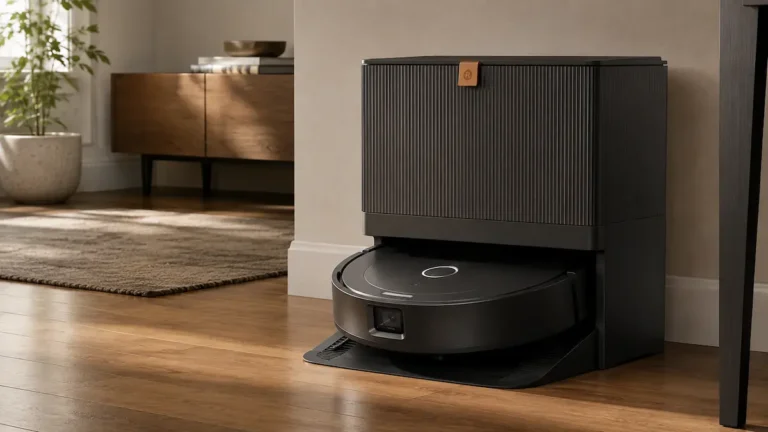
TL;DR: The Roborock Saros 20 is the best robot vacuum for pet hair in 2026: 36,000 Pa suction, a fully anti-tangle dual rubber brush, and a self-emptying dock that operates almost entirely without you.
For most pet owners who want strong allergen containment at a lower price point, the Shark Matrix Plus delivers a HEPA-rated base and hands-free emptying that no competing mid-range model matches.
Quick Picks
- Roborock Saros 20: best overall; 36,000 Pa suction and full hands-free maintenance for any pet household
- Dreame L60 Ultra FE: best for heavy-shedding breeds; TriCut Brush 3.0 slices long hair before it can wrap on long-haired dogs and cats
- Narwal Flow 2: best for hard floors; a self-rinsing track mop leaves paw-printed floors genuinely clean, not just damp
- iRobot Roomba Combo 10 Max: best obstacle avoidance; specifically trained to recognize and avoid pet accidents on the floor
- Shark Matrix Plus 2-in-1: best mid-range; HEPA-rated base captures pet dander instead of venting it back into the room
- Eufy Omni S2: best for carpet-heavy homes; a claimed 30,000 Pa (manufacturer claim) and a 0%-tangle DuoSpiral brush, with 5-layer filtration for allergy-prone households
- Shark PowerDetect 2-in-1: best smart detection; DirtDetect auto-boosts suction where pet hair concentrates most
Pet hair is one constraint, but not always the only one.
If you need to weigh floor type, noise, or budget at the same time, our best robot vacuums guide covers all the trade-offs together.
Key Takeaways
- Pet dander, not just visible hair, is the real allergen trigger; the EPA identifies pet allergens as a key biological contaminant linked to asthma and allergic reactions in the home
- Rubber brushes reduce brush cleaning from every 1–3 days (bristle brush, heavy shedder) to every 2–4 weeks; a meaningful daily quality-of-life difference
- Self-emptying docks extend hands-free operation to 30–60 days even in heavy-shedding households; without one, daily manual emptying is the norm
- The Roborock Saros 20’s 36,000 Pa suction (manufacturer claim) is the highest figure any major robot-vacuum brand advertises as of May 2026
- Schedule the dock’s auto-empty cycle during daytime hours: the burst is short but loud, louder than the robot’s own cleaning, and enough to wake light sleepers or startle noise-anxious pets
The Best Robot Vacuum for Pet Hair Keeps Your Home Clean Without the Daily Effort
Finding the best robot vacuum for pet hair means more than picking the highest suction number.
If you have a dog or cat, you’re dealing with pet fur that embeds into carpet fibers, dander that triggers allergies, and a floor that looks clean one hour and covered again the next.
The right robot vacuum runs daily, handles the mess without clogging, empties itself, and lets you stop thinking about it.
The wrong one becomes another chore you own.
Why Pet Hair Is Harder Than Regular Household Dust
Pet hair doesn’t sit on the surface, it works its way into carpet fibers, wraps around brush rollers, and fills dustbins faster than any other household debris.
But visible hair is only part of the problem.
The part that matters for health is dander: microscopic skin flakes, not the visible hair, trigger the allergic reactions, and they stay airborne for hours after a vacuum passes through.
The EPA classes pet allergens as a key biological contaminant behind asthma and allergic reactions and names regular floor cleaning as one of the most effective source-control steps a pet household can take.
The American Lung Association adds that dander’s jagged microscopic structure lets it penetrate deep into the lungs, so how a vacuum contains what it collects matters as much as how much it picks up.
Look for a fully sealed HEPA path, brush to bin and bin to base, not just a HEPA-style filter in an unsealed bin: a vacuum that lifts the hair but vents dander back through the exhaust defeats the purpose for allergy households.
For the dander that stays airborne between cleanings, pair the robot with an air purifier as a second layer.
Our best air purifier for pets guide covers which units handle dander most effectively, with the best UV light air purifiers if you want added microbial control.
What to Look for in a Robot Vacuum for Pet Hair
- Brush type: Rubber or TriCut for any household with medium-to-heavy shedding or long-haired breeds.
Bristle brushes are only acceptable for short-haired, light shedders. - Self-emptying base: Non-negotiable for pet households.
Daily manual emptying without a base defeats the purpose of a robot vacuum in a shedding home.
See our full best self-emptying robot vacuums guide if that feature is your priority. - HEPA filtration: Required if anyone in your household has pet allergies.
A genuine HEPA filter traps at least 99.97% of particles at 0.3 microns; look for a sealed HEPA system, not just a HEPA-style filter in an unsealed dustbin. - Obstacle avoidance: Camera-based AI avoidance is worth paying for if you have dogs.
The consequence of poor obstacle avoidance isn’t just a clogged brush, it’s a smeared mess across your entire floor. - Suction power: depends on your floors, see the tier table below.
Hard floors are forgiving; carpet is where Pa earns its keep. - Noise: the cleaning run is a steady background hum on most models; the auto-empty dock is the loud part, a short burst louder than the robot itself.
If a pet or a light sleeper is nearby, schedule both for when the house is empty. - Battery life: 120+ minutes for apartments; 200+ minutes for large homes.
Running out mid-clean in a pet household means the half-cleaned floor immediately re-accumulates hair.
How much suction you actually need runs by floor type, not by chasing the biggest number:
| Floor | Suction (Pa, approx) | Why |
|---|---|---|
| Bare floors, low-pile rugs | 4,000+ | Surface hair lifts easily; brush design matters more than Pa here |
| Medium-pile carpet | 10,000+ | Hair settles into the pile and needs real pull to release |
| High-pile carpet, embedded undercoat | 18,000+ | Fine hair works down to the backing; only strong suction plus active brush agitation clears it |
Pa is a manufacturer figure measured differently from brand to brand, so read it as a rough tier, not a precise ranking.
Our robot vacuum suction power guide covers how it is measured.
New to robot vacuum specs in general?
Our robot vacuum buying guide covers navigation, filtration, suction, and brush design, and robot vacuum vs regular vacuum weighs whether it is the right tool for your situation at all.
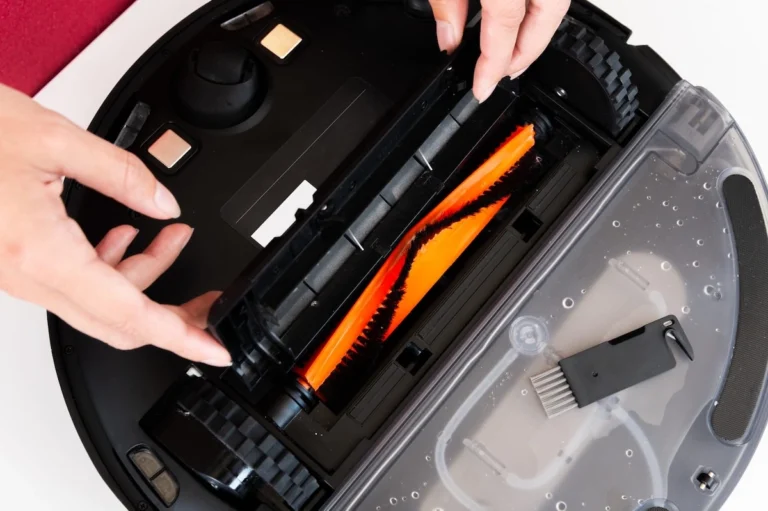
Rubber brushes tangle far less than bristle: in a heavy-shedding home that is the difference between cleaning the roller every 2–4 weeks and every 1–3 days, which is what separates a robot you keep using from one that becomes a chore.
Best Robot Vacuums for Pet Hair: Full Comparison
These seven picks are ordered by the situation they solve best (breed, floor type, allergy needs, and so on), not by overall score.
Compare the EverydayHomeComfort Score column below when suction, mopping, or ease of use is what actually decides your choice.
| Product | Best For | Suction (Pa) | Brush Type | Self-Emptying | HEPA Filtration | EHC Score |
|---|---|---|---|---|---|---|
| Roborock Saros 20 | Best overall | 36,000 | Dual rubber (DuoDivide) | Yes | Yes | 9.1 |
| Dreame L60 Ultra FE | Heavy shedders | 30,000 | TriCut Brush 3.0 | Yes | Comparable, not certified | 8.4 |
| Narwal Flow 2 | Hard floors | 31,000 | Anti-tangle roller | Yes | Not specified | 8.4 |
| iRobot Roomba Combo 10 Max | Obstacle avoidance | N/A | Dual rubber multi-surface | Yes | Yes | 7.1 |
| Shark Matrix Plus 2-in-1 | Mid-range / allergies | N/A | Anti-wrap rubber | Yes (HEPA base) | Yes | 6.2 |
| Eufy Omni S2 | Carpet + allergies | 30,000 | DuoSpiral rubber (hair to 20in) | Yes | Comparable, not certified | 8.0 |
| Shark PowerDetect 2-in-1 | Smart detection | N/A | Anti-wrap rubber | Yes | Yes | 7.2 |
Roborock Saros 20: Overall Best Robot Vacuum for Pet Hair

Roborock Saros 20
- 𝗜𝗻𝗱𝘂𝘀𝘁𝗿𝘆-𝗟𝗲𝗮𝗱𝗶𝗻𝗴 𝗢𝗯𝘀𝘁𝗮𝗰𝗹𝗲-𝗖𝗿𝗼𝘀𝘀𝗶𝗻𝗴 𝗣𝗼𝘄𝗲𝗿: AdaptiLift Chassis 3.0 dynamically raises the body to glide over thresholds…
- 𝗨𝗹𝘁𝗿𝗮-𝗣𝗿𝗲𝗰𝗶𝘀𝗲 𝗡𝗮𝘃𝗶𝗴𝗮𝘁𝗶𝗼𝗻 𝘄𝗶𝘁𝗵 𝗙𝗲𝘄𝗲𝗿 𝗠𝗶𝘀𝘀𝗲𝗱 𝗦𝗽𝗼𝘁𝘀: Powered by StarSight Autonomous System 2.0, the…
- 𝗖𝗹𝗲𝗮𝗻𝘀 𝗨𝗻𝗱𝗲𝗿 𝟯.𝟭𝟯 𝗶𝗻 𝗙𝘂𝗿𝗻𝗶𝘁𝘂𝗿𝗲 𝘄𝗶𝘁𝗵 𝗘𝗮𝘀𝗲: With its ultra-slim design, Saros 20 glides under sofas and beds as low as…
The Roborock Saros 20 is the overall best robot vacuum for pet hair available in 2026.
It launched in March 2026 and immediately became the performance benchmark in the category.
| EverydayHomeComfort Score | Roborock Saros 20 |
|---|---|
| Cleaning Performance (30%) | 9.5 / 10 |
| Pet Hair (20%) | 9.5 / 10 |
| Mopping (15%) | 8.5 / 10 |
| Hard-Floor Safety (15%) | 8.5 / 10 |
| Ease of Use (20%) | 9.0 / 10 |
| Overall Rating | 9.1 / 10 |
Why we picked it:
- Highest suction of any consumer robot vacuum right now, and it shows on the embedded carpet hair that lower-powered flagships leave behind
- DuoDivide’s two counter-rotating rubber rollers eject long hair instead of trapping it, so no scissors between cleanings
- Slimmest flagship body here at 3.14 inches, so it actually clears the gap under most beds and sofas
Real-world scenario:
You have a Golden Retriever and 1,200 sq ft of mixed hardwood and area rugs.
The Saros 20 runs every morning before you leave, auto-empties into its sealed dock, and you interact with it about once every six weeks to replace the dust bag.
The floor is clean every time you come home.
Pros:
- Hot-water (212°F) mop-pad washing in the dock stops pet odor building up in the pads
- StarSight system recognizes 300+ object types, including pet waste and toys
- Auto-empty dock rated for up to 65 days of hands-free emptying (manufacturer claim)
- Matter compatible: works with Alexa, Siri, and Google Home
Cons:
- Dock auto-empty is loud; schedule it for daytime hours, not overnight
- Mop coverage can be inconsistent in certain room configurations
- Top-of-market price reflects top-of-market specs
Best for:
Pet owners who want maximum suction, fully hands-free maintenance, and the best performance the category offers.
If you’re narrowing down to Roborock or Dreame specifically, our brand comparison helps you pick the right ecosystem for your home.
Dreame L60 Ultra FE: Best for Heavy-Shedding Breeds
Sale

Dreame L60 Ultra FE
- ThermoHub Self-Cleaning Mop Technology: Adopts 100℃ PTC heated washboard to high-temperature clean mop…
- Vormax Suction: 30,000Pa strong suction lifts dust, hair, litter and daily debris on all floors…
- TriCut Brush: Built-in blade rubber brush makes full floor contact, cuts and removes long hair…
$719.99

Check Today’s Price on Amazon
The Dreame L60 Ultra FE is purpose-built for households where pet hair is a daily crisis: Huskies, Malamutes, Golden Retrievers, German Shepherds, Maine Coons.
Note: the L60 line has several trims (Pro Ultra, Ultra, Ultra PE, Ultra FE).
The Ultra FE is the one that keeps the TriCut cutting brush, paired with 30,000 Pa suction (manufacturer claim) and the 212°F hot-water dock.
| EverydayHomeComfort Score | Dreame L60 Ultra FE |
|---|---|
| Cleaning Performance (30%) | 8.5 / 10 |
| Pet Hair (20%) | 9.0 / 10 |
| Mopping (15%) | 8.5 / 10 |
| Hard-Floor Safety (15%) | 7.5 / 10 |
| Ease of Use (20%) | 8.0 / 10 |
| Overall Rating | 8.4 / 10 |
Why we picked it:
- TriCut Brush 3.0 comes standard and adds an integrated blade that slices long pet hair before it can wrap, a different fix from rubber rollers alone for coat-blowing breeds
- 30,000 Pa Vormax suction (manufacturer claim) drives strong carpet extraction in large open-plan homes (our Dreame L40 Ultra review covers the previous L40 generation)
- 240-minute runtime on the 5,200 mAh battery covers a large single-level home on one charge, with recharge-and-resume for anything bigger
Real-world scenario:
You’ve replaced three budget vacuums because the brushes kept clogging.
The L60 Ultra FE runs every day with the TriCut Brush 3.0, slices the hair before it wraps, and the dock handles the rest, including washing the mop pads in 212°F water so pet odor does not build up.
You replace the TriCut brush every few months as a consumable: a fair trade for never cutting hair off a brush roll again.
Pros:
- TriCut Brush 3.0 and an anti-tangle side brush are both standard, so long hair is cut and cleared without a separate upgrade
- An extending side brush and an extending mop reach into corners and along baseboards
- The all-in-one base auto-empties (up to 100 days, manufacturer claim), refills the water tank, and washes and hot-air-dries the mop pads
Cons:
- Navigation is camera and sensor based (Smart Pathfinder), not lidar, so it maps less precisely than the Roborock or the step-up L60 Pro Ultra
- Navigation occasionally avoids certain chairs and low-clearance furniture
- Customer service inconsistency reported by some users; warranty replacement process has friction
Best for:
Owners of heavy-shedding or long-haired breeds who have been frustrated by brush tangles on every previous robot vacuum they’ve owned.
Narwal Flow 2: Best for Pet Owners with Hard Floors

Narwal Flow 2
- Self-Cleaning Mop with FlowWash — Always Cleans with Fresh Water. Tired of robot mops spreading dirty…
- 31,000Pa Suction for Pet Hair + Dual Tangle-Free Brush System. This robot vacuum for pet hair delivers…
- AI Object Recognition with Dual Cameras — Avoids Obstacles, Cleans Smarter. Powered by dual cameras and…
If most of your home is hardwood, tile, or LVP, and your pet leaves paw prints and water bowl splashes along with the hair, the Narwal Flow 2 is the robot vacuum that treats mopping as seriously as vacuuming. Narwal launched it in the US in April 2026, per its launch announcement.
| EverydayHomeComfort Score | Narwal Flow 2 |
|---|---|
| Cleaning Performance (30%) | 8.5 / 10 |
| Pet Hair (20%) | 8.5 / 10 |
| Mopping (15%) | 9.0 / 10 |
| Hard-Floor Safety (15%) | 8.5 / 10 |
| Ease of Use (20%) | 7.5 / 10 |
| Overall Rating | 8.4 / 10 |
Why we picked it:
- Narwal designed the track mop so pet hair slides off instead of wrapping: the flat loop rotates on a plane rather than around a central axle, and a built-in scraper clears debris from it as it runs (manufacturer claim).
- The mop rolls at over 100 rotations per minute with 12 N of downward pressure and rinses through 16 nozzles with 140°F water while it cleans, per Narwal’s launch release, so it isn’t dragging this morning’s paw prints across the rest of the floor
- Pet Care Mode adds automatic pet-zone cleaning and pet locating, and dual RGB cameras are designed to tell different kinds of mess apart and adjust the cleaning strategy (manufacturer claim)
Real-world scenario: You have two cats and an open-plan apartment with hardwood throughout. Paw prints appear around the water bowl every day. The Flow 2 vacuums and mops in one pass, keeps rinsing the mop as it goes, and back at the dock Narwal says the mop gets a 212°F hot-water wash and 140°F hot-air drying (manufacturer claim), so the mop doesn’t start to smell sour.
Pros:
- 31,000 Pa suction with CarpetFocus and an anti-tangle roller brush, per Narwal’s launch release (manufacturer claim)
- Dust bag rated for up to 120 days, or about 90 days in a home with pets (manufacturer claim)
- At 95 mm (3.74 in) tall, per the Flow 2 user manual, it slides under most sofas, where shed hair tends to collect
Cons:
- The mop lifts on carpet instead of detaching, so set high-pile rugs to “Avoid” in the app
- Early owner reviews often mention map editing and occasional docking hiccups in the first weeks, and Narwal’s spec list doesn’t include Matter
- US launch was April 2026, so the long-term owner record is thinner than for the Roborock and iRobot picks
Best for: Pet owners with mostly hard floors who want the cleanest mopping result in a fully autonomous system. It also runs quietly enough to earn a spot in our quietest robot vacuum guide.
iRobot Roomba Combo 10 Max: Best Obstacle Avoidance for Dog Owners
Sale

iRobot Roomba Combo 10 Max
- OUR MOST POWERFUL CLEANING ROBOT YET. It vacuums with 100% more suction power*, mops back-and-forth with…
- AN EXPERT IN DIRT ELIMINATION. The 4-Stage Cleaning System features an Edge-Sweeping Brush for thorough…
- IT DOESN’T JUST LEARN YOUR HOME; IT REACTS TO IT IN REAL TIME. With PrecisionVision Navigation and a…
The iRobot Roomba Combo 10 Max earns its place on this list for one reason above all: it’s the most reliable robot vacuum at detecting and avoiding things it shouldn’t run over, including what your dog left on the floor before you noticed it.
| EverydayHomeComfort Score | iRobot Roomba Combo 10 Max |
|---|---|
| Cleaning Performance (30%) | 6.0 / 10 |
| Pet Hair (20%) | 7.0 / 10 |
| Mopping (15%) | 7.5 / 10 |
| Hard-Floor Safety (15%) | 8.5 / 10 |
| Ease of Use (20%) | 7.5 / 10 |
| Overall Rating | 7.1 / 10 |
Why we picked it:
- PrecisionVision Navigation was trained specifically on pet waste, cables, shoes, socks, and toys, not a generic avoidance system adapted for pets, and it has the longest real-world track record in dog homes
- Auto-Retract Mopping System lifts the pad when it crosses carpet, so there is no manual removal and no wet-carpet passes
- Clean Base Auto-Fill dock auto-empties debris for up to 60 days and holds about 7 days of mop water, per iRobot
Real-world scenario:
You have a senior dog with occasional accidents.
You can’t always check the floor before the robot runs.
The 10 Max maps your home, runs its route, identifies and avoids anything it recognizes as an obstacle, and empties itself, without creating a cleanup catastrophe.
Pros:
- Home mapping is fast and accurate from the first run
- Pet Owner Official Promise: iRobot replaces the robot if it runs over solid pet waste within a year of purchase, which no other brand here offers
Cons:
- iRobot does not publish a Pa suction figure for this model.
It markets “100% stronger suction” than the Roomba Combo i Series, with no comparable rating to the 25,000+ Pa Chinese flagships in this list. - App is basic compared to Roborock and Dreame; occasional sensor bugs reported by users
- Brand stability note: iRobot has undergone significant restructuring since 2023; software development pace has slowed vs. competitors; a consideration for long-term ownership
Choosing between Roborock and iRobot for your pet household?
Our Roborock vs iRobot comparison covers which brand leads on suction, obstacle avoidance, and ownership stability.
Best for:
Dog owners who prioritize accident avoidance above all, especially households with senior dogs, puppies in training, or unpredictable floor hazards.
Shark Matrix Plus 2-in-1: Best Mid-Range for Allergy Households
Sale

Shark Matrix Plus 2-in-1
- HIGH SUCTION POWER & SONIC MOPPING: Ultra-powerful, whole-home cleaning on carpets and hard floors with…
- NO SPOTS MISSED: With Matrix Clean technology, the robot cleans in a precision matrix grid, taking…
- PERFECT FOR HOMES WITH PETS: The self-cleaning brushroll captures pet hair, dust, and debris while…
The Shark Matrix Plus 2-in-1 is the best mid-range robot vacuum for pet hair if allergen containment matters as much as the clean itself, which it should if anyone in your household reacts to pet dander.
| EverydayHomeComfort Score | Shark Matrix Plus 2-in-1 |
|---|---|
| Cleaning Performance (30%) | 6.5 / 10 |
| Pet Hair (20%) | 7.5 / 10 |
| Mopping (15%) | 5.0 / 10 |
| Hard-Floor Safety (15%) | 6.0 / 10 |
| Ease of Use (20%) | 5.5 / 10 |
| Overall Rating | 6.2 / 10 |
Why we picked it:
- HEPA-rated self-emptying base captures and seals pet dander during the empty cycle, where most competing docks vent unfiltered air and put the dander back in the room
- Matrix Clean grid navigation makes a systematic pass over every zone instead of a random path; Shark markets it as delivering about 30% better carpet cleaning (manufacturer claim)
Real-world scenario:
You have a cat and a partner with a cat allergy.
You need the floor cleaned daily, and you need the emptying process to not recirculate dander.
The Shark Matrix Plus runs every morning, empties into its HEPA base, and 60 days of debris sits sealed inside.
The allergy situation improves measurably.
That’s the job.
Pros:
- Noticeably quieter than the flagships in balanced mode (Shark publishes no decibel rating), with full power on tap when needed
- 60-day base capacity for long hands-free stretches
- Anti-wrap rubber brushroll resists pet-hair wind-up on everyday shedding
Cons:
- App is unreliable: live navigation tracking is glitchy and slow
- Mopping is surface-level only: not suitable for stuck-on messes or deep floor cleaning
- Brush roll needs periodic manual cleaning in very heavy-shedding households
Best for:
Pet owners with allergy sufferers in the household who need HEPA filtration across the entire cleaning and emptying cycle, not just in the vacuum itself.
If you’re specifically shopping for an apartment, see our best robot vacuum for small apartments guide for compact-dock options in this tier.
Eufy Omni S2: Best for Carpet-Heavy Homes with Pets
Sale

Eufy Omni S2
- 𝟗𝟗.𝟗𝟗% 𝐆𝐞𝐫𝐦 𝐑𝐞𝐦𝐨𝐯𝐚𝐥 𝐨𝐧 𝐇𝐚𝐫𝐝𝐰𝐨𝐨𝐝 𝐚𝐧𝐝 𝐓𝐢𝐥𝐞: Generates electrolyzed water on every pass—killing 99.99% of bacteria. Works as…
- 𝟗𝟓% 𝐃𝐮𝐬𝐭 𝐌𝐢𝐭𝐞 𝐑𝐞𝐦𝐨𝐯𝐚𝐥-𝐁𝐚𝐛𝐲 𝐂𝐫𝐚𝐰𝐥𝐬 𝐖𝐨𝐫𝐫𝐲-𝐅𝐫𝐞𝐞: This carpet cleaner machine uses AeroTurbo 2.0 with 30,000 Pa…
- 𝐀𝐥𝐥𝐞𝐫𝐠𝐞𝐧 𝐅𝐢𝐥𝐭𝐫𝐚𝐭𝐢𝐨𝐧 𝐚𝐧𝐝 𝐁𝐮𝐢𝐥𝐭-𝐈𝐧 𝐅𝐫𝐚𝐠𝐫𝐚𝐧𝐜𝐞 𝐃𝐢𝐟𝐟𝐮𝐬𝐞𝐫: Multi-cone 5-layer filtration…
The Eufy Omni S2 is the pick for pet owners whose homes lean carpet-heavy, where strong suction and a tangle-free brush matter more than mopping finesse.
| EverydayHomeComfort Score | Eufy Omni S2 |
|---|---|
| Cleaning Performance (30%) | 8.0 / 10 |
| Pet Hair (20%) | 8.0 / 10 |
| Mopping (15%) | 7.5 / 10 |
| Hard-Floor Safety (15%) | 8.0 / 10 |
| Ease of Use (20%) | 8.5 / 10 |
| Overall Rating | 8.0 / 10 |
Why we picked it:
- eufy pairs a claimed 30,000 Pa with the DuoSpiral split brush, marketed as a 0% hair-tangling design, plus a sealed auto-empty bin so allergens are not kicked back into the air on a manual dump (manufacturer claim)
- 5-layer AirClean filtration is marketed to trap 99.99% of common household allergens, useful in an allergy-prone pet home
- 12-in-1 UniClean Station handles auto-empty, ozone mop washing, heated drying, and detergent dispensing
Real-world scenario:
You have a 1,100 sq ft home with a shedding golden retriever and a mix of low-pile carpet and hardwood.
Run nightly, the Omni S2’s DuoSpiral brushes pull hair off carpet fibers instead of wrapping around the roller, and the sealed auto-empty bin means you’re not opening a dusty bin full of dog hair every other day.
For carpet-specific buying advice beyond this pick, our best robot vacuum for carpet guide breaks down pile height and suction thresholds in more depth.
Pros:
- Up to 68 days between auto-empties, the longest interval among these picks
- Electrolyzed-water mopping targets bacteria on sealed wood and tile, marketed at 99.99% germ removal
- Built-in fragrance diffuser in the station for multi-pet ambient odor
Cons:
- Mopping on dried, set-in stains is a real regression from eufy’s prior generation
- The auto-refill and drainage accessory locks you into eufy’s proprietary consumables rather than generic parts
- Flagship pricing puts it well above the budget and mid-range picks on this list
Best for:
Pet owners with mostly carpeted or mixed flooring who want a hands-off dock and don’t mind paying flagship pricing for the carpet-cleaning upgrade.
Read our full eufy Omni S2 review for the complete breakdown, including where its mopping falls short on dried stains.
Shark PowerDetect 2-in-1: Best Smart Detection

Shark PowerDetect 2-in-1
- HIGH SUCTION POWER, SONIC MOPPING & PET HAIR PICKUP: Combines powerful vacuuming with sonic mopping to…
- SELF-EMPTYING & SELF-CLEANING BASE: Automatically empties debris into the 60-day-capacity bin…
- POWERFUL CLEANING TECHNOLOGIES: Five PowerDetect cleaning technologies help to target hidden debris…
$1,199.99
Check Today’s Price on Amazon
The Shark PowerDetect 2-in-1 takes a different approach to the pet hair problem: instead of maximizing raw suction across the entire floor, it automatically detects where the hair concentrates and intensifies effort precisely there.
| EverydayHomeComfort Score | Shark PowerDetect 2-in-1 |
|---|---|
| Cleaning Performance (30%) | 7.0 / 10 |
| Pet Hair (20%) | 7.0 / 10 |
| Mopping (15%) | 7.0 / 10 |
| Hard-Floor Safety (15%) | 8.0 / 10 |
| Ease of Use (20%) | 7.0 / 10 |
| Overall Rating | 7.2 / 10 |
Why we picked it:
- DirtDetect boosts suction the moment it crosses a concentrated patch of pet hair, so power tracks what it finds instead of running flat across the whole floor
- NeverTouch Pro base auto-empties, auto-refills water for 30 days, and washes and dries the mop pad, one of the most complete docks below flagship level
- Odor Neutralizer built into the base is unique here, aimed at ambient odor in multi-pet homes
Real-world scenario:
You have a dog that favors one corner of the living room and a couch where all the pet hair concentrates.
The PowerDetect runs its route, boosts power automatically when it crosses those hotspots, and the NeverTouch Pro base handles the rest.
You interact with it for the first time after about a month.
Pros:
- Captures 99.97% of pet allergens and dust, per Shark’s specification
- Floor-type sensing stops wet mop passes at carpet edges with no manual input
- Sonic mopping scrubs at speed for stuck-on marks on hard floors
Cons:
- Brush roller is not user-removable for manual cleaning: if it clogs, intervention options are limited
- App is basic and occasionally unreliable; obstacle avoidance performs inconsistently in independent analysis
- Navigation can miss areas under low furniture and along kickboards
Best for:
Pet owners who want smart adaptive cleaning in a fully autonomous system, without stepping to full flagship pricing.
Best Robot Vacuum for Dog Hair (by Breed and Shedding Level)
Dog hair is not a single problem.
A Siberian Husky blowing its winter undercoat, a Golden Retriever trailing long feathered strands, and a Beagle leaving short bristly hairs along the baseboards each ask something different from a robot vacuum.
Most dogs shed twice a year, in spring and fall, and double-coated breeds drop their entire undercoat during those weeks, according to the overview of moulting in mammals.
The right pick depends on your dog’s coat type, not just the raw suction number.
Heavy shedders: Husky, German Shepherd, Golden Retriever, Labrador
These are the breeds that fill a dustbin in one run.
Husky hair and German Shepherd hair are mostly fine, dense undercoat, so suction and dock capacity matter more than anything, and German Shepherds shed year-round on top of the seasonal blow.
Prioritize two things: suction strong enough to pull dense undercoat out of carpet, and a large self-emptying dock so you are not emptying a packed bin every day.
The Roborock Saros 20 is the strongest match here.
Roborock lists it at 36,000 Pa (manufacturer claim), the highest figure among our picks, paired with the DuoDivide dual rubber brush and an auto-empty dock rated for up to 65 days.
For a Golden Retriever specifically, whose coat is long rather than dense, the Dreame L60 Ultra FE with its TriCut Brush 3.0 is the better fit (see the next section, and our Dreame L40 Ultra review on the previous generation).
If your home is mostly carpet, the Eufy Omni S2 adds 5-layer filtration and a sealed auto-empty bin, which help with the fine undercoat and dander a heavy shedder leaves airborne.
Long dog hair and brush wrap
Long dog hair is what turns a brush roll into a matted spindle.
Golden Retrievers, Australian Shepherds, Collies, and Newfoundlands all carry long coats, and a nylon bristle brush will wrap those strands around the axle within a cleaning cycle or two.
Two brush designs deal with it.
The Dreame L60 Ultra FE (30,000 Pa, manufacturer claim) uses the TriCut Brush 3.0, whose blade cuts long strands before they can wrap.
The Roborock Saros 20 takes a different route: two counter-rotating rubber rollers that push long hair toward the suction path instead of catching it, rated by Roborock for strands up to about 40 cm.
The Eufy Omni S2’s DuoSpiral split brush is marketed as a zero-tangle design (manufacturer claim).
If you own a long-haired breed, the brush design matters more than the suction number.
Short-haired breeds on hard floor
Short-coated dogs like Beagles, Boxers, Dalmatians, French Bulldogs, and Dobermans shed constantly, but the hairs are short and stiff and sit on top of a hard floor rather than working into it.
Raw suction is less important here. What matters is edge and corner pickup, since short hairs drift to the baseboards, and a mopping pass, because short-coated dogs tend to leave more skin oil and dander behind.
The Narwal Flow 2 fits this best: its self-rinsing track mop handles the dander and skin oil that short coats leave on hard floors, and its 31,000 Pa roller brush (manufacturer claim) is designed to resist hair wrap.
The Shark PowerDetect 2-in-1 is a strong alternative for a dog that favors one spot: its DirtDetect feature is designed to boost suction automatically when the robot crosses a concentrated patch of hair (manufacturer claim).
Match your dog to the row that fits its coat:
| Breed group | Coat and shedding | What to prioritize | Best pick from our list |
|---|---|---|---|
| Husky, Malamute | Arctic double coat, heaviest seasonal blow | High suction, large auto-empty dock, sealed HEPA | Roborock Saros 20 |
| German Shepherd | Double coat, sheds year-round plus seasonal | High suction, anti-tangle brush, large dock | Roborock Saros 20 |
| Golden Retriever, Aussie, Collie | Long coat with feathering | Blade or dual-rubber anti-tangle brush | Dreame L60 Ultra FE with TriCut |
| Labrador | Short, dense double coat | Strong carpet suction, sealed filtration | Roborock Saros 20, or Eufy Omni S2 on carpet |
| Beagle, Boxer, Dalmatian, Frenchie | Short single coat | Edge cleaning, mop pass for dander | Narwal Flow 2 |
| Newfoundland, Bernese | Long, dense double coat | Blade or dual-rubber brush, large dock | Dreame L60 Ultra FE with TriCut |
Whatever the breed, heavy shedding also puts dog allergen into the air.
Dog allergy is a reaction to proteins in dander, saliva, and urine, not the hair itself, according to the Asthma and Allergy Foundation of America, and the US EPA notes that carpet acts as a reservoir that ordinary foot traffic stirs back up.
Best Robot Vacuum for Cat Hair, Litter, and Accidents
Cats create three separate messes: fine cat hair that drifts into every corner, coarse litter that tracks several feet from the box, and the occasional accident on the floor.
The robot vacuum that handles cat hair and litter best is not automatically the one you want patrolling near the litter box, so this section covers all three.
Long-haired cats such as Maine Coons, Persians, and Ragdolls create the same brush-wrap problem as long-haired dogs, so the anti-tangle brush advice in the section above applies to them too.
Litter tracking and coarse-debris pickup
Cat litter is heavier, coarser, and more abrasive than household dust.
Clay and silica granules wear on brushes and filters over time, and any litter that gets damp in the bin hardens into a clump that can jam the mechanism.
Two features limit the damage: a sealed dustbin with a self-emptying dock, so litter is not sitting in the onboard bin between runs, and an anti-tangle rubber brush, because litter binds with shed fur into knots that stop a bristle brush cold.
A quick wipe of the brush every week or two, covered in our robot vacuum cleaning guide, keeps that from building up.
For litter specifically, the Roborock Saros 20 is a strong choice.
Its StarSight system can recognize cat litter as a debris type and boost suction automatically when it crosses a tracked patch, a mode you switch on in the Roborock app.
The Shark PowerDetect 2-in-1 does something similar with DirtDetect, ramping power when it detects a concentrated area (manufacturer claim).
If you are specifically after the best Roomba for cat litter, the iRobot Roomba Combo 10 Max is the one to consider from iRobot’s current lineup: its dual rubber brushes resist litter-and-fur knots, though iRobot does not publish a suction figure to compare.
No-go zones around the litter box and water bowl
The simplest way to stop a robot vacuum from scattering litter or dragging a wet mop through the water bowl is to tell it not to go there.
Every mapping model in our list supports app-drawn no-go zones: Roborock calls them no-go zones, iRobot calls them Keep Out Zones, and Shark and Eufy use interactive maps with virtual boundaries.
Draw one box around the litter tray, another around the food and water station, and a no-mop zone over any rug or spill-prone spot.
It takes about a minute in the app after the first mapping run, and it removes most litter-box problems before they start.
If your robot still stops in the same spot after that, our guide to a robot vacuum stuck in one place walks through every cause and fix.
Can a robot vacuum avoid pet waste?
Some can, but none are perfect.
Camera-based models from iRobot and Roborock are trained to identify and steer around solid pet waste, and iRobot backs its j-series and the Combo 10 Max with a replacement guarantee if one runs over waste in the first year.
Accuracy drops in low light, so run the robot during daylight hours.
The iRobot Roomba Combo 10 Max is the pick here.
It uses PrecisionVision Navigation, which iRobot describes as trained on pet waste along with cables, socks, and pet toys, and it is covered by iRobot’s Pet Owner Official Promise: if it runs over solid cat or dog waste within a year of purchase, iRobot replaces the robot.
That promise applies to solid waste only and covers replacement, not a refund, and no competing brand in our list offers an equivalent.
Still, treat obstacle avoidance as a safety net rather than a guarantee: if your cat has frequent accidents, keep the litter area inside a Keep Out Zone and run the robot when you are home.
Match your main cat problem to the row that fits:
| Your main cat problem | What to prioritize | Best pick from our list |
|---|---|---|
| Fine cat hair everywhere | Anti-tangle brush, sealed filtration, daily runs | Roborock Saros 20; Eufy Omni S2 on carpet |
| Litter tracking from the box | Debris detection, self-empty dock, no-go zone around the tray | Roborock Saros 20; Shark PowerDetect 2-in-1 |
| Accidents on the floor | Camera-based pet-waste avoidance plus a replacement guarantee | iRobot Roomba Combo 10 Max |
One note for allergy households: cat allergy is a reaction to a protein in dander and saliva, not the fur itself, according to the American College of Allergy, Asthma and Immunology, and clay litter adds fine dust around the box.
A sealed filtration path from brush to dock does more here than any single suction number.
Do You Need the Vacuum-and-Mop Combo, or Vacuum-Only?
Every pick in this guide is a vacuum-and-mop combo.
That is where the flagship market has landed, so the real question is not which combo to buy, but whether you will use the mop, and whether a larger dock and extra upkeep are worth it for your floors.
Best vacuum-and-mop combo for pet homes
If your home is more than about half hard flooring, the combo earns its place.
A dry vacuum lifts the hair, but it leaves the thin film of skin oil, paw prints, and water-bowl splash that builds up along a pet’s routes.
A damp pass clears that, and the US EPA lists damp-mopping hard floors as one of its recommended ways to control pet dander and other indoor allergens.
Our pick for the best robot vacuum and mop for pet hair in a hard-floor home is the Narwal Flow 2, also our hard-floor pick above.
Its track mop keeps rinsing itself with hot water as it mops, so it is not dragging a dirty pad across a floor the dog uses all day.
The Roborock Saros 20 is the close second: a dual spinning mop that applies up to 13 N of downward pressure and a dock that washes the pads in 212°F water, so pet odor does not build up in the pad.
When vacuum-only is the smarter pick
Vacuum-only makes more sense in three cases.
If your home is mostly carpet, the mop barely runs and you are housing a bigger dock and doing more upkeep for a feature you rarely use.
If you already own a steam mop or wet mop you trust for hard floors, the robot only needs to vacuum.
And if a large dock footprint, or the routine of refilling tanks, rinsing pads, and cleaning the dock tray, is a dealbreaker, a vacuum-only robot is simpler.
None of our seven picks are vacuum-only; the flagships are all combos now.
That leaves two practical options.
Run one of these in vacuum-only mode: on the Roborock Saros 20, the mop detaches at the dock for vacuum-only cleaning, and the chassis lifts any attached mop when it detects carpet, so wet carpet is not a risk.
Or shop a dedicated vacuum-only robot outside this guide if you want the smaller dock and simpler upkeep.
For a carpet-first pet home, either route is fine, and our best robot vacuum for carpet guide covers vacuum-first models in more depth.
Quick read:
| Your floors | Better choice | From our list |
|---|---|---|
| More than half hard floor | Vacuum-and-mop combo | Narwal Flow 2; Roborock Saros 20 |
| Mostly carpet | Vacuum-only, or a combo run in vacuum-only mode | Roborock Saros 20 in vacuum-only mode |
| Mixed, with a mop you already like | Vacuum-only | Any combo above, mop unused |
One trade-off to know: on a pure hair-pickup basis, a vacuum-only robot has nothing competing with a mopping system for space or power, which can mean fewer clogs and simpler long-term upkeep.
With the flagship combos in this guide the gap is small, because their suction and brush hardware are not scaled back for the mop, but it is a real reason some multi-pet owners still choose vacuum-only.
Which Robot Vacuum for Your Household?
Most people are choosing against more than one constraint at once.
Two combinations come up from pet owners where the right pick is not obvious from the comparison table:
We have premium hardwood, a shedding dog, and we are worried about water on the floor.
The Roborock Saros 20 or the Narwal Flow 2.
Both lift or detach the mop automatically when they detect carpet, control water volume on hard floors, and let you set no-mop zones in the app.
The Narwal Flow 2’s track mop rinses itself with hot water as it cleans, so it is not dragging a soaked pad across sealed wood.
How do the two Shark models in this guide compare for pet hair?
The Matrix Plus 2-in-1 is the allergy-and-quiet pick: a HEPA-sealed base, lower noise, surface mopping.
The PowerDetect 2-in-1 is the adaptive pick: DirtDetect boosts suction on hair hotspots, and its NeverTouch Pro base washes and dries the mop pad, which the Matrix Plus base does not do.
Choose the Matrix Plus for allergen containment, the PowerDetect for a more autonomous dock.
Common Mistakes When Buying a Robot Vacuum for Pet Hair
- Buying on suction (Pa) alone:
Pa measures airflow pressure, not real-world pet hair pickup, and brands do not measure it to a shared test standard, so a high-Pa vacuum with a poorly designed brush loses to a lower-Pa model with a good rubber roller.
Pick on Pa alone and you get a machine that sounds powerful but clogs within weeks, throws error codes mid-clean, and needs daily detangling. - Skipping the self-emptying base to save money:
Without one you empty the dustbin every 1–3 days in a shedding home, often mid-clean when the bin fills before the robot finishes a room.
The base pays for itself in saved time within weeks; in a pet home it is not optional equipment. - Putting a bristle-brush model in a long-haired household:
Bristle brushes wrap long pet hair around the axle within minutes.
In a Husky or Golden Retriever home you spend more time cutting hair off the brush than the robot saves you, the single most common complaint in owner reviews for those breeds.
Rubber or TriCut brushes are the only viable choice. - Treating filtration as an afterthought:
Pet dander, not the visible hair, is the real allergen, and a vacuum without a sealed HEPA path recirculates it through the exhaust on every pass.
For allergy households, sealed HEPA is a baseline requirement, not an upgrade. - Ignoring obstacle avoidance if you have a dog:
Skip it and one accident on the floor becomes a smeared mess spread across the whole house.
Once is usually enough to make camera-based avoidance a hard requirement on the next purchase. - Scheduling the dock auto-empty overnight:
The auto-empty burst is loud, louder than the robot’s own cleaning, and enough to wake light sleepers or startle noise-anxious pets.
Run both the cleaning cycle and the auto-empty during daytime hours instead.
How We Research
We analyzed 30+ robot vacuum models across 2023–2026, cross-referenced manufacturer spec sheets with independent analysis data, and reviewed thousands of verified user purchase reports.
External sources include peer-reviewed research from the Journal of Allergy and Clinical Immunology on HEPA filtration and allergen reduction, EPA guidance on indoor allergen control, and the American Lung Association’s pet dander documentation.
For our full method and scoring rubric, see our review methodology.
Update history:
October 9, 2026: Replaced the Ecovacs Deebot X8 Pro Omni with the Narwal Flow 2 as our pick for pet owners with hard floors.
What owners report after 6+ months
Reading verified owner reviews in volume and coding them by issue and months owned, four patterns recur across brands:
| Pattern | Where it shows up | How common |
|---|---|---|
| Long hair still wraps the brush ends and axle caps | Long-haired breeds; bristle or partial-rubber brushes | Most frequent complaint past month three |
| Hair clogs the dock duct or bin, weakening auto-empty | Heavy shedders, daily runs, no monthly duct wipe | Common, largely preventable |
| Obstacle avoidance misses cords or waste in low light | Early-morning or overnight runs, camera-based models | Occasional |
| App drops the connection or updates the map slowly | Budget and some Shark models more than Roborock or Dreame | Common, rarely a dealbreaker |
We did not run these units ourselves.
This is the recurring owner signal months into daily use, and it matches the Cons under each pick above.
Choose Your Robot Vacuum in 60 Seconds
If you only have 60 seconds: find your one hard constraint in the spec comparison near the top of this guide and take that row.
Brush type and shedding level decide the result more often than the suction number, so weigh those first, then use the EverydayHomeComfort Score column as the tiebreaker.
On a tight budget, our best budget robot vacuums guide has cheaper picks.
Live prices for all seven picks are in the table below.
Buying this fall? Our top pick, the Roborock Saros 20, reaches its first Black Friday this year, and our Black Friday robot vacuum deals guide covers when discounts land and how to spot a relabeled list price.


Who This Guide Is For, and Who It’s Not
This is for you if:
- You have one or more pets that shed and want the floors managed without daily manual effort
- You or someone in your household has pet allergies and needs genuine allergen containment, not just surface cleaning
- You’ve burned through cheaper robot vacuums that clogged on pet hair within weeks of purchase
- You want a system that runs, empties, and maintains itself so you stop thinking about the floors
- You live in an apartment with a pet and need a quiet, compact solution that works in a smaller space
This is NOT for you if:
- You need zero internet connectivity: all seven picks in this guide require Wi-Fi for full functionality; see best robot vacuums without internet for offline-capable alternatives house, you may also be interested in our article How to Clean Hardwood Floors
- You need to clean stairs: robot vacuums don’t navigate stairs; you still need a handheld or upright for those surfaces
- You have very thick, high-pile carpet throughout your home: see our best robot vacuum for thick carpet guide for picks optimized specifically for that surface
Frequently Asked Questions
Are robot vacuums good for pet hair?
Yes, if you choose one built for shedding.
The features that matter are a rubber or anti-tangle brush that pushes hair into the bin instead of wrapping it, suction strong enough for carpet, and a self-emptying dock so you are not emptying a hairy bin every day.
Do robot vacuums pick up pet hair on carpets?
Yes, though carpet is harder than bare floors.
On low-pile carpet most current models clear surface hair well.
Medium and high-pile carpet, where hair settles down into the fibers, needs stronger suction and a brush that actively agitates the pile, so check both specs before you buy.
How often should I run a robot vacuum if I have pets?
For most pet owners, daily is the gold standard, especially with a heavy-shedding breed like a Husky, Golden Retriever, or German Shepherd.
Pet hair builds up fast: one skipped day means visible clumps on hardwood, and on carpet the hair works deeper into the fibers with every footstep, so it is harder to pull out later.
If daily feels like too much, run every day during the spring and fall coat blows and every other day the rest of the year.
With multiple pets, or a dog that stays indoors most of the day, daily is non-negotiable.
Schedule the run and the dock’s auto-empty for when the house is empty, and see the dock-noise question below for why timing matters.
Do robot vacuums actually help with pet allergies?
Yes, but only if the vacuum uses a sealed HEPA filtration system that captures dander rather than recirculating it.
Here’s the distinction that matters: visible pet hair is not the allergen.
Pet dander, microscopic flakes of skin shed by cats and dogs, is the actual trigger for most allergic reactions.
According to the American Lung Association, pet dander is so lightweight and microscopically small that it stays airborne for long periods and settles everywhere, including carpets and upholstery.
A peer-reviewed study published in the Journal of Allergy and Clinical Immunology found that HEPA-equipped vacuums can reduce airborne cat allergen levels by approximately 30–40% with regular use.
That’s a meaningful reduction, not a cure, but a measurable intervention.
What to look for: a robot vacuum with a sealed HEPA-rated dustbin and a HEPA-rated self-emptying base.
The Shark Matrix Plus’s HEPA bagless base is specifically designed to contain allergens during the emptying cycle; most competing bases vent unfiltered air during auto-empty, releasing the dander you just collected back into the room.
For allergy households, that distinction matters more than raw suction power.
Running the robot daily and pairing it with a HEPA air purifier in the bedroom compounds the benefit significantly.
What it will not do: reach dander already worked deep into a mattress or sofa, replace washing bedding weekly in hot water, or clean the vertical and upholstered surfaces where dander also lands.
Treat the robot as the floor half of an allergy routine, not the whole thing.
What’s the difference between a rubber brush and a bristle brush for pet hair?
This is the single most important spec to check before buying.
Bristle brushes use nylon or synthetic fibers that grab dirt effectively, but those same fibers catch and wrap pet hair and human hair into a dense, twisted mat around the brush axle.
In a heavy-shedding household, a bristle brush can clog within a single cleaning cycle, dramatically reducing suction and sometimes stalling the motor.
Rubber brushes have smooth, flexible fins or paddles that physically push hair into the suction path rather than wrapping around it.
The result: a rubber brush in a heavy-shedding home might need manual cleaning every 2–4 weeks.
A bristle brush in the same home needs cleaning every 1–3 days.
The best current implementation is the DuoDivide dual rubber brush on the Roborock Saros 20, two counter-rotating rollers that eject long hair rather than catch it.
Dreame’s TriCut takes a different route: a rubber roller with an integrated blade that slices long hair before it can wrap.
These are what the industry labels anti-tangle or tangle-free, and every flagship now has a version: Dreame’s DuoBrush, Ecovacs’s ZeroTangle, and eufy’s DuoSpiral all aim at the same thing, keeping long hair moving into the bin instead of winding onto the roller.
If you have a long-haired breed (Golden Retriever, Maine Coon, Labradoodle), a rubber or blade brush is essential.
Bristle brushes are only acceptable for short-haired, light shedders.
Can robot vacuums detect and avoid pet accidents on the floor?
Some can, and this is one of the most important differentiators in the category for dog owners.
The iRobot Roomba Combo 10 Max uses PrecisionVision Navigation, a camera-based system specifically trained on pet waste, cables, socks, and pet toys.
It avoids solid waste more reliably than any other model here, though not perfectly, and it has the longest track record in real dog households.
The Roborock Saros 20’s StarSight Autonomous System 2.0 uses 3D time-of-flight sensors plus an RGB camera to recognize over 300 household object types, including what Roborock classifies as pet waste.
The Narwal Flow 2 pairs dual RGB cameras with a cloud-based vision language model to recognize obstacles and tell different kinds of mess apart (manufacturer claim).
The honest caveat: no robot vacuum achieves 100% accuracy at pet waste avoidance in all conditions.
Low-light environments (early morning or nighttime runs) reduce camera-based recognition accuracy significantly.
If your dog has accidents frequently or unpredictably, run the vacuum during well-lit daytime hours so you can intervene if needed.
If you want to set and forget, the iRobot Combo 10 Max is the most reliable option in this specific scenario, with the longest track record across real-world dog households.
Is the self-emptying dock loud enough to disturb my pet?
Yes, for most models, and it is worth planning around.
The dock’s auto-empty burst is short but loud, comparable to a hair dryer heard from across the room, and on most flagships it is louder than the robot’s own cleaning run.
Manufacturers do not publish a decibel figure for the emptying cycle.
For pets with noise anxiety, sudden loud sounds can trigger distress responses: hiding, trembling, or attempting to flee.
The practical solution: schedule the vacuum’s cleaning cycle and the dock’s auto-empty for periods when your pet is outside, in another room, or during your normal daytime activity window.
Never schedule it for overnight when sleeping pets and people are nearby.
The quietest overall system among our picks is the Shark Matrix Plus: it runs noticeably quieter than the flagships in balanced mode (Shark publishes no decibel figure), and its bagless dock empties more quietly than the compressed-air systems used by Roborock and Dreame.
If your pet is particularly noise-sensitive, Shark’s ecosystem is worth prioritizing over pure suction performance.
For a full comparison of quiet models, see our guide to silent robot vacuum cleaners.
Do I still need to clean the brushes if my robot has anti-tangle technology?
Yes, but far less frequently, and it’s a much simpler task.
Anti-tangle means the brush is designed to minimize wrapping, not eliminate all maintenance.
In a heavy-shedding household, even the best rubber brushes accumulate fine hair and debris at the brush end caps and axle points over time.
Left unchecked, this can cause the brush to slow down, create a burning smell from motor strain, or trigger error codes mid-clean.
A realistic maintenance schedule for anti-tangle rubber brushes in a heavy-shedding household: inspect and clean every 2–4 weeks.
For light shedders, once every 4–6 weeks is usually sufficient.
The cleaning process itself is simple: most rubber brushes pull out with one hand and wipe clean in under two minutes.
Compare that to bristle brushes in a heavy-shedding household, which typically require cleaning every 1–3 days with scissors to cut out matted hair.
Anti-tangle technology doesn’t eliminate maintenance, it converts a frequent, frustrating daily task into an occasional, easy one.
That’s the real value proposition, and it compounds over months and years of ownership in a pet household.
Can I use a robot vacuum on both carpet and hardwood floors if I have pets?
Yes, all seven models in this guide handle mixed-surface homes.
But the floor type split in your home should influence which model you choose.
For homes that are primarily hardwood or tile with area rugs: prioritize a model with strong hard-floor performance and genuine mopping capability.
The Narwal Flow 2’s track mop is the best mopping option in this guide: it rinses itself with 140°F water as it cleans rather than dragging a dirty pad (manufacturer claim), which leaves hard floors genuinely clean rather than just damp.
This matters in pet households where paw prints and splash marks from water bowls need more than a dry pass.
For homes that are primarily carpet: suction power matters most.
The Roborock Saros 20’s 36,000 Pa and the Dreame L60 Ultra FE’s 30,000 Pa (both manufacturer claims) both outperform competitors on embedded pet hair extraction from medium and high-pile carpet.
For true mixed homes: the Shark PowerDetect handles the carpet-to-hard-floor transition automatically, sensing floor type to prevent wet mop passes over carpet without any manual intervention.
Does a Roomba pick up dog hair?
Yes.
Current Roomba Combo models use dual rubber brushes that resist wrapping with dog hair, and the auto-empty dock keeps you from handling a full bin often.
Against the higher-Pa flagships it is a trade-off: Roborock and eufy publish much stronger suction and tend to lift more embedded carpet hair, Shark sits in between and adds a HEPA-sealed dock, and Roomba’s edge is the most proven pet-waste avoidance plus a first-year waste-replacement guarantee.
For shedding homes with mostly hard floors and the odd accident, that trade is often worth it; for deep carpet, the flagships pull ahead.
Our Roborock vs iRobot comparison goes deeper
Do vacuum-mop combos work for pet hair?
Yes.
The vacuum side handles the hair, and the mop adds a pass for paw prints, drool marks, and fine dander on hard floors.
The feature to check is carpet handling: the mop pad should lift or detach automatically so it never drags wet fabric across your rugs.
Summary
The best robot vacuum for pet hair in 2026 is the one that matches your shedding level, floor type, and how hands-free you need it to be.
The Roborock Saros 20 is the top pick for most homes; the Dreame L60 Ultra FE with its TriCut Brush 3.0 is the more targeted choice for heavy-shedding or long-haired breeds.
Still unsure?
Start with the Shark Matrix Plus 2-in-1: it covers 80% of pet-owner use cases without the flagship price, and the HEPA base makes it the right default for mixed households where at least one person is sensitive to pet dander.
If you want a cordless stick for pet fur on stairs, sofas, and upholstery, or spot cleanup between robot runs, our best cordless vacuums under $200 covers the top picks at that budget.
If noise is a concern for your pet or your household, also check our roundup of the best silent robot vacuum cleaners, it’s a factor that’s easy to overlook until it becomes a daily problem.
Explore more from our vacuum cleaners category or head back to the EverydayHomeComfort home page for all our home comfort guides.