Ad. When you purchase through links we provide, we may receive an affiliate commission. Here's how it works.
Best Smart Thermostat 2026: Top 5 Picks Reviewed
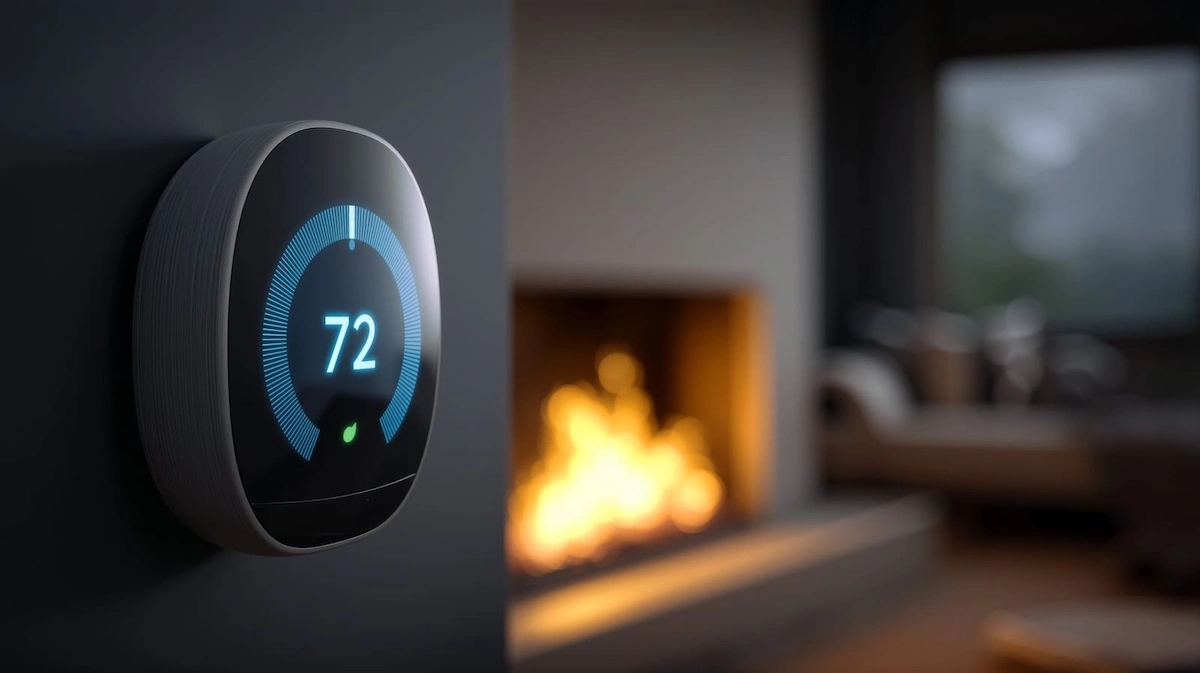
The Google Nest Learning Thermostat (4th Gen) is the best smart thermostat for most homes.
It builds your schedule automatically, works with every major voice platform, and requires no C-wire in most installations.
If built-in air quality monitoring or broader ecosystem support is a priority, the Ecobee Smart Thermostat Premium is the stronger pick.
Quick Picks: Top 5 Smart Thermostats
- Google Nest Learning Thermostat (4th Gen): best overall; self-learning schedule, no C-wire needed in most homes, Matter-certified for long-term compatibility
- Ecobee Smart Thermostat Premium: best for smart home ecosystems; built-in air quality monitoring, works with Alexa, Google, HomeKit, and SmartThings simultaneously
- Honeywell Home X8S: best for large homes; up to 20 room sensors on a 900MHz link, Matter-certified, built-in radar occupancy and air quality sensing
- Sensi Touch 2 Smart Thermostat: best no-subscription pick; every feature works free, ultra-thin profile, installs in under 15 minutes
- Amazon Smart Thermostat: best budget option; Alexa-first, most affordable entry into smart comfort, EPA-verified energy savings
Key Takeaways
- ENERGY STAR certified smart thermostats save an average of $50 or more per year, with some manufacturers reporting up to 31% savings on annual heating and cooling bills
- Heat pump owners must verify O/B wire support before buying: standard temperature setbacks reduce heat pump efficiency in heating mode, per the US Department of Energy
- Ecobee locks geofencing, eco+ smart savings, and smoke detection behind a paid subscription; Sensi Touch 2 includes all features free
- The Nest 4th Gen, Ecobee Premium, and Honeywell Home X8S are Matter-certified (the X8S under CSA certificate CSA25541MAT46227-24), the interoperability standard that prevents smart home lock-in as the ecosystem matures
Not sure how Matter compares to Zigbee or Z-Wave? Our Zigbee vs Z-Wave vs Matter guide explains which protocol fits which type of home.
Picking the best smart thermostat for your home means more than downloading a slick app.
It means choosing a device that works with your heating system, integrates cleanly with your smart home setup, and delivers real energy savings without hiding core features behind a paywall.
We researched over 30 models and narrowed the list to the 5 that actually deliver.
What Makes a Smart Thermostat Worth the Upgrade
A smart thermostat earns its place when it does three things well: it adapts to your schedule so you stop heating empty rooms, it connects reliably to your other devices, and it does not lock core features behind a monthly subscription.
Before you pick one, work through this short checklist.
C-Wire and Power
Most smart thermostats need a continuous 24V power source from a C-wire (common wire) on your HVAC system.
Nest 4th Gen works without one in the vast majority of homes.
Ecobee includes a Power Extender Kit in the box.
The Honeywell Home X8S, Sensi Touch 2, and Amazon Smart Thermostat require a C-wire but do not bundle an adapter.
Check your existing thermostat wiring before ordering anything.
System Compatibility
Most smart thermostats support 24V forced-air systems: gas, electric, oil, and heat pump.
Electric baseboard heating (120-240V) is not compatible with any thermostat in this roundup.
If you have a heat pump, verify that your chosen thermostat supports O/B wire control and includes a dedicated heat pump mode.
Standard setback schedules reduce heat pump efficiency in heating mode.
Ecosystem and Future-Proofing
If your home runs on Alexa, Google Home, or Apple HomeKit, choose a thermostat that speaks the same language.
Nest 4th Gen, Ecobee Premium, and Honeywell Home X8S are all Matter-certified, which means they work across every major platform and will stay compatible as smart home standards evolve.
If you are building out a broader setup, see our roundup of the best smart home hub options for 2025.
Subscription Costs
Some features you expect to come standard actually require a paid plan.
Ecobee locks geofencing, eco+ smart savings, and smoke detection behind its Smart Security subscription.
Sensi Touch 2 offers every feature free. Clarify the subscription situation for any model before you buy.
The 5 Best Smart Thermostats for 2026
After reviewing 30+ models across multiple HVAC system types and smart home setups, these five deliver the best combination of features, compatibility, and long-term reliability.
According to Wikipedia’s overview of smart thermostats, the three core mechanisms that separate a smart thermostat from a basic programmable model are occupancy sensing, remote access, and automated scheduling.
All five picks below deliver on all three.
| Product | Best For | Key Spec | Ecosystem | Subscription Required |
|---|---|---|---|---|
| Google Nest Learning Thermostat (4th Gen) | Best Overall | AI learning schedule, no C-wire needed in most homes | Alexa, Google, Siri, HomeKit, Matter | None |
| Ecobee Smart Thermostat Premium | Smart Home Ecosystems | Built-in air quality monitor, radar occupancy sensing | Alexa, Google, HomeKit, SmartThings | Optional (advanced features) |
| Honeywell Home X8S | Large Homes | Up to 20 room sensors, 900MHz, 200 ft sensor range | Alexa, Google, Apple Home, Matter | None |
| Sensi Touch 2 Smart Thermostat | No-Subscription Value | All features free, ultra-thin profile | Alexa, Google, SmartThings | None |
| Amazon Smart Thermostat | Budget Pick | Alexa Hunches learning, ENERGY STAR certified | Alexa only | None |
Google Nest Learning Thermostat 4th Gen: Best Overall
Sale

Google Nest Learning Thermostat 4th Gen
- Nest’s smartest, most advanced thermostat yet, the Google Nest Learning Thermostat (4th gen) is a…
- Improved compatibility: It works with most 24V systems, including gas, electric, oil, forced air, heat…
- Easy control in the Google Home app: Adjust on your phone from anywhere[1] or by using your voice with…
Google’s flagship smart thermostat with an AI learning schedule, a 60% larger display than the prior generation, and native support for every major smart home platform, including Matter.
Why we picked it:
- Builds your heating and cooling schedule automatically within one week by observing your adjustments, with no manual programming required
- Matter-certified: fully compatible with Alexa, Google Assistant, Siri, and Apple HomeKit on a single device
- Works without a C-wire in the vast majority of home installations
Real-world scenario:
You set the temperature twice on Monday morning and once on Tuesday evening.
By Friday, the Nest has built a routine that mirrors your actual week.
You stop thinking about it entirely.
The Google Nest Learning Thermostat (4th Gen) is the best smart thermostat for most homes: it builds your schedule automatically within the first week and requires no C-wire in most installations.
Pros:
- Zero manual programming after initial setup
- Premium stainless steel and sapphire glass construction
- Natural Heating and Cooling mode factors in outdoor temperature and sunlight
- ENERGY STAR certified
- Most installs complete in 20 to 35 minutes
Cons:
- Requires the Google Home app (the legacy Nest app is no longer supported)
- A small percentage of 3rd Gen upgraders report power detection issues without a C-wire
- Available in three colors only: Obsidian, Silver, and Gold
Best for:
Busy households in any smart home ecosystem who want a thermostat that manages itself.
Ecobee Smart Thermostat Premium: Best for Smart Home Ecosystems

Ecobee Smart Thermostat Premium
- Save up to 26% on your energy bills: ENERGY STAR certified. Automatically adjusts your temperature based…
- Manage hot or cold spots in your home: The included SmartSensor ($50 dollar value) detects which rooms…
- See and talk to visitors from your thermostat: Stream a live view of your front door and use two-way talk…
Ecobee’s flagship thermostat with built-in radar occupancy sensing, an integrated air quality monitor, and the widest ecosystem compatibility of any thermostat in this comparison.
Why we picked it:
- Integrated sensor tracks VOC and CO2 levels without requiring a separate air quality device
- SmartSensors use a 915MHz radio frequency for reliable range across large and multi-floor homes
- Works simultaneously with Alexa, Google Assistant, Apple HomeKit, and Samsung SmartThings
Real-world scenario:
One room in your home runs perpetually warmer than the rest.
You place a SmartSensor on the wall.
The thermostat starts factoring that room’s temperature into its decisions.
The hot spot disappears without any zone control setup or contractor visit.
If your household also struggles with allergy season, the Ecobee’s air quality data pairs naturally with a strong air purifier for allergy relief.
If you also want automated lighting or security triggers beyond climate control, our guide to the best smart home motion sensors covers dedicated options that pair with the same ecosystem.
The Ecobee Smart Thermostat Premium combines a built-in air quality monitor that tracks VOC and CO2 with the broadest platform support in this roundup, including Samsung SmartThings.
Pros:
- Widest smart home ecosystem support of any thermostat in this roundup
- Built-in Alexa speaker for voice control without a separate Echo device
- 4-inch full-color touchscreen with dual-band Wi-Fi (2.4GHz and 5GHz)
- 3-year warranty
- ENERGY STAR certified
Cons:
- Geofencing, eco+ smart savings, and smoke alarm detection require a paid Smart Security subscription
- C-wire required (a Power Extender Kit is included in the box)
- Some users report SmartSensor batteries draining faster than the stated 3-to-5-year rating
Best for:
Homeowners with large homes and multi-room comfort challenges.
Also strong for households that want integrated air quality data alongside temperature control.
Honeywell Home X8S: Best for Large Homes
Sale

Honeywell Home X8S
- “Doorbell Camera View & Intercom: See and speak to visitors at your door directly from the thermostat…
- Customizable Display: A sleek 5” display delivers enhanced visibility with the option to choose the…
- “Precision Comfort & Air Quality: Comfort is more than just the perfect temperature, maintain optimal…
$245.27

Check Today’s Price on Amazon
Resideo’s newest Honeywell Home flagship, announced in December 2025, pairs a 5-inch touchscreen with room sensors on a dedicated 900MHz wireless link, radar occupancy sensing, and Matter certification. It takes over this slot from the Honeywell Home T9, which is no longer sold on Amazon USA.
Why we picked it:
- Supports up to 20 room sensors per thermostat, with a rated range of 200 feet on a 900MHz link that passes through walls and floors better than 2.4GHz radios, according to the X8S user manual (manufacturer claim)
- Two averaging modes: “Selected Rooms” averages the sensors you choose, and “Active Rooms” averages only the rooms where a sensor detects motion, per the manual’s FAQ
- Matter-certified (Matter 1.4 over Wi-Fi, CSA certificate dated July 2025), and Resideo lists Alexa, Google Assistant, and Apple Home support (manufacturer claim)
Real-world scenario:
Your two-story home runs 5 degrees warmer upstairs than on the main floor. You put a room sensor in the upstairs bedroom and one in the living room, then switch to “Active Rooms.” The thermostat now steers by the rooms you are actually in, so the family room stays comfortable during the day and the bedrooms take over at night.
The X8S box includes only one room sensor, so a large multi-floor home needs extra sensors to get the room-by-room control this pick is chosen for.
Pros:
- Up to 20 room sensors, each reading temperature, humidity, and motion (manufacturer claim)
- Built-in radar occupancy sensing plus a VOC and estimated CO2 air quality sensor (per the X8S specifications)
- Heat pump ready: up to 3 heat and 2 cool stages with auxiliary and emergency heat (per the X8S compatibility guide)
- ENERGY STAR certified, with a measured static temperature accuracy of 0.63°F on its ENERGY STAR listing
- Newer T9 room sensors can pair with it, which helps if you are upgrading from a T9
Cons:
- C-wire required, and the C-wire adapter is sold separately
- Early verified-purchase reviews often flag Wi-Fi drops and sync problems in the First Alert app
- 2-year limited warranty, shorter than Ecobee’s 3 years
- Uses Resideo’s First Alert app, not the Honeywell Home app T9 owners know
Best for:
Homeowners with larger, multi-floor homes who want room-by-room temperature control and Matter compatibility from one thermostat.
Sensi Touch 2 Smart Thermostat: Best No-Subscription Pick
Sale

Sensi Touch 2 Smart Thermostat
- WORKS WITH ROOM SENSORS: Compatible with Sensi Room Sensors to balance temperatures throughout your home…
- PRIVACY PROTECTION: Sensi won’t sell your personal information to third parties
- SAVE ABOUT 23% ON HVAC ENERGY: The ENERGY STAR-certified Sensi Touch 2 smart thermostat can help you save…
$165.99
Check Today’s Price on Amazon
A full-featured smart thermostat from Emerson (Copeland) with a 4.3-inch touchscreen, geofencing, support for up to 15 room sensors, and a subscription-free feature set that no other thermostat in this roundup matches.
Why we picked it:
- Every feature, including geofencing, flexible scheduling, usage history, and room sensor support, is free with no plan required
- App-guided installation routinely completed in under 15 minutes
- Ultra-thin profile (approximately 0.75 inches deep) with a clean beveled edge
Real-world scenario:
You want smart control without recurring costs.
Sensi’s geofencing adjusts the temperature when you leave and when you return.
No subscription prompt, no trial period, no card on file.
The Sensi Touch 2 is the only thermostat in this comparison where every feature, including geofencing and room sensors, is completely free with no subscription required.
Pros:
- No subscription required for any advertised feature
- Supports Alexa, Google Assistant, and Samsung SmartThings
- ENERGY STAR certified
- Filter reminders and energy usage history included free
Cons:
- No Apple HomeKit support
- C-wire adapter not included in the box (sold separately)
- No wall plate included to cover paint marks from the previous thermostat
Best for:
Budget-conscious households and anyone prioritizing full smart thermostat functionality without recurring costs.
A strong pick for renters who need a straightforward, reversible install.
Amazon Smart Thermostat: Best Budget Option

Amazon Smart Thermostat
- An Alexa thermostat – Amazon Smart Thermostat is an easy way to switch from a traditional thermostats for…
- Create comfort zones throughout your home by connecting to select Alexa devices to automatically adjust…
- Save money and energy – After purchase, Amazon will send you an email with details about home thermostat…
Amazon’s entry-level smart thermostat powered by Alexa, with ENERGY STAR certification, EPA-verified energy savings, and the lowest cost of entry among the best smart thermostats.
Why we picked it:
- Highest energy savings per dollar invested of any option in this roundup
- “Thermostat Hunches”: Alexa observes patterns and adjusts temperature automatically after an initial learning period
- App-guided setup designed to complete in under 30 minutes
Real-world scenario:
Your home already runs on Echo devices.
You want a smarter thermostat without overspending.
The Amazon thermostat joins your existing Alexa routines immediately and starts learning your patterns within the first week.
If you are new to setting up Alexa-connected devices, our guide on how to set up a smart home with Alexa walks through the full process.
Pros:
- ENERGY STAR certified
- Hands-off Alexa intelligence after initial learning period
- Straightforward app-guided installation
Cons:
- Alexa-only: no Google Home, Apple HomeKit, or SmartThings support
- C-wire required, and no adapter is included in the box
- Room sensors are not supported
- No physical keypad lockout
Best for:
Alexa-first households looking for the most affordable path into smart thermostat comfort.
Which Features Require a Subscription and Which Are Free
Subscription tiers vary significantly across smart thermostat brands, and this is one of the most under-examined factors at purchase time.
The table below shows exactly what you get for free versus what costs extra.
| Feature | Nest 4th Gen | Ecobee Premium | Honeywell Home X8S | Sensi Touch 2 | Amazon Smart |
|---|---|---|---|---|---|
| Remote app control | Free | Free | Free | Free | Free |
| Scheduling | Free | Free | Free | Free | Free |
| Geofencing | Free | Paid | Free | Free | N/A |
| Energy usage history | Free | Free | Free | Free | Free |
| Room sensor support | Free | Free | Free | Free | Not available |
| Eco+ smart savings | N/A | Paid | N/A | N/A | N/A |
| Smoke alarm detection | N/A | Paid | N/A | N/A | N/A |
Resideo’s X8S documentation describes geofencing (“Auto Away”) and room sensors without mentioning any paid plan.
If you plan to use Ecobee and expect geofencing to work out of the box, you will hit a paywall in the first week of setup.
The Smart Security subscription unlocks geofencing, eco+ smart savings, smoke alarm detection, and door and window open alerts.
If avoiding ongoing costs is a priority, Sensi Touch 2 is the only option in this roundup where every advertised feature is genuinely free.

Common Mistakes When Buying a Smart Thermostat
If you have a heat pump, use a thermostat that explicitly supports O/B wire control: the US Department of Energy warns that standard temperature setbacks reduce heat pump efficiency in heating mode.
- Skipping the C-wire check before ordering:
Many homes do not have a C-wire routed to the thermostat location.
Not every thermostat handles this gracefully.
Check your existing wiring before buying.
If no C-wire is present, Nest 4th Gen is the safest pick in this roundup. - Choosing based on ecosystem fit alone:
Your smart thermostat also needs to match your HVAC system type.
A thermostat that integrates beautifully with Apple HomeKit but lacks proper heat pump support will cause efficiency problems that no app update can fix. - Missing the subscription fine print:
Ecobee’s geofencing and eco+ features require a paid plan.
If avoiding ongoing costs is a factor, Sensi Touch 2 delivers the same functional scope for free. - Using standard setback schedules on a heat pump:
Gas and electric systems benefit from aggressive temperature setbacks.
Heat pumps do not.
Setbacks in heating mode force the auxiliary electric strip heater to compensate, consuming more energy than a steady temperature would.
Verify heat pump optimization mode before committing to any thermostat. - Prioritizing app design over sensor quality:
Every thermostat in this roundup has a competent app.
The real differentiator is sensor range, system compatibility, and how reliably the device functions when your Wi-Fi drops.
What Happens If You Choose Wrong
- If you buy without checking your C-wire situation: you will likely need to order a separate adapter or schedule a professional visit before your new smart thermostat powers on at all
- If you choose an Alexa-only thermostat and later expand into Google or HomeKit devices: you will have no way to bridge those ecosystems without replacing the thermostat entirely
- If you have a heat pump and install a thermostat without proper O/B wire handling: your system will run harder in heating mode, pushing energy costs in the wrong direction
- If you buy Ecobee expecting all features to work without a subscription: you will find geofencing and eco+ locked behind a paywall in the first week of setup
How We Research
We analyzed technical specifications across 30+ smart thermostat models, cross-referenced HVAC compatibility documentation, and reviewed verified purchase feedback from real users.
Our recommendations reflect installation reliability, long-term consistency, and real-world value, not just spec sheet comparisons.
We do not accept manufacturer samples or affiliate arrangements for product inclusion.
For our full method and scoring rubric, see our review methodology.
Update history:
October 7, 2026: Replaced the Honeywell Home T9 with the Honeywell Home X8S as our pick for large homes.
Choose Your Best Smart Thermostat in 60 Seconds
- If your home has no C-wire: buy the Google Nest Learning Thermostat 4th Gen
- If you have a large home with uneven room temperatures: buy the Honeywell Home X8S
- If you want built-in air quality monitoring: buy the Ecobee Smart Thermostat Premium
- If you want every feature free with no subscription: buy the Sensi Touch 2 Smart Thermostat
- If your home runs on Alexa and budget is the priority: buy the Amazon Smart Thermostat
- If you have a heat pump: buy the Nest 4th Gen or Ecobee Premium, and verify O/B wire support for your specific HVAC model before finalizing
Who This Is For and Who Should Skip It
This is for you if:
- You are tired of paying to heat or cool an empty home
- You want remote temperature control from your phone or voice assistant
- You are building or expanding a smart home ecosystem and need a thermostat that fits
- You have consistent daily routines and want a device that adapts to them automatically
- You want energy savings backed by ENERGY STAR certification data, not just manufacturer promises
This is NOT for you if:
- You have electric baseboard heating (120-240V): all 5 thermostats in this roundup are incompatible with these systems
- You rent and cannot modify thermostat wiring: confirm with your landlord before ordering anything
- You want zero installation involvement: smart thermostats require basic wiring work that most DIYers complete in 30 minutes or less, but it is still wiring work
Also rounding out our smart home coverage: if you are also shopping for doorbell cameras, check our guide to video doorbells without a subscription.
Frequently Asked Questions
Do I need a C-wire to install a smart thermostat?
Most smart thermostats need a continuous 24V power source from a C-wire (common wire) in your HVAC wiring.
The Google Nest Learning Thermostat (4th Gen) is the exception: it works without a C-wire in the large majority of homes by drawing small amounts of power from the other wires during idle cycles.
Ecobee includes a Power Extender Kit in the box that adapts homes without a C-wire. The Honeywell Home X8S, Sensi Touch 2, and Amazon Smart Thermostat require a C-wire and do not include an adapter (Honeywell sells its C-wire adapter separately).
To check whether you have a C-wire, remove your current thermostat faceplate and look for a wire connected to the “C” terminal.
If you see one, you are set.
If you only have two wires (R and W), you are likely running a millivolt system and will need a professional assessment.
For most homes built after 1990, a C-wire is present but may not be connected to the thermostat itself.
An HVAC technician can activate it in under an hour for a modest service call.
Will a smart thermostat work with my heat pump?
Most smart thermostats support heat pumps, but not all of them do it correctly.
The US Department of Energy explicitly warns that standard temperature setbacks reduce heat pump efficiency in heating mode.
Heat pumps work best running continuously at moderate output.
Aggressive setbacks force the auxiliary electric strip heater to compensate, consuming more energy than a steady temperature would.
Look for thermostats with a dedicated heat pump mode or “smart recovery” feature.
Google Nest 4th Gen and Ecobee Smart Thermostat Premium handle this correctly.
The Honeywell Home X8S (up to 3 heat and 2 cool stages on a heat pump, with auxiliary and emergency heat) and the Sensi Touch 2 also support heat pump systems.
Verify that your specific HVAC model uses an O/B terminal (the reversing valve wire) and that your chosen thermostat supports it.
If your heat pump has auxiliary electric backup heat (common in cold climates), make sure the thermostat can manage the aux heat lockout threshold to prevent inefficient cycling.
Which smart thermostat works best with Apple HomeKit?
If HomeKit is non-negotiable, your best options are the Google Nest Learning Thermostat (4th Gen) and the Ecobee Smart Thermostat Premium, both of which are fully HomeKit compatible and Matter-certified.
The Honeywell Home X8S is also Matter-certified and works with Apple Home.
The Sensi Touch 2 does not support HomeKit at all, which is its most significant limitation for Apple-first homes.
The Amazon Smart Thermostat is Alexa-only with no HomeKit support.
For an Apple-heavy household, Ecobee Premium is the strongest overall pick: it supports HomeKit, Siri, and Alexa simultaneously, and its Matter certification means future Apple platform updates will not break compatibility.
HomeKit integration also works with Siri shortcuts and automations in the Apple Home app.
How much money can a smart thermostat actually save?
According to the ENERGY STAR program, certified smart thermostats save an average of about $50 per year on heating and cooling costs.
Google claims up to 31% savings for Nest users based on independent studies.
Ecobee cites up to 26% per year.
The actual savings you see depend on your local utility rates, your home’s insulation quality, how large your home is, and how consistent your current routine is.
If you already maintain a tight manual schedule and adjust your thermostat every day, the gains will be smaller.
If you regularly forget to turn the heat down when you leave, the savings can be significant.
According to the Department of Energy, turning your thermostat back 7 to 10 degrees for 8 hours per day can save up to 10% per year on heating and cooling.
A smart thermostat automates this habit reliably, every single day, without any effort on your part.
Can a smart thermostat work if I rent my apartment?
Yes, with a few important caveats.
Most smart thermostat installs require basic wiring changes that a competent DIYer can complete in 30 minutes, but in a rental you need your landlord’s permission before touching any HVAC wiring or replacing a thermostat.
The installation is reversible: you keep the original thermostat and reinstall it when you move out.
Many landlords will agree, especially for a reversible upgrade.
The more important question is whether your rental’s wiring is compatible.
Many apartment buildings use millivolt systems or proprietary wiring that is not compatible with standard smart thermostats.
Check what type of system your building uses before purchasing.
If your rental has a standard 24V system and a C-wire, Nest 4th Gen is the most renter-friendly option in this roundup since it is the least likely to require additional wiring work.
If C-wire is absent, Nest 4th Gen still works in most cases.
If your lease rules out wiring changes altogether, smart bulbs are the easiest way to get real smart home functionality without touching a single wire.
See our picks for the best smart bulbs for renter-friendly options that need no hub and no landlord approval.
What is the difference between a learning thermostat and a programmable smart thermostat?
A programmable smart thermostat follows a schedule you configure manually in the app: you set 70 degrees on weekdays from 7am to 9pm, and it holds that schedule exactly.
A learning thermostat, like the Nest 4th Gen or the Amazon Smart Thermostat with Alexa Hunches, observes how you actually use your HVAC and builds a schedule automatically from your behavior.
You never program anything.
Learning thermostats are better for households with inconsistent schedules or anyone who has never gotten around to programming a thermostat properly.
Programmable smart thermostats give you more explicit, auditable control.
Ecobee uses a hybrid model: manual scheduling combined with geofencing-based occupancy detection (subscription required) and built-in radar sensing for real-time occupancy awareness.
For most households, a learning thermostat is the simpler choice.
For households where schedules are complex or frequently changing, programmable control with geofencing is more reliable than pure learning algorithms.
Which smart thermostats work without a subscription?
Four out of five thermostats in this roundup offer full core functionality without a paid subscription: Google Nest Learning Thermostat (4th Gen), Honeywell Home X8S, Sensi Touch 2, and Amazon Smart Thermostat.
Scheduling, remote app access, and energy usage reporting are free on all four.
Geofencing is also free on the Nest 4th Gen, Honeywell X8S, and Sensi Touch 2; the Amazon Smart Thermostat does not support geofencing at all.
Ecobee is the outlier.
The Ecobee Smart Thermostat Premium requires a paid Smart Security subscription to unlock geofencing, eco+ smart savings, smoke alarm detection via SmartSensor audio, and door and window open alerts.
Without the subscription, Ecobee still functions as a capable smart thermostat with manual scheduling and remote access.
But the features that justify its premium positioning are gated.
If subscription-free operation is the priority, Sensi Touch 2 is the only thermostat in this comparison where every advertised feature, including geofencing and room sensor support for up to 15 sensors, is completely free from day one.
Is my thermostat data private?
Smart thermostats collect occupancy data, temperature preferences, and usage patterns that are transmitted to cloud servers for processing.
The extent of data collection and retention varies significantly between manufacturers.
Google Nest syncs data with your Google account and is subject to Google’s broader privacy policy, which permits using aggregated data for product improvement.
Ecobee publishes a detailed privacy policy covering what it collects and with whom it shares data.
Amazon Smart Thermostat connects to the Alexa ecosystem, meaning activity data is processed through Amazon’s cloud infrastructure.
If household privacy is a priority, review each manufacturer’s published privacy policy before purchasing.
For a broader overview of how smart home devices handle encryption and data security, see our guide to end-to-end encryption in smart home devices.
All five thermostats in this roundup transmit data over encrypted connections, but the scope of what is collected and how long it is retained varies by brand and requires independent review.
The Right Smart Thermostat Makes Your Home Work for You
The best smart thermostat for most homes is the Google Nest Learning Thermostat (4th Gen): it requires no manual programming, works with every major smart home platform, and installs without a C-wire in most cases.
For large homes with persistent multi-room temperature gaps, the Honeywell Home X8S supports up to 20 room sensors on a 900MHz link and can steer by whichever rooms are occupied.
For the most complete smart home ecosystem support and built-in air quality monitoring, the Ecobee Smart Thermostat Premium is the right call, but factor in the subscription cost before deciding.
If you want full functionality with zero recurring cost, Sensi Touch 2 is the one to buy.
ENERGY STAR certified smart thermostats save an average of $50 or more per year on energy costs, with some manufacturers reporting up to 31% savings on annual heating and cooling bills.
Still unsure?
Start with the Nest Learning Thermostat: it covers 80% of use cases and requires less setup than any other option in this roundup.
Browse our full smart device reviews library for more guides like this one, or head back to EverydayHomeComfort to explore by category.