Ad. When you purchase through links we provide, we may receive an affiliate commission. Here's how it works.
Best Robot Vacuum for Carpet in 2026: 5 Top Picks
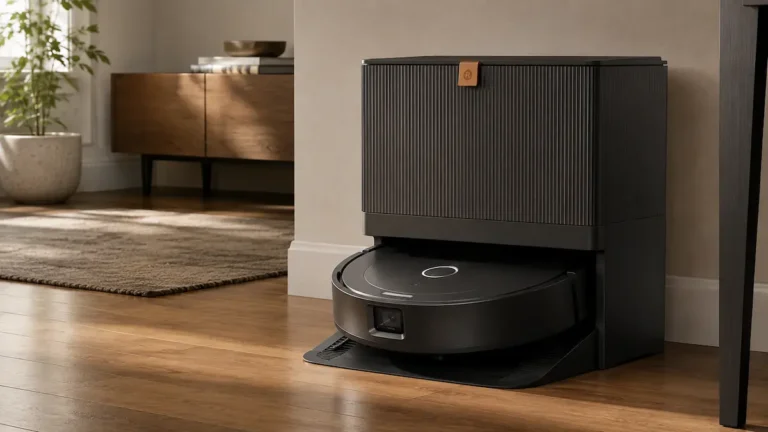
TL;DR: The Roborock Saros 20 is the best robot vacuum for carpet overall.
Its chassis adjusts height for pile up to 1.18 inches and its dual anti-tangle brush handles hair up to 15.75 inches long, so it holds suction contact from thin apartment carpet to plush wall-to-wall pile.
If you want strong carpet performance without the flagship price tier, the budget-friendly Roborock Q10 S5+ tied for the highest carpet deep-clean score ever recorded across more than 150 tested robot vacuums.
Quick Picks: Top Recommendations
- Roborock Saros 20: best overall for carpet, thanks to a chassis that adjusts to pile height and a brush that resists tangling regardless of hair length.
- Dreame X50 Ultra: best for homes that mix carpet and hardwood, since it detaches its mop pads automatically before crossing onto carpet.
- Roborock Qrevo CurvX: best for busy professionals and parents who want weeks of hands-off cleaning between chores.
- Eufy E25 Omni: best value self-empty station for pet owners who want corner-to-corner coverage.
- Roborock Q10 S5+: best budget-friendly pick for carpet, with flagship-level LiDAR mapping and a dual anti-tangle brush system tested at 0% hair wrap.

Key Takeaways
- Carpet pile above roughly 0.75 inches can stall a robot vacuum that can’t adjust its own chassis height.
- Pa suction ratings measure airflow resistance in a sealed tube, not how much dirt a brush actually lifts out of carpet fibers.
- Self-emptying bins fill roughly twice as fast in carpet-heavy homes, so a “60-day hands-off” claim often becomes 30 to 40 days in practice.
- Mop pads left down on carpet can trap moisture long enough to encourage mold, which is why every pick below lifts or detaches its pads first.
- Carpet traps more dust mite allergens than hard flooring, per the American Lung Association, so cleaning frequency matters as much as the machine you buy.
The best robot vacuum for carpet does more than drive over your rug until it beeps “done.”
It adjusts to your carpet’s pile height, resists hair tangles, and still has suction left after crossing from hardwood onto carpet mid-route.
If your current robot vacuum leaves visible dust sitting in the fibers, you’re probably using the wrong match for your carpet type, not a broken machine.
Below, we break down what actually matters for carpet performance and match five vetted picks to the household situations they fit best.
Does Suction Power (Pa) Really Matter on Carpet?
Pa (pascal) is a unit of pressure, and manufacturers use it to advertise how much airflow resistance a vacuum’s motor can overcome.
It’s a useful spec for comparing motors, but it’s measured in a sealed test tube, not against a real carpet fiber.
Pa suction ratings only measure airflow resistance in a lab tube, not how much embedded dirt a brush roll actually lifts out of carpet fibers, so a higher Pa number does not guarantee better real-world carpet cleaning.
Brush roll design, bristle stiffness, and how well the brush maintains contact with the carpet surface do more of the actual work than the number on the box.
Why this matters: a robot vacuum with a modest Pa rating but a well-designed dual brush can outperform a higher-Pa competitor with a single brush that loses contact on uneven pile.
When you’re comparing specs for the best robot vacuum for carpet, treat Pa as a tiebreaker, not the deciding factor.
Low-Pile, Medium-Pile, and High-Pile: Does Carpet Type Change the Answer?
Most buying guides treat “carpet” as a single category, but low-pile apartment carpet, medium-pile wall-to-wall, and high-pile or shag rugs each demand different chassis clearance and brush pressure.
A robot vacuum that glides over thin carpet tiles can bog down or lose suction contact the moment the pile gets thick enough to swallow its wheels.
- Low-pile (under 0.25 in): nearly any robot vacuum handles this without adjustment.
- Medium-pile (0.25 to 0.75 in): chassis clearance starts to matter; look for models with carpet-boost suction modes.
- High-pile or shag (over 0.75 in): only models built with adjustable chassis height reliably maintain suction contact.
Why this matters: if your home is mostly deep-pile or shag carpet, the mobility trade-offs are different enough that we cover them separately in our guide to the best robot vacuum for thick carpet.
This article focuses on the broader mix of pile heights most households actually have.
Self-Emptying Bins Fill Faster in Carpet-Heavy Homes (Here’s Why)
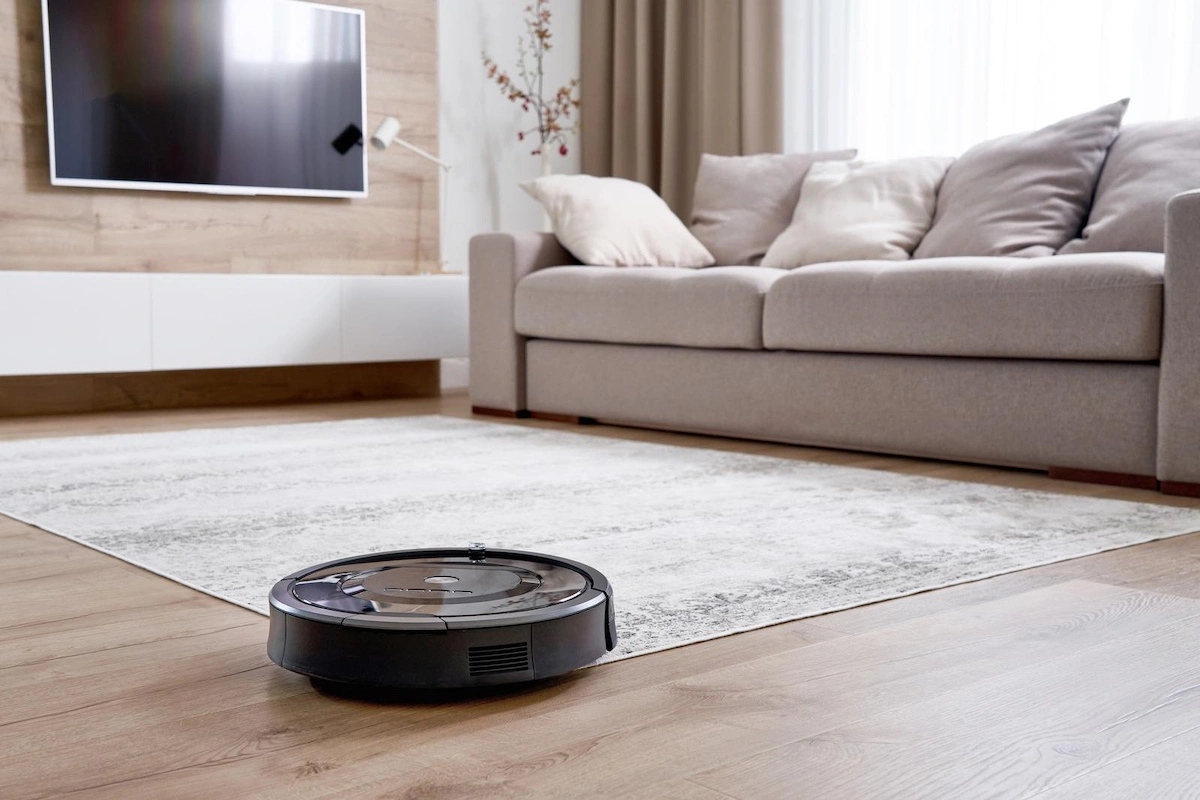
Carpet fibers hold more embedded dust and debris than hard flooring, and a robot vacuum pulls more of it out per square foot when it’s working correctly.
That means the onboard bin, and the self-empty station’s larger bag, both fill faster than the marketing claim on the box assumes.
A robot vacuum’s dust bin fills roughly twice as fast in a carpet-heavy home as it does on hardwood, so a 60-day hands-off claim on the box usually turns into 30 to 40 days once your carpets are in the mix.
None of the picks below are dishonest about this, but it’s worth planning around rather than being surprised by it.
Why this matters: if hands-off maintenance is your top priority, check our roundup of the best self-emptying robot vacuum models for interval comparisons across carpet-heavy and hard-floor homes.
Can a Robot Vacuum’s Mop Function Damage Your Carpet?
Combination vacuum-mop robots are common now, and most owners assume the mop pad simply lifts or detaches on its own when it senses carpet.
That’s not universally true.
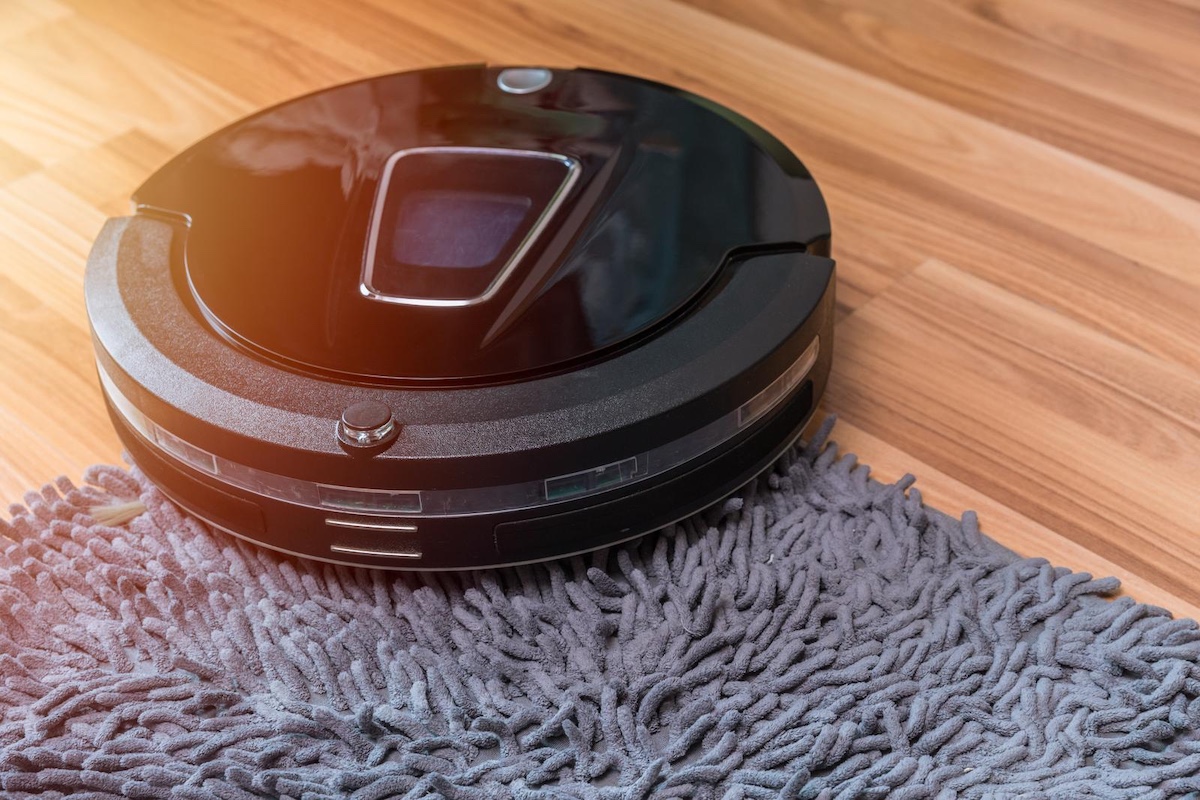
Running a mop attachment over carpet without lifting or detaching it first can leave fibers damp long enough to encourage mold and mildew growth, which is why every pick on this list handles this automatically before crossing onto carpet.
Cheaper combo units sometimes skip this feature entirely, dragging a damp pad across your rug.
Why this matters: if you’re shopping for a combo unit, confirm the auto-lift or auto-detach feature specifically, don’t assume it’s included just because the product is marketed as a “vacuum and mop.”
Why Carpet Cleaning Matters for Allergies and Indoor Air Quality
Carpet does more than cushion your floors. It also traps dust, pet dander, and dust mite allergens deep in its fibers, where they stay put until something agitates and removes them.
According to the American Lung Association, dust mites concentrate in carpet, upholstery, and bedding, and their waste particles are a common trigger for asthma and allergic reactions.
If pet hair and dust mites are a daily reality in your home, the American Lung Association notes that carpet traps allergens that regular vacuuming helps remove, making cleaning frequency as important as which robot vacuum you buy.
The U.S. Environmental Protection Agency also recommends regular vacuuming as part of a broader indoor air quality routine, alongside humidity control.
If allergens are a real concern in your household, pairing consistent carpet vacuuming with filtration in the room helps more than either alone; our guide to the best air purifier for pet owners covers the filtration side of that combination.
If you’d rather cover both halves of that EPA recommendation with one device, our air purifier and humidifier combo guide rounds up 2-in-1 units that add moisture control alongside filtration.
Our Picks: The Best Robot Vacuum for Carpet in 2026
We matched five vetted robot vacuums to the carpet situations and household priorities most readers actually have, from flagship pile-adaptive performance to budget-friendly picks that still hold their own on carpet.
Here’s how they compare before we go deep on each one.
| Product | Best For | Key Spec | Est. Annual Maintenance |
|---|---|---|---|
| Roborock Saros 20 | Best overall for carpet | 36,000 Pa suction; chassis adjusts for pile up to 1.18 in | Low: occasional mop pad and filter swaps, self-empty bags refilled a few times a year |
| Dreame X50 Ultra | Best for mixed carpet and hardwood | 20,000 Pa suction; auto-detaches mop pads before carpet | Low to moderate: filter and mop pad replacement, standard auto-empty bags |
| Roborock Qrevo CurvX | Best for busy professionals and parents | 22,000 Pa suction; up to 7 weeks between manual bin empties | Low: infrequent bag changes, periodic brush cleaning |
| Eufy E25 Omni | Best value self-empty for pet owners | 20,000 Pa turbo suction; self-wash and self-refill station | Moderate: station uses cleaning solution and water refills in addition to filters |
| Roborock Q10 S5+ | Best budget-friendly pick for carpet | 10,000 Pa suction; 96% carpet deep-clean score, tied for highest ever recorded | Low to moderate: dust bag replaced roughly every 7 weeks, plus mop pad and filter upkeep |
Roborock Saros 20: Best Overall for Carpet Cleaning

Roborock Saros 20
- 𝗜𝗻𝗱𝘂𝘀𝘁𝗿𝘆-𝗟𝗲𝗮𝗱𝗶𝗻𝗴 𝗢𝗯𝘀𝘁𝗮𝗰𝗹𝗲-𝗖𝗿𝗼𝘀𝘀𝗶𝗻𝗴 𝗣𝗼𝘄𝗲𝗿: AdaptiLift Chassis 3.0 dynamically raises the body to glide over…
- 𝗨𝗹𝘁𝗿𝗮-𝗣𝗿𝗲𝗰𝗶𝘀𝗲 𝗡𝗮𝘃𝗶𝗴𝗮𝘁𝗶𝗼𝗻 𝘄𝗶𝘁𝗵 𝗙𝗲𝘄𝗲𝗿 𝗠𝗶𝘀𝘀𝗲𝗱 𝗦𝗽𝗼𝘁𝘀: Powered by StarSight Autonomous System…
- 𝗖𝗹𝗲𝗮𝗻𝘀 𝗨𝗻𝗱𝗲𝗿 𝟯.𝟭𝟯 𝗶𝗻 𝗙𝘂𝗿𝗻𝗶𝘁𝘂𝗿𝗲 𝘄𝗶𝘁𝗵 𝗘𝗮𝘀𝗲: With its ultra-slim design, Saros 20 glides under sofas and beds as low as…
Roborock’s current flagship robot vacuum, built around a chassis that physically adjusts to the carpet underneath it.
Why we picked it:
- The Roborock Saros 20 adjusts its chassis height for carpet pile up to 1.18 inches, which is the main reason it handles low-pile rugs and medium-pile wall-to-wall carpet without losing suction contact.
- Its DuoDivide dual rubber brush is rated for a 0% tangle rate on hair up to 15.75 inches long, covering both pet hair and long human hair.
- StarSight 3D navigation recognizes over 300 obstacle types, reducing the odds it gets stuck mid-route on carpet.
Real-world scenario:
You’ve got a golden retriever, hardwood in the living room, medium-pile carpet in the bedrooms, and toys that migrate onto the rug daily.
The Saros 20 adjusts itself at the threshold and keeps working instead of stalling at the transition.
Pros:
- Adaptive chassis height handles a wide range of carpet types in one machine
- Near-elimination of brush tangling regardless of hair length
- Climbs double-layer thresholds up to 3.46 inches
- 212°F hot-water mop wash at the dock
Cons:
- Sits at the top of the price tier, out of reach for budget-focused buyers
- Recently launched, so long-term reliability data is still thin
Best for:
Pet owners and multi-surface homes who want one machine to handle both carpet variety and hardwood without babysitting it.
Dreame X50 Ultra: Best for Mixed Carpet and Hardwood Homes
A premium robot vacuum built around protecting hard flooring while still cleaning carpet thoroughly in the same route.
Why we picked it:
- It automatically detaches its mop pads before crossing onto long-pile carpet, so your carpet never gets wet and your adjacent hardwood never gets skipped.
- Retractable legs climb obstacles up to 2.36 inches, useful for rugs with thick edges or raised carpet-to-hardwood transitions.
- Five tailored carpet-care modes adjust suction and brush behavior by pile type automatically.
Real-world scenario:
You’ve invested in refinished hardwood floors and have an area rug in the study.
You don’t want a robot vacuum that drags a wet mop pad across that rug and leaves a damp ring, and you don’t want to babysit the route to prevent it.
Pros:
- Auto mop-pad detach protects both carpet and adjacent hard flooring
- Strong navigation under low furniture and around rug edges
- DToF 360° mapping for consistent room-by-room routing
Cons:
- Requires a 2.4GHz WiFi network, which trips up some first-time setups
- Premium price tier alongside the Saros 20
Best for:
Homeowners with premium hardwood floors and area rugs who want carpet cleaned without any risk to the flooring around it.
Roborock Qrevo CurvX: Best for Busy Professionals and Parents
Sale
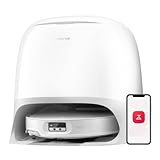
Roborock Qrevo CurvX
- 𝐏𝐨𝐖𝐞𝐫𝐟𝐮𝐥 𝐂𝐥𝐞𝐚𝐧𝐢𝐧𝐠 𝐒𝐲𝐬𝐭𝐞𝐦: With 22000Pa HyperForce suction and Zero-Tangling Design, the Roborock Qrevo CurvX robot…
- 𝐃𝐞𝐬𝐢𝐠𝐧𝐞𝐝 𝐭𝐨 𝐑𝐞𝐚𝐜𝐡 𝐖𝐡𝐞𝐫𝐞 𝐃𝐮𝐬𝐭 𝐇𝐢𝐝𝐞𝐬: The Roborock Qrevo CurvX— the slimmest Roborock yet…
- 𝟖𝟎°𝐂 𝐇𝐨𝐭 𝐖𝐚𝐭𝐞𝐫 𝐟𝐨𝐫 𝐓𝐫𝐮𝐥𝐲 𝐂𝐥𝐞𝐚𝐧 𝐌𝐨𝐩𝐬: The Roborock Qrevo CurvX uses 80°C hot water to dissolve…
An upper-mid-tier robot vacuum built for long stretches of hands-off operation.
Why we picked it:
- Its Dual Anti-Tangle System handles hair up to nearly 16 inches, and owners describe it as “less frustrating” day-to-day than competing models.
- The Thermo+ dock supports up to seven weeks between manual bin empties, the longest interval among our five picks.
Real-world scenario:
You and your partner both work full-time with a toddler leaving toys everywhere, and the last thing you want is a robot vacuum that needs weekly check-ins.
The Qrevo CurvX runs its schedule and stays out of your way.
Pros:
- Long hands-off interval between manual maintenance
- Reliable, consistent day-to-day performance per owner reports
- Strong edge and threshold handling
Cons:
- Some owners report charging-contact plate issues that cause the dock to stop recognizing the unit
- Initial setup occasionally requires a factory reset or remap
- Companion app is described by some owners as clunky
Best for:
Busy professionals and parents who need weeks of hands-off carpet cleaning between check-ins, not days.
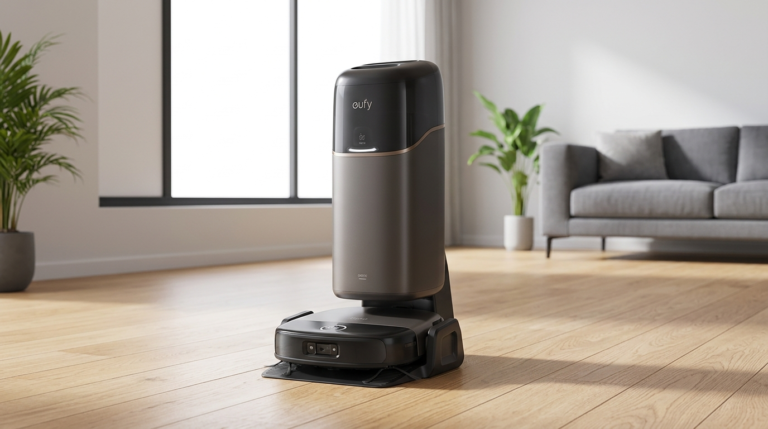
Eufy E25 Omni: Best Value Self-Empty for Pet Owners

Eufy E25 Omni
- 【𝐀𝐥𝐰𝐚𝐲𝐬-𝐂𝐥𝐞𝐚𝐧 𝐌𝐨𝐩𝐩𝐢𝐧𝐠 𝐰𝐢𝐭𝐡 𝐇𝐲𝐝𝐫𝐨𝐉𝐞𝐭 𝐒𝐲𝐬𝐭𝐞𝐦】Refreshes the roller mop 2 times per second with clean…
- 【𝐇𝐚𝐧𝐝𝐬-𝐅𝐫𝐞𝐞 𝐰𝐢𝐭𝐡 𝐀𝐥𝐥-𝐢𝐧-𝐎𝐧𝐞 𝐒𝐭𝐚𝐭𝐢𝐨𝐧】Auto-empties dust into a 3L bag (lasts ~75 days), self-washes roller mops, hot air…
- 【𝐏𝐨𝐰𝐞𝐫𝐟𝐮𝐥 𝟐𝟎,𝟎𝟎𝟎 𝐏𝐚 𝐒𝐮𝐜𝐭𝐢𝐨𝐧 𝐟𝐨𝐫 𝐃𝐞𝐞𝐩 𝐂𝐥𝐞𝐚𝐧𝐢𝐧𝐠】Lifts deeply embedded dirt and pet hair from…
A mid-tier robot vacuum built around a full self-emptying, self-washing, self-refilling station.
Why we picked it:
- DuoSpiral anti-tangle brushes are reviewed specifically for pet hair, not just general debris.
- The CornerRover extending side brush reaches into corners and along baseboards where pet hair tends to collect.
Real-world scenario:
You’ve got a cat and a dog shedding into the carpet daily, and hair collects along the baseboards faster than you can keep up with manually.
The E25 Omni’s extending side brush and self-wash station handle that buildup without you emptying anything yourself.
Pros:
- Full self-empty, self-wash, self-refill station at a mid-tier price point
- Effective edge-to-corner cleaning for pet hair buildup
- Works with Alexa, Google Assistant, and Siri
Cons:
- A subset of owners report a faulty sweep mechanism that replacement units didn’t fully resolve
- The wash station adds water and cleaning solution refills to routine maintenance
Best for:
Pet owners who want a full self-care station without stepping into flagship pricing.
Roborock Q10 S5+: Best Budget-Friendly Pick for Carpet
Sale

Roborock Q10 S5+
- 𝟳𝟬 𝗗𝗮𝘆𝘀 𝗼𝗳 𝗛𝗮𝗻𝗱𝘀-𝗙𝗿𝗲𝗲 𝗖𝗹𝗲𝗮𝗻𝗶𝗻𝗴 – Enjoy ultimate convenience with the self-emptying station. The large…
- 𝟭𝟬,𝟬𝟬𝟬 𝗣𝗮 𝗛𝘆𝗽𝗲𝗿𝗙𝗼𝗿𝗰𝗲 𝗦𝘂𝗰𝘁𝗶𝗼𝗻 – With an impressive 10,000 Pa suction, it effortlessly lifts embedded pet…
- 𝗗𝘂𝗮𝗹 𝗔𝗻𝘁𝗶-𝗧𝗮𝗻𝗴𝗹𝗲 𝗦𝘆𝘀𝘁𝗲𝗺 – Equipped with a JawScrapers Comb main brush and a specialized anti-tangle side brush, this…
A value-tier robot vacuum and mop that pairs flagship-grade LiDAR mapping and suction with a price point well below Roborock’s premium lineup.
Why we picked it:
- It posted a 96% pickup rate in independent carpet deep-clean testing, tied for the highest score ever recorded across more than 150 tested robot vacuums.
- Its dual anti-tangle brush removed 100% of 7-inch hair strands in lab testing, well above the roughly 38% tangle rate typical of competing brush designs.
- Ultrasonic carpet detection automatically boosts suction and lifts its mop pads the moment it senses carpet, so there’s no manual mode switch.
Real-world scenario:
You’re renting an apartment with wall-to-wall carpet in the bedrooms and laminate in the kitchen, and you don’t want flagship money just to get the carpet properly cleaned.
The Q10 S5+ boosts suction and lifts its mop the instant it crosses onto carpet, then resumes mopping once it’s back on the laminate.
Pros:
- Carpet deep-clean performance that matches or beats pricier flagship models
- Dual anti-tangle brush tested at 0% hair wrap on strands up to 7 inches
- Self-empty RockDock Plus holds roughly 7 weeks of debris in a 2.7L bag
- Automatic mop-pad lift and suction boost on carpet, no manual switching required
Cons:
- Structured-light obstacle avoidance (not camera-based) scored poorly navigating cluttered rooms in third-party testing
- Mop-lift clearance struggles with high-pile shag carpet over roughly 0.4 inches thick
- Some early buyers reported quality-control issues, worth checking recent reviews before ordering
Best for:
Budget-conscious buyers who want flagship-level carpet cleaning and anti-tangle performance without paying flagship price.
Common Mistakes When Buying a Robot Vacuum for Carpet
- Buying based on suction Pa alone:
Pa numbers are a marketing spec measured in a sealed tube, not a real-world carpet performance indicator.
Focus on brush design and chassis clearance instead. - Assuming all carpet is the same:
Low-pile, medium-pile, and high-pile carpet each demand different chassis clearance.
Check pile-height tolerance before buying, not after. - Ignoring self-empty bin capacity in carpet-heavy homes:
Bins fill faster on carpet than the marketed interval assumes, so plan for more frequent emptying than the box promises. - Running the mop function over carpet without checking auto-lift:
A damp mop pad left on carpet fibers invites mold and mildew.
Confirm the auto-lift feature before buying a combo unit. - Skipping anti-tangle brush specs with pets or long hair in the house:
This single spec determines whether you’re cutting hair out of the brush roll weekly or monthly.
What Happens If You Choose Wrong
- If you buy based on Pa suction numbers alone → you’ll end up with a vacuum that sounds powerful on the box but leaves embedded dirt in your carpet fibers because the brush design can’t agitate it out.
- If you assume all carpet is the same → you’ll buy a vacuum that stalls or skips your high-pile rug entirely because the chassis can’t clear it.
- If you ignore self-empty bin capacity → your “60-day hands-off” vacuum needs manual emptying every 30 to 40 days, and the automation feels like it failed you.
- If you run the mop over carpet without checking auto-lift → your carpet stays damp longer than it should, inviting mold, mildew, and odor.
- If you skip anti-tangle specs with pets or long hair in the house → you’ll be cutting hair out of the brush roll weekly instead of monthly.
How We Research
We cross-reference manufacturer specifications with independent lab test data on carpet deep-cleaning and brush tangle rates, then check verified owner reports on Reddit and manufacturer support forums for real-world reliability patterns that don’t show up in a spec sheet.
For any health or air-quality claim, we cite authoritative, non-commercial sources like the EPA and the American Lung Association rather than marketing copy.
For our full method and scoring rubric, see our review methodology.
Choose in 60 Seconds
- If you have pets and a mix of carpet pile heights → buy the Roborock Saros 20.
- If your home mixes hardwood and carpet and you’re worried about water damage → buy the Dreame X50 Ultra.
- If you have almost no time to manage your robot vacuum → buy the Roborock Qrevo CurvX.
- If you want a full self-empty and self-wash station for pet hair without flagship pricing → buy the Eufy E25 Omni.
- If you want flagship-level carpet performance without stepping into the flagship tier → buy the Roborock Q10 S5+.
Who This Is For / Not For
This is for you if:
- Your home has a mix of low, medium, or medium-high pile carpet
- You have pets, kids, or long hair that clogs brush rolls
- You want a robot vacuum that adjusts to your carpet automatically, rather than researching pile-height specs yourself
- You care about indoor air quality and allergens, not just visible crumbs
This is NOT for you if:
- Your home is entirely deep-pile shag or plush wall-to-wall carpet (see our best robot vacuum for thick carpet guide instead)
- You want the lowest possible entry point regardless of carpet performance (see our best budget robot vacuum roundup instead)
- You already own a robot vacuum you’re happy with and are just browsing specs
Frequently Asked Questions
What suction power (Pa) do you actually need for carpet vs. hardwood?
There’s no single Pa number that guarantees good carpet performance, because Pa measures airflow resistance in a sealed test tube rather than real dirt extraction from fibers.
In practice, robot vacuums in the 15,000 to 22,000 Pa range clean carpet effectively when paired with a well-designed brush roll, while machines above that range mostly add headroom for very thick pile rather than dramatically better results on standard carpet.
Hardwood needs far less raw suction since there’s no fiber to dig into, which is why many models include a carpet-boost mode that automatically increases suction only when a sensor detects carpet underneath.
For example, the Roborock Q10 S5+ uses ultrasonic carpet detection to automatically raise suction and lift its mop pads the moment it senses carpet, then drops back down for quieter, more efficient hardwood runs.
If you’re comparing two models with similar Pa ratings, look at brush design, bristle stiffness, and carpet-boost automation before defaulting to whichever number is higher.
Our recommendation: don’t shop by Pa rating in isolation, use it only to break a tie between two models that already look strong on brush design and chassis clearance for your specific carpet type.
Do robot vacuums work on thick or high-pile carpet, or only low-pile?
Some do, but it depends entirely on chassis design, not on suction power.
A robot vacuum with a fixed, low-clearance chassis can lose wheel traction or drag its underside on carpet pile above roughly 0.75 inches, causing it to stall mid-route or avoid the rug entirely.
Models built with adjustable or lifting chassis systems, like the Roborock Saros 20’s height adjustment for pile up to 1.18 inches, are specifically engineered to maintain wheel traction and brush contact on thicker pile.
If your home is mostly shag or plush wall-to-wall carpet rather than a mix of pile heights, mobility becomes the dominant factor over raw cleaning power, and we cover that scenario in more depth in our dedicated guide to the best robot vacuum for thick carpet.
Our recommendation: for a home with high-pile carpet as the majority flooring, prioritize chassis clearance and threshold-climbing specs over Pa suction numbers, since a vacuum that can’t physically stay on the rug can’t clean it at all.
How often should you vacuum carpet in a home with pets or allergies?
For households with pets or allergy sufferers, vacuuming carpet at least every one to two days keeps dust mite allergens and pet dander from accumulating to levels that trigger symptoms, according to guidance from the American Lung Association on reducing indoor allergens.
This is a big part of why self-emptying robot vacuums are popular in pet-owning households: running a route daily without manual intervention is far more realistic than a person keeping up with the same frequency using an upright vacuum.
A household with a shedding dog and wall-to-wall carpet, for example, benefits more from a daily automated route with strong anti-tangle brush design than from a weekly deep clean with a more powerful traditional vacuum.
Our recommendation: set your robot vacuum to run daily in carpeted rooms if anyone in the home has pet allergies or asthma, and pair it with a HEPA air purifier in the same room for dust mite particles the vacuum stirs up but doesn’t fully capture.
Can a robot vacuum’s mop function damage or over-wet carpet?
Yes, if the unit doesn’t lift or detach its mop pads before crossing onto carpet.
A damp mop pad dragged repeatedly across carpet fibers can leave enough residual moisture to encourage mold or mildew growth over time, especially in carpet with thicker pile that traps moisture near the base of the fibers rather than letting it evaporate quickly.
This is a real, if underappreciated, risk with cheaper combo vacuum-mop units that don’t include automatic pad handling as a dedicated feature.
The Dreame X50 Ultra addresses this directly by automatically detaching its mop pads before the robot crosses onto long-pile carpet, so the carpet stays completely dry.
Our recommendation: if you’re considering any combination vacuum-mop robot for a home with carpet, confirm the auto-lift or auto-detach mop feature specifically in the spec sheet, don’t assume it’s included just because the product is marketed as a 2-in-1 device.
Do anti-tangle brush rolls really stop pet hair from wrapping, or just slow it down?
It depends on the specific design, and results vary by hair length even among vacuums marketed as anti-tangle.
Dual-brush systems, like the ones on the Roborock Saros 20 and Qrevo CurvX, are rated by their manufacturers for a 0% tangle rate up to specific hair lengths (15.75 to nearly 16 inches), and owner reports for these models are largely consistent with that claim for typical pet hair and shorter human hair.
Budget positioning doesn’t automatically predict tangle resistance, though: the Roborock Q10 S5+, priced well below Roborock’s flagship tier, removed 100% of 7-inch hair strands in independent lab testing, right in line with pricier dual-brush systems.
This suggests anti-tangle performance genuinely differs by hair length and brush geometry, rather than being pure marketing across the board.
Our recommendation: if anyone in the household has long hair (not just pets), prioritize a model with a published anti-tangle rating tested against long hair specifically, rather than assuming any “anti-tangle” label performs the same.
What does a “CRI Seal of Approval” rating on a vacuum actually mean?
The Carpet and Rug Institute’s Seal of Approval program is an independent testing protocol that measures a vacuum’s soil removal percentage, dust containment, and surface-appearance retention on carpet, then assigns a Bronze, Silver, or Gold rating based on the results.
It’s a nonprofit industry standards body, not a vacuum brand or retailer, so a Seal of Approval rating carries more independent weight than a manufacturer’s own marketing claims about carpet performance.
For context, this kind of controlled soil-removal testing is closer to what actually predicts real-world carpet cleaning than a Pa suction number, since it directly measures dirt removed from fiber rather than motor airflow.
Not every robot vacuum on the market pursues this certification, so its absence doesn’t automatically mean a product performs poorly, but its presence is a meaningful positive signal.
Our recommendation: treat a CRI Seal of Approval rating as a strong tiebreaker between two otherwise similar robot vacuums, and don’t dismiss a product just because it hasn’t pursued the certification, since certification itself has a cost that not every brand chooses to pay.
Summary
Finding the best robot vacuum for carpet comes down to matching chassis clearance and brush design to your specific pile height, not chasing the highest Pa number on the shelf.
The Roborock Saros 20 leads this list because its adjustable chassis and dual anti-tangle brush cover the widest range of carpet types in one machine, while the Dreame X50 Ultra is the safer pick if you’re protecting hardwood floors alongside carpet.
Busy households should look at the Roborock Qrevo CurvX for its long hands-off interval, pet owners on a mid-tier budget will get the most from the Eufy E25 Omni‘s self-wash station, and budget-conscious buyers get flagship-level carpet performance from the Roborock Q10 S5+.
Still unsure?
Start with the Roborock Saros 20: its pile-adaptive chassis covers the broadest range of carpet situations, so it’s the safest default if your home doesn’t fit neatly into one category.
It also reaches its first US Black Friday this year; our Black Friday robot vacuum deals guide explains which discount wave to buy in.
Carpet type isn’t the only variable, though.
If shedding pets are part of the equation, it’s worth narrowing things down by pet hair pickup specifically.
And suction specs alone can be misleading, so understanding what suction power actually measures helps you compare models on equal footing.
If pet accidents are a recurring issue, getting stains out of carpet before they set is its own skill worth knowing.
You can also browse the full Vacuum Cleaners category or head back to the EverydayHomeComfort home page for more home comfort guides.