Ad. When you purchase through links we provide, we may receive an affiliate commission. Here's how it works.
Best Self Emptying Robot Vacuum 2026: 5 Picks for Busy Homes
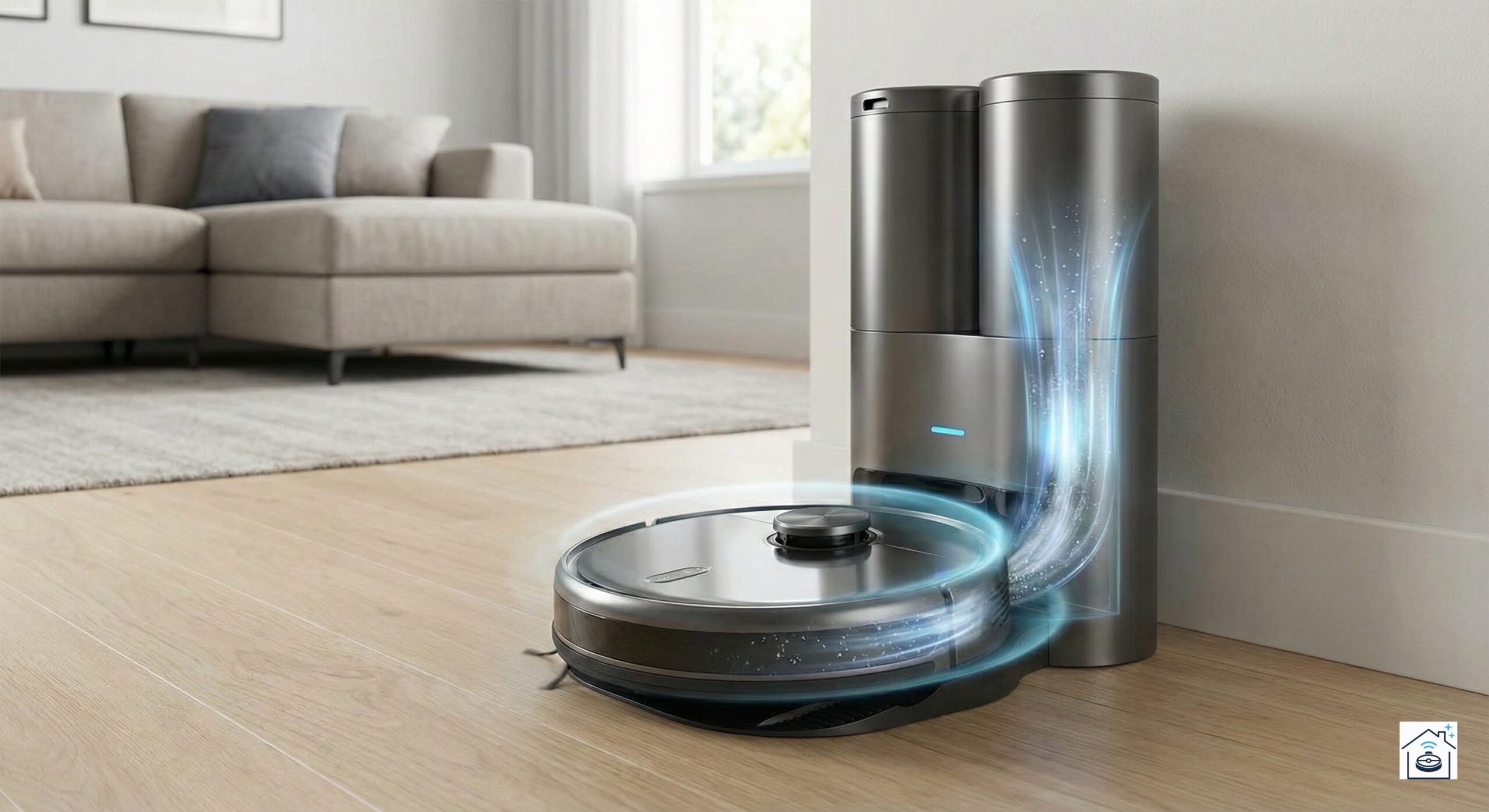
TL;DR: The best self emptying robot vacuum for most busy households is the Roborock Qrevo CurvX: it eliminates hair tangles completely, washes its mop pads at 176°F, and goes up to 7 weeks between bag changes.
If you want nearly the same results in the mid-range bracket, the Dreame L40 Ultra Gen 2 is the strongest value option in the category.
Quick Picks: Best Self Emptying Robot Vacuums
- Roborock Qrevo CurvX: best overall for zero-tangle hair pickup and fully hands-free maintenance
- Dreame L40 Ultra Gen 2: best value premium for mixed-floor homes with pets
- Eufy Omni E25: best for pet owners who need heavy hair pickup and auto mop cleaning
- Mova P10 Pro Ultra Gen 2: best mid-level pick for obstacle-heavy rooms
- TP-Link Tapo RV30 Max Plus: best budget entry for light-duty self emptying in a small space
Key Takeaways
- Self emptying robot vacuums split into two tiers: basic auto-empty-only docks and full omni-stations that also wash, dry, and refill for the mop
- The self emptying cycle runs at 70 to 80 dB on every model, roughly as loud as a traditional vacuum
- Even the most automated docks require a water tank refill one to two times per week and a filter swap every two to three months
- The Roborock Qrevo CurvX achieves a 0% hair tangle rate in standardized tests, compared to the 28% industry average
- All five models work on hardwood, tile, and low-to-medium pile carpet, but performance on high-pile carpet varies
Finding the best self emptying robot vacuum means more than picking the one with the highest suction number.
It means finding one that genuinely removes daily cleaning from your list, not one that trades 10 minutes of vacuuming for 10 minutes of robot maintenance.
We analyzed 20-plus models, cross-referenced specs with real-world user feedback, and narrowed it down to five picks that cover every budget and household type.
What Makes the Best Self Emptying Robot Vacuum Worth It
A standard robot vacuum requires you to empty the dustbin after almost every run.
A self emptying model sucks that debris into a sealed dock bag every time it docks, giving you 45 to 100 days between manual interventions.
For a busy household, that difference is significant.
The self emptying category has split into two distinct tiers. Knowing which tier you need is the most important decision you will make in this purchase.
- Basic auto-empty docks:
The robot docks, debris gets sucked into a sealed bag, done.
No mopping, no washing.
Lower price point and simpler maintenance. - Full omni-stations:
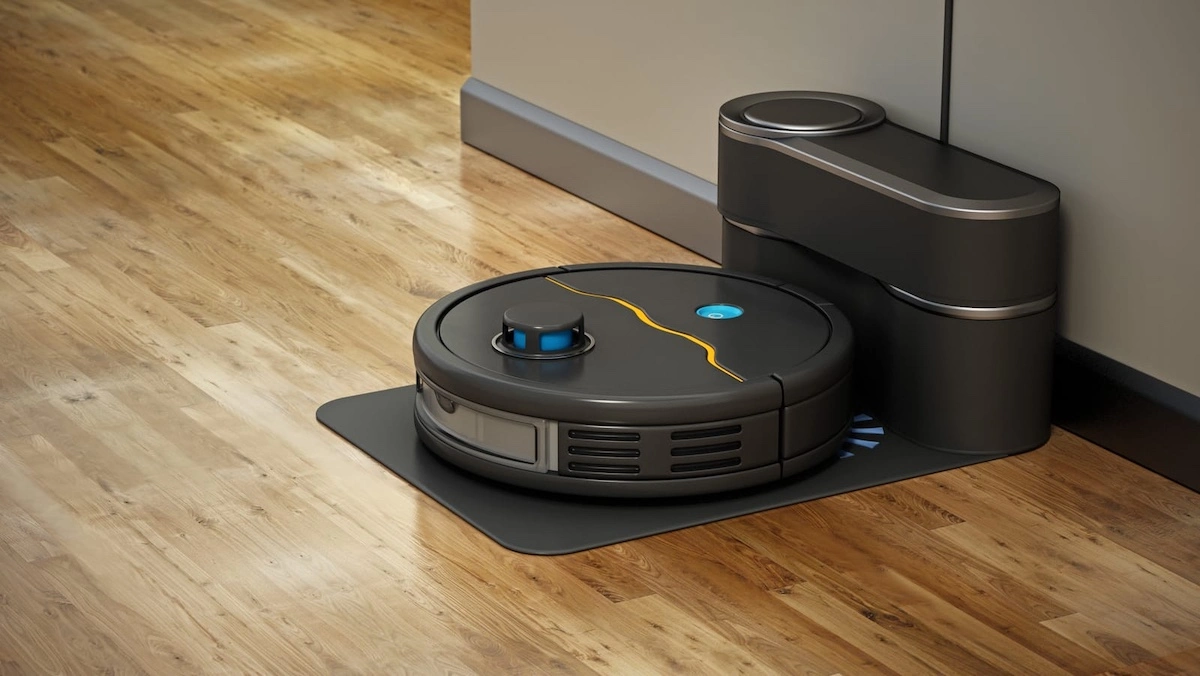
The dock vacuums the bin, washes the mop pad with hot water, dries the pad with warm air, and on some models refills the robot water tank automatically.
Four of the five models here include full omni-stations.
The fifth gives you self emptying at a budget entry point.
Before choosing based on suction specs alone, read our robot vacuum suction power explainer to understand why Pa numbers are only part of the picture.
If you’re still deciding whether a robot vacuum fits your home at all, our robot vacuum buying guide covers the full spec framework before you commit to a dock type.
What You Still Have to Do (The Hands-Free Reality)
“Fully automated” is a marketing description, not an operational reality.
Even the best self emptying robot vacuums still need regular human input.
Here is what that actually looks like for a mid-range omni-station model:
- Weekly: Refill the clean water tank and empty the dirty water tank (mop-capable models)
- Monthly: Wipe down the dock washboard and drainage channels, check the brush roller for debris following a full robot vacuum maintenance schedule to stay on top of every task
- Every 2 to 3 months: Replace the filter
- Every 45 to 100 days: Replace the self emptying bag (varies by model and home size)
The auto-emptying cycle on every model in this group runs at 70 to 80 dB, about as loud as a traditional vacuum, so scheduling it overnight will wake up light sleepers.
Set the auto-empty window to mid-morning instead.
All five models let you configure the dock cycle window independently from the cleaning schedule.
For most households, this maintenance totals 10 to 20 minutes per month, a genuine improvement over weekly vacuuming, but not zero.
A basic auto-empty-only model with no mop drops closer to 5 to 10 minutes per month since there is no water to manage.
Quick Comparison: 5 Best Self Emptying Robot Vacuums
| Product | Best For | Suction | Dock Type | Bag Autonomy |
|---|---|---|---|---|
| Roborock Qrevo CurvX | Best Overall | 22,000 Pa | Full omni-station (hot wash + dry + auto refill) | Up to 7 weeks |
| Dreame L40 Ultra Gen 2 | Best Value Premium | 25,000 Pa | Full omni-station (hot wash + dry) | Up to 75 days |
| Eufy Omni E25 | Best for Pet Owners | 20,000 Pa | Full omni-station (hot wash + dry + auto detergent) | Up to 75 days |
| Mova P10 Pro Ultra Gen 2 | Best Mid-Level | 26,000 Pa | Full omni-station (100°C hot wash + 1-hr dry) | Up to 75 days |
| TP-Link Tapo RV30 Max Plus | Best Budget Entry | 5,300 Pa | Auto-empty only (no mop station) | Up to 60 days |
Roborock Qrevo CurvX Review: Best Overall
Sale
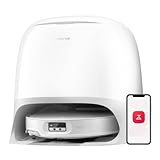
Roborock Qrevo CurvX
- 𝐏𝐨𝐖𝐞𝐫𝐟𝐮𝐥 𝐂𝐥𝐞𝐚𝐧𝐢𝐧𝐠 𝐒𝐲𝐬𝐭𝐞𝐦: With 22000Pa HyperForce suction and Zero-Tangling Design, the Roborock Qrevo CurvX robot…
- 𝐃𝐞𝐬𝐢𝐠𝐧𝐞𝐝 𝐭𝐨 𝐑𝐞𝐚𝐜𝐡 𝐖𝐡𝐞𝐫𝐞 𝐃𝐮𝐬𝐭 𝐇𝐢𝐝𝐞𝐬: The Roborock Qrevo CurvX— the slimmest Roborock yet…
- 𝟖𝟎°𝐂 𝐇𝐨𝐭 𝐖𝐚𝐭𝐞𝐫 𝐟𝐨𝐫 𝐓𝐫𝐮𝐥𝐲 𝐂𝐥𝐞𝐚𝐧 𝐌𝐨𝐩𝐬: The Roborock Qrevo CurvX uses 80°C hot water to dissolve…
The Roborock Qrevo CurvX is Roborock’s thinnest full-featured robot at 3.14 inches, built to clean under furniture that defeats other robots while delivering complete omni-station automation.
Why we picked it:
- 0% hair tangle rate in standardized testing thanks to the DuoDivide dual-brush system, which actively separates hair before it winds around the roller
- Multifunctional Dock 3.0 Thermo+ washes mop pads at 176°F, eliminating mold and odor without any manual intervention
- AdaptiLift Chassis raises the entire body up to 4 cm to clear thick area rug edges and door thresholds that stop other slim robots
Real-world scenario:
You have two dogs and a bedroom with a platform bed sitting two inches off the floor.
The CurvX slides under it, finishes a full clean, docks itself, empties the bin, and has the mop pad washed and dried before you finish your morning coffee.
You touch it once every six to seven weeks to swap the bag.
Pros:
- 0% hair tangle rate in standardized tests
- Ultra-slim 3.14-inch profile reaches low-clearance furniture
- Hot water mop washing at 176°F with warm air drying
- Auto water tank refill built into the dock
- Reactive AI obstacle recognition handles most common floor obstacles
Cons:
- Obstacle avoidance still struggles with thin cables and cords lying flat on the floor
- Hard water can cause mopping streaks on tile without a pre-vacuum pass
- Self emptying flap can jam with very heavy hair accumulation
Best for:
Busy households with pets, multi-room layouts, and low-clearance furniture.
Also the strongest pick for anyone who finds themselves clearing the brush roller weekly on their current robot.
The Roborock Qrevo CurvX achieves a 0% hair tangle rate in standardized tests, compared to the 28% industry average for robot vacuums.
Dreame L40 Ultra Gen 2 Review: Best Value Premium
Sale
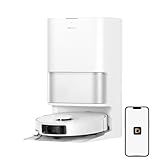
Dreame L40 Ultra Gen 2
- High-Powered 25,000Pa Suction Performance: Powerfully clean hard floors and carpets with 25,000Pa suction…
- Tackle Corner Messes with Ease: L40 Ultra Gen 2 extends its brush and mop to reach corners and under…
- Less Manual Maintenance: All-in-one self-cleaning dock streamlines the autonomous cleaning experience…
$499.98

Check Today’s Price on Amazon
The Dreame L40 Ultra Gen 2 is a full omni-station robot with a MopExtend arm that physically extends the mop and side brush to reach corners and the area directly under furniture edges, a gap most fixed-geometry robots skip on every run.
Why we picked it:
- TriCut brush system actively cuts hair as it picks it up, significantly reducing tangle maintenance for pet owners
- Extended mop arm covers corner gaps that fixed-geometry robots miss entirely
- Full omni-station includes hot-water mop washing and hot-air drying at a mid-range price point
Real-world scenario:
You are a parent with two kids and a shedding labrador in a 1,400 sq ft house with hardwood in the main areas and carpet in the bedrooms.
The L40 Ultra Gen 2 runs at 9 PM every night, mops the hardwood, lifts the pad over carpet, docks, and cleans itself.
You refill the water tank on Sunday morning and forget about it for another week.
Pros:
- MopExtend arm reaches corners and under furniture edges
- TriCut brush handles pet hair with minimal tangling
- Up to 231 minutes runtime in quiet mode
- Strong value relative to the full-station feature set
- Full omni-station with hot wash and dry
Cons:
- App scheduling can fail silently on some Wi-Fi configurations
- Carpet pickup is the weakest performance area of this model
- QC consistency has been uneven in early production batches
Best for:
Mixed-floor homes (hardwood and carpet) with pets where full mop automation is the priority.
Our Dreame L40 Ultra Gen 2 review covers all the specs, if you want to take a deeper look.
Also see the Roborock vs Dreame comparison if you are deciding between the two brands.
If you have a mixed-floor home with pets and limited time for floor care, the Dreame L40 Ultra Gen 2 is the strongest value option in the best self emptying robot vacuum category right now.
Eufy Omni E25 Review: Best for Pet Owners

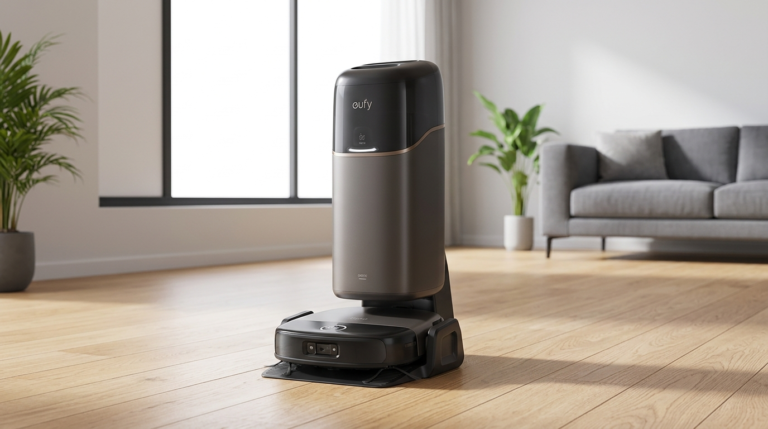
Eufy Omni E25
- 【𝐀𝐥𝐰𝐚𝐲𝐬-𝐂𝐥𝐞𝐚𝐧 𝐌𝐨𝐩𝐩𝐢𝐧𝐠 𝐰𝐢𝐭𝐡 𝐇𝐲𝐝𝐫𝐨𝐉𝐞𝐭 𝐒𝐲𝐬𝐭𝐞𝐦】Refreshes the roller mop 2 times per second with clean…
- 【𝐇𝐚𝐧𝐝𝐬-𝐅𝐫𝐞𝐞 𝐰𝐢𝐭𝐡 𝐀𝐥𝐥-𝐢𝐧-𝐎𝐧𝐞 𝐒𝐭𝐚𝐭𝐢𝐨𝐧】Auto-empties dust into a 3L bag (lasts ~75 days), self-washes roller mops, hot air…
- 【𝐏𝐨𝐰𝐞𝐫𝐟𝐮𝐥 𝟐𝟎,𝟎𝟎𝟎 𝐏𝐚 𝐒𝐮𝐜𝐭𝐢𝐨𝐧 𝐟𝐨𝐫 𝐃𝐞𝐞𝐩 𝐂𝐥𝐞𝐚𝐧𝐢𝐧𝐠】Lifts deeply embedded dirt and pet hair from…
The Eufy Omni E25 (released June 2025) is built around DuoSpiral anti-tangle brushes paired with an Omni Station that handles emptying, mop washing, hot-air drying, and automatic detergent dispensing.
Why we picked it:
- DuoSpiral brushes are specifically engineered to prevent hair tangles, with a 93% pet hair pickup rate in independent analysis
- Omni Station includes auto detergent dispensing, removing one more manual step from the mopping routine
- CornerRover arm extends side coverage for better edge cleaning on hard floors
Real-world scenario:
You have two cats and hardwood floors throughout.
The E25 runs every evening, picks up the fur, docks, and the Omni Station washes and dries the mop pad while you watch TV.
The detergent tank lasts weeks without a refill.
Pros:
- DuoSpiral anti-tangle brushes designed specifically for pet hair
- Auto detergent dispensing unique at this tier
- Strong large-arc sweeping pattern on hard floors
- LiDAR plus RGB camera obstacle recognition
- Up to 216 minutes runtime in vacuum-only mode
Cons:
- Early units (pre-mid-2025) had a dirty water tank leak defect; units shipping from mid-2025 onward include the fix
- Loud during self emptying and drying cycles
- Mopping near edges can be inconsistent on complex floor layouts
Best for:
Pet owners on hardwood or tile who want automated detergent management.
This same model is also our top value pick for carpet-heavy pet households in our best robot vacuum for carpet guide.
If pet allergens are also a concern, pair this with an air purifier.
Our best air purifier for pets guide covers that side of the equation.
Mova P10 Pro Ultra Gen 2 Review: Best Mid-Level Value
Sale

Mova P10 Pro Ultra Gen 2
- 26,000Pa Powerful Suction for Deep Cleaning: Powered by a high-speed motor, MOVA P10 Pro Ultra Gen…
- TurboPress Tech for Vacuum and Mop Combo Performance: TurboPress Tech applies 12N downward pressure to…
- 212℉ PTC Hot Mop Washing Hygienic Homes: The built-in PTC system heats water up to 212°F to wash mop…
$427.00
Check Today’s Price on Amazon
The Mova P10 Pro Ultra Gen 2 leads this group in suction at 26,000 Pa and offers the hottest mop washing temperature, 100°C (212°F), combined with 360-degree obstacle recognition that identifies up to 70 object types.
Why we picked it:
- Obstacle avoidance consistently rated among the best in its price class, reliably navigating around cables, shoes, pet toys, and furniture legs
- Triple anti-tangle system handles heavy pet hair shedding from large breeds
- 10.5 mm mop lift and 75-day bag capacity require minimal setup adjustments for mixed-floor homes
Real-world scenario:
Your home office floor has charging cables, a dog bed, and scattered toys at any given time.
The P10 Pro Ultra Gen 2 maps the space, avoids every obstacle, runs a full clean, and docks without getting stuck.
You have not had to place it back on its dock manually in three weeks.
Pros:
- 26,000 Pa suction leads this group
- Best-in-class obstacle avoidance for mid-range models
- 100°C mop washing temperature is the highest in this comparison
- Strong pet hair pickup on hardwood floors
- Dual edge extensions for corner coverage
Cons:
- Customer service complaints are the most common negative theme in verified user reviews
- Carpet performance on patterned or textured surfaces is below average
- Long-term durability data for Gen 2 units is still limited
Best for:
Households with obstacle-heavy floors and strong pet hair shedding where avoidance matters as much as pickup.
TP-Link Tapo RV30 Max Plus Review: Best Budget Entry

TP-Link Tapo RV30 Max Plus
- 𝗘𝗳𝗳𝗶𝗰𝗶𝗲𝗻𝘁𝗹𝘆 𝗖𝗹𝗲𝗮𝗻𝘀 𝗬𝗼𝘂𝗿 𝗛𝗼𝗺𝗲: Effectively removes dust, pet hair, crumbs, and debris from all…
- 𝗡𝗼 𝗦𝗽𝗼𝘁𝘀 𝗠𝗶𝘀𝘀𝗲𝗱: Utilizes Mesh Grid Technology, a unique grid-like cleaning pattern for thorough coverage, ensuring effective…
- 𝗖𝗮𝗿𝗽𝗲𝘁 𝗔𝗿𝗲𝗮 𝗙𝘂𝗻𝗰𝘁𝗶𝗼𝗻𝘀: Robot increases suction on low-pile carpet to catch hidden dirt and grime and avoids…
The Tapo RV30 Max Plus is the entry point to self emptying automation: a 2-month sealed dust bag and LiDAR navigation at a fraction of the cost of a full omni-station.
It does not mop.
Why we picked it:
- The only model in this group to make self emptying accessible without a large upfront investment
- LiDAR navigation works in the dark, with precise zone control and reliable scheduling via the Tapo app
- 3-liter bag capacity with a 2-month interval is genuinely competitive with more expensive models
Real-world scenario:
You live in a 700 sq ft apartment with mostly hardwood and one medium-shedding dog.
You want to stop emptying a small robot bin every day.
The RV30 Max Plus empties itself after every run and you touch the dock once every six to eight weeks to swap the bag.
Pros:
- 2-month sealed bag capacity at a budget entry point
- LiDAR navigation works in complete darkness
- Excellent app with reliable zone control and voice integration
- Significantly quieter and smarter than bump-and-go predecessors
Cons:
- Pet hair tangles easily in brushes, especially long hair, requiring manual clearing with heavy shedding pets
- 5,300 Pa suction cannot reliably pick up fine particles or debris embedded in carpet
- Replacement bags have had intermittent stock availability issues
Best for:
Small apartments or homes with light shedding and primarily hard floors.
For more options in the lower price tier, our best budget robot vacuum guide covers additional models without self emptying.
The TP-Link Tapo RV30 Max Plus is the most accessible self emptying robot vacuum in this group, but its 5,300 Pa suction cannot reliably pick up pet hair embedded in carpet.
Common Mistakes Buyers Make
- Choosing based on Pa suction alone:
Pa is a motor spec, not a real-world performance guarantee.
Brush design, airflow path, and filtration matter as much or more.
Our suction power guide explains what to look at instead. - Underestimating dock placement requirements:
A self emptying station needs a nearby outlet, flat hard floor, and 12 to 18 inches of clearance on all sides.
Dock-on-carpet setups fail on most models. - Assuming “self emptying” means zero maintenance:
Every model here still requires weekly water tank management (on mop models) and monthly dock cleaning.
If this is a dealbreaker, the basic auto-empty tier is the lower-maintenance option. - Skipping the initial mapping run setup:
All five models build a floor map on the first run.
Running that first map with doors open, cables off the floor, and obstacles cleared dramatically improves long-term navigation accuracy. - Buying a self emptying station primarily for thick carpet:
None of these models is optimized for high-pile or shag carpet.
Our best robot vacuum for thick carpet guide covers models built specifically for that use case.
What Happens If You Choose Wrong
- If you pick based on Pa suction numbers alone, you end up with a robot that sounds powerful but clogs on pet hair within weeks and needs daily brush clearing
- If you buy a full omni-station without accounting for dock placement, you spend the first week searching for a working spot and the robot misses its dock half the time
- If you choose the budget entry tier with heavy-shedding pets, you will be clearing hair from the brushes manually every three to four days, which defeats the purpose of the upgrade
- If you skip checking app reviews before buying, you might end up with a robot whose scheduling fails silently, missing daily runs while you are at work
How We Research
We analyzed specs across 20-plus self emptying robot vacuum models released between 2024 and 2026, cross-referenced performance data from independent lab testing sources, reviewed over 1,000 verified user reports across Reddit and major retail platforms, and checked manufacturer documentation for dock specs and maintenance requirements.
No manufacturer provided samples or compensation for inclusion in this guide.
For our full method and scoring rubric, see our review methodology.
Choose in 60 Seconds
- If you have pets and want zero brush tangles, choose the Roborock Qrevo CurvX
- If you have mixed floors with a medium-shedding pet, choose the Dreame L40 Ultra Gen 2
- If pet hair pickup on hard floors is the top priority and you want auto detergent dispensing, choose the Eufy Omni E25
- If your floor is cluttered with cables, toys, and obstacles daily, choose the Mova P10 Pro Ultra Gen 2
- If you want self emptying in a small apartment without the full omni-station, choose the TP-Link Tapo RV30 Max Plus
- If you have multiple floors with different layouts, check our best robot vacuum for multiple floors guide first
- If your home is 2,500+ sq ft on one or more levels, check our best robot vacuum for large house guide first.
Who This Is For / Not For
This is for you if:
- You spend more than 30 minutes per week vacuuming and want that time back
- You have one or more shedding pets and a mix of hard floors and carpet
- You travel for work and need floors maintained while you are away
- You or someone in your household has allergies or asthma and benefits from consistent daily floor cleaning
- You already own a basic robot vacuum and want to upgrade to auto-emptying
This is NOT for you if:
- Your home is predominantly high-pile or shag carpet, where none of these models performs reliably
- You want a completely silent appliance: auto-empty cycles hit 70 to 80 dB on all models
- You have no suitable outlet or floor space within reach of a dock location
Frequently Asked Questions
What is the difference between a self emptying robot vacuum and a regular robot vacuum?
A regular robot vacuum stores debris in a small onboard dustbin that you need to empty after every one to two runs.
Skip it and suction drops, leaving the robot redistributing debris rather than picking it up.
A self emptying robot vacuum automatically transfers that debris into a sealed dock bag after every run, giving you 45 to 100 days between manual interventions depending on home size and floor type.
The practical difference: a regular robot requires daily attention, a self emptying model requires weekly or monthly attention.
For a household with pets, children, or limited time, the difference in daily friction is significant.
If you are still deciding whether to make the jump, our robot vacuum vs regular vacuum comparison covers the full cost-benefit trade-off, including which use cases favor each type.
How long can a self emptying robot vacuum go without any maintenance?
Longer than a regular robot, but not indefinitely.
The self emptying bag on most mid-range models lasts 45 to 75 days in a typical household.
But if your model also mops, you will need to refill the clean water tank and empty the dirty water tank once or twice per week.
Filters need replacing every two to three months.
Mop pads wear out every three to six months.
The dock washboard needs a wipe-down monthly.
Added up, a top-tier self emptying robot with a full omni-station requires about 10 to 20 minutes of maintenance per month.
A basic auto-empty-only model with no mop drops closer to 5 to 10 minutes per month.
Neither is zero, but both are significantly less than the 30 to 60 minutes per week most households spend vacuuming manually.
Even the most automated self emptying docks still require a water tank refill one to two times per week and a filter replacement every two to three months.
Are bagged or bagless self emptying docks better for pet owners and allergy sufferers?
For allergy and asthma sufferers, bagged docks are the clear recommendation.
Research published in the Journal of Allergy and Clinical Immunology tested vacuum bags for cat allergen (Fel d 1) leakage and found that single-layer bags allowed 1,250 to 2,640 nanograms of allergen to pass through.
Multi-layer microfiltration bags performed significantly better, and the researchers concluded that particle-capture marketing claims alone do not guarantee allergen containment.
The same logic applies to auto-empty docks.
When you open a bagless bin, fine particles become airborne immediately, exactly what you are trying to capture.
A sealed multi-layer bag keeps that debris contained until you remove and toss the whole bag, no direct contact with the dust.
Four of the five models in this guide use sealed bags.
The Tapo RV30 Max Plus also uses a sealed 3-liter bag.
If you have a household member with respiratory sensitivities, avoid bagless dock designs when possible.
Our best robot vacuum for pet hair guide covers additional allergy-relevant features to look for in this category.
Will a self emptying robot vacuum work on both hardwood floors and carpet?
Yes, all five models handle mixed-floor homes.
On low-to-medium pile carpet, all five perform adequately.
On high-pile or shag carpet, performance drops across the board, and the mop pad can drag on the fibers even when the robot lifts it.
The strongest carpet performance in this group comes from the Mova P10 Pro Ultra Gen 2 (26,000 Pa with a 10.5 mm mop lift) and the Roborock Qrevo CurvX (22,000 Pa with AdaptiLift chassis).
The EPA’s research on indoor particulate matter sources notes that carpets trap and re-release allergens during foot traffic, making daily vacuuming especially important in carpeted homes with pets.
How loud is the self emptying cycle, and can it run at night?
The self emptying cycle on every model in this group runs at 70 to 80 dB, roughly equivalent to a traditional upright vacuum.
Setting it to run at 2 AM will wake up light sleepers in most households.
The cleaning run itself (the robot mapping and vacuuming the floor) is typically 55 to 65 dB, quieter than a normal conversation.
Every app in this group lets you separate the cleaning schedule from the dock auto-empty window.
A practical setup: cleaning run at midnight, dock auto-empty at 8 AM.
Our best silent robot vacuum cleaners guide covers models where noise reduction is the primary design target, if that matters more than self emptying for your situation.
Do I still need to mop manually if my robot vacuum has a mopping station?
For daily maintenance and light soil, no.
The mopping function on all four omni-station models here handles it well.
But robot mops are not a replacement for deep mopping.
They use a spinning or vibrating pad with a light water mist, removing light grime and everyday dust from smooth hard floors.
They will not handle dried food spills, grout lines, or heavy soiling from tracked-in mud.
The practical split: let the robot handle daily floor maintenance, and plan a manual deep mop every four to six weeks for kitchens and high-traffic areas.
The best vacuum mop combo guide covers manual options for when you need to go deeper.
Also see our how to clean hardwood floors guide for floor-type-specific mopping advice.
Is it worth spending more on a self emptying robot vacuum, or do budget options perform just as well?
The gap between budget and premium is real, and it is widest in three areas: hair management, mop automation, and obstacle avoidance.
The TP-Link Tapo RV30 Max Plus at the budget entry point gives you genuine self emptying convenience and reliable scheduling.
But its brushes tangle with pet hair, it does not mop, and its obstacle avoidance is basic.
The Roborock Qrevo CurvX at the top of this list eliminates hair tangles entirely, washes and dries its own mop pads, and navigates around cables and shoes automatically.
If you do not have pets, do not need mopping, and have a clean obstacle-free floor, the budget tier delivers most of the convenience at a lower upfront cost.
If you have heavy pet shedding or rely on the robot for mopping, the premium tier earns its place.
For a detailed look at the premium Ecovacs option in this category, including its 75°C mop washing dock and fully autonomous dirty-water management, see our Ecovacs Deebot X9 Pro Omni review.
Our best robot vacuum guide covers the broader category if you want to compare self emptying models against non-self emptying alternatives.
What is the best self emptying robot vacuum for a hardwood floor home?
For hardwood-primary homes, the Dreame L40 Ultra Gen 2 is the strongest pick.
Its MopExtend arm reaches the corners and under-furniture edges where dust and pet hair accumulate on smooth floors, and its hot-water mop washing keeps the pad from spreading bacteria around the floor surface.
The Eufy Omni E25 is a close second for hardwood, particularly for pet owners: its large sweeping arcs on hard floors leave surfaces visibly cleaner per run.
Both models include hot-air drying to prevent mold on the mop pad overnight.
The best robot vacuum for hardwood floors guide goes deeper on floor-specific considerations including pad material and water volume control.
The EPA notes that biological contaminants including pet dander and dust mites accumulate rapidly in homes with pets, making daily automated vacuuming on hard floors one of the most effective controls.
Summary
The best self emptying robot vacuum for most busy households is the Roborock Qrevo CurvX: zero hair tangles, hot-water mop washing, and up to 7 weeks between bag changes.
For mixed-floor homes with pets and a tighter budget, the Dreame L40 Ultra Gen 2 is the strongest value in the category.
The Eufy Omni E25 earns its spot for heavy pet hair picku p and automatic detergent management.
The Mova P10 Pro Ultra Gen 2 is the best choice for obstacle-heavy floors.
And the TP-Link Tapo RV30 Max Plus brings self emptying to the budget tier for small apartments with light shedding.
Still unsure?
Start with the Dreame L40 Ultra Gen 2.
Shopping in November? The L40 Ultra Gen 2 and the Tapo RV30 Max Plus are both in our Black Friday robot vacuum deals guide.
Browse the full vacuum cleaners category on EverydayHomeComfort for more options.