Ad. When you purchase through links we provide, we may receive an affiliate commission. Here's how it works.
Robot Vacuum Buying Guide: How to Choose the Right One
TL;DR: This robot vacuum buying guide covers every spec that matters and which ones to ignore.
The decision comes down to three things: navigation type, brush design, and whether you need a self-emptying dock.
Get those three right and the rest of the choice is straightforward.
Key Takeaways
- LiDAR navigation cleans homes over 500 sq ft 30 to 40% more efficiently than random-bounce or gyroscope models
- Rubber-roller brushes outperform bristle brushes for pet hair in every configuration: less tangling, easier maintenance, longer motor life
- Suction power below 2,500 Pa struggles to lift embedded debris from low-pile carpet; 3,000+ Pa is the practical baseline for thick rugs
- True HEPA filters capture 99.97% of particles at 0.3 microns; “HEPA-style” labels are unregulated and may perform well below that threshold
- Self-emptying docks reduce hands-on time from daily to monthly, but the dock itself still needs bin emptying and filter replacement on a set schedule
What Is a Robot Vacuum?
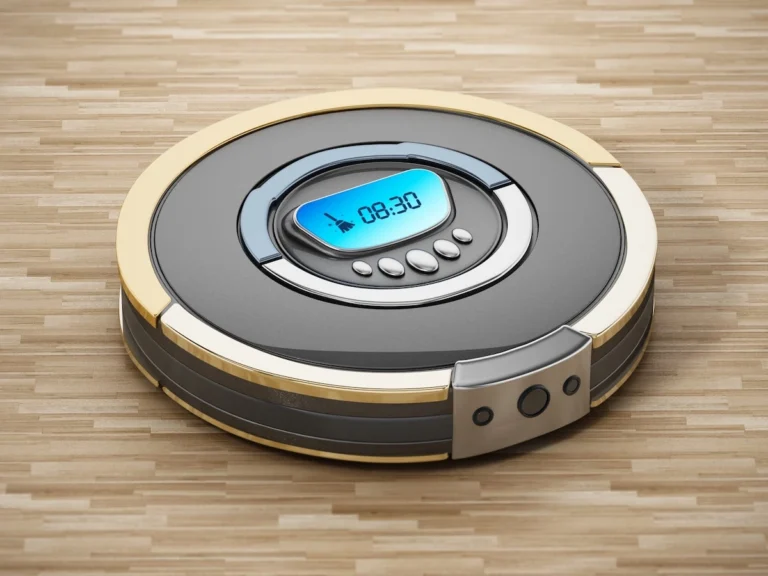
A robot vacuum is an autonomous floor-cleaning device that moves through your home on its own, picks up dust, debris, and pet hair, then returns to a charging dock when the job is done.
According to Wikipedia’s overview of robotic vacuum cleaners, the first commercially successful model launched in the US in 2002.
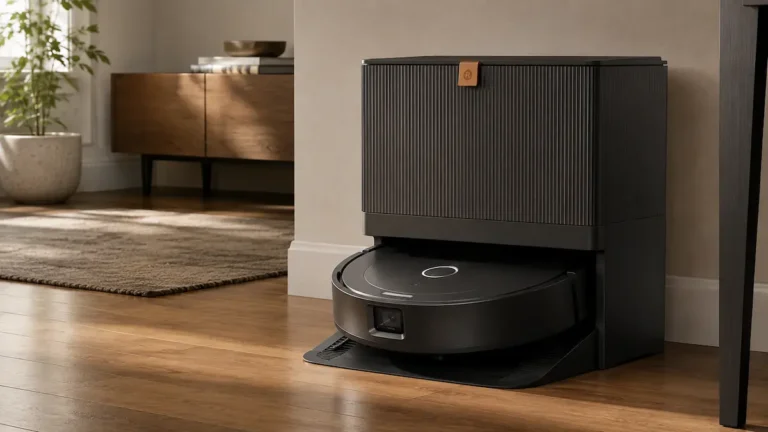
Today’s models map your entire home, schedule themselves, avoid obstacles, and on premium units, wash their own mop pads and empty their own dustbin.
The core function is the same: hands-off floor maintenance on a schedule you set once and rarely touch again.
How Robot Vacuums Navigate Your Home
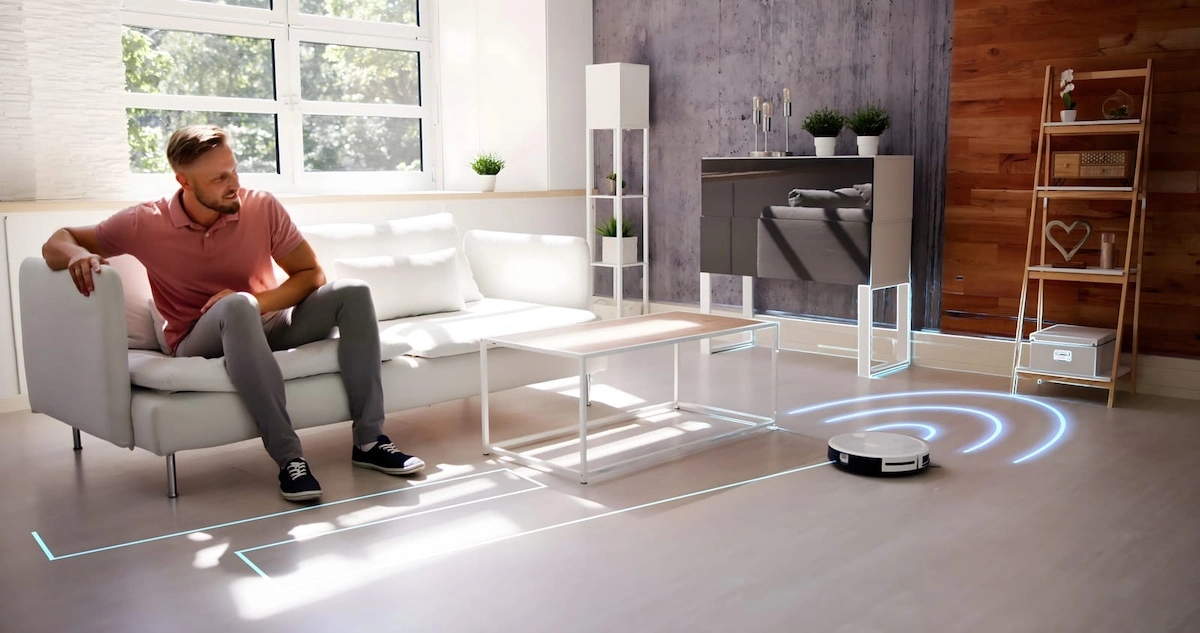
Navigation is the single biggest differentiator between robot vacuum tiers.
There are four main approaches, and the one your model uses determines how thoroughly and efficiently it cleans.
- LiDAR (laser mapping):
A rotating laser on top of the unit measures distance to walls and furniture in real time, building a precise 2D map.
Works in complete darkness.
Plans an efficient row-by-row cleaning path with no repeated sections.
Standard on mid-range and premium models.
The LiDAR Wikipedia entry covers the underlying technology in detail. - Visual SLAM (camera-based):
Cameras and computer vision build a map from visual landmarks.
Performs well in furnished spaces but can lose position in low-light conditions or rooms with few distinguishing features. - Gyroscope + bumper:
The unit moves in straight lines, turns when it bumps an obstacle, and estimates its position using an internal gyroscope.
No persistent map.
Frequently misses corners and edges. - Random bounce:
No map and no positional awareness.
The robot ricochets around the room until statistical coverage probability is high enough.
Slowest approach.
Found only in entry-level models.
LiDAR mapping is worth the extra cost in any home larger than 500 sq ft, because random-bounce and gyroscope models consistently miss corners and require multiple passes over the same area to achieve comparable coverage.
Why These Features Matter in Real Homes
Abstract specs become concrete when you put them in a real home; this is the essence of a good robot vacuum buying guide.
Here are two scenarios that show the practical difference navigation type makes.
900 sq ft two-bedroom apartment with one cat:
A gyroscope model covers the apartment in two to three runs with significant overlap in the center and missed corners near furniture legs.
A LiDAR model maps the same layout in a single run, stores the map, and follows the same efficient route every time you run it.
Schedule it for 6 AM and it finishes before you wake up.
1,400 sq ft house with hardwood floors and area rugs:
Without LiDAR, a camera-based model can lose its position when lights are off, re-run sections it has already cleaned, and deplete its battery before covering the full floor.
A LiDAR model maintains its map in complete darkness and executes the same route every time, regardless of lighting conditions or furniture rearrangement.
For a home under 400 sq ft with simple furniture placement, a gyroscope model works adequately.
For anything larger, or any layout with multiple rooms and thresholds, LiDAR is the clear choice.
Key Specs at a Glance
| Spec | Entry Level | Mid-Range | Premium |
|---|---|---|---|
| Suction (Pa) | 1,000–1,500 | 2,000–3,000 | 5,000–15,000 |
| Navigation | Random / gyroscope | LiDAR or camera | LiDAR + AI obstacle avoidance |
| Battery life | 60–90 min | 90–150 min | 150–210 min |
| Self-emptying dock | No | Optional | Standard |
| Mopping | No | Vibrating pad | Spinning mop or roller |
| Obstacle avoidance | Bumper only | Basic sensor | AI vision (cables, shoes, pet waste) |
| Map storage | None | 1–3 maps | 10+ maps, multi-floor |
Use this table to match a spec tier to your home’s size and cleaning needs.
Entry-level works for small, low-traffic single-room setups.
Premium specs justify the investment in larger homes, multi-pet households, and interiors with a mix of hardwood and carpet.
Common Myths and Misunderstandings
Myth: Higher Pa suction always means better cleaning.
Pa (Pascal) measures motor suction pressure, not real-world cleaning performance.
A 2,000 Pa model with a well-engineered brush roll and tight airflow channel will outclean a 4,000 Pa model with a poorly designed intake path.
Suction matters as a floor-type baseline, but brush design and airflow path efficiency have equal or greater impact on results.
Myth: Any filter labeled HEPA meets the HEPA standard.
According to the US EPA’s definition of HEPA filters, a true HEPA filter must capture at least 99.97% of airborne particles at 0.3 microns. “HEPA-style,” “HEPA-type,” and “washable HEPA” are unregulated marketing labels with no mandated performance threshold.
HEPA-style and washable HEPA labels are unregulated marketing terms: only a filter certified as True HEPA meets the EPA standard of capturing 99.97% of airborne particles at 0.3 microns.
If you have allergies or asthma, also verify that the vacuum’s filtration path is sealed.
An unsealed system allows fine dust to bypass the filter and re-enter the room.
See our guide on HEPA vs True HEPA for the full breakdown.
Myth: A self-emptying base means zero maintenance.
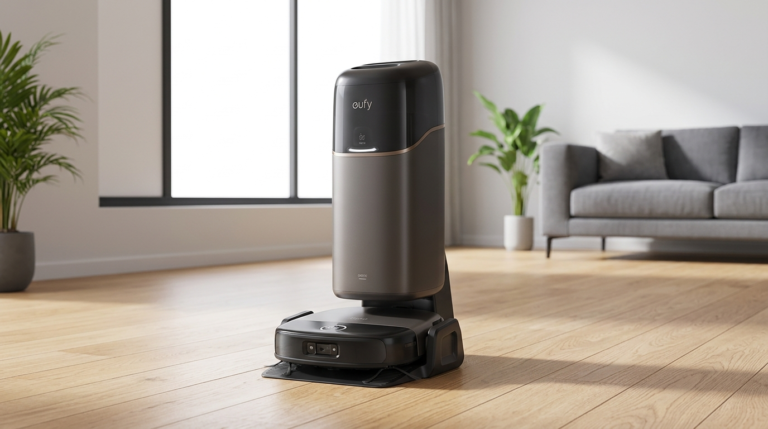
The dock collects debris into its own internal bag or bin, which still needs to be emptied regularly.
Beyond the bin, the dock’s own exhaust filter needs periodic replacement and its sensor ports need occasional wiping to maintain navigation accuracy.
A self-emptying dock does not eliminate maintenance: the internal bag or bin still needs to be cleared every 30 to 60 days, and the dock’s own filter needs periodic replacement, so it helps to follow a regular maintenance schedule.
Myth: Robot vacuums work fine on all rugs.
High-pile rugs over roughly one inch of pile height create real problems.
The vacuum may get stuck on the transition from hard floor to rug, may not generate enough suction to lift debris from deep fibers, or may damage rug fringe with its brush roll.
Always verify the manufacturer’s maximum pile height spec before buying.
How to Evaluate a Robot Vacuum When Buying
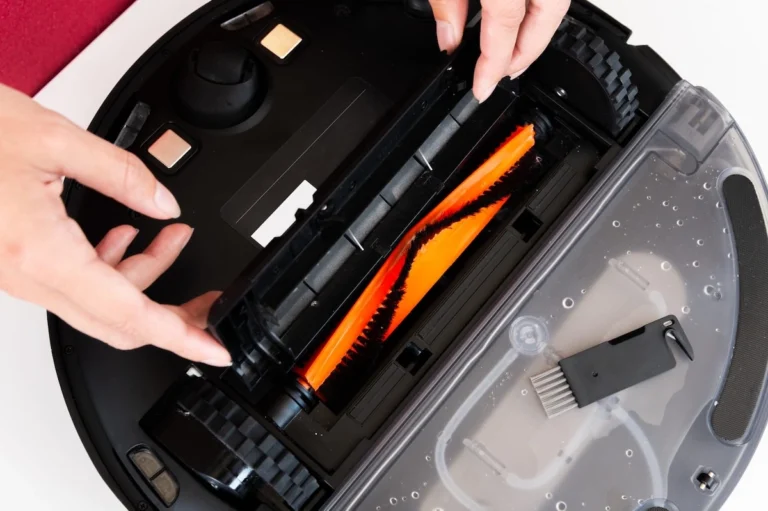
Check the brush roll type first. For homes with pets, a rubber-roller brush is the single most important spec to check: bristle brushes collect and trap hair until they jam the motor, while rubber rollers propel debris into the suction channel without tangling.
This decision affects long-term maintenance more than any other spec on the sheet.
Verify the obstacle avoidance tier against your household’s actual floor hazards.
Basic sensor models stop when they hit something solid.
AI-vision models identify and route around cables, shoes, and pet waste before contact.
If you have cables on the floor or pets that have accidents, AI avoidance is not optional.
Measure furniture clearance before you order.
Most robot vacuums are 3.5 to 4 inches tall. If your sofa, bed frame, or kitchen island sits lower than that, the robot cannot pass under it.
Measure those clearances before buying.
Read the mopping system description carefully.
Vibrating pads oscillate slightly against the floor and work for light surface dust on hard floors.
Spinning mop heads apply more rotational friction.
Roller-style mops on premium models use a damp spinning cloth that the dock actively washes between runs.
None of these handle sticky spills or replace a scrub mop.
For thick carpet, always check the model’s transition capability and pile height limit; see our best robot vacuum for thick carpet guide for models that handle mixed flooring cleanly.
Check parts availability for the self-emptying dock.
Dock bags and filters are model-specific, not universal.
If a manufacturer discontinues support for a model, replacement bags become unavailable and the dock stops working as intended.
Verify that consumables are available from at least one secondary retailer before committing to a platform.
Decision Framework: If X, Then Y
- If your home is under 500 sq ft with no pets and light traffic: a gyroscope or entry-level LiDAR model handles the job without over-spending
- If you have one or more pets on hardwood or low-pile carpet: prioritize a rubber brush roll and LiDAR navigation with 2,500+ Pa suction
- If you have thick carpet in any room: verify maximum pile height tolerance and choose a model with 3,000+ Pa; confirm it handles floor transitions without getting stuck
- If your home mixes low-to-medium pile carpet with hard floors: see our best robot vacuum for carpet guide for vetted picks by pile height.
- If you travel frequently or want true fire-and-forget automation: a self-emptying dock plus AI obstacle avoidance lets you leave the system running unsupervised for weeks at a time
- If you have hardwood, engineered wood, or luxury vinyl plank floors: run the robot daily, not weekly; daily passes prevent grit buildup before it can cause surface damage
- If smart home integration matters: look for Matter protocol support, which enables local device control without routing commands through the manufacturer’s cloud server
Smart bulbs are usually the cheapest and easiest way to test that same Matter ecosystem before committing to it elsewhere in your home.
See our best smart bulbs guide for Matter-certified picks that pair with the same hub as your robot vacuum. - If allergies are a primary concern: confirm the filter is certified True HEPA and the filtration path is sealed; the EPA’s guidance on indoor particulate matter sources explains what your vacuum’s filter needs to capture
Running your robot vacuum daily rather than weekly is the most effective way to protect hardwood floors, because daily passes prevent the grit accumulation that causes surface micro-scratches.
How We Researched This Guide
We reviewed technical documentation from the US EPA on indoor particulate matter and HEPA filter standards, analyzed published user feedback from thousands of verified purchasers, and studied navigation technology specifications across the major robot vacuum product lines available in 2025 and 2026.
Navigation technology references were cross-checked against published technical definitions for LiDAR and visual SLAM systems.
For our full method and scoring rubric, see our review methodology.
Practical Examples
600 sq ft apartment with two cats:
A mid-range LiDAR model with a rubber brush roll maps the apartment in one run.
Scheduled for 6 AM daily, it clears pet hair before you wake up.
At this home size, a self-emptying dock cuts manual bin checks from daily to once a month.
1,800 sq ft house with a large dog on hardwood and area rugs:
A premium model with LiDAR, a rubber roll, 3,000+ Pa suction, and a self-emptying dock handles both floor types without manual intervention between weekly dock checks.
See our picks for the best robot vacuum for large house for models built around exactly this scenario.
AI obstacle avoidance lets the dog’s toys and food bowl stay where they are without creating errors or spreading debris.
Frequently Asked Questions
Do robot vacuums clean as well as a regular vacuum?
No, and the gap is worth understanding before you buy.
A robot vacuum excels at high-frequency light cleaning: daily surface maintenance that removes pet hair, crumbs, and fine dust before it accumulates.
A traditional upright or stick vacuum with a motorized head and higher sustained suction cleans embedded dirt from carpet fibers, handles edge-to-corner debris, and tackles heavier loads more effectively than any autonomous model currently available.
The most practical household setup uses both: a robot vacuum on a daily schedule for surface maintenance, and a traditional vacuum weekly or bi-weekly for a deeper clean.
In a hardwood-only home with low foot traffic, a quality robot vacuum can serve as the primary cleaner for months.
In a home with carpet, children, and pets, it supplements but does not replace a traditional vacuum.
For a direct comparison of what each type handles, see our robot vacuum vs regular vacuum guide.
What suction power do I actually need? Does Pa number matter?
Pa (Pascal) is a pressure unit measuring suction force at the motor intake.
On bare hardwood or tile, 1,500 to 2,000 Pa is more than sufficient: debris sits on the surface and lifts easily.
On low-pile carpet, 2,500 Pa is the practical minimum to pull debris out of fiber.
On thick or high-pile carpet, look for 3,000 Pa and above.
The complication is that Pa numbers are self-reported under ideal lab conditions: sealed intake, full power, no floor contact.
Real-world performance depends as much on brush design and airflow channel engineering as it does on raw Pa.
A 2,000 Pa model with a tight airflow path and well-fitted brush roll will outclean a 4,000 Pa model with a poorly designed intake in most real home conditions.
Use Pa as a rough minimum threshold for your floor type, not as the primary ranking metric between models.
For the full breakdown, see our guide on robot vacuum suction power.
Are robot vacuums safe for hardwood floors?
Yes, with one important caveat.
The risk to hardwood floors is not the robot vacuum itself: it is abrasive grit that the brush roll can drag across the surface when the floor already has debris accumulation.
A robot vacuum running daily removes grit before it builds up, which actually reduces scratch risk compared to less frequent cleaning.
A model running once a week may push accumulated sand and fine dirt under its chassis on the first pass, causing micro-scratches before the suction path reaches the material.
To minimize risk on premium or sensitive floors: confirm the brush roll and chassis skirt materials are soft-contact (silicone or soft rubber rather than hard plastic), and never run the robot on a visibly dirty floor without first sweeping heavy debris by hand.
Running the robot daily is the single most effective floor-protection habit.
For a curated list of models that handle hardwood carefully, see best robot vacuum for hardwood floors.
Can a robot vacuum handle pet hair without getting clogged?
It depends almost entirely on the brush roll type.
Bristle brushes tangle with long pet hair and wrap it tightly around the axle.
Left unchecked, this stalls the motor or triggers an error mid-run.
Rubber or silicone brush rolls use a ribbed design that propels hair into the suction channel rather than wrapping it: the hair moves up and into the dustbin instead of accumulating on the brush axle.
The difference is most significant in multi-pet homes or households with long-coated or double-coated breeds.
Beyond brush design, suction matters for pet hair embedded in low-pile carpet: 2,500 Pa is the practical minimum for fur that has worked into fiber.
A self-emptying dock also helps in high-shedding homes, because a full dustbin reduces effective suction on subsequent runs.
Daily or near-daily dock emptying keeps performance consistent when hair volume is high.
For the best models handling pet hair across home types, see best robot vacuum for pet hair.
Do I need a self-emptying base, or is it a luxury?
That depends on how often you want to interact with the robot after setup.
Without a self-emptying dock, you empty the dustbin after every one to three cleaning runs depending on debris volume.
In a pet household running the robot daily, that means daily bin checks.
A self-emptying dock collects debris into an internal bag or bin with 30 to 60 days of typical capacity, reducing your interaction to a monthly bin swap and filter replacement.
The trade-offs: the dock adds significant upfront cost, introduces a recurring consumable expense, and creates a single point of failure if its internal mechanism jams.
Dock bags are model-specific: once a manufacturer stops stocking bags for a discontinued model, the dock becomes unusable.
If you are in a low-debris household running the robot two or three times a week, the manual dustbin is manageable.
For the top-rated options with strong parts availability, see best self-emptying robot vacuum.
What can a robot vacuum NOT do?
This is the most practical question to ask before buying a robot vacuum, and it deserves a direct answer.
No current robot vacuum can clean stairs: the round, floor-level chassis has no mechanism to navigate vertical surfaces.
Robot vacuums cannot handle wet spills: liquid debris requires manual cleanup before running the robot, otherwise the unit spreads the liquid across the floor before detecting the obstruction.
Robot vacuums cannot clean true corners: the round chassis leaves a small uncleaned triangle in every 90-degree wall intersection.
They struggle with high-pile rugs over roughly one inch of pile height and can get stuck on tall thresholds.
They cannot identify and avoid every floor hazard: some models will drive into pet waste, spreading it across the floor before a soil detection error stops the run.
And they cannot replicate the deep-cleaning capability of a motorized upright on a heavily soiled carpet.
Understanding these limits before you buy is the difference between useful daily automation and buyer’s regret.
Summary: Your Robot Vacuum Buying Guide Next Steps
Now that, thanks to this robot vacuum buying guide, you have the framework, the next step is matching your criteria to a specific model.
Our best robot vacuum roundup covers the top picks at every tier.
Buying this fall?
Our Black Friday robot vacuum deals guide shows which models to watch and how to tell a real discount from a fake one.
For households on a tighter budget, the best budget robot vacuum guide covers the strongest options under the entry-level threshold.
Browse the full vacuum cleaners category for the complete library of guides and picks, or return to the EverydayHomeComfort home page to explore air purifiers, dehumidifiers, and more home comfort products.