Ad. When you purchase through links we provide, we may receive an affiliate commission. Here's how it works.
Dehumidifier vs Air Purifier (2026): Honest Breakdown
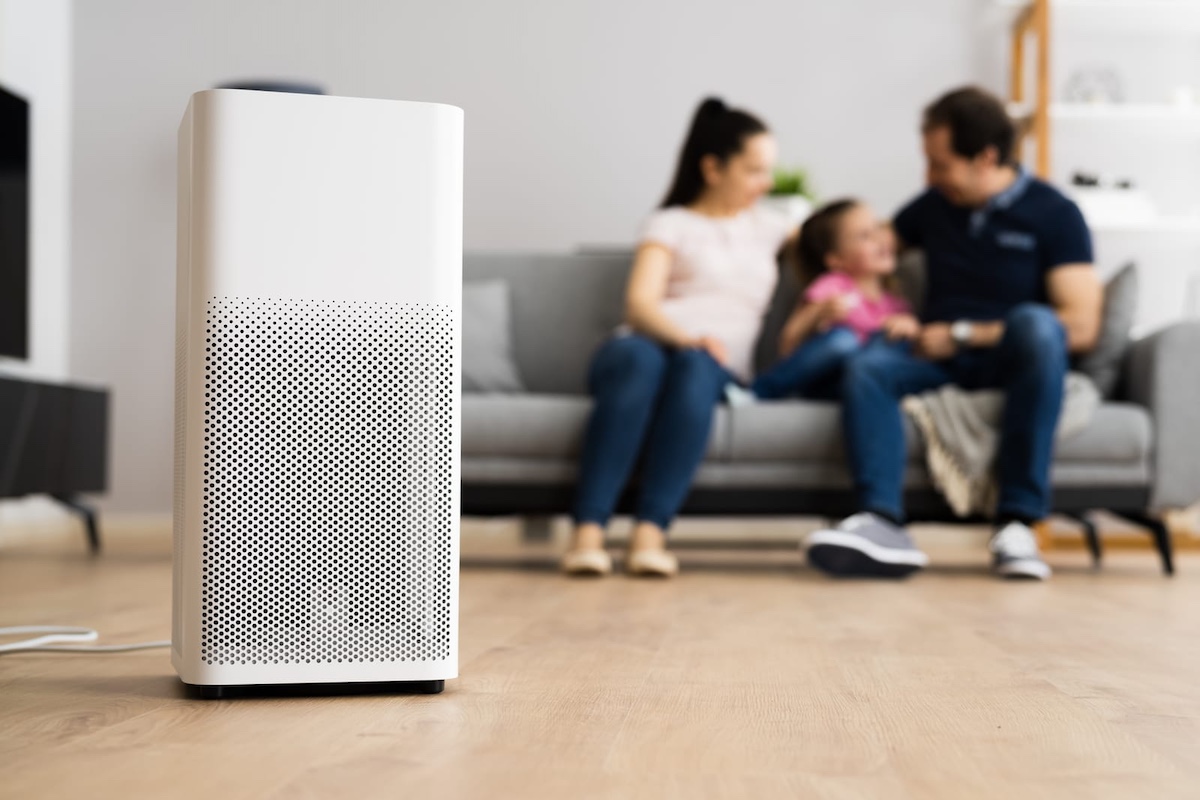
Which one to buy, dehumidifier vs air purifier, if you sense that something is wrong with the air in your home, such as an unusual musty smell that does not go away or an increase in allergy attacks?
Both promise better air, but they address two very different issues.
If you buy the wrong one, you won’t notice anything.
Quick Verdict
Air purifiers and dehumidifiers differ significantly in what they can actually do for your home.
Both appliances strive to bring clean air into the home, but which would provide it most efficiently?
- Smell musty, see mold, feel damp? You need a dehumidifier.
- Sneezing constantly, smell smoke, have pets or allergies? You need an air purifier — and if smoke is your specific problem, our guide to the best air purifier for cigarette smoke covers exactly which models handle it.
- Both? Use both. They solve different problems and work well together.
Neither device replaces the other.
A dehumidifier won’t catch dust.
An air purifier won’t dry a damp basement.
Knowing which problem you have is 90% of this decision.
Stop Here First: Which Problem Does Your Home Actually Have?
Before jumping into the lists below, take thirty seconds to diagnose your actual problem.
Most buying mistakes happen because people skip this step.
Step 1 — Check humidity
Grab a hygrometer and measure your indoor levels.
Above 50% consistently? Moisture problem.
A dehumidifier is your starting point.
Step 2 — Check what you’re reacting to
Sneezing indoors, watery eyes, pet odor, or smoke smell?
Those are particle and gas problems — the kind HEPA and carbon filters address.
Step 3 — Check the surfaces
Condensation on windows, mold in corners, damp patches on walls?
Structural moisture.
An air purifier won’t fix this.
A dehumidifier will.
Do those three checks first.
The dehumidifier vs air purifier decision usually makes itself.
Choose a dehumidifier if…
- Your home smells musty or damp, especially in basements, bathrooms, or laundry rooms
- You can see condensation on windows or walls
- Mold or mildew keeps coming back no matter how often you clean it
- You live in a humid climate and the air just feels heavy and sticky
- Humidity in your home is consistently above 50%
Choose an air purifier if…
- You suffer from allergies, asthma, or regular sneezing fits indoors
- You have pets and deal with dander and odour
- There’s cigarette smoke, cooking fumes, or wildfire smoke affecting your home
- You live near a busy road and want to filter traffic pollutants
- You want to remove dust, pollen, VOCs, or fine particles from the air
Use both if…
- Your home has high humidity AND airborne allergens — common in older homes and humid climates
- You have pets in a home that also gets damp in winter
- Allergy season hits and condensation on your windows never goes away
Dehumidifier vs Air Purifier: Key Differences at a Glance
| Feature | Dehumidifier | Air Purifier |
| Main job | Removes moisture from the air | Removes particles from the air |
| Fixes | Mold, mildew, damp, musty smells | Dust, pollen, smoke, pet dander, VOCs |
| Works on humidity | Yes — controls it directly | No — has no effect on humidity |
| Works on allergens | Indirectly — removes conditions mold needs | Yes — directly captures particles |
| Filter needed | Usually not (some basic dust pre-filters) | Yes — HEPA and/or carbon filters |
| Water tank | Yes — needs emptying regularly | No |
| Noise | Moderate — compressor is audible | Low to moderate, depending on fan speed |
| Energy use | Higher — compressor draws more power | Lower — fan-based systems use less |
| Ideal rooms | Basement, bathroom, utility room, kitchen | Bedroom, living room, home office |
| Running cost | Moderate to high | Low to moderate (plus filter costs) |
Performance Comparison
The air purifier vs dehumidifier gap is clearest when you look at what each machine actually does to the air.
Dehumidifier
Dehumidifiers remove moisture by pulling it across cold coils and condensing into droplets that drip down easily removable tanks or drain lines before being collected by attachment hose for disposal or recycling.
CDC recommendations call for humidity levels between 30%-50% in homes to limit mold, dust mite, and bacteria growth; anything above 60% significantly increases your odds.
A dehumidifier addresses that problem head-on; however, it cannot filter existing dust, pollen, smoke, or dander already floating through your airspace.
High indoor humidity also damages hardwood floors — our guide on how to clean hardwood floors covers the safe humidity range for different finish types.
Air Purifier
Air purifiers work by drawing room air through a HEPA filter that captures particles down to 0.3 microns—dust, pollen, pet dander, and mold spores — before passing it over an activated carbon layer to deal with gases and odors.
Cleaned air returns continuously back into the room; with one important caveat however: air purifiers don’t affect humidity: though they might capture airborne mold spores but won’t prevent further growth on damp walls.
Bottom Line
A dehumidifier solves a moisture problem.
An air purifier solves a particle problem. In many homes both exist at once — which is why running a dehumidifier in damp rooms alongside an air purifier in living spaces is often the most effective approach.
Noise Comparison
Dehumidifiers run a compressor — that low fridge-like hum is always present.
Most land between 45–55 dB. Fine in a utility room or during the day, but noticeable in a quiet bedroom at night.
Air purifiers run on fans.
On low, a good model barely registers — around 25–35 dB. On high, 50–60 dB.
Most people run them quietly overnight and turn up the speed during the day.
For bedrooms, the air purifier is the easier machine to sleep next to.
If bedroom humidity is the primary problem, our guide to the best dehumidifier for bedroom covers quiet compressor models that run under 50 dB on low.
If an air purifier is your answer, our best air purifier for bedroom guide covers the quietest models built for overnight use.
If you also want airflow in the room, our guide to the best bladeless tower fans covers models quiet enough for overnight use.
Maintenance & Running Costs
Dehumidifier: tank needs emptying every 24–48 hours.
Monthly coil cleaning.
Energy draw of 300–700W makes it pricier to run.
No filter costs.
Annual running cost roughly $80–$180.
Air purifier: HEPA filter replacement every 6–12 months ($25–$70).
Energy draw of just 30–100W.
Annual cost, including filters, roughly $40–$120.
If you’re leaning toward an air purifier, our best air purifier under $100 covers the most cost-efficient units at that price point.
Air purifiers cost less to run but more in consumables.
Dehumidifiers cost more in energy but nothing in filters.
Over a year, costs are broadly similar — your usage pattern decides which is cheaper.
Pros & Cons
Here is how each side of the dehumidifier vs air purifier comparison stacks up in practice.
Dehumidifier
Pros: A dehumidifier provides ideal humidity controls that eliminate mold, mildew and condensation problems in their tracks while eliminating dust mite conditions without incurring filter costs.
They’re even great for drying laundry in winter!
Cons: Does not address dust, pollen, smoke and dander; tank requires regular emptying; higher electricity use with audible compressor at night.
Air Purifier
Pros: An HEPA filter captures dust, pollen, pet dander, smoke and VOCs effectively, providing real support to allergy and asthma sufferers with near silent operation on low.
Running costs are lower; HEPA models cover large rooms well, see our best air purifier for large rooms guide for specific picks.
To size one correctly for your space, check our guide on what CADR means in air purifiers: it tells you how fast a unit cleans a given room.
Cons: Zero effect on humidity; captures airborne mold spores but won’t stop mold growing on damp walls; ongoing filter costs.
Avoid ozone generators and ionizers that intentionally emit ozone — the EPA confirms ozone can irritate the lungs and worsen respiratory conditions, even at levels that meet public health standards.
Check before buying: EPA guidance on ozone and air cleaners.
Which One Is Right for You?
The air purifier vs dehumidifier choice depends entirely on which problem you are solving — not which machine sounds more impressive.
Musty smell, condensation on windows, mold reappearing — start with a dehumidifier.
Filtering particles from air that still has a moisture problem underneath won’t solve anything. Sort the damp first.
Dry home but sneezing every morning, allergies worse indoors, pets, smoke, or traffic fumes coming in — start with an air purifier.
If pets are the main concern, our best air purifier for pets covers the right picks for dander and odor.
For whole-home coverage, a whole house air purifier integrated with your HVAC handles every room at once.
And if you’ve settled on an air purifier but aren’t sure which specs matter, our air purifier buying guide walks through sizing and filtration from scratch.
Still unsure?
Ask yourself: am I fixing what’s in the air (particles) or what the air is doing (holding too much moisture)? That question usually settles it. And if the honest answer is ‘both, but my air runs dry rather than damp,’ an air purifier and humidifier combo filters and adds moisture in a single machine, though it won’t match a standalone air purifier’s cleaning power
How We Research
We dig through manufacturer specs, hands-on reviews from trusted outlets, independent performance data, and long-term user feedback — then pull it all into one place so you don’t have to.
Every recommendation in this guide is based on what the evidence consistently shows, not what a brand wants you to believe.
For our full method and scoring rubric, see our review methodology.
For more, browse our Home Climate category at EverydayHomeComfort.com.
Frequently Asked Questions
Dehumidifiers should be your first choice; these devices remove moisture, which is essential for the survival and thriving of mold, whereas air purifiers may remove the spores of mold floating in the air, but if the walls are damp, the spores will still get in.
In the case of pre-existing mold, remediation services should first be sought, as no home device is able to do this.
Dehumidifier pulls water out of the air.
Air purifier pulls particles out.
One fixes damp.
The other fixes dirty air.
Yes — and for most homes with real air quality issues, you should.
They solve different problems and don’t interfere with each other.
Air purifiers capture pollen, dust mites and pet dander directly, while dehumidifiers help indirectly by restricting dust mites and mold growth, which also act as allergen triggers.
When it comes to immediate allergy relief, the air purifier takes the crown.
For a full breakdown by allergen type, see our guide on air purifiers and allergies.
Dehumidifiers draw 300–700 W.
Air purifiers use 30–100W.
A meaningful gap if energy costs matter to you.
Almost always a dehumidifier.
Basements are damp by nature — the CDC recommends controlling moisture as the primary mold prevention strategy.
Sort the moisture first, then add an air purifier if you use the space regularly.
No.
None.
Zero effect on moisture levels.
If your home feels damp, only a dehumidifier helps.
Final Recommendation
The dehumidifier vs air purifier decision isn’t a competition — it’s about identifying the right problem.
Damp, musty, humid?
Get a dehumidifier.
Without moisture control, you’re fighting mold and dust mites with the wrong tool no matter what else you buy.
Allergies, smoke, pets, pollutants?
Get an air purifier.
A quality HEPA model makes a noticeable difference within days.
For whole-home coverage, a whole house air purifier on your HVAC handles every room at once.
Both?
Use both.
A dehumidifier in damp rooms and an air purifier in your bedroom and living space covers the problem from both sides — and that’s usually the setup that actually works.