Ad. When you purchase through links we provide, we may receive an affiliate commission. Here's how it works.
Best Dehumidifiers for Basements (2026): 5 Top Picks
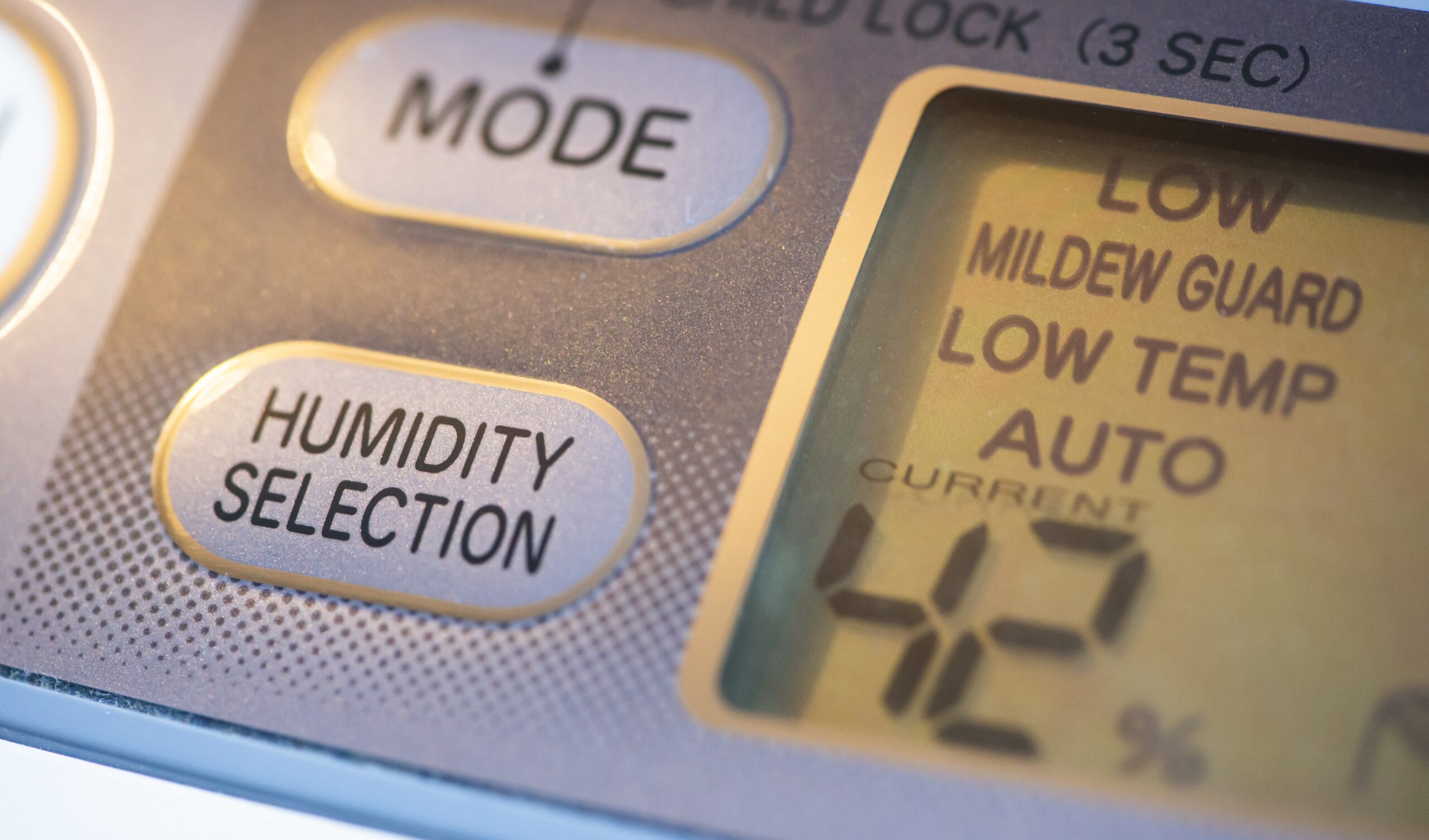
The best dehumidifiers for basements start with one clear winner: the Midea Cube 50-Pint removes moisture faster than any other consumer unit we analyzed, and its 4.25-gallon tank means you empty it three times less often. If you need it running through winter or covering a large unfinished space, step up to the AlorAir Sentinel HDi90 or Aprilaire E100 Pro.
Quick Picks
- Midea Cube 50-Pint: best overall for most finished basements; fastest moisture removal and biggest tank in the consumer tier
- GoveeLife H7151: best runner-up for a large tank and full app control with Alexa and Google Home
- Santa Fe Compact70: best for crawl spaces and pet owners; MERV 13 filter and 6-year warranty
- AlorAir Sentinel HDi90: best for cold basements; runs to 33.8°F with a built-in pump included
- Aprilaire E100 Pro: best for large finished basements; 100 PPD, 55 dBA when ducted, made in the USA
Key Takeaways
- The PPD number on the box is tested at 80°F: most basements run 60–65°F in summer, cutting real-world capacity by 30–40%. A “50-pint” unit extracts closer to 30–35 pints per day in typical basement conditions.
- Target 45–50% relative humidity, and never let it sit above 60%: that’s the EPA’s ceiling for mold prevention.
- Three of the five picks here have minimum operating temperatures above 45°F: only the AlorAir Sentinel HDi90 (33.8°F min) runs reliably year-round in cold unheated basements.
- Built-in pumps fail more often than gravity drains. If you have a floor drain or sump pit, gravity drain is always the better choice.
- Warranty length predicts long-term reliability better than brand name: consumer units carry 1-year warranties; Santa Fe and Aprilaire carry 5–6 years for a reason.

Why Finding the Best Dehumidifiers for Basements Is Harder Than It Looks
Your basement holds more moisture than any other room in your home, and most dehumidifiers at the big-box store weren’t designed for it. Finding the best dehumidifiers for basements means understanding why standard units underperform underground, and which specs actually hold up once temperatures drop below 65°F. The EPA’s guide on indoor mold and moisture recommends keeping relative humidity between 30% and 50%. Your basement is where that target is hardest to maintain, and the CDC links chronic mold exposure to respiratory conditions and worsened asthma, especially in children and people with allergies.
Pairing your dehumidifier with one of the best UV light air purifiers adds another layer of defense, since UV-C disinfection targets airborne mold spores that filtration alone can miss.
Set your basement dehumidifier to 45–50% relative humidity: the EPA sets 60% as its ceiling for mold prevention, and separately recommends drying any wet or damp materials within 24–48 hours after a leak or spill. Below 35% and you risk drying out engineered hardwood floors and wood trim.
Why Standard Dehumidifiers Underperform in Basements
Most consumer dehumidifiers are AHAM-rated at 80°F and 60% relative humidity. Real basements run 60–65°F in summer and colder through winter.
At 65°F, a “50-pint” unit may extract only 30–35 pints per day, sometimes less with pets, a 1940s stone foundation, or limited airflow. The ENERGY STAR testing and capacity page explains why: DOE’s own current test for portable dehumidifiers runs at 65°F, colder than the 80°F AHAM condition manufacturers still use for their headline PPD number, which is one reason a unit’s real-world output can look lower than the box suggests. If you are managing both humidity and temperature, pairing your dehumidifier with a smart thermostat gives you coordinated climate control rather than two separate systems working independently.
When you compare models, always compare AHAM-certified PPD, not saturation ratings, which are measured at extreme 90°F/90% RH conditions you’ll never hit indoors.
Three specs matter most when choosing a basement dehumidifier:
- IEF (Integrated Energy Factor): measures liters removed per kWh under real-world conditions (post-2019 DOE standard). Look for 1.8+ for consumer units, 2.4+ for industrial.
- Minimum operating temperature: if your basement drops below 50°F in winter, most consumer units will ice up and shut off.
- MERV filter rating: consumer units use basic filters; industrial units reach MERV 8–13, which matters for pet owners and households with allergies.
See our guide on HEPA vs True HEPA filters for context on what these filtration ratings actually mean.
Dehumidifiers for Basement Mold, Musty Odor, and Wet or Flooded Basements
Mold, musty odor, and standing water are three different problems, and they don’t all start with a dehumidifier. Here’s what to do first in each case, and where a dehumidifier actually fits.
If You Already Have Visible Mold
A dehumidifier will not remove mold that has already grown. Clean up small patches yourself or bring in a remediation professional for anything larger, and fix whatever is causing the moisture. The EPA is direct about this: if you clean up the mold but don’t fix the water problem, the mold comes back. Once the surface mold is gone, run a properly sized unit from the sizing table above to hold humidity at 45 to 50% RH, so conditions can’t support new growth. The Santa Fe Compact70’s MERV 13 filter also helps here: it captures airborne mold spores as it runs, on top of the humidity control.
If It Smells Musty but You Don’t See Mold
That smell is real information. The EPA notes that musty odors come from microbial compounds mold releases as it grows, and that a moldy smell suggests mold growing somewhere in the building, often before it’s visible. If the odor is coming from one specific spot, like behind trim or inside a wall cavity, that needs to be investigated rather than just dehumidified around. If it’s a general basement smell with no obvious source, sustained humidity control from any of the picks above, sized correctly for your space, is usually enough to clear it over one to two weeks.
If Your Basement Just Flooded or Has Standing Water
A dehumidifier is not a flood-response tool. Remove standing water first, with a wet vac, a sump pump, or a professional water extraction service, before a dehumidifier does anything useful. Once the standing water is gone, speed matters: the EPA’s guidance is to dry wet materials within 24 to 48 hours to keep mold from taking hold. That’s the drying phase a dehumidifier is actually built for. For that kind of sustained, heavy moisture load, use the Wet/Seepage column in the sizing table above, and look at the AlorAir Sentinel HDi90, built with a standard condensate pump for exactly this kind of continuous, high-volume drainage.
Compressor vs. Desiccant vs. Peltier: Which Dehumidifier Technology Works in a Basement
All five picks above use compressor (refrigerant) technology, the same category ENERGY STAR certifies for dehumidifiers. That’s not an accident. For a basement pulling 50 to 100 pints a day, compressor units are the only technology built for that kind of volume. Two other technologies exist, though, and knowing where each one actually fits explains why every pick above lists a minimum operating temperature, and when a compressor unit isn’t the right tool at all.
Compressor (Refrigerant) Dehumidifiers
This is the technology behind every pick on this page. A cold evaporator coil condenses moisture out of the air, then a condenser coil reheats that air before it’s blown back into the room. The tradeoff is built into the mechanism: this process works best at higher ambient temperatures and gets less effective as the room gets colder, which is exactly why every unit above lists a minimum operating temperature between 33°F and 50°F. Push a compressor unit below that line and the coils ice over.
Desiccant Dehumidifiers
Desiccant units remove moisture a different way: air passes over a hygroscopic material, usually silica gel, that bonds with water molecules directly, with no cold coil involved. That’s why desiccant dehumidifiers stay effective in cold, high-humidity conditions where compressor units struggle. If your basement or crawl space regularly runs colder than 33.8°F, the lowest minimum operating temperature among the picks above, a desiccant unit is the technology built for that environment, not a compressor unit rated for temperatures it can’t reliably hit.
Peltier (Thermoelectric) Dehumidifiers
Peltier units use an electric current across a semiconductor junction to create a cold surface that condenses moisture, with no compressor or refrigerant involved. That makes them compact, quiet, and simple, but also far less efficient: thermoelectric coolers typically reach only 10 to 15% of ideal refrigeration efficiency, compared with 40 to 60% for compressor systems. That gap is why thermoelectric cooling is rarely used at basement scale. A Peltier unit belongs in a closet or a gun safe, not a basement.
How to Size Your Basement Dehumidifier
Use this table as a starting point, then add 15–25 PPD if you see efflorescence (white mineral deposits on walls), visible condensation, or a persistent musty smell. Always use AHAM-rated PPD for comparisons.
| Basement Area | Moderately Damp | Very Damp | Wet / Seepage |
|---|---|---|---|
| Under 500 sq ft | 20–25 PPD | 30–35 PPD | 40–50 PPD |
| 500–1,000 sq ft | 25–35 PPD | 40–45 PPD | 50–60 PPD |
| 1,000–1,500 sq ft | 35–45 PPD | 50–55 PPD | 60–70 PPD |
| 1,500–2,000 sq ft | 45–55 PPD | 60–70 PPD | 70–90 PPD |
| Over 2,000 sq ft | 60–70 PPD | 75–90 PPD | 90–100+ PPD |
Large or open-concept basements often need dust and allergen control too. If that’s you, check our best air purifier for large rooms guide.
The 5 Best Dehumidifiers for Basements in 2026
1. Midea Cube 50-Pint: Best Overall
Sale

Midea Cube 50-Pint
- 4,500 Sq.Ft. OF COVERAGE – Midea dehumidifier with drain hose collects 50 pints of water a day and…
- SMALLER FORM, LARGER CAPACITY – Up to 3X larger water tank allows the Midea Cube dehumidifier to operate…
- DEHUMIDIFIER WITH DRAIN HOSE allows CONTINUOUS DRAIN OPTION – Versatile, no-bucket option provides more…
$241.59

Check Today’s Price on Amazon
The Midea Cube 50-Pint pairs a 50 PPD (AHAM) rating with a 34-pint tank, meaning you empty it every 2 to 3 days instead of daily. In a 900 sq ft finished basement, it runs every afternoon, sends app alerts when the tank needs emptying, and holds the space at 47% RH without you touching it. If you have pets, note the Midea uses a standard washable filter, not MERV 13; for pet dander filtration, the Santa Fe Compact70 is the stronger choice.
| EverydayHomeComfort Score | Midea Cube 50-Pint |
|---|---|
| Moisture Removal (35%) | 7.5 / 10 |
| Energy Efficiency (20%) | 5.0 / 10 |
| Capacity & Drainage (20%) | 7.5 / 10 |
| Noise (15%) | 6.5 / 10 |
| Ease of Use (10%) | 9.0 / 10 |
| Overall Rating | 7.0 / 10 |
Pros
- Fastest humidity drop in the consumer tier
- 34-pint tank (3× standard)
- Wi-Fi + Alexa with bucket-full alerts
- Compact cube footprint
- Continuous drain port available
Cons
- 1-year warranty only
- Short for a damp environment
- Pump model is a separate SKU: easy to order the wrong one if you’re not checking the listing carefully
- Some compressor issues reported at 11–14 months
Key specs
- 50 PPD (AHAM) (manufacturer claim)
- IEF 2.01 L/kWh (ENERGY STAR certified database)
- 512W (manufacturer claim)
- 66.4 dB (manufacturer claim)
- Min temp 41°F
- 1-year warranty
Best for: Busy professionals wanting app alerts and infrequent emptying; finished basements up to 1,500 sq ft
2. GoveeLife H7151: Best Value Runner-Up
Sale

GoveeLife H7151
- Smart Functions: Dehumidifier for home with smart APP/voice/touch control brings a more convenient living…
- Automatic Comfort: The dehumidifier for basement has a built-in sensor to dehumidification based on the…
- Powerful Dehumidification: Under high-speed dehumidification work, this bathroom dehumidifier will emit a…
The GoveeLife H7151 has a 32-pint tank, one of the largest in its class, which means fewer trips to empty it during high-humidity stretches. It connects to Alexa, Google Home, and the Govee app, with real-time humidity monitoring, scheduling, and tank-full alerts on your phone.
| EverydayHomeComfort Score | GoveeLife H7151 |
|---|---|
| Moisture Removal (35%) | 7.0 / 10 |
| Energy Efficiency (20%) | 8.0 / 10 |
| Capacity & Drainage (20%) | 6.5 / 10 |
| Noise (15%) | 4.5 / 10 |
| Ease of Use (10%) | 9.0 / 10 |
| Overall Rating | 6.9 / 10 |
Pros
- 50 PPD (AHAM) capacity, on par with the Midea Cube
- 32-pint tank; largest in the runner-up class
- Wi-Fi + Alexa + Google Home
- Fast moisture removal (90% → 40% RH in 8 min 41 sec)
- Govee app with real-time monitoring, scheduling, and alerts
Cons
- No built-in pump
- Higher power draw (603W vs. ~430–512W on comparable consumer units)
- Govee is a newer brand; less long-term track record
- 1-year warranty
Key specs
- 50 PPD (AHAM) (manufacturer claim)
- 603W (manufacturer claim)
- 4,500 sq ft (manufacturer claim)
- 1-year warranty
Best for: Basements where energy efficiency and tank capacity matter
3. Santa Fe Compact70: Best for Pet Owners and Crawl Spaces
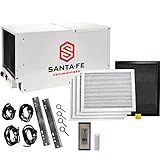
Santa Fe Compact70
- Simple Dial Humidity Control
- Two-Stage Air Filtration – MERV 13
- Auto Defrost
Built by Therma-Stor in Wisconsin, the Santa Fe Compact70 is the only unit on this list with a MERV 13 filter: it captures fine particles and pet dander before they can recirculate through your home. Its horizontal low-profile form factor (12″ wide × 12″ tall × 21″ deep) fits in crawl spaces and low-clearance basements where nothing else goes. Its Energy Factor is 2.4 L/kWh at the AHAM 80°F condition, or 1.9 L/kWh at 70°F (Therma-Stor’s official specifications).
The Santa Fe Compact70’s warranty is the longest of any unit on this list: 2 years on the full product, 6 years on components, a genuine signal of the build quality gap between consumer and industrial tiers.
If you have pets and are also dealing with household allergy concerns, this is the basement dehumidifier that addresses both moisture and air quality simultaneously.
| EverydayHomeComfort Score | Santa Fe Compact70 |
|---|---|
| Moisture Removal (35%) | 7.5 / 10 |
| Energy Efficiency (20%) | 8.0 / 10 |
| Capacity & Drainage (20%) | 6.0 / 10 |
| Noise (15%) | 8.0 / 10 |
| Ease of Use (10%) | 5.0 / 10 |
| Overall Rating | 7.1 / 10 |
Pros
- MERV 13 filter
- Best filtration of the five
- Horizontal design for crawl spaces and low ceilings
- Longest warranty of the five (6 years on components)
- 58–63 dB
Cons
- Min temp 49°F: not suitable for cold unheated basements in winter
- No Wi-Fi or app control
- No built-in pump
- Sold through specialty dealers, not big-box stores
Key specs
- 70 PPD (AHAM)
- EF 2.4 L/kWh @ 80°F, 1.9 L/kWh @ 70°F (manufacturer spec)
- MERV 13
- Min temp 49°F
- 2-yr warranty (6-yr components)
- 58–63 dB (manufacturer claim)
Best for: Crawl spaces and any basement where air quality matters
4. AlorAir Sentinel HDi90: Best for Cold or Large Basements

AlorAir Sentinel HDi90
- 198 PPD Dehumidifier: With a large water removal capacity of up to 198 Pints per day at saturation…
- Heavy Duty Condensate Pump: When removing large amounts of moisture, the condensate pump keeps the…
- Automatic Defrost: Our advanced auto-defrosting system continuously monitors the ambient temperature…
Only the AlorAir Sentinel HDi90, rated to a minimum of 33.8°F, is truly built for year-round basement operation in cold-climate homes. Every other unit on this list stops functioning reliably below 41–50°F. The HDi90 pairs that c old-weather capability with a built-in condensate pump (standard, not an add-on), 90 PPD AHAM capacity, and a 5-year warranty.
If you’re in Minnesota, Wisconsin, or any state where your unheated basement drops below 45°F from November through March, this is the unit that keeps running when others freeze. It’s not a finished-basement appliance, the industrial aesthetic and 58 dBA noise level put it in utility territory, but it’s unmatched for raw reliability in harsh conditions. Pet owners should upgrade the base MERV-1 filter to the optional MERV-8 version AlorAir offers separately.
| EverydayHomeComfort Score | AlorAir Sentinel HDi90 |
|---|---|
| Moisture Removal (35%) | 8.5 / 10 |
| Energy Efficiency (20%) | 7.5 / 10 |
| Capacity & Drainage (20%) | 9.0 / 10 |
| Noise (15%) | 5.5 / 10 |
| Ease of Use (10%) | 6.0 / 10 |
| Overall Rating | 7.7 / 10 |
Pros
- Lowest min temp of any unit here: 33.8°F
- Built-in condensate pump included as standard
- 5-year warranty
- 90 PPD for large or very damp spaces
- Auto-defrost + auto-restart
Cons
- 58 dBA: higher end for a finished space
- MERV-1 base filter captures almost nothing; upgrade recommended for pet owners
- No Wi-Fi
- Industrial aesthetic
Key specs
- 90 PPD (AHAM) (manufacturer spec sheet)
- EF 2.69 L/kWh
- Min temp 33.8°F
- Built-in pump
- 5-year warranty
- <58 dBA
Best for: Unheated or cold-climate basements; large or very damp unfinished spaces; users who are looking for set-and-forget with auto-pump and auto-restart
5. Aprilaire E100 Pro: Best for Large Finished Basements
Sale

Aprilaire E100 Pro
- PROTECT YOUR HOUSE – Reduces & controls basement & whole home humidity to help prevent damp carpeting and…
- SET AND FORGET – Smart sensing technology automatically starts dehumidification when humidity above…
- ENERGY EFFICIENT – Energy Star Most Efficient Certified Dehumidifier removes up to 100 PPD of moisture…
$2,158.33
Check Today’s Price on Amazon
If you have a large finished basement and want a single unit that handles the whole space quietly, the Aprilaire E100 Pro is the right investment. At 100 PPD AHAM and 55 dBA when ducted, it’s the highest-capacity and one of the quietest high-capacity dehumidifiers available. Made in the USA with corrosion-resistant aluminum coils, a MERV 8 washable filter, and a 5-year warranty, it carries ENERGY STAR Most Efficient 2024 certification.
The tradeoff: 50°F minimum operating temperature means it won’t function in a cold unheated basement through winter, and the base E100 Pro model has no Wi-Fi (the E100W variant adds it).
For households where both humidity and air quality matter, pair it with a quality air purifier – if you have pets, our best air purifier for pets covers the most effective options. Our comparison of dehumidifier vs air purifier explains what each device actually solves. If your basement doubles as a living room and you’ve invested in engineered hardwood floors, this is the unit that protects that investment for years.
| EverydayHomeComfort Score | Aprilaire E100 Pro |
|---|---|
| Moisture Removal (35%) | 9.0 / 10 |
| Energy Efficiency (20%) | 8.5 / 10 |
| Capacity & Drainage (20%) | 5.5 / 10 |
| Noise (15%) | 8.5 / 10 |
| Ease of Use (10%) | 6.0 / 10 |
| Overall Rating | 7.8 / 10 |
Pros
- 100 PPD; highest capacity of the five
- 55 dBA ducted, quietest at this capacity level
- 5-year warranty
- Made in USA
- MERV 8 washable filter
- R32 refrigerant
- ENERGY STAR Most Efficient 2024
Cons
- Min temp 50°F: not for cold unheated basements
- No built-in pump
- No Wi-Fi on base model (E100W adds it)
- E4 error code reported on some early units
Key specs
- 100 PPD (AHAM) (manufacturer spec sheet)
- EF 2.6 L/kWh
- Min temp 50°F
- 5-year warranty
- MERV 8
- 55 dBA (ducted)
Best for: large finished basements, premium floors, long-term investment; whole-home humidity control
Best Dehumidifiers for Basements: Side-by-Side Comparison
| Model | Best For | Capacity (AHAM) | Min. Temp | Noise | IEF (L/kWh) | Warranty | EHC Score |
|---|---|---|---|---|---|---|---|
| Midea Cube 50-Pint | Most finished basements | 50 PPD | 41°F | 66.4 dB | 1.8 | 1 year | 7.0 |
| GoveeLife H7151 | Energy-efficient, app-connected spaces | 50 PPD | 41°F | 63.8-71.2 dB | ENERGY STAR Most Efficient (no published L/kWh figure) | 1 year | 6.9 |
| Santa Fe Compact70 | Pet owners / crawl spaces | 70 PPD | 49°F | 58–63 dB | 1.96 | 6 years | 7.1 |
| AlorAir Sentinel HDi90 | Cold / large basements | 90 PPD | 33.8°F | <58 dB | 2.69 | 5 years | 7.7 |
| Aprilaire E100 Pro | Large finished basements | 100 PPD | 50°F | 55 dB (ducted) | 2.6 | 5 years | 7.8 |
Common Mistakes When Buying a Basement Dehumidifier
- Trusting the box PPD number at face value. AHAM rates units at 80°F, not at real basement temperatures (60–65°F): expect 30–40% less output. Skip the size-up and the unit runs continuously, never reaches your humidity target, and burns out prematurely. Always size up by at least one tier.
- Ignoring the minimum operating temperature. Three of the five units above stop working reliably below 49–50°F. Buy one rated too high for your basement and it ices up in winter, often failing the compressor just after the warranty expires. If your basement goes cold in winter, check the spec before buying.
- Setting the humidity target too low. Below 35% RH risks cupping, cracking, and gapping in engineered hardwood floors and wood trim, damage that’s expensive to reverse. The sweet spot is 45–50%.
- Confusing pump models with non-pump models, or relying on a pump with no backup plan. The Midea Cube is sold in separate pump and non-pump versions, easy to order the wrong one if you’re not checking the listing carefully. If you have a floor drain, gravity drain is more reliable than any built-in pump: a single pump failure means water overflows while you’re at work.
- Skipping filter maintenance. A clogged filter restricts airflow, stresses the compressor, and can cut a unit’s working life in half. Rinse every 2–4 weeks during peak summer use.
Still deciding between a pump model and gravity drain? Here’s the short version:
| Your basement setup | What to use | Why |
|---|---|---|
| Floor drain or sump pit accessible via gravity | Gravity drain, no pump | More reliable: built-in pumps are the most common component to fail on consumer units |
| No floor drain, need to move water up to a window or utility sink | External condensate pump | More dependable than a factory-installed pump |
How We Research
We analyzed 20+ basement dehumidifier models released between 2023 and early 2026, drawing on manufacturer specifications, DOE/ENERGY STAR certified efficiency data, AHAM-verified capacity ratings, and thousands of verified purchase reviews. For each model, we cross-referenced IEF ratings, minimum operating temperatures, noise levels at measured distances, filter MERV ratings, and warranty terms. We do not accept payment or product samples from manufacturers, our recommendations are editorially independent. For our full method and scoring rubric, see our review methodology.
Update history:
16 September 2026: added new sections on dehumidifier technology types and on mold, musty odor, and flooded-basement scenarios.
Choose in 60 Seconds
- If you have a finished basement under 1,500 sq ft → buy the Midea Cube 50-Pint
- If you want the largest consumer tank and full app control → buy the GoveeLife H7151 (32-pint tank, Wi-Fi + Alexa + Google Home)
- If you have pets or a crawl space → buy the Santa Fe Compact70 (MERV 13, horizontal form factor)
- If your basement drops below 45°F in winter → buy the AlorAir Sentinel HDi90 (runs to 33.8°F)
- If you have a large finished basement over 2,000 sq ft → buy the Aprilaire E100 Pro
- If you want the longest warranty and lowest long-term risk → buy the Santa Fe Compact70 (6 years) or Aprilaire E100 Pro (5 years)
Browse all our humidity control guides for more options and comparisons.
Who This Is For, and Who It Isn’t
This is for you if:
- Your basement smells musty or shows condensation during summer months
- You want a unit that runs quietly in a finished basement without constant attention
- You have pets whose dander or hair ends up in your basement air
- Your basement is unfinished, unheated, or prone to seasonal moisture
- You want set-and-forget operation: large tank, auto-restart, or app alerts
This is NOT for you if:
- You need to control whole-home humidity from the HVAC level: that’s a different product category
- You’re dealing with active mold growth or water intrusion: professional remediation comes before any dehumidifier
- You want a lightweight portable unit to move between rooms: these are basement-optimized for continuous stationary operation
Frequently Asked Questions
What humidity level should I set my basement dehumidifier to?
Set it to 45–50% relative humidity. The EPA sets 60% as its ceiling for mold prevention, and separately recommends drying any wet or damp materials within 24–48 hours after a leak or spill. Below 35% risks drying out hardwood floors and wood trim. Most units have a digital humidistat: set it to 48% and leave it.
Why does the PPD on the box not match what my unit actually removes?
AHAM tests dehumidifiers at 80°F and 60% relative humidity: conditions most basements never reach. Real basements run 60–65°F in summer. At 65°F, a 50-pint unit removes closer to 30–35 pints per day. DOE runs its own portable-dehumidifier test at 65°F, separate from the 80°F AHAM condition, which is one reason a unit’s real-world output often runs lower than the box PPD suggests. Always size up by 15–20 PPD from what the box says.
What is the difference between AHAM-rated PPD and saturation PPD?
AHAM PPD is measured at 80°F/60% RH: a standardized condition useful for comparing models head-to-head. Saturation PPD is measured at 90°F/90% RH: extreme conditions you’ll rarely see indoors. Saturation ratings can be 2–3× higher than AHAM ratings for the same unit. Always compare AHAM-certified numbers; saturation PPD is a marketing figure.
Do I need a built-in pump in my basement dehumidifier?
Only if you have no floor drain or sump pit accessible via gravity.
See the pump vs. gravity drain table below the Common Mistakes section for the full breakdown.
Can I run a basement dehumidifier in winter?
It depends on your unit’s minimum operating temperature. Consumer models (Midea, GoveeLife) struggle below 50°F and can ice up. The Santa Fe Compact70 works down to 49°F; the Aprilaire E100 Pro to 50°F. Only the AlorAir Sentinel HDi90 (33.8°F minimum) runs reliably year-round in a cold unheated basement. Check the spec sheet before assuming your unit can handle winter.
How often should I clean the filter on a basement dehumidifier?
Every 2–4 weeks during peak summer use (May–September). In a basement with pets, clean every 2 weeks. A clogged filter restricts airflow, reduces dehumidification capacity, and stresses the compressor, shortening the unit’s working life. Washable filters (Midea, GoveeLife, Aprilaire) should be rinsed and fully dried before reinstalling.
Is a Santa Fe or Aprilaire worth the higher investment vs. a consumer unit?
If you need it running year-round in an unfinished or semi-finished basement, yes. The 5–6 year warranties on industrial units reflect a real build quality difference. A consumer unit in a wet unfinished basement commonly requires replacement within 2–3 years. Two consumer unit replacements typically exceed the one-time cost of one industrial unit, plus the hassle of repeated installation.
Where in the basement should I place my dehumidifier?
Centrally if possible, with at least 12 inches of clearance on all sides.
In basements with identifiable moisture sources (foundation walls, sump pit, below-grade windows) position the unit near the primary moisture entry point. Avoid corners and tight wall placements, which restrict airflow and can reduce efficiency by 15–20%.
Can I use a bedroom dehumidifier in my basement instead?
Only if your basement is small, finished, and stays as warm as a bedroom, usually above 60°F. Bedroom dehumidifiers are sized for smaller, quieter spaces, not the 50 to 100+ PPD a damp or cold basement needs.
Check the sizing table above first; for bedroom-specific picks, see our best dehumidifier for bedroom guide.
Final Verdict: The Best Dehumidifiers for Basements in 2026
The best dehumidifiers for basements aren’t the ones with the biggest PPD number on the box, they’re the ones sized for what your basement actually delivers at real temperatures.
For most finished basements, the Midea Cube 50-Pint covers 80% of use cases.
Pet owners and crawl spaces point to the Santa Fe Compact70 and its MERV 13 filter.
Cold or large unfinished basements need the AlorAir Sentinel HDi90. If you’re protecting a large finished space for the long term, the Aprilaire E100 Pro is worth the investment.
Still unsure? Start with your square footage and whether your basement stays above 50°F in winter, those two answers narrow it to one pick.
For sleeping areas where humidity is the primary concern, our best dehumidifier for bedroom guide covers quiet units sized for overnight use.
If pet hair is a factor across your whole home, our guide to the best robot vacuums for pet hair covers the floor side of the equation. Explore the full range of home climate guides (fans, purifiers, and seasonal comfort) or browse everything at EverydayHomeComfort.
And if you’re also thinking about improving air quality alongside humidity, our best bladeless tower fans guide covers how airflow complements dehumidification in summer.