Ad. When you purchase through links we provide, we may receive an affiliate commission. Here's how it works.
Best Air Purifier for Cigarette Smoke in 2026
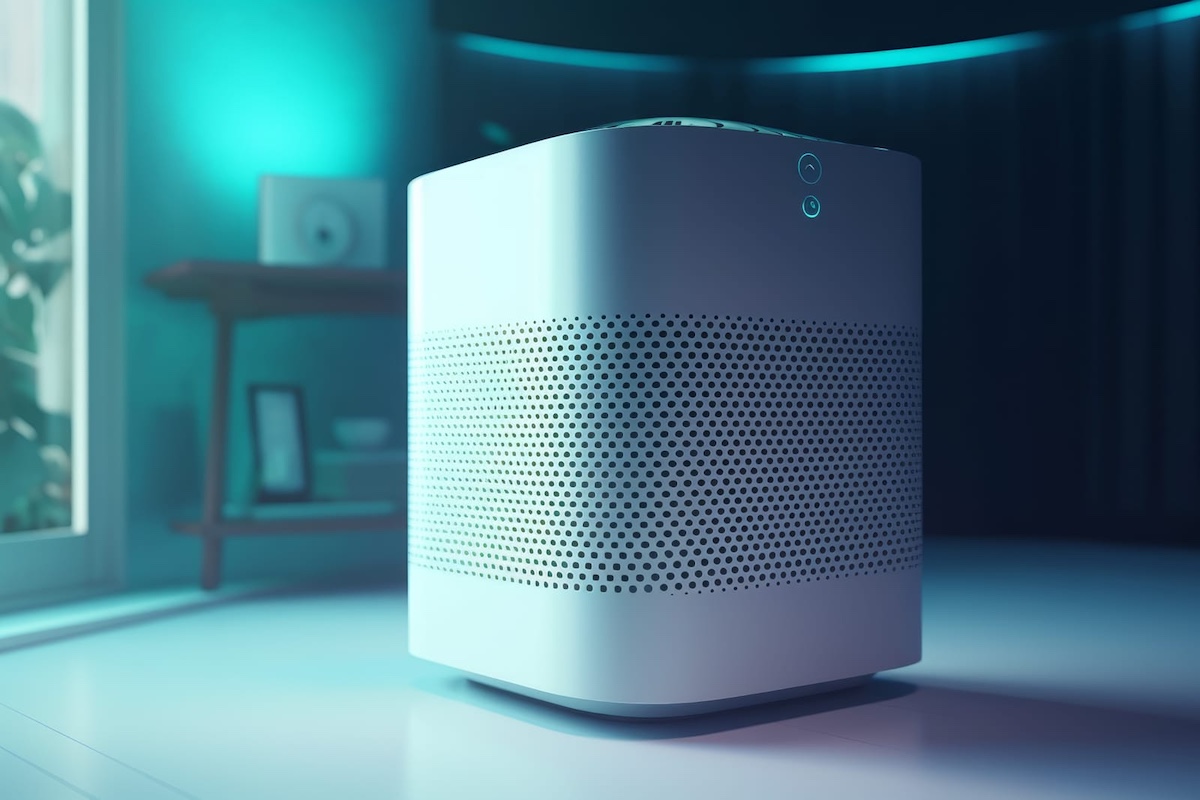
Standard HEPA units built for dust or pollen will capture the visible haze — but leave the toxic gases and odor behind.
The Austin Air HealthMate Standard B400 is the best air purifier for cigarette smoke for most households — its 15 lbs of activated carbon outperforms every mainstream competitor for odor and VOC removal.
If you need smart features and fast air turnover for a large room, the Levoit Core 600S (with the smoke filter) is the better fit.
Quick Picks — Best Air Purifiers for Cigarette Smoke
- Austin Air HealthMate Standard B400 — best overall for households where someone smokes indoors daily
- IQAir HealthPro Plus — best premium pick for large rooms and maximum particle + gas filtration
- Levoit Core 600S — best for large open-plan spaces with smart home integration
- Winix 5510 — best mid-range pick for occasional or light smoke exposure
- Coway Airmega AP-1512HH (Coway Mighty) — best for small rooms and apartment dwellers dealing with drifting smoke
For more on sizing a purifier to a large open floor plan specifically, see our best air purifier for large rooms guide.
Key Takeaways
- Activated carbon weight is the single most important spec for cigarette smoke — a purifier needs at least 1–2 lbs of pelletized or granular carbon to handle odors meaningfully; thin carbon-impregnated fabric filters won’t cut it
- HEPA filters capture smoke particles down to 0.3 microns but do nothing for the gases and volatile organic compounds (VOCs) responsible for the smell and the health risk
- The Austin Air HealthMate carries 15 lbs of activated carbon — the highest carbon capacity available in any mainstream consumer air purifier
- For active cigarette smoke control, you need 4–6 air changes per hour — most buyers undersize by 30–40% and wonder why the smell lingers
- Ionizer features (found in Winix and Coway units) can produce trace ozone — the EPA recommends disabling them, which both units allow
If you’re dealing with cigarette smoke indoors, you need a different air purifier than everyone else — and the best air purifier for cigarette smoke is almost never the one with the most impressive marketing.
Cigarette smoke is a two-part problem: fine particles and toxic gases.
Most purifiers handle the particles.
Almost none handle the gases well enough.
Here’s what actually works, and why.
Why Cigarette Smoke Requires a Different Air Purifier
Cigarette smoke contains over 7,000 chemical substances, according to the EPA. The particles — ranging from 0.09 to 1.0 microns — are captured effectively by a True HEPA filter.
But the odor and the toxic gases (benzene, formaldehyde, acrolein) aren’t particles.
They’re volatile organic compounds (VOCs). HEPA doesn’t touch VOCs.
That’s where activated carbon comes in.
Activated carbon adsorbs gases and VOCs by trapping them in millions of microscopic pores.
The problem:
Most air purifiers use a thin sheet of carbon-impregnated fabric — maybe 50–200 grams total.
That amount saturates quickly and provides minimal gas-phase filtration.
For real cigarette smoke control, you need substantial activated carbon — measured in pounds, not grams.
Understanding the difference between HEPA grades helps here too, but even the best HEPA alone won’t address the chemical gases in cigarette smoke.
For the fundamentals of sizing, filtration, and cost before you compare carbon-heavy models, see our air purifier buying guide.
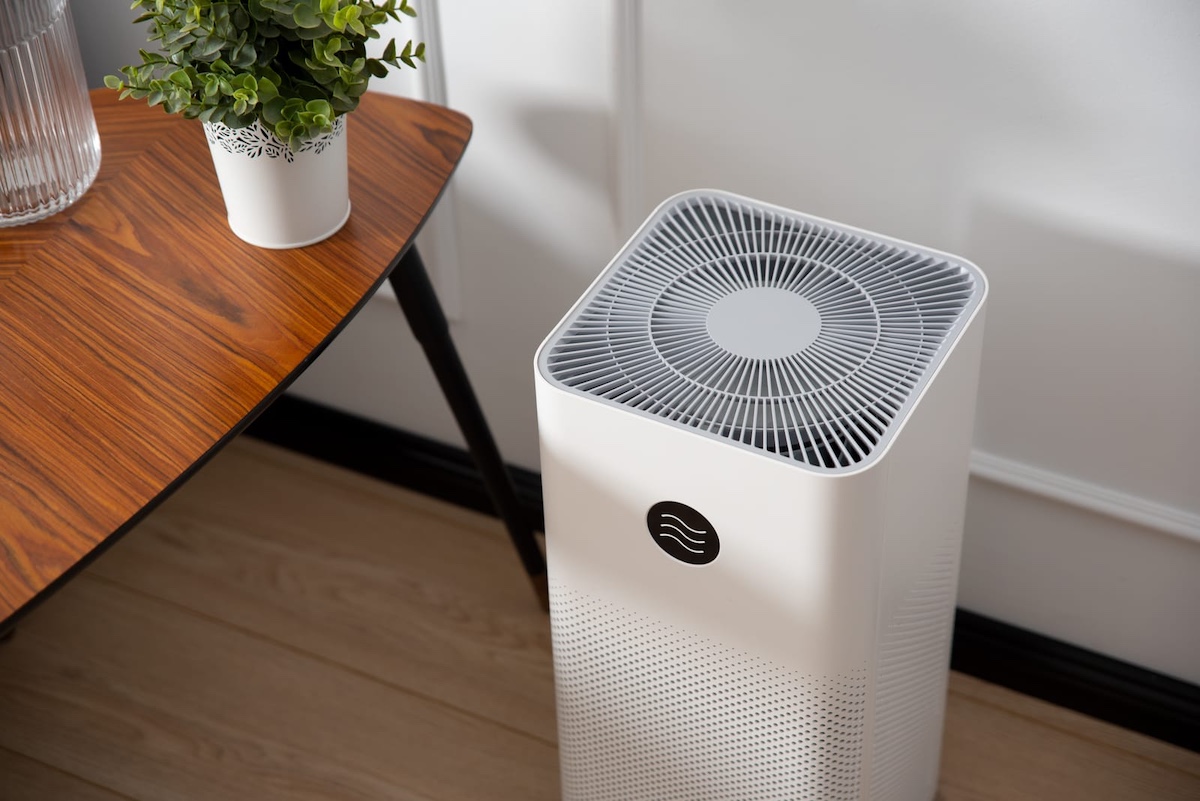
Carbon Weight vs. CADR: Which Spec Matters More for Cigarette Smoke
CADR (Clean Air Delivery Rate) measures how fast a purifier moves clean air through a room.
For a full breakdown of how CADR works, see our guide to CADR in air purifiers.
For smoke particles, CADR matters — a higher smoke CADR means faster particle removal. But for odors and VOCs, CADR is almost irrelevant.
A unit can have a high smoke CADR and still do nothing about the smell because the carbon is inadequate.
The EPA’s own guidance on home air cleaners states that gas-phase filtration requires “a large amount of material” to be effective.
For cigarette smoke, that threshold is roughly 1–2 lbs minimum for light exposure; the best units carry 5–15 lbs.
Here’s how the five units in this article compare on activated carbon weight — a spec most buyers never check:
| Product | Carbon Weight | Carbon Type |
|---|---|---|
| Austin Air HealthMate Standard B400 | 15 lbs | Activated carbon + zeolite blend |
| IQAir HealthPro Plus (V5 Cell) | ~5 lbs | Activated carbon granules |
| Levoit Core 600S (smoke filter) | ~360g (~0.8 lbs) | Pelletized carbon |
| Winix 5510 | ~200g (~0.44 lbs) | Pelletized carbon |
| Coway Airmega AP-1512HH | ~50–100g | Carbon-impregnated fabric |
Smoking Household vs. Drifting Smoke: Two Different Problems
Before choosing the best air purifier for cigarette smoke, clarify which problem you’re actually solving.
This changes the right recommendation more than any single spec.
If someone smokes indoors daily: You need a high-carbon unit running continuously — the Austin Air HealthMate or IQAir HealthPro Plus.
The carbon will saturate faster than the rated interval under heavy use, so plan for shorter filter replacement cycles.
If smoke drifts in from a neighbor (apartment building, shared wall, hallway): The smoke load is lower and intermittent.
A mid-range unit like the Winix 5510 or Levoit Core 600S in auto mode is sufficient.
Here, CADR matters more than carbon mass — you want fast air turnover when smoke enters.
Best Air Purifier for Cigarette Smoke — Comparison Table
| Product | Best For | Smoke CADR | Carbon Weight | Filter Lifespan |
|---|---|---|---|---|
| Austin Air HealthMate Standard B400 | Daily smoking households | ~400 CFM | 15 lbs | ~5 years (normal use) |
| IQAir HealthPro Plus | Large rooms, premium performance | ~300 CFM | ~5 lbs | 12–24 months |
| Levoit Core 600S | Large rooms, smart features | 391 CFM (AHAM verified) | 360g (smoke filter) | 6–12 months |
| Winix 5510 | Light smoke, value pick | 253 CFM (AHAM verified) | ~200g | ~12 months |
| Coway Airmega AP-1512HH | Small rooms, drifting smoke | 233 CFM (manufacturer claim) | ~50–100g fabric | 6–12 months |
Austin Air HealthMate Standard B400 — Best Overall Air Purifier for Cigarette Smoke

Austin Air HealthMate Standard B400
- 4-STAGE FILTRATION FOR CLEANER AIR – Featuring a filter with integrated Activated Carbon and Zeolite…
- HELPS WITH ASTHMA, ALLERGIES, AND PET SENSITIVITIES – This air purifier for home pets removes common…
- CLEAN ROOMS AND OFFICES – The room air purifier covers up to 1,500 square feet, making it a great…
The Austin Air HealthMate is a heavy-duty air purifier built around a single purpose: removing gases and odors at scale.
Made in the USA since the 1990s, it’s the top recommendation across independent smoke-focused reviews — not because of marketing, but because its carbon capacity is in a different class from everything else on the market.
Why we picked it:
- 15 lbs of activated carbon + zeolite blend — the highest carbon capacity of any mainstream consumer air purifier for cigarette smoke
- True HEPA filter covers 60 sq ft of filter media, capturing smoke particles down to 0.3 microns
- 5-year filter lifespan under normal use — the lowest annualized filter cost of any unit in this list
Real-world scenario: You smoke a cigarette in your living room every evening.
By the time you’ve gone to bed, the Austin Air has cycled the air enough times that your partner in the bedroom doesn’t notice.
That’s what 15 lbs of carbon does that no other unit can match.
Pros:
- Unmatched carbon capacity for VOC and odor removal from cigarette smoke
- Bulletproof build quality — units from the 1990s are still running; widely considered a “buy it for life” purchase
- Low long-term cost due to the 5-year filter lifespan
- No ionizer, no ozone-producing features, no connectivity that can fail
Cons:
- No air quality sensor or auto mode — you set the speed manually
- Audible on high — background noise is noticeable in a quiet room
- No Wi-Fi or smart home integration
Best for:
Households where someone smokes indoors daily.
Anyone who needs maximum odor and VOC removal and doesn’t need smart features.
IQAir HealthPro Plus — Best Premium Air Purifier for Cigarette Smoke

IQAir HealthPro Plus
- ADVANCED HYPERHEPA FILTRATION – Designed to remove and trap 99.995% of all airborne particles down to…
- ENERGY EFFICIENT DESIGN – Experience next-generation efficiency with the redesigned fan system, which is…
- SMART TECHNOLOGY INTEGRATION – The HealthPro Plus XE integrates seamlessly with IQAir’s AirVisual app…
The IQAir HealthPro Plus is a medical-grade Swiss air purifier used in hospitals and clean rooms. Its HyperHEPA filter captures particles down to 0.003 microns — 100 times smaller than the 0.3-micron standard HEPA threshold — making it the best unit for capturing ultrafine smoke particles that other purifiers miss entirely.
Why we picked it:
- HyperHEPA filtration captures ultrafine particles that standard HEPA cannot — the fraction of cigarette smoke that penetrates deepest into lungs
- V5-Cell gas filter contains ~5 lbs of activated carbon granules — effective for moderate-to-heavy cigarette smoke loads
- 10-year warranty; documented 10–15 year lifespans in real-world use
Real-world scenario: You have premium hardwood floors, a family member with asthma, and won’t compromise on indoor air quality.
The IQAir is the closest thing to a hospital-grade filtration system for a home.
The HyperHEPA catches ultrafine particles that cause the deepest lung damage; the V5-Cell handles light-to-moderate VOCs.
If you’re also concerned about allergens, see how it compares in our roundup of air purifiers for allergies.
Pros:
- Best particle filtration available in a consumer purifier — captures ultrafine particles standard HEPA misses
- Very quiet on low speeds — suitable for bedroom use
- 10-year warranty; built to last a decade or more
- New XE model adds Wi-Fi and app control
Cons:
- Very expensive — the highest-priced unit in this comparison by a wide margin
- Bulky, industrial design — weighs 34 lbs and doesn’t blend into most living spaces
- The V5-Cell’s ~5 lbs of carbon is strong for moderate smoke but falls short of the Austin Air for very heavy daily use
Best for:
Upper-income homeowners who want the best available air quality, especially where particle filtration and ultrafine particle capture matter alongside odor control.
Levoit Core 600S — Best Air Purifier for Cigarette Smoke in Large Rooms
Sale

Levoit Core 600S
- 𝐖𝐇𝐘 𝐂𝐇𝐎𝐎𝐒𝐄 𝐀𝐇𝐀𝐌 𝐕𝐄𝐑𝐈𝐅𝐈𝐃𝐄 𝐀𝐈𝐑 𝐏𝐔𝐑𝐈𝐅𝐈𝐄𝐑𝐒: AHAM (Association of Home Appliance Manufacturers) is an…
- 𝐋𝐄𝐕𝐎𝐈𝐓’𝐒 𝐌𝐎𝐒𝐓 𝐏𝐎𝐖𝐄𝐑𝐅𝐔𝐋 𝐀𝐈𝐑 𝐏𝐔𝐑𝐈𝐅𝐈𝐄𝐑: A powerhouse at purifying your air in any room. It scans for tiny…
- 𝐔𝐋𝐓𝐑𝐀-𝐏𝐎𝐖𝐄𝐑𝐅𝐔𝐋 𝐏𝐔𝐑𝐈𝐅𝐈𝐂𝐀𝐓𝐈𝐎𝐍 𝐅𝐎𝐑 𝐄𝐗𝐓𝐑𝐀-𝐋?𝐑𝐆𝐄 𝐒𝐏𝐀𝐂𝐄𝐒: The Levoit Core…
$259.97

Check Today’s Price on Amazon
The Levoit Core 600S is a smart, app-controlled air purifier with one of the highest AHAM-verified smoke CADR ratings at its price point. Its standard filter has thin carbon — but the specialty smoke/pet filter adds ~360g of pelletized carbon, making a meaningful difference for light-to-moderate cigarette smoke in large spaces.
Why we picked it:
- Smoke CADR of 391 CFM (AHAM verified) — the highest in this group, meaning the fastest air turnover for open-plan living areas
- Amazon Alexa, Google Home, and VeSync app compatible; real-time PM2.5 sensor drives auto mode
- ENERGY STAR certified; independently verified specs you can trust
Real-world scenario: You work from home in an open-plan living/kitchen area of around 600 sq ft.
A neighbor’s cigarette smoke occasionally drifts in through the corridor.
The 600S in auto mode detects the air quality change and ramps up automatically.
You don’t have to think about it.
Pros:
- Highest smoke CADR in this group — clears large rooms faster than any other pick
- Smart auto mode genuinely responds to real-time PM2.5 — not just a marketing checkbox
- AHAM-verified and ENERGY STAR certified
Cons:
- Very loud at high speeds (62–68 dB)
- Must buy the specialty smoke filter — the standard filter’s carbon is too thin for cigarette odors
- Some units have documented motor vibration issues (adding rubber feet resolves it)
Best for:
Busy professionals with large open-plan spaces who want a hands-off smart air purifier for cigarette smoke.
Winix 5510 — Best Budget Air Purifier for Light Cigarette Smoke

Winix 5510
- 𝐀𝐇𝐀𝐌 𝐕𝐞𝐫𝐢𝐟𝐢𝐝𝐞 𝐚𝐭 𝟑92 𝐬𝐪 𝐟𝐭.: Also cleans rooms up to 1,882 sq ft in 1 hour (941 sq ft in…
- 𝐖𝐢𝐧𝐢𝐱 𝐓𝐫𝐮𝐞 𝐇𝐄𝐏𝐀: Captures 99.99%* of airborne allergens including pollen, dust, smoke, and pet dander, as small…
- 𝐀𝐝𝐯𝐚𝐧𝐜𝐞𝐝 𝐎𝐝𝐨𝐫 𝐂𝐨𝐧𝐭𝐫𝐨𝐥 𝐂𝐚𝐫𝐛𝐨𝐧 𝐅𝐢𝐥𝐭𝐞𝐫: Reduces VOCs and…
$179.99
Check Today’s Price on Amazon
The Winix 5510 is the best mid-range option for light or occasional cigarette smoke exposure.
Its pelletized carbon filter outperforms the thin fabric carbon in most budget competitors, and its AHAM-verified smoke CADR of 253 CFM is solid for medium-sized rooms.
Why we picked it:
- Pelletized activated carbon (not fabric) — better odor and VOC performance than most competitors at this price point
- Auto mode and air quality sensor — adjusts automatically without you managing it
- Washable pre-filter reduces ongoing consumable costs
Real-world scenario: Your visiting parent smokes on the balcony, and some smell drifts in when the door opens.
You run the Winix on auto in the adjacent living room.
The carbon isn’t enough for daily indoor smoking, but for intermittent exposure, it handles it cleanly.
Pros:
- Pelletized carbon outperforms fabric filters at this price range for odor control
- Strong CADR-to-value ratio; good performance for medium rooms
- Washable pre-filter keeps ongoing filter costs lower
Cons:
- Bearings can develop fan noise after 2–3+ years (documented issue)
- ~200g carbon saturates quickly under heavy daily smoke loads
- PlasmaWave ionizer can produce trace ozone — disable it per EPA guidance on ozone-producing devices
Best for:
Budget-conscious buyers dealing with light or intermittent cigarette smoke.
Not suited for a household where someone smokes indoors every day.
Coway Airmega AP-1512HH (Coway Mighty) — Best for Small Rooms and Drifting Smoke
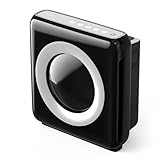
Coway Airmega AP-1512HH
- [Coverage] Designed to clean spaces up to 1,748 sq. ft. in 60 minutes
- [Four Stage Filtration System] Combination of a washable pre-filter, deodorization filter, Bipolar…
- [Auto Mode] Constantly monitoring the air quality, the fan automatically adjustes to most effectively…
$229.99
Check Today’s Price on Amazon
The Coway Mighty is one of the best-reviewed air purifiers for allergens and fine particles.
For the smoke particle fraction, it performs well.
For cigarette smoke odors, it has a real limitation: its deodorization filter is a thin carbon-impregnated fabric sheet with minimal gas-phase capacity.
If pets are also a concern, compare it against the best air purifiers for pet owners.
Why we picked it:
- True HEPA captures smoke particles effectively — reliable PM2.5 performance
- Compact footprint — fits in bedrooms, home offices, and small apartments
- Outstanding long-term durability — units regularly last 5–8+ years
Real-world scenario: You live in an apartment on the 4th floor.
Cigarette smoke seeps in through the corridor on warmer days — a faint smell for 20–30 minutes, not a room full of smoke.
The Coway handles that well.
If someone smoked in your apartment daily, it would capture the particles but leave the smell.
Pros:
- Excellent particle and allergen filtration for the price
- Outstanding durability — one of the most reliable air purifiers available
- Affordable, widely available replacement filters
- Compact — works well in bedroom air purifier setups
Cons:
- Thin carbon fabric filter — weak VOC and odor control for cigarette smoke
- No Wi-Fi or smart features
- Vital Ion ionizer — disable per EPA guidance
Best for:
Small apartments or bedrooms where cigarette smoke is occasional and faint.
Not the right choice for daily indoor smoking.
Picking one up on sale?
Our air purifier Black Friday guide explains why the AP-1512HH, AP-1512HHS, and Mighty2 each take a different filter set.
Common Mistakes When Buying an Air Purifier for Cigarette Smoke
- Buying based on HEPA grade alone — HEPA removes smoke particles but does nothing for gases or odors.
A unit with excellent HEPA but thin carbon will capture the visible haze but leave benzene and formaldehyde behind.
Always check carbon weight. - Choosing a unit that’s too small for the room — AHAM CADR ratings are calculated at 2 air changes per hour.
For cigarette smoke, you want 4–6 ACH.
Most buyers undersize by 30–40% and wonder why the smell lingers for hours. - Ignoring the ionizer setting — Both the Winix 5510 and the Coway Mighty include ionizers.
The EPA specifically warns against ozone-generating air cleaners.
Both units let you disable it — always do. - Expecting a purifier to remove thirdhand smoke — The residue that soaks into walls, furniture, and carpet over time requires physical cleaning, not filtration.
A purifier can slow the buildup but cannot reverse it. - Running on low speed only — Low speed is too slow to keep up with active smoke generation.
Run at medium-to-high during and after smoking, then drop to low for maintenance.
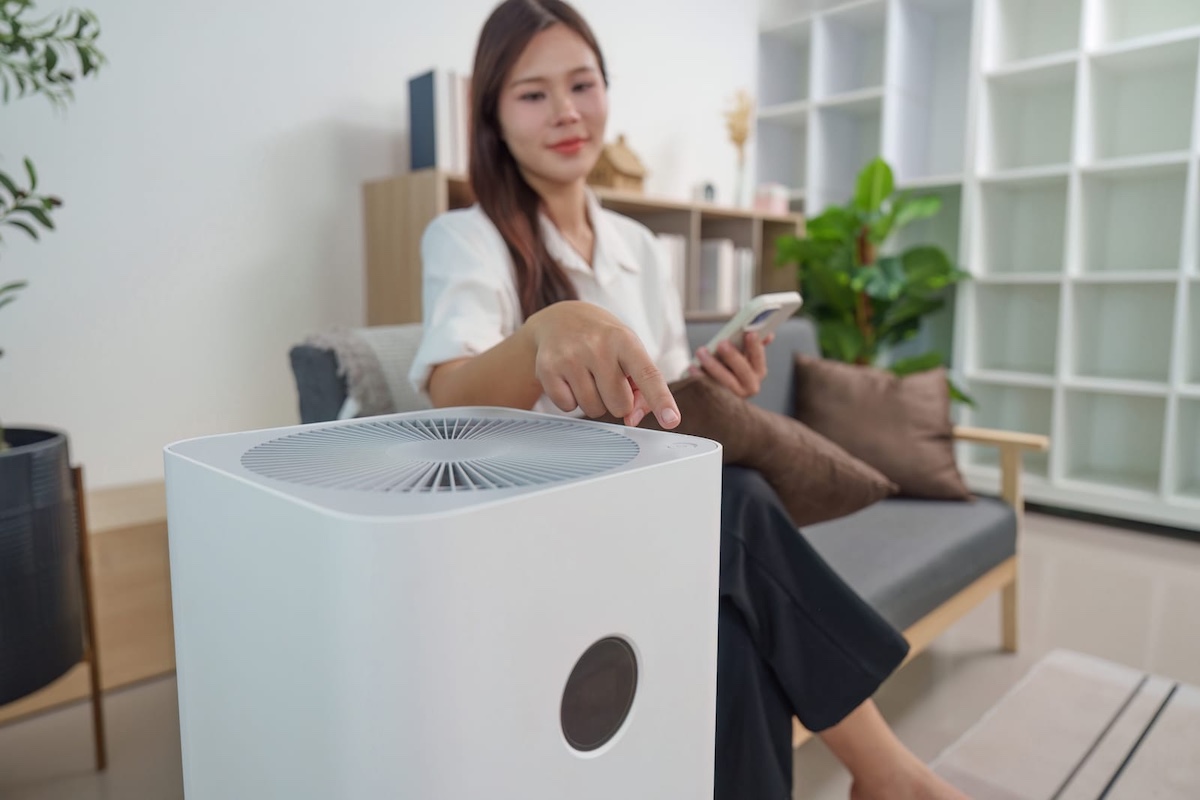
What Happens If You Choose Wrong
- If you buy a purifier with thin fabric carbon → you’ll capture the visible haze and assume it’s working, but VOCs including benzene and formaldehyde will remain in the air
- If you buy a unit that’s too small → smoke will linger for hours instead of clearing in 20–30 minutes; you’ll burn through filters faster running it at maximum speed constantly
- If you choose the Rabbit Air MinusA2 based on competitor recommendations → its 1.5-lb carbon sheet is widely documented as inadequate for cigarette and cigar smoke; you’ll spend a premium and end up disappointed
- If you leave the ionizer enabled → you’ll be adding trace ozone to an air quality problem you’re actively trying to solve
How We Researched These Picks
We analyzed specs across 7 candidate models, cross-referenced AHAM-verified CADR data, reviewed activated carbon weight and filter type for each unit, and examined hundreds of verified buyer reviews specifically addressing cigarette and cigar smoke performance.
We also referenced EPA guidance on home air cleaners for filtration standards.
No unit was included based on price or popularity alone — every pick required confirmed real-world performance for smoke specifically.
For our full method and scoring rubric, see our review methodology.
Choose in 60 Seconds
- If someone smokes indoors in your home daily → buy the Austin Air HealthMate Standard B400
- If you want medical-grade filtration and budget isn’t a concern → buy the IQAir HealthPro Plus
- If you have a large room (500+ sq ft) and want smart home integration → buy the Levoit Core 600S with the smoke filter
- If your smoke exposure is light or occasional → buy the Winix 5510
For light, occasional smoke in a smaller room, also check our best air purifier under $100: the Levoit Core 300-P covers up to 222 sq ft and handles light smoke well. - If you’re in a small apartment dealing with drifting smoke from neighbors → buy the Coway Airmega AP-1512HH
- If your main concern is wildfire smoke (not cigarette odors) → see our best air purifier for wildfire smoke guide: different priorities apply, and the right picks change
Who This Is For — and Who Should Look Elsewhere
This is for you if:
- Someone in your household smokes cigarettes or cigars indoors, even occasionally
- Cigarette smoke drifts into your apartment from a neighbor’s unit or shared hallway
- You have guests who smoke and want to clear the room quickly afterward
- You have respiratory sensitivities or asthma and secondhand smoke is a health concern
- You want to address both smoke particles and VOCs, not just the visible haze
This is NOT for you if:
- Your only concern is dust, pet dander, or pollen — a standard HEPA purifier is sufficient and cheaper
- You’re primarily dealing with wildfire smoke — focus on CADR and building envelope sealing instead
- You’re hoping to remove smell already embedded in walls, carpets, or furniture — that’s thirdhand smoke and requires physical remediation. If humidity is also a factor in your home, our dehumidifier vs. air purifier guide covers which appliance handles which problem.
Frequently Asked Questions
Air purifiers reduce cigarette smoke significantly — they don’t eliminate it completely.
A unit with True HEPA and substantial activated carbon (at least 1–2 lbs pelletized) will capture smoke particles and adsorb many of the VOCs and odors.
But no purifier removes 100% of all harmful substances in real-world conditions.
The EPA notes that even the best air cleaners should be used alongside other measures: not smoking indoors, improving ventilation, and addressing thirdhand smoke on surfaces.
CDC data shows secondhand smoke causes 34,000 premature heart disease deaths and 7,300 lung cancer deaths annually in U.S. non-smokers — reducing indoor exposure is a genuine health priority.
A quality air purifier like the Austin Air HealthMate will produce a measurable improvement in air quality for a daily-smoking household, but it is not a substitute for smoking outside.
For meaningful cigarette smoke odor control, you need at least 1–2 lbs of pelletized or granular activated carbon — not carbon-impregnated fabric.
The thin carbon sheets in budget and mid-range purifiers (50–200g) provide minimal gas-phase filtration.
They saturate quickly and offer little protection against VOCs like benzene, formaldehyde, and acrolein.
The Austin Air HealthMate’s 15 lbs is the gold standard for heavy use.
The IQAir HealthPro Plus V5-Cell carries about 5 lbs, which handles moderate exposure well.
Units like the Levoit Core 600S and Winix 5510 carry 200–360g of pelletized carbon — adequate for light or occasional smoke, but not for a daily-smoking household.
The carbon type matters too: pelletized or granular carbon provides more surface area and adsorbs longer than fabric-impregnated material at the same weight.
Prioritize pelletized carbon over any product described simply as having an “activated carbon layer.”
Filter replacement frequency increases significantly under heavy smoke conditions.
The Austin Air HealthMate’s 5-year filter (rated for normal use) should be replaced every 2–3 years in a daily-smoking household.
The IQAir V5-Cell gas filter (rated 12–24 months normally) may need replacement every 9–12 months.
Levoit Core 600S smoke filters (rated 6–12 months) may need changing every 3–6 months.
The Winix 5510’s carbon filter, rated 12 months, may need replacement after 6–9 months under heavy daily use.
The best indicator isn’t a timer — it’s when cigarette smoke odors start passing through the unit instead of being adsorbed.
When the purifier is running on high but the smell remains obvious in the room, the carbon bed is saturated.
Replace early rather than running a saturated filter that provides no odor or VOC protection.
Budget for shorter replacement cycles when you buy.
No — air purifiers cannot remove thirdhand smoke.
Thirdhand smoke is the residue from cigarette smoke that deposits on surfaces: walls, carpets, upholstery, drapes, and settled dust.
It contains carcinogens — including NNK and NNN — that bind chemically to surfaces and re-emit as gases over time.
An air purifier running in the room can capture some of the re-emitted gases as they off-gas, but it cannot reach or remove the surface residue.
Eliminating thirdhand smoke requires physical intervention: repainting walls with a sealant primer, steam-cleaning or replacing carpets and upholstery, and wiping down hard surfaces.
If you’re moving into a home where someone previously smoked heavily, an air purifier alone will not solve the persistent odor or reduce the chemical exposure from surface residue.
Use the purifier as a maintenance tool after physical remediation — not as a shortcut around it.
For broader home air quality concerns, see also our guide to dehumidifiers for basements where smoke and moisture often combine.
Run it while someone is smoking — and keep it running for at least 30–60 minutes after.
When smoke is actively being produced, you want maximum air turnover.
Set the purifier to its highest practical speed during and immediately after smoking.
Placement matters: the purifier doesn’t need to be in the room where smoking happens.
Positioning it in the main living area where smoke circulates is often more effective than placing it in a smaller room with poor airflow.
After the smoke source is gone, reduce to medium speed for an hour, then to low for ongoing maintenance.
Running continuously on low is better than nothing, but insufficient to keep up with active smoke generation.
A Levoit Core 600S in auto mode detects rising PM2.5 and ramps up automatically — making it strong for households where managing this manually is inconvenient.
The Austin Air HealthMate has no sensor or auto mode and requires manual speed adjustment.
Cigarette smoke and wildfire smoke have different filtration priorities — and the distinction changes which purifier you should buy.
Wildfire smoke is primarily a fine particle problem (PM2.5 and PM10).
A high-CADR True HEPA purifier handles it well, and activated carbon is secondary.
Cigarette smoke is both a particle problem and a gas/odor problem — VOCs like benzene, formaldehyde, and acrolein are the primary health hazard, and these require substantial activated carbon to adsorb.
If your main concern is wildfire smoke, maximize CADR.
If your concern is cigarette smoke, prioritize carbon weight first, then CADR.
Units optimized for one don’t always excel at both.
The Blueair Blue Pure 211+, for example, has a strong particle CADR well-suited for wildfire smoke — but its thin carbon-impregnated fabric is not designed for cigarette VOC removal and will underperform on odors.
If you face both risks (wildfire season plus indoor smoking), the IQAir HealthPro Plus handles both meaningfully.
For cigarette smoke, filter type matters more than CADR — up to a point.
CADR tells you how fast a purifier delivers clean air; it doesn’t tell you how effectively the filter handles gases and odors.
Two purifiers with the same smoke CADR can produce radically different odor control if one has 15 lbs of activated carbon and the other has a thin fabric filter with 50g.
The Austin Air HealthMate has a modest CADR compared to the Levoit Core 600S, but it dramatically outperforms it for cigarette odor control because of carbon capacity.
The correct approach: first confirm adequate carbon (at least 1–2 lbs pelletized for light smoke; 5+ lbs for daily use), then compare CADR within that shortlist to ensure adequate room coverage.
Never pick based on CADR alone for a cigarette smoke use case.
Our CADR guide explains how to apply the metric correctly for different use cases.
A single well-sized air purifier can handle an open-plan living area — if it’s correctly rated for the space.
Use this formula: multiply room square footage by ceiling height to get cubic footage, then divide by the unit’s CADR to get air changes per hour (ACH).
For active cigarette smoke control, aim for at least 4–6 ACH. For a 600 sq ft open-plan space with 9-ft ceilings (5,400 cubic ft), you need roughly 360+ CFM CADR for 4 ACH.
The Levoit Core 600S at 391 CFM meets this threshold.
Where a single unit falls short is in multi-room homes where smoke travels freely.
In that case, run the purifier in the room where smoking occurs with the door closed, or add a secondary unit for common areas.
Avoid placing the purifier in a corner or behind furniture — position it where it can draw air from the center of the room.
Browse our full air purifier guide for sizing across different room types and use cases.
Summary
The best air purifier for cigarette smoke isn’t the one with the highest CADR — it’s the one with enough activated carbon to handle the gases and VOCs that cause the smell and the health risk.
For daily indoor smoking, the Austin Air HealthMate Standard B400 is the only mainstream unit with the carbon capacity to genuinely do the job.
For large rooms and maximum filtration, the IQAir HealthPro Plus is the premium choice.
For smart features and fast air turnover in bigger spaces, the Levoit Core 600S with the smoke filter delivers.
For lighter or occasional exposure, the Winix 5510 and Coway Mighty are reliable, lower-cost options — just understand their limits.
Browse the full air purifier category or head back to EverydayHomeComfort for more home comfort guides.
Still unsure?
Start with the Austin Air HealthMate Standard B400 — it covers 80% of use cases and will likely still be running in 2040.