Ad. When you purchase through links we provide, we may receive an affiliate commission. Here's how it works.
Best Air Purifier for Bedroom 2026
TL;DR — Quick Answer
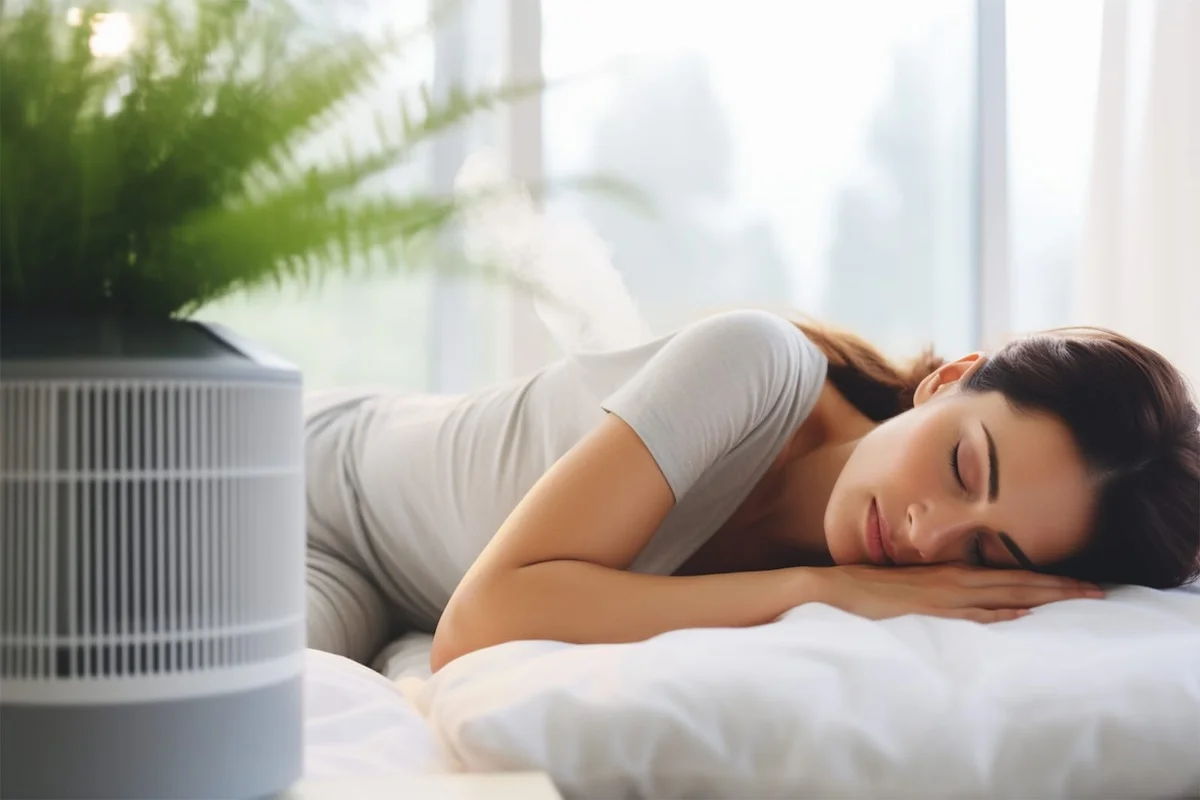
The Levoit Vital 200S-P is the best air purifier for bedrooms in 2026 — it covers up to 390 sq ft at recommended ACH levels, runs at 23 dB in Sleep mode, and captures pet fur before it reaches the HEPA filter.
For smaller rooms under 220 sq ft, the Levoit Core 300S-P delivers the same near-silent performance at a fraction of the size.
If you’re covering an open-plan living area rather than a bedroom, our best air purifier for large rooms guide covers higher-CADR picks built for that.
Quick Picks — Top Bedroom Air Purifiers
- Levoit Vital 200S-P — best overall for large bedrooms and pet owners who want smart auto mode
- Blueair Blue Pure 311i Max — best for silent overnight operation; quietest at low speed in its class
- Coway Airmega AP-1512HH — best for long-term reliability; 12-month True HEPA filter life
- Winix 5510 — best for pet odor control; washable carbon filter handles pet smells more effectively than competitors, with Wi-Fi app control added
- Levoit Core 300S-P — best for small bedrooms under 220 sq ft; compact, app-controlled, nearly inaudible at night
Key Takeaways
- Most air purifiers advertise coverage based on 1 air change per hour (ACH).
The AHAM recommendation is 4.8 ACH for effective air cleaning — the real usable coverage is roughly one-fifth of the marketed number. - At 23 dB in Sleep mode, both the Levoit Vital 200S-P and Blueair Blue Pure 311i Max are quieter than a whisper and won’t disrupt light sleepers.
- Pet dander settles on bedding and gets re-aerosolized as you move in your sleep — running an air purifier continuously overnight is the most effective way to reduce allergen exposure during your 7–8 hours of rest.
- Ionizer-equipped models (Winix 5510 PlasmaWave, Blueair 311i Max HEPASilent) produce trace ozone.
Both are CARB-certified safe, but the Winix lets you disable it; the Blueair does not. - In high-pet households, True HEPA filters clog in 3–4 months — not the 6–12 months manufacturers claim.
Factor that into annual running costs.
The Bedroom Is the Hardest Room to Get Right
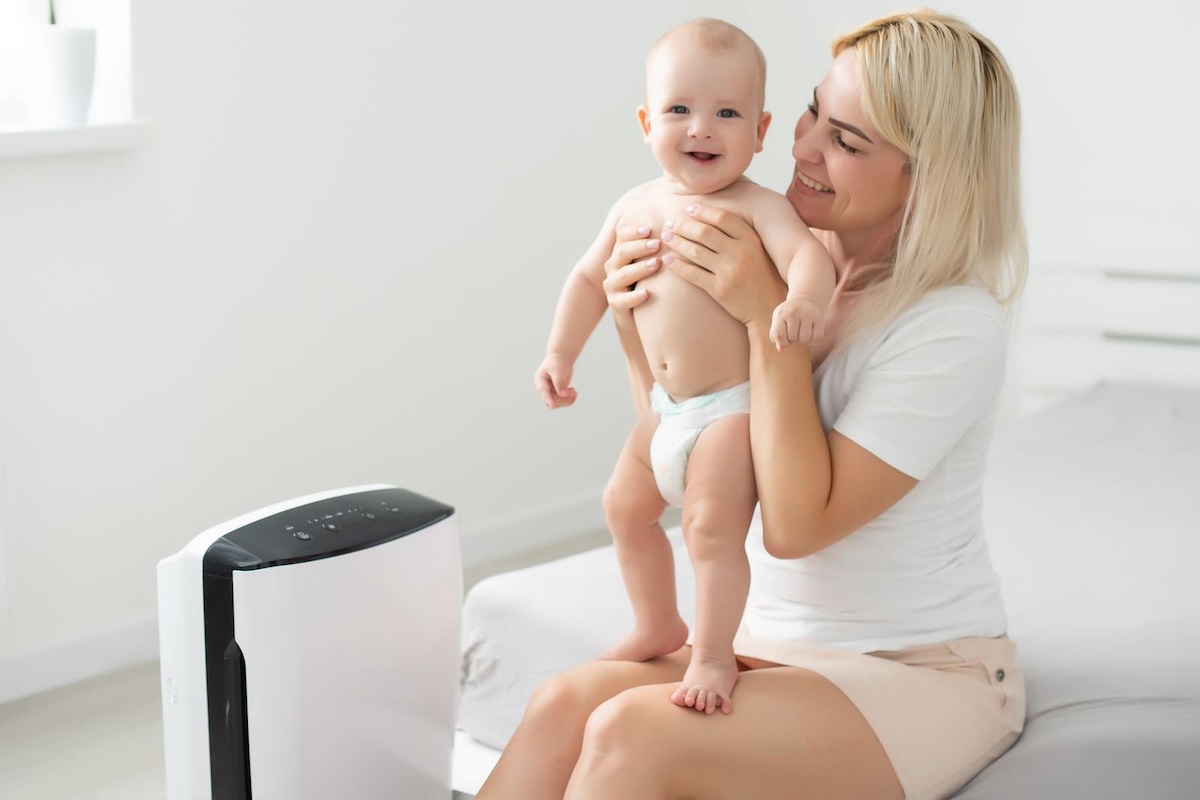
Picking a best air purifier for bedroom use isn’t the same as picking one for your living room.
It has to run all night, stay quiet enough not to wake you, and not blast you awake at 2 a.m. when auto mode kicks in.
These are the 5 best options for 2026 — chosen specifically for how they perform while you sleep.
What Makes a Bedroom Air Purifier Different
You spend 7–8 hours in your bedroom, often with windows closed, and in many homes a pet too.
That makes it the highest-impact room for air quality — but the criteria are different from every other room:
- Noise floor at low speed matters more than peak CADR — you’ll run it on Sleep mode overnight, not high speed
- Auto mode behavior — does it ramp up quietly or jolt you awake with a sudden fan surge?
- Indicator lights — Coway and Winix both have notoriously bright front panels that function as an unwanted nightlight
If you’re rethinking bedroom lighting anyway, a tunable-white smart bulb can replace that harsh panel light with a warm, sleep-friendly glow instead.
Our guide to the best smart bulbs explains how circadian lighting affects sleep and which models handle it best. - True coverage vs. advertised coverage — most buyers get undersized purifiers because they trust the box number
How to Size the Best Air Purifier for Bedroom Use
The coverage area printed on the box is based on 1 air change per hour (ACH). AHAM and the EPA’s indoor air quality guide both recommend 4.8 ACH for effective air cleaning.
That means you need a CADR at least equal to 2/3 of your room’s square footage.
A quick rule: multiply your room’s square footage by 0.65 — the result is the minimum CADR you need.
For example, a 300 sq ft bedroom needs at least 195 CFM CADR.
Most “360 sq ft” models on this list cover that comfortably.
To understand the CADR metric in detail, see our guide on what CADR means in air purifiers.
For the complete buying framework, from filtration types to placement, see our air purifier buying guide.
| Room Size | Min CADR Needed | Products That Fit |
|---|---|---|
| Under 220 sq ft | 143 CFM | Core 300S-P |
| 220–350 sq ft | 143–228 CFM | AP-1512HH, Winix 5510 |
| 350–400 sq ft | 228–260 CFM | Vital 200S-P, Blueair 311i Max |
Best Air Purifier for Bedroom — Comparison at a Glance
| Product | Best For | CADR (Smoke) | Coverage (4.8 ACH) | Noise (Sleep) | HEPA Filter Life |
|---|---|---|---|---|---|
| Levoit Vital 200S-P | Large bedrooms + pets | 250 CFM | 390 sq ft | 23 dB | 3–12 mo* |
| Blueair Blue Pure 311i Max | Silent overnight use | 283 CFM | 439 sq ft | 23 dB | 6 mo |
| Coway Airmega AP-1512HH | Long-term reliability | 233 CFM | 361 sq ft | 24 dB | 12 mo |
| Winix 5510 | Pet odor + allergens | 253 CFM | 392 sq ft | 27 dB | 12 mo |
| Levoit Core 300S-P | Small bedrooms | 141 CFM | 219 sq ft | 22 dB | 3–8 mo* |
*Shorter under heavy pet conditions — expect 3–4 months in high-shedding households.
Product Reviews
1. Levoit Vital 200S-P — Best Overall for Pet Owners
Sale

Levoit Vital 200S-P
- 𝐖𝐇𝐘 𝐂𝐇𝐎𝐎𝐒𝐄 𝐀𝐇𝐀𝐌 𝐕𝐄𝐑𝐈𝐅𝐈𝐃𝐄 𝐏𝐑𝐎𝐃𝐔𝐂𝐓𝐒: AHAM (Association of Home Appliance Manufacturers) is an ANSI-accredited…
- 𝐀𝐇𝐀𝐌 𝐕𝐄𝐑𝐈𝐅𝐈𝐃𝐄 & 𝐓𝐑𝐔𝐒𝐓𝐄𝐃 𝐁𝐘 𝐄𝐗𝐏𝐄𝐑𝐓𝐒: Certified by the Association of Home Appliance Manufacturers (AHAM), the Vital…
- 𝐀𝐈𝐑 𝐏𝐔𝐑𝐈𝐅𝐈𝐄𝐑 𝐃𝐄𝐒𝐈𝐆𝐍𝐄𝐃 𝐅𝐎𝐑 𝐀𝐋𝐋𝐄𝐑𝐆𝐘 𝐆𝐑𝐎𝐔𝐏𝐒:The Vital 200S-P is designed specifically for…
$169.99

Check Today’s Price on Amazon
The Vital 200S-P is Levoit’s mid-size purifier built with pet households in mind.
Its U-shaped air inlet captures pet fur before it reaches the H13 True HEPA filter — a design detail that extends filter life significantly in shedding-pet homes.
At 250 CFM CADR, it covers up to 390 sq ft at 4.8 ACH.
For pet owners who need coverage beyond the bedroom, see our best air purifier for pets for whole-home options.
Why we picked it:
- H13 True HEPA + activated carbon + washable pre-filter — 3-stage system that captures particles down to 0.3 microns, including pet dander, dust mites, and pollen
- Sleep mode at 23 dB — quieter than a library (30 dB); ENERGY STAR certified for low overnight energy draw
- Smart auto mode with real-time PM2.5 monitoring; VeSync app with Alexa and Google Assistant support
Real-world scenario: You have a Labrador that sleeps at the foot of the bed.
The Vital 200S-P runs on auto all night, ramps down silently once the room clears, and the pre-filter catches the fur before it clogs the HEPA.
You clean the pre-filter monthly and swap the main filter every 4–5 months.
Pros:
- U-shaped inlet designed specifically for pet fur capture
- Whisper-quiet Sleep mode at 23 dB
- Smart auto mode with PM2.5 air quality sensor
- VeSync app — Alexa and Google Assistant compatible
- ENERGY STAR certified
Cons:
- Filter replacement drops to 3–4 months in high-pet households
- Occasional VeSync app connectivity drops reported
- Brief chemical smell on first run (resolves in 1–2 hours)
Best for: Pet owners with bedrooms 250–390 sq ft who want smart auto mode and hands-off overnight operation.
If pets and allergies are your primary concern, also check our full guide on the best robot vacuums for pet hair — tackling allergens at the floor level makes your air purifier work harder.
2. Blueair Blue Pure 311i Max — Quietest for Sleep
Sale

Blueair Blue Pure 311i Max
- Powerful Air Purifier for Medium Rooms: The Blue Pure 311i Max quickly cleans air in bedrooms, living…
- Removes Dust, Smoke, Pet Dander & Allergens: Blueair’s HEPASilent dual filtration technology captures…
- Smart Air Purifier with App Control: Built-in sensors automatically adjust fan speed when pollution…
$169.99
Check Today’s Price on Amazon
The 311i Max uses Blueair’s HEPASilent dual filtration — mechanical HEPA combined with electrostatic filtration — to capture particles down to 0.1 microns (3x finer than standard HEPA’s 0.3-micron threshold).
It runs at just 2.8W in Sleep mode and is QuietMark certified.
Why we picked it:
- 23 dB at lowest speed — one of the quietest models in its CADR class
- HEPASilent technology removes 99.97% of particles ≥0.1 microns; finer particle capture than standard True HEPA
- Washable fabric pre-filter reduces ongoing costs; ENERGY STAR Most Efficient 2023
Real-world scenario: You’re a light sleeper and your partner brought home a cat.
The 311i Max sits on the dresser, runs on auto all night, and you genuinely cannot hear it from 6 feet away.
The fabric pre-filter gets a quick rinse every couple of weeks.
Pros:
- Quietest in its class at low speeds — near-imperceptible at 23 dB
- Removes particles 3x finer than standard HEPA
- Washable pre-filter reduces replacement frequency
- ENERGY STAR Most Efficient 2023
- Auto mode with real-time air quality sensor
Cons:
- Electrostatic component cannot be disabled — produces trace ozone (CARB-certified safe but cannot be turned off)
- Filter replacement every 6 months — more frequent than some competitors
- Highest speed (50 dB) is louder than some competitors at max
Best for: Light sleepers who prioritize near-silent operation and want a set-and-forget setup.
3. Coway Airmega AP-1512HH — Best Long-Term Reliability
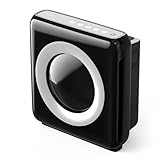
Coway Airmega AP-1512HH
- [Coverage] Designed to clean spaces up to 1,748 sq. ft. in 60 minutes
- [Four Stage Filtration System] Combination of a washable pre-filter, deodorization filter, Bipolar…
- [Auto Mode] Constantly monitoring the air quality, the fan automatically adjustes to most effectively…
$229.99
Check Today’s Price on Amazon
The Coway AP-1512HH has been sold since 2013 and consistently ranks among the top-rated air purifiers in the US.
Its 4-stage filtration and responsive auto mode make it one of the most dependable overnight bedroom options available — though its LED panel needs managing.
Why we picked it:
- True HEPA filter rated for 12 months — the lowest per-year filter cost of any model in this roundup
- Eco mode turns the fan off entirely when air quality is clean, for zero noise and minimal energy use
- Auto mode responds quickly to particle events; proven over 10+ years of consumer use
Real-world scenario: You’re a parent with two kids and a dog.
The AP-1512HH runs in the master bedroom every night.
You set it to Auto, replace the HEPA once a year, and that’s it.
One first-night nuisance: you’ll want to cover the front LEDs.
Pros:
- 12-month True HEPA filter — lowest maintenance frequency in this roundup
- Near-silent at lowest speed (24 dB)
- Proven reliability over 10+ years on the market
- ENERGY STAR certified; Eco mode cuts energy use when air is clean
Cons:
- Bright indicator LEDs — no auto-dim; reported sleep disruption
- No Wi-Fi on base model — the smart version costs more
- Carbon filter uses fabric impregnation, less effective for strong pet odors
Best for: Busy households that want a proven, low-maintenance purifier without needing app control.
If you’re also battling humidity in other rooms, compare it against our picks in best dehumidifiers for basements.
4. Winix 5510 — Best for Pet Odors

Winix 5510
- 𝐀𝐇𝐀𝐌 𝐕𝐞𝐫𝐢𝐟𝐢𝐝𝐞 𝐚𝐭 𝟑92 𝐬𝐪 𝐟𝐭.: Also cleans rooms up to 1,882 sq ft in 1 hour (941 sq ft in 30 minutes, 627 sq ft in…
- 𝐖𝐢𝐧𝐢𝐱 𝐓𝐫𝐮𝐞 𝐇𝐄𝐏𝐀: Captures 99.99%* of airborne allergens including pollen, dust, smoke, and pet dander, as small as 0.01 microns
- 𝐀𝐝𝐯𝐚𝐧𝐜𝐞𝐝 𝐎𝐝𝐨𝐫 𝐂𝐨𝐧𝐭𝐫𝐨𝐥 𝐂𝐚𝐫𝐛𝐨𝐧 𝐅𝐢𝐥𝐭𝐞𝐫: Reduces VOCs and household odors from cooking…
$179.99
Check Today’s Price on Amazon
The Winix 5510 leads this list on odor control.
Its washable AOC (Advanced Odor Control) carbon filter handles pet smells and litter box odors more effectively than the thinner carbon-impregnated fabric found in most competitors — and that same carbon performance is what makes units like it a top choice in our best air purifier for cigarette smoke guide.
The HEPA and carbon filters both last 12 months.
Why we picked it:
- Washable AOC carbon pre-filter + True HEPA (99.97% at 0.3 microns) — best combo for odor and particulate
- PlasmaWave ionizer can be disabled independently — disable it for bedroom use overnight
- Wi-Fi app control — schedule cleaning cycles, monitor air quality, and adjust settings from your phone
Real-world scenario: You have two cats, one of which uses a litter box near the bedroom.
At night you disable PlasmaWave, set it to Sleep mode, and the odor is handled.
The HEPA and carbon filters last a full year.
Pros:
- Best odor/VOC performance in this roundup — pelleted washable carbon outperforms fabric carbon filters
- 12-month filter life — matches Coway for lowest maintenance
- PlasmaWave ionizer can be disabled (unlike Blueair)
- Remote control included
- ENERGY STAR and CARB certified
- Wi-Fi app control with air quality monitoring and scheduling
Cons:
- Front indicator lights are bright — may need covering for bedroom use
- Speed 4 reaches 66 dB — use only Sleep or Auto mode in the bedroom
Best for: Pet owners dealing with odor as much as allergens.
For more context on how air quality interacts with allergies, see our guide on air purifiers and allergies.
5. Levoit Core 300S-P — Best for Small Bedrooms
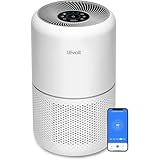
Levoit Core 300S-P
- 𝐖𝐇𝐘 𝐂𝐇𝐎𝐎𝐒𝐄 𝐀𝐇𝐀𝐌 𝐕𝐄𝐑𝐈𝐅𝐈𝐃𝐄 𝐀𝐈𝐑 𝐏𝐔𝐑𝐈𝐅𝐈𝐄𝐑𝐒: AHAM (Association of Home Appliance…
- 𝗔𝗛𝗔𝗠 𝗩𝗘𝗥𝗜𝗙𝗜𝗗𝗘 𝗙𝗢𝗥 𝗣𝗥𝗢𝗩𝗘𝗡 𝗣𝗘𝗥𝗙𝗢𝗥𝗠𝗔𝗡𝗖𝗘: The Core 300S-P is AHAM VERIFIDE with CADR…
- 𝐀𝐂𝐂𝐄𝐒𝐒 𝐀𝐍𝐘𝐖𝐇𝐄𝐑𝐄 𝐀𝐍𝐘𝐓𝐈𝐌𝐄: Simply ask Alexa or Google Assistant to control the air purifier when your hands are full…
$149.99
Check Today’s Price on Amazon
The Core 300S-P is compact enough for a nightstand (8.7″ wide, 6 lbs), draws only 23W overnight, and runs at 22–24 dB on Sleep mode.
It’s the right pick for studio apartments and small bedrooms where the larger models above are oversized.
Why we picked it:
- H13 True HEPA + activated carbon in a 360° intake design — effective in a compact footprint
- VeSync app with Alexa/Google Assistant — same smart controls as the Vital 200S-P at a smaller scale
- At 23W, costs approximately $1–2/month to run overnight year-round
Real-world scenario: You have a 180 sq ft apartment bedroom with a cat.
The Core 300S-P sits on the nightstand, runs on Sleep all night, and you swap the Pet Allergy filter every 3–4 months.
You barely notice it’s there.
Pros:
- Compact — nightstand-friendly at 8.7″ wide, 6 lbs
- Near-inaudible Sleep mode at 22 dB
- VeSync app with Alexa and Google Assistant
- Pet Allergy filter variant available
- ENERGY STAR certified
Cons:
- Coverage limited to 219 sq ft at 4.8 ACH — undersized for larger bedrooms
- Air quality sensor calibrated above WHO thresholds — auto mode may not engage when it should
- Filters need replacing every 3–4 months with heavy pet shedding
Best for: Small bedrooms under 220 sq ft and apartment dwellers who want app control and a compact footprint.
Common Mistakes When Buying a Bedroom Air Purifier
- Trusting the advertised room size — Manufacturers use 1 ACH.
For effective air cleaning, you need 4.8 ACH.
That “360 sq ft” model actually covers about 75 sq ft at recommended rates.
Always divide the marketed coverage by 4–5 to get the real working size, or use CADR ÷ 0.65. - Buying the highest CADR available — Higher CADR means a larger, faster fan.
At the speeds needed to hit that CADR, most units are loud.
Right-size to your room so it runs quietly on low all night. - Ignoring the LED panel — Coway and Winix have bright indicator displays. In a dark bedroom, they function as a nightlight you didn’t order.
Check reviews specifically for light complaints before buying. - Leaving the ionizer on overnight — Winix PlasmaWave and Blueair HEPASilent both produce trace ozone.
The EPA explicitly recommends against ozone-generating devices in occupied spaces.
Disable ionizers for overnight bedroom use where possible. - Using the manufacturer’s filter schedule in a pet household — Advertised filter life assumes clean-ish air.
In high-shedding homes, True HEPA filters clog in 3–4 months.
Run on manufacturer’s timeline and you’re pushing air through a clogged filter for half the year.
What Happens If You Choose Wrong
- If you trust the box coverage area without adjusting for 4.8 ACH → you’ll buy a purifier half the size you need, and wake up with the same allergy symptoms it was supposed to fix
- If you buy the highest-CADR model without checking noise at low speeds → you’ll either keep it on low (where it barely cleans) or high (where it’s too loud to sleep through)
- If you ignore indicator lights → you’ll cover them with tape on night one and resent the product every time you look at it
- If you leave the ionizer on overnight → you’re adding ozone to the air you breathe for 8 hours — exactly what you bought the purifier to prevent
- If you follow the manufacturer’s filter schedule with pets → you’re running a clogged filter for the last half of its stated life, reducing air cleaning effectiveness by 30–50%
How We Research
We analyzed specs across 20+ bedroom air purifier models, cross-referenced AHAM Verifide CADR certifications, and reviewed user feedback across thousands of purchases.
Our selection criteria weight noise performance at Sleep mode settings above all other metrics — because a purifier that wakes you up is worse than no purifier at all.
We also evaluated real-world filter replacement intervals under pet-household conditions, which consistently differ from manufacturer claims.
For our full method and scoring rubric, see our review methodology.
Choose in 60 Seconds
- If you have pets in a bedroom over 300 sq ft → buy the Levoit Vital 200S-P
- If you’re a light sleeper who prioritizes silence above everything → buy the Blueair Blue Pure 311i Max
- If you want the lowest long-term maintenance and proven reliability → buy the Coway Airmega AP-1512HH
- If pet odors are as much of a problem as allergens → buy the Winix 5510
- If your bedroom is under 220 sq ft → buy the Levoit Core 300S-P
- If you have asthma or severe allergies → buy the Levoit Vital 200S-P (H13 True HEPA + dedicated pet-fur inlet)
Working with a tighter budget?
Check our roundup of the best air purifier under $100, several of the picks there are built for bedrooms.
Buying in November?
Three of these picks, the Coway Airmega AP-1512HH, Winix 5510, and Levoit Core 300S-P, also appear in our air purifier Black Friday guide, along with the model-number mix-ups to check before checkout.
Who This Is For — and Who It’s Not
This is for you if:
- You sleep 7–8 hours in a room with a pet that sheds or triggers allergies
- You or your partner have allergies, asthma, or sensitivity to dust and dander
- You want to reduce overnight allergen exposure without daily effort
- You live in an apartment with limited ventilation and windows you can’t open
- You want a set-and-forget device that handles air quality while you sleep
This is NOT for you if:
- Your main issue is humidity — an air purifier won’t dehumidify; see our dehumidifier vs air purifier guide or go straight to our best dehumidifier for bedroom for targeted picks.
- You need whole-home coverage — bedroom-sized units won’t meaningfully clean a large open-plan space
- You expect zero maintenance — every air purifier needs periodic filter changes, and pets accelerate that
Frequently Asked Questions
Multiply your room’s square footage by 0.65 — that’s the minimum CADR (in CFM) you need for effective air cleaning at 4.8 ACH, the rate recommended by AHAM and the EPA.
A 300 sq ft bedroom needs at least 195 CFM.
The advertised coverage on the box uses 1 ACH, which is roughly one-fifth as effective.
See our full breakdown in what CADR means in air purifiers.
For uninterrupted sleep, look for a Sleep mode below 30 dB.
The best bedroom models run at 22–24 dB on their lowest setting — roughly the level of a quiet rural environment.
Avoid models where the jump between speed settings is abrupt, as auto mode can trigger a noticeable fan surge at night.
Yes — with one caveat.
Standard True HEPA models are completely safe to run continuously.
If your model includes an ionizer (like the Winix PlasmaWave or Blueair HEPASilent), disable it for overnight bedroom use.
Both produce trace ozone, and the EPA recommends against ozone-generating devices in occupied rooms.
All models in this roundup are ENERGY STAR certified for efficient overnight use.
Yes — significantly.
Pet dander (microscopic skin flakes) settles on bedding and pillows throughout the day and gets re-aerosolized as you move during sleep.
A True HEPA air purifier running continuously overnight captures airborne dander before you inhale it.
For maximum effect, run it at a speed appropriate for your room size and keep the bedroom door closed.
They can.
The Coway AP-1512HH and Winix 5500-2 both have bright front-panel LEDs that are consistently flagged in user reviews as sleep disruptors.
The Levoit and Blueair models are better in this regard — Levoit’s Sleep mode dims or turns off the display entirely.
If you’re light-sensitive, check whether the model has a display-off or night mode before buying.
Standard HEPA filters capture 99.97% of particles at 0.3 microns.
H13 True HEPA captures 99.97% of particles at 0.3 microns AND maintains ≥99.95% efficiency across all particle sizes — including the most penetrating particle size (MPPS) between 0.1–0.3 microns.
H13 certification requires independent testing; “HEPA-type” or “HEPA-grade” filters have no certified performance standard.
For a full comparison, see our HEPA vs True HEPA explainer.
Expect to replace True HEPA filters every 3–4 months in homes with actively shedding pets — not the 6–12 months manufacturers advertise.
Those estimates assume average household air quality.
Pet fur and dander load filters faster.
The pre-filter (washable on most models) should be cleaned monthly to prevent premature HEPA clogging.
Watch for reduced airflow or increased fan noise as early signs the filter needs changing.
Yes, if your model has an auto mode with an air quality sensor.
Running it while you’re away keeps the room air clean for when you return, and auto mode drops to near-silent low speeds when no particles are detected — keeping energy use minimal.
If your model has an Eco mode (like the Coway AP-1512HH), it turns the fan off entirely when air quality is clean, making continuous operation essentially free in well-maintained rooms.
Summary
The best air purifier for bedrooms in 2026 is the Levoit Vital 200S-P — it covers up to 390 sq ft at recommended ACH levels, runs silently at 23 dB, and handles pet fur and dander better than any other model in this size class.
For small bedrooms under 220 sq ft, the Core 300S-P delivers the same near-silent performance in a nightstand footprint.
For the lowest annual filter cost, both the Coway AP-1512HH and Winix 5510 use 12-month True HEPA filters and have proven themselves over years of real-world use.
If you want zero app dependency, the Coway AP-1512HH is the pick — the Winix 5510 adds Wi-Fi control for those who want it.
Still unsure?
Start with the Coway AP-1512HH — it covers most bedrooms, runs quietly on auto, and has earned its reputation for a reason.
Visit the air purifiers category page to explore more options, or head back to the EverydayHomeComfort home page for guides across all home comfort categories.