Ad. When you purchase through links we provide, we may receive an affiliate commission. Here's how it works.
The Best Robot Vacuum in 2026: 6 Models Compared for Every Home

TL;DR
The best robot vacuum in 2026 is the Dreame X60 Max Ultra Complete for most homes — it combines 35,000Pa suction, a 3.13-inch ultra-slim profile, and a fully automated dock that washes, dries, empties, and refills itself.
If you want premium performance at a more accessible price, the Roborock Qrevo CurvX delivers 22,000Pa and a hot water dock without the flagship price tag.
Quick Picks: Best Robot Vacuums of 2026
- Dreame X60 Max Ultra Complete: Best overall for pet owners and premium homes who want zero manual intervention
- Roborock Saros 10R: Best for hardwood floors and tight edges, thanks to its extending FlexiArm side brush
- Eufy Omni S2: Best for pet owners; independent testing found roughly 87% carpet sand pickup and 88% pet-hair removal, backed by 5-layer filtration
- Roborock Qrevo CurvX: Best value: 22,000Pa suction and a hot water dock at a mid-range price
- Narwal Flow 2: Best for mopping, with a track mop that rinses itself while it cleans
- Ecovacs Deebot T30S: Best budget pick that still includes a full hot water dock
Both brands dominate the premium tier — if you’re choosing between them, our Roborock vs Dreame comparison lays out exactly which brand suits which home.

Key Takeaways
- In 2026, the $400–$900 range gets you 90% of what a $1,500 flagship delivers — including LiDAR navigation, self-emptying docks, and hot water mop washing.
- Robot height matters more than suction Pa for homes with low furniture: a 3.13-inch robot cleans under sofas that a 3.8-inch model never reaches.
- If you have pets, obstacle avoidance count — not suction — is the spec that protects your floors. Look for models recognizing 100+ object types.
- Hot water mop washing in the dock is now the baseline for any mopping robot worth buying.
Cold-water docks leave bacteria on the pads. - HEPA filtration is mandatory if you have allergies — the EPA defines it as capturing 99.97% of particles at 0.3 microns, which includes fine dust, pollen, and pet dander.
Picking the best robot vacuum in 2026 isn’t hard because the options are bad — it’s hard because so many of them are genuinely good.
The market has shifted: features that cost $1,500 three years ago now come standard at $600.
This guide compares six of the strongest robotic vacuum models across every floor type, home size, and budget, and gives you a clear decision framework to pick the right one — not just the one with the highest Pa number on the spec sheet.

Best Robot Vacuums 2026: At a Glance
| Pick | Product | Best For | Key Feature |
|---|---|---|---|
| Best Overall | Dreame X60 Max Ultra Complete | Premium homes, pet owners | 35,000Pa + 3.13″ slim + 280+ obstacle types |
| Best for Hardwood | Roborock Saros 10R | Hardwood & edge cleaning | FlexiArm extends to reach corners |
| Best for Pets | Eufy Omni S2 | Carpet cleaning + pet hair | 87% carpet pickup, 88% pet-hair removal |
| Best Value | Roborock Qrevo CurvX | Most homes, balanced budget | 22,000Pa + 176°F hot water dock |
| Best for Mopping | Narwal Flow 2 | Hard floors, kids & pets | Self-rinsing track mop, 212°F dock wash (manufacturer claim) |
| Best Budget | Ecovacs Deebot T30S | First-time buyers, apartments | Full hot water dock at entry price |
The Best Robot Vacuums of 2026: Full Breakdown
Best Overall: Dreame X60 Max Ultra Complete
Sale

Dreame X60 Max Ultra Complete
- 𝐃𝐑𝐄𝐀𝐌𝐄’𝐬 𝐓𝐡𝐢𝐧𝐧𝐞𝐬𝐭 𝐑𝐨𝐛𝐨𝐭 𝐕𝐚𝐜𝐮𝐮𝐦 𝐚𝐭 𝟑.𝟏𝟑𝐢𝐧 (𝟕.𝟗𝟓𝐜𝐦): At just 3.13in (7.95cm…
- 𝐃𝐞𝐭𝐞𝐜𝐭, 𝐀𝐝𝐚𝐩𝐭, 𝐚𝐧𝐝 𝐂𝐥𝐞𝐚𝐧 𝐓𝐡𝐨𝐫𝐨𝐮𝐠𝐡𝐥𝐲: Equipped with dual AI cameras and proactive illumination, it sees…
- 𝟑𝟓,𝟎𝟎𝟎𝐏𝐚 𝐏𝐨𝐰𝐞𝐫𝐬 𝐔𝐩𝐠𝐫𝐚𝐝𝐞𝐝 𝐃𝐮𝐨𝐁𝐫𝐮𝐬𝐡: Featuring a retractable pressure plate that creates a semi-sealed…
$1,529.99

Check Today’s Price on Amazon
The Dreame X60 Max Ultra Complete is the most capable robotic vacuum available in 2026. Its 3.13-inch ultra-slim chassis fits under furniture that stops most competitors cold — without sacrificing the LiDAR unit, which sits flush inside the body rather than raising up in a tower bump.
The X60 Max Ultra Complete runs at 35,000Pa of suction, recognizes 280+ obstacle types, and returns to a dock that self-empties, auto-refills its water tank, washes mop pads at 212°F, and dries them — all without you touching anything.
Real-world scenario:
You have two cats, hardwood throughout, and a sofa sitting 3.5 inches off the ground.
The X60 slips under it, identifies the litter that got kicked out, routes around the cat toy, cleans the floor, and returns to dock.
You handle it once a month when the bag needs changing.
Pros:
- Highest benchmark scores for obstacle avoidance
- Retractable LiDAR keeps profile at 3.13″
- 212°F mop wash
- 280+ object recognition
- Near-silent dock
Cons:
- Premium price
- Dock has a larger footprint than competitors
- More than most small apartments need
Best for:
Pet owners, large homes, premium floors, anyone who wants maximum autonomy.
For a pet-specific breakdown, see our dedicated guide to the best robot vacuums for pet hair.
Best for Hardwood Floors: Roborock Saros 10R

Roborock Saros 10R
- 𝟯.𝟭𝟰-𝗜𝗻𝗰𝗵 𝗨𝗹𝘁𝗿𝗮-𝗧𝗵𝗶𝗻 𝗗𝗲𝘀𝗶𝗴𝗻: The Roborock Saros 10R redefines home cleaning with its ultra-slim 3.14-inch profile…
- 𝗦𝘁𝗮𝗿𝗦𝗶𝗴𝗵𝘁 𝗔𝘂𝘁𝗼𝗻𝗼𝗺𝗼𝘂𝘀 𝗦𝘆𝘀𝘁𝗲𝗺 𝟮.𝟬: Experience smarter cleaning with advanced 3D sensing technology…
- 𝗣𝗼𝘄𝗲𝗿𝗳𝘂𝗹 𝗖𝗹𝗲𝗮𝗻𝗶𝗻𝗴 𝗦𝘆𝘀𝘁𝗲𝗺: With 22,000 Pa HyperForce suction, the Roborock Saros 10R effortlessly removes dirt…
The Roborock Saros 10R solves the corner problem that every other robot vacuum works around.
Its FlexiArm Riser side brush physically extends to reach into corners and along baseboards — a mechanical advantage that no software mapping update can replicate.
At 3.14 inches tall with no raised LiDAR tower, it reaches the same low-clearance spaces as the Dreame X60 but at a lower entry point.
The DuoDivide zero-tangle main brush handles long hair and pet fur without wrapping — the most common maintenance complaint with older brush designs.
For premium wood floors, this is the robot we’d reach for first.
Pros:
- FlexiArm physically extends to corners
- 22,000Pa suction
- Zero-tangle brush
- Hot air drying dock
- 3.14″ ultra-slim profile
Cons:
- Fewer obstacle types than Dreame X60
- Dock doesn’t auto-refill water tank
Best for:
Hardwood-heavy homes, open floor plans, edge-cleaning priority.
If you have premium wood floors, pair this with our guide on how to clean hardwood floors to understand how robotic vacuums fit into a complete care routine.
Best for Pet Owners: Eufy Omni S2
Sale

Eufy Omni S2
- 𝟗𝟗.𝟗𝟗% 𝐆𝐞𝐫𝐦 𝐑𝐞𝐦𝐨𝐯𝐚𝐥 𝐨𝐧 𝐇𝐚𝐫𝐝𝐰𝐨𝐨𝐝 𝐚𝐧𝐝 𝐓𝐢𝐥𝐞: Generates electrolyzed water on every pass—killing 99.99% of bacteria. Works as…
- 𝟗𝟓% 𝐃𝐮𝐬𝐭 𝐌𝐢𝐭𝐞 𝐑𝐞𝐦𝐨𝐯𝐚𝐥-𝐁𝐚𝐛𝐲 𝐂𝐫𝐚𝐰𝐥𝐬 𝐖𝐨𝐫𝐫𝐲-𝐅𝐫𝐞𝐞: This carpet cleaner machine uses AeroTurbo 2.0 with 30,000 Pa…
- 𝐀𝐥𝐥𝐞𝐫𝐠𝐞𝐧 𝐅𝐢𝐥𝐭𝐫𝐚𝐭𝐢𝐨𝐧 𝐚𝐧𝐝 𝐁𝐮𝐢𝐥𝐭-𝐈𝐧 𝐅𝐫𝐚𝐠𝐫𝐚𝐧𝐜𝐞 𝐃𝐢𝐟𝐟𝐮𝐬𝐞𝐫: Multi-cone 5-layer filtration…
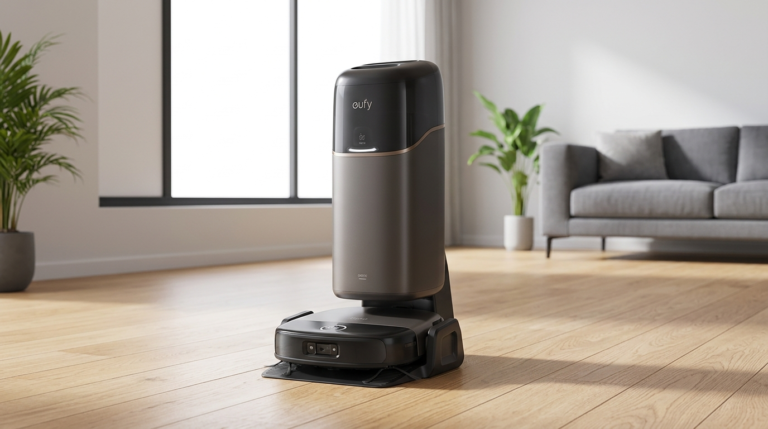
The Eufy Omni S2 is built for one specific job: keeping carpet clean in a home with shedding pets.
Independent lab testing found sand pickup on carpet jumped to roughly 87%, up from about 61% on eufy’s previous flagship, with flattened pet-hair removal landing around 88% — one of the stronger results in this price tier.
The 12-in-1 UniClean Station empties, washes, and dries itself, and its 200+ recognized obstacle types mean it correctly identifies and routes around pet waste instead of spreading it.
Pros:
- 87% carpet sand pickup, 88% pet-hair removal in independent testing
- 200+ obstacle types recognized
- 5-layer filtration marketed to capture 99.99% of common allergens
- 12-in-1 UniClean Station handles auto-empty, mop wash, and drying without daily intervention
Cons:
- Mopping on dried, set-in stains measured well below category average, a regression from eufy’s prior generation
- auto-refill and drainage accessory locks you into eufy’s proprietary consumables
- flagship pricing
Best for:
Homes with shedding pets and mostly carpeted or mixed flooring, where hands-off carpet cleaning matters more than spotless daily mopping.
Read our full eufy Omni S2 review for the complete breakdown, including where its mopping falls short on dried stains.
Best Value: Roborock Qrevo CurvX
Sale
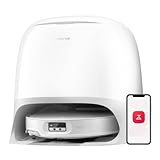
Roborock Qrevo CurvX
- 𝐏𝐨𝐖𝐞𝐫𝐟𝐮𝐥 𝐂𝐥𝐞𝐚𝐧𝐢𝐧𝐠 𝐒𝐲𝐬𝐭𝐞𝐦: With 22000Pa HyperForce suction and Zero-Tangling Design, the Roborock Qrevo CurvX robot…
- 𝐃𝐞𝐬𝐢𝐠𝐧𝐞𝐝 𝐭𝐨 𝐑𝐞𝐚𝐜𝐡 𝐖𝐡𝐞𝐫𝐞 𝐃𝐮𝐬𝐭 𝐇𝐢𝐝𝐞𝐬: The Roborock Qrevo CurvX— the slimmest Roborock yet…
- 𝟖𝟎°𝐂 𝐇𝐨𝐭 𝐖𝐚𝐭𝐞𝐫 𝐟𝐨𝐫 𝐓𝐫𝐮𝐥𝐲 𝐂𝐥𝐞𝐚𝐧 𝐌𝐨𝐩𝐬: The Roborock Qrevo CurvX uses 80°C hot water to dissolve…
The Roborock Qrevo CurvX is the sweet spot of the 2026 robot vacuum market: 22,000Pa suction, a 3.14-inch ultra-slim profile, and a dock that washes mop pads at 176°F and warm-air dries them — at a fraction of the flagship price.
The AdaptiLift chassis automatically adjusts height for carpet-to-hardwood transitions.
Reactive AI obstacle avoidance handles 108 object types — sufficient for most homes without pets.
If you’ve been waiting for premium dock features at a rational price, this is the model that delivers them.
Pros:
- 22,000Pa suction
- 176°F hot water mop wash
- 3.14″ ultra-slim
- Zero-tangle brush
- Best value-to-feature ratio in this list
Cons:
- 108 obstacle types (fewer than Eufy Omni S2’s 200+)
- No auto water-tank refill in dock
Best for:
Mixed-floor homes without pets; anyone who wants flagship dock features without the flagship investment.
For a broader look at mop+vacuum combinations, see our best vacuum mop combo guide.
Best for Mopping: Narwal Flow 2
The Narwal Flow 2 is the robot to pick if mopping matters as much as vacuuming in your home. Narwal launched it in the US in April 2026, per its launch announcement, and it replaces the spinning pads most robots use with a track mop: a belt-style pad that rolls along the floor like a small conveyor.
That track turns at over 100 rotations per minute with 12 N of downward pressure and is rinsed with 140°F water through 16 nozzles as it cleans, per the same release. Back at the dock, Narwal says the mop gets a 212°F hot-water wash and 140°F hot-air drying (manufacturer claim). Because the mop is rinsed while the robot is still cleaning, the last room gets a clean pad instead of the dirty water from the first one.
On the vacuum side, Narwal rates suction at 31,000 Pa (manufacturer claim), with a roller brush designed to resist hair wrap. It is also quiet for its class: Narwal rates it at under 56.5 dB while running (manufacturer claim), and a Baby Care mode lowers it to about 56 dB near a nursery (manufacturer claim). At 95 mm (3.74 in) tall, per the Flow 2 user manual, it fits under most sofas, though not as low as the slimmest picks in this list.
Pros:
- Track mop rinsed with clean water during the run
- 212°F dock mop wash and 140°F hot-air drying (manufacturer claim)
- 31,000 Pa suction (manufacturer claim) with an anti-tangle roller
- Baby Care and Pet Care modes for quieter runs
- Dust bag lasts up to 120 days without pets, about 90 with pets (manufacturer claim)
Cons:
- The mop lifts on carpet instead of detaching, so set high-pile rugs to “Avoid” in the app
- Owner reviews often mention map-editing quirks and docking hiccups in the first weeks
- No Matter support, and no published decibel figure for the dock
Best for:
Homes with lots of hard floor, kids, or pets, where sticky spills and paw prints matter more than deep carpet cleaning.
Best Budget: Ecovacs Deebot T30S

Ecovacs Deebot T30S
- Unbeatable 11,000Pa Suction Power – Experience a new level of clean with the DEEBOT T30S AI Care. Its…
- TruEdge Adaptive Edge Mopping – Equipped with TruEdge Technology, the DEEBOT T30S AI Care excels in…
- AI Instant Re-mop – DEEBOT T30S AI Care identifies and targets noticeable floor stains. When encountering…
$880.13
Check Today’s Price on Amazon
The Ecovacs Deebot T30S is the strongest argument that you don’t need to spend four figures for a capable autonomous vacuum in 2026.
It delivers 11,000Pa suction, ZeroTangle technology on the main brush, and a dock that hot water washes mop pads at 158°F, auto-empties, and auto-refills — features that were exclusive to premium tiers just two years ago.
TruEdge adaptive edge mopping keeps the pad within 0.04 inches of baseboards — the closest edge coverage in this list at any price.
If you’re buying your first robotic vacuum or equipping a smaller space, this is where to start.
For more budget-focused options, see our best budget robot vacuums roundup.
Pros:
- Full dock (hot water + auto-empty + auto-refill) at entry price
- TruEdge mopping within 0.04″ of baseboards
- ZeroTangle brush
- Accessible starting point
Cons:
- 11,000Pa (notably lower than premium picks)
- Fewer obstacle types
- Less effective on thick carpet
Best for:
First-time buyers; renters; smaller apartments.
To see where Ecovacs sits at the premium tier, read our Ecovacs Deebot X9 Pro Omni review.
For small-space options specifically, see our guide to the best robot vacuums for small apartments.
Robot Vacuum Buying Guide: What Actually Matters

For a deeper look at how each of these specs works in practice (including Pa thresholds by floor type, HEPA filter standards, and what self-emptying docks actually do for your maintenance routine) see our robot vacuum buying guide.
Navigation: LiDAR vs. Camera vs. Gyroscope
Navigation determines how systematically your robot cleans — and how reliably it returns to the same spots every run.
According to Wikipedia, Neato Robotics introduced laser-based navigation (LiDAR) to robot vacuums in 2010, replacing the random-bounce approach that made early models frustrating.
Here’s how the three types compare in 2026:
| Navigation Type | How It Works | Real-World Result | Best For |
|---|---|---|---|
| LiDAR | Laser spins 360°, builds a room map in real time | Systematic row-by-row cleaning; accurate maps; works in the dark | Most homes — the standard to look for |
| Camera / vSLAM | Visual landmarks for positioning | Good accuracy; struggles in low light or featureless rooms | Well-lit homes; mid-range models |
| Gyroscope + IR sensors | Motion sensors and bump detection | Erratic coverage; random navigation patterns | Budget-only; not recommended for reliable daily cleaning |
Every model in this guide uses LiDAR. If a robot vacuum at any price point doesn’t specifically mention LiDAR or laser navigation, it’s worth skipping.
Suction Power (Pa Explained)
Pa (Pascals) measures suction pressure.
Higher Pa pulls more debris from carpet fibers — but the number alone tells you nothing about brush design, airflow efficiency, or real-world pickup.
A robot with 22,000Pa and a zero-tangle rubber brush often outperforms a 35,000Pa model with a bristle brush that clogs on pet hair within minutes.
As a general framework: 8,000–12,000Pa handles hard floors and light carpet well; 15,000–22,000Pa is sufficient for most carpet types; 25,000Pa+ is the premium tier for deep pile or embedded pet hair.
Every robot in this guide exceeds the 11,000Pa floor for real-world carpet performance.
Mopping: Pad vs. Roller vs. Vibrating
Entry-level robot mops drag a damp pad across the floor — fine for dust and light residue, useless for dried spills or grease.
Vibrating mops apply consistent pressure and clean better on tile and sealed hardwood.
Roller mops continuously clean the mop surface during operation for the freshest result.
The bigger differentiator in 2026 is the dock wash temperature.
A hot water mop wash (140°F+) sterilizes the pad after every run.
A cold-water dock leaves bacteria on the pad — and you’re effectively dragging a damp, contaminated cloth across your floors.
If mopping matters, the dock’s wash temperature is the specification to check first.
Dock Features: What’s Worth Paying For
| Dock Feature | What It Does | Worth It? |
|---|---|---|
| Auto-empty | Transfers debris from robot bin into a larger bag (4–10 week capacity) | Yes — eliminates daily bin maintenance |
| Auto-refill | Refills the robot’s water tank automatically before each run | Yes, if you mop frequently |
| Hot water mop wash (140°F+) | Sanitizes mop pads after every cleaning session | Yes — non-negotiable for any mopping robot |
| Warm air drying | Dries mop pads post-wash to prevent mildew | Yes — eliminates damp pad smell |
| Dock self-clean | Washes the dock’s internal surfaces periodically | Nice-to-have, not essential |
HEPA Filtration and Allergen Control
If anyone in your home has allergies or asthma, filtration is as important as suction.
The EPA defines a HEPA filter as one capable of capturing 99.97% of airborne particles at 0.3 microns — the most penetrating particle size, which includes fine dust, pollen, mold spores, and pet dander.
All six models in this guide include HEPA filtration as standard.
If allergen control is a household priority, note that a robot vacuum handles floor-level particles — airborne allergens require a separate solution.
See our guide to air purifiers for allergies for that side of the equation.
Battery Life and Home Coverage
Most robot vacuums clean 1,000–2,000 sq ft on a single charge.
Larger homes or multi-floor layouts need auto-resume: the robot docks to recharge mid-clean, then picks up exactly where it stopped.
Every model in this guide supports auto-resume.
For homes over 2,000 sq ft, see our guide to the best robot vacuums for multiple floors.
If square footage matters more than floor count, our best robot vacuum for large house guide narrows it down further.
Noise Levels
Most robot vacuums operate at 60–72 dB on standard mode — roughly equivalent to a normal conversation.
Premium models drop to 55–58 dB in quiet mode, which is barely audible from another room.
The practical solution for most households: schedule the robot to run while you’re out.
Every model in this guide supports time-based scheduling via its app.
For noise-sensitive environments, see our roundup of the quietest robot vacuum cleaners.
App and Smart Home Integration
Every model in this guide connects via Wi-Fi for scheduling, zone cleaning, and no-go zones.
Roborock supports Alexa, Google Home, and Apple HomeKit.
Dreame supports Alexa and Google Home.
Ecovacs works with both.
If you’re torn between Roborock and Ecovacs specifically, our Roborock vs Ecovacs comparison covers navigation, mopping, app quality, and privacy side by side.
If you prefer no Wi-Fi dependency, see our guide to robot vacuums that work without internet.
How to Match a Robot Vacuum to Your Home
Hardwood and Tile Floors
Hard floors are where robot vacuums perform best.
Edge cleaning and mopping capability matter more than raw suction here.
The Roborock Saros 10R’s FlexiArm and the Ecovacs T30S’s TruEdge mopping are the standouts for reaching baseboards that standard side brushes consistently miss.
If hardwood floors are your priority, we cover the floor-safety specifics — mop lift, wheel grit, and finish types — in our dedicated best robot vacuum for hardwood floors guide.
Carpet: Low-Pile vs. High-Pile
Low-pile carpet under 0.5 inches is handled reliably by any model in this list.
High-pile or thick carpet over 0.75 inches needs 18,000Pa+ and a robot that actively boosts suction when it detects carpet beneath it.
The Dreame X60 and Roborock Saros 10R both auto-boost on carpet detection.
For carpet-specific picks across every pile height, see our best robot vacuum for carpet guide; if your home is exclusively high-pile or shag, our best robot vacuum for thick carpet guide narrows further.
Mixed Flooring
Homes with both hard floors and carpet need mop-lift capability — you don’t want a wet mop pad dragged across carpet.
Every premium pick in this guide (X60, Saros 10R, Qrevo CurvX) automatically lifts or retracts its mop when transitioning from hard floor to carpet.
Pet Hair and Allergen Households
For pet homes, prioritize in this order:
(1) obstacle avoidance count — the higher, the less likely the robot spreads a mess rather than avoiding it
(2) zero-tangle rubber or hybrid brush — handles fur without daily maintenance
(3) HEPA filter — captures dander at the particle sizes that trigger allergic reactions.
The Eufy Omni S2 checks the first two at the highest level in this list — 200+ recognized obstacle types and a zero-tangle DuoSpiral brush — though its 5-layer filtration is marketed to a HEPA-comparable standard rather than being officially HEPA-certified.
Common Mistakes When Buying a Robot Vacuum
- Buying based on Pa suction alone — Pa measures pressure, not real-world cleaning effectiveness.
Brush design, airflow path, and filtration determine actual pickup.
A 22,000Pa robot with a rubber brush routinely outperforms a 35,000Pa model with a bristle brush that clogs on pet hair. - Not measuring furniture clearance first — A robot that can’t fit under your sofa cleans zero of the dust under your sofa.
Measure your lowest furniture before buying.
Under 3.5 inches means you specifically need an ultra-slim model. - Ignoring the dock when comparing models — The dock determines how hands-free the experience actually is.
A cold-water dock on a mopping robot means you’re maintaining the cleaner constantly.
A hot water dock means you’re not. - Skipping obstacle avoidance if you have pets — A robot without reliable pet-waste avoidance will eventually spread a mess across your floors.
If you have animals, obstacle avoidance count is the spec to spend money on — not extra suction. - Comparing Pa and coverage specs across brands at face value — Manufacturers measure these differently.
A 20,000Pa claim from one brand is not directly comparable to the same number from another.
Cross-reference with independent data before deciding.
What Happens If You Choose Wrong
- If you buy based on Pa alone → you’ll end up with a robot that sounds powerful but wraps pet hair around its brush every few days and requires constant manual maintenance.
- If you ignore robot height → you’ll discover the dust under your sofa is never cleaned, which defeats the main reason you bought the robot in the first place.
- If you choose a cold-water mop dock → within two weeks you’ll notice a persistent smell from the pads, and you’ll spend more time cleaning the robot than it spends cleaning your floors.
- If you skip obstacle avoidance in a pet home → one incident with a pet accident and you’re cleaning your floors, the robot brush, and the dock all at once.
How We Research
We analyzed specifications across 30+ robot vacuum models, cross-referenced performance data from independent lab sources, and reviewed thousands of verified user purchases to identify consistent real-world patterns.
We have no paid relationships with any manufacturer and do not accept free products.
For our full method and scoring rubric, see our review methodology.
For a broader perspective on robot vs. traditional cleaning tools, see our robot vacuum vs. regular vacuum comparison, and visit the robot vacuum category page for all our coverage in one place.
Update history:
October 7, 2026: Replaced the Roborock Qrevo Curv S5X with the Narwal Flow 2, and renamed the slot from Best Mid-Range to Best for Mopping.
Choose in 60 Seconds
- If you want the absolute best with no compromises → Dreame X60 Max Ultra Complete
- If you have mostly hardwood and want perfect edge cleaning → Roborock Saros 10R
- If your home is carpet-heavy and pet hair is your main problem → Eufy Omni S2
- If you want flagship dock features at a rational price → Roborock Qrevo CurvX
- If mopping matters as much as vacuuming, especially with kids or pets → Narwal Flow 2
- If you’re buying your first robot vacuum and don’t want to overspend → Ecovacs Deebot T30S
Who This Guide Is For — And Who It’s Not
This is for you if:
- You want floors cleaned on a daily schedule without lifting a finger
- You have pets, allergies, or hardwood floors that need consistent attention
- You’re upgrading from an older robot vacuum and want to know what’s genuinely changed
- You want to understand the real differences between models before committing
This is NOT for you if:
- You have very high-pile shag carpet over 1.5 inches — no robot vacuum handles this reliably
- You need to vacuum stairs — robot vacuums are floor-only tools
- You want a compact option for a studio apartment on a tight budget
Final Verdict
The best robot vacuum in 2026 is no longer a niche product — it’s a practical daily tool that maintains floors better than most people do manually.
For most homes, the Roborock Qrevo CurvX is the smartest starting point: 22,000Pa suction, a hot water dock, and an ultra-slim profile at a price that doesn’t need justification.
If you have pets, step up to the Eufy Omni S2.
If you want the best available without compromise, the Dreame X60 Max Ultra Complete is the answer.
And if you’re just starting out, the Ecovacs Deebot T30S proves you don’t need four figures to get a genuinely useful autonomous vacuum.
Whatever you choose from this list of the best robot vacuums of 2026, you’re getting technology that would have cost twice as much three years ago.
If you’re buying this fall, two picks here, the Roborock Saros 10R and the eufy Omni S2, also appear in our Black Friday robot vacuum deals guide, along with when each is likely to drop.
Still unsure?
Start with the Qrevo CurvX — it covers 80% of homes at a sensible price.
Visit EverydayHomeComfort for guides across every home comfort category.
Frequently Asked Questions
Yes — and more so than in any previous year.
By 2026, the $400–$900 price range includes LiDAR navigation, self-emptying docks, and hot water mop washing: features that cost $1,500+ just three years ago.
The return is clearest for households with pets, allergies, or young children — daily automated cleaning keeps allergen and debris levels significantly lower than weekly manual vacuuming.
The honest caveat: a robot vacuum supplements but doesn’t fully replace a traditional vacuum for deep cleaning sessions, stairs, or upholstery.
Think of it as a daily floor maintenance tool.
If you vacuum more than twice a week, a robot running on a schedule will consistently outperform that habit and give you those hours back.
For daily floor maintenance, yes.
For deep cleaning sessions, stairs, and upholstery, no.
A robot vacuum running every day keeps debris, pet hair, and dust at consistently low levels — often performing better over time than a manual vacuum used once or twice a week, because frequency beats intensity for allergen control.
But it can’t reach stairs, couch cushions, car interiors, or any surface above floor level.
The approach most households settle on: robot vacuum daily for floors, traditional vacuum once a month for deeper cleaning and surfaces the robot can’t reach.
See our full robot vacuum vs. regular vacuum comparison for a complete breakdown of where each type performs best.
If you want a genuinely hands-free experience, yes.
Without a self-emptying dock, you’re manually emptying the robot’s dustbin every 1–3 cleaning sessions — for daily use, that means every 2–3 days.
A self-emptying dock transfers debris into a larger bag (typically 2–3 liters) that lasts 4–10 weeks depending on the model and your home.
The Roborock Qrevo Curv S5X holds the record in this list at 10 weeks between bag changes.
If you want to compare the top self-emptying picks side by side, our best self-emptying robot vacuums guide covers every budget.
If you have pets or allergies, sealed bag disposal also prevents re-releasing fine particles into the air when you empty — a real advantage over manually tipping a small open bin.
In 2026, yes — with the right model and dock.
Entry-level robot mops drag a damp pad that handles light dust and residue on sealed hard floors.
Premium models in this guide (Dreame X60, Roborock Saros 10R, Qrevo CurvX) use vibrating or oscillating mops with hot water docks that wash, sanitize, and dry the pads between every session.
The difference between a 140°F hot water dock and a cold rinse is not cosmetic — it determines whether you’re cleaning your floors or spreading residual bacteria across them with every pass.
One honest limitation: no robot mop currently handles dried or sticky spills as effectively as manual scrubbing.
For routine sealed hardwood and tile maintenance, however, the results are genuinely clean.
Most robot vacuums require Wi-Fi for initial setup and map building.
Once the floor plan is saved, some models can run on saved schedules with a limited internet connection.
If you want a robot with no Wi-Fi dependency at all — no cloud account, no app required — there are dedicated offline-capable models designed exactly for that.
See our guide to robot vacuums without internet for the best options.
For most users, the connected app is where the real value lives: zone-specific cleaning, no-go zones, and scheduled runs tied to your calendar are significantly more useful than manually pressing a button.
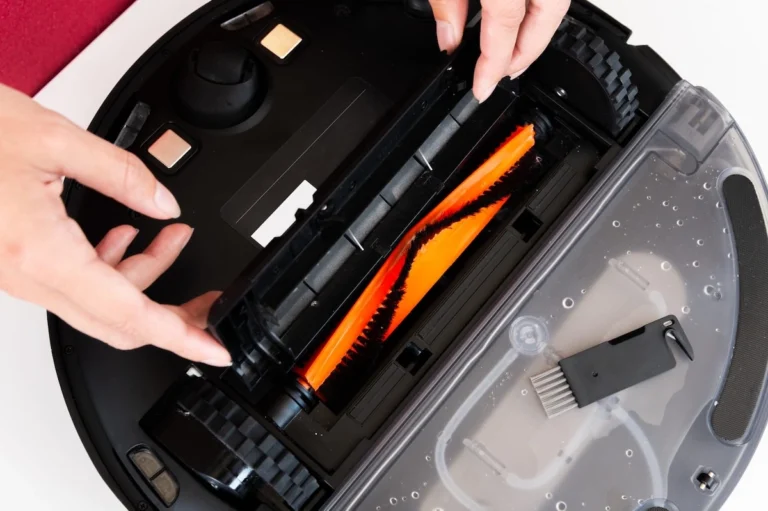
For daily users, a monthly maintenance routine covers most of what’s needed: confirm the dock bag isn’t full, rinse or replace the HEPA filter every 4–6 weeks, and inspect the main brush for tangled hair or debris.
Our robot vacuum maintenance schedule breaks down the full weekly, monthly, and quarterly checklist.
Models with zero-tangle rubber brushes — like the Eufy Omni S2 and Roborock Saros 10R — require far less brush maintenance than bristle-brush designs, where hair wrap is a near-daily issue.
The dock itself, if it has a hot water mop wash, needs a quarterly wipe-down of internal tubing and a periodic self-clean cycle.
Most premium models prompt you via the app when maintenance is due, removing the guesswork from the process entirely.