Ad. When you purchase through links we provide, we may receive an affiliate commission. Here's how it works.
iRobot Roomba Combo 10 Max Review: Is It Worth It?
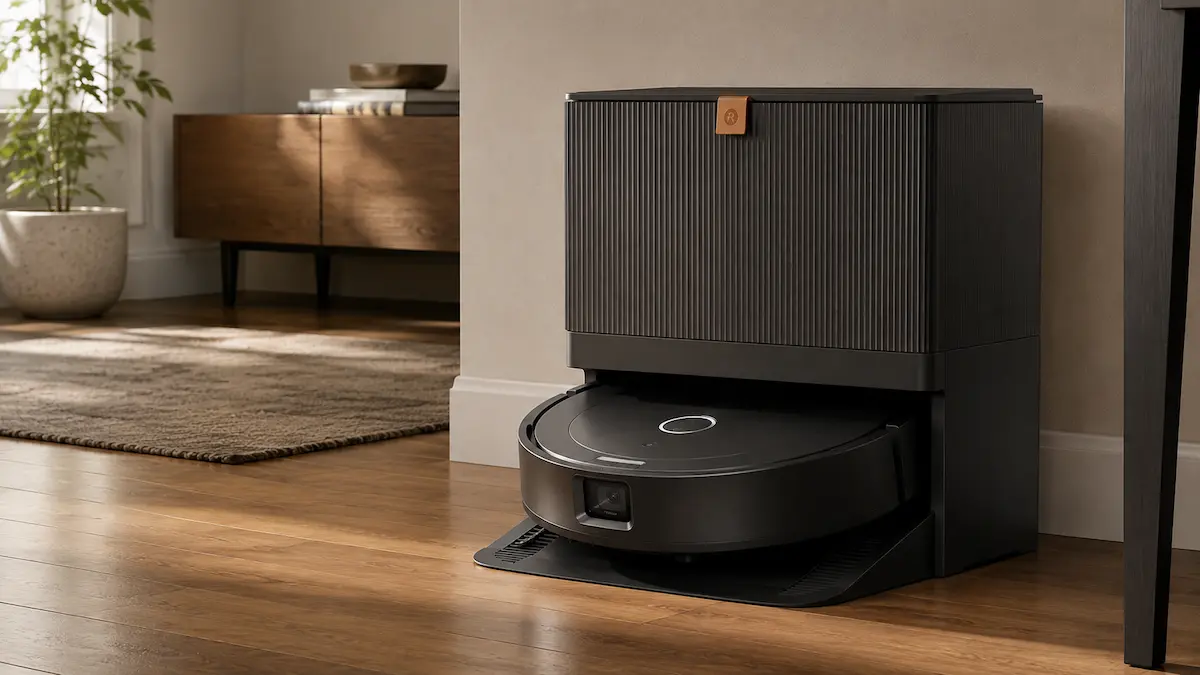
The iRobot Roomba Combo 10 Max is one of the strongest robot vacuums for pet hair and embedded dirt pickup we’ve researched, but its noisy dock and inconsistent mopping make it a harder recommendation for quiet households or pristine hardwood floors.
If you want one robot to vacuum and mop without daily upkeep, it earns its spot at the top of iRobot’s lineup.
If quiet operation or flawless mopping matters more to you, you’ll want to weigh the alternatives below first.
Sale

iRobot Roomba Combo 10 Max
- OUR MOST POWERFUL CLEANING ROBOT YET. It vacuums with 100% more suction power*, mops back-and-forth with…
- AN EXPERT IN DIRT ELIMINATION. The 4-Stage Cleaning System features an Edge-Sweeping Brush for thorough…
- IT DOESN’T JUST LEARN YOUR HOME; IT REACTS TO IT IN REAL TIME. With PrecisionVision Navigation and a…
Key Takeaways
- The iRobot Roomba Combo 10 Max pairs dual rubber brushes with an edge-sweeping brush and Dirt Detect, which iRobot says recognizes concentrated debris up to 8x more often (manufacturer claim). iRobot publishes no Pa suction figure, so you cannot compare its raw power directly with other brands.
- Its AutoWash Dock empties the bin for up to 60 days and holds enough water to refill the mop tank for up to 7 days, but owners and reviewers consistently flag it as one of the messier, higher-maintenance docks on the market.
- PrecisionVision Navigation relies entirely on cameras and sensors instead of LiDAR, which means slower initial mapping in low light and the occasional light debris getting flung instead of collected.
- The metal Auto-Retract Mopping System lifts the mop pad automatically when it senses carpet, a feature built specifically to protect rugs, though it doesn’t eliminate every moisture risk on sensitive hardwood.
- Operating noise is one of the most common complaints in owners reviews, loud enough to disrupt quiet activities like a video call or a nap in an adjacent room.
EverydayHomeComfort Score
| Category | Score |
|---|---|
| Cleaning Performance | 7.0/10 |
| Pet Hair | 8.0/10 |
| Mopping | 6.0/10 |
| Hard-Floor Safety | 8.0/10 |
| Ease of Use | 6.5/10 |
| Overall Rating | 7.1/10 |
What Is the iRobot Roomba Combo 10 Max?
The iRobot Roomba Combo 10 Max is iRobot’s current flagship robot vacuum and mop, built to vacuum carpet, mop hard floors, and clean itself at its dock without you lifting a finger.
It’s a vacuum and mop combo in the truest sense: a camera-based PrecisionVision navigation system pairs with a 4-Stage cleaning system and an auto-retracting mop pad, so it switches between vacuuming and mopping automatically as it moves between rooms.
If you’re shopping the vacuum cleaners and floor care category, the Combo 10 Max sits at the top of iRobot’s current lineup.
Key Specifications
Here’s how the iRobot Roomba Combo 10 Max stacks up on paper.
If you want a deeper primer on what these numbers actually mean, our robot vacuum suction power explainer breaks down how manufacturer claims translate to real-world pickup.
| Spec | Value |
|---|---|
| Navigation | PrecisionVision (camera and sensor based, no LiDAR) |
| Cleaning System | 4-Stage: edge-sweeping brush, dual rubber brushes, suction, SmartScrub mopping |
| Manufacturer Suction Claim | 100% more suction than the prior-generation Roomba Combo (relative claim, not an absolute Pascal rating) |
| Mopping System | SmartScrub 2x back-and-forth scrubbing with D.R.I. (Dry Rug Intelligence) |
| Carpet Protection | Metal Auto-Retract Mopping System lifts the pad on carpet detection |
| Dirt Detection | Enhanced Dirt Detect, recognizes concentrated debris up to 8x more often |
| Dock | AutoWash Dock: auto-empty (up to 60 days), auto-refill water tank (up to 7 days), washes and dries mop pad, self-cleans |
| Battery | 4200 mAh LFP |
| Robot Dimensions | 13.3 x 13.3 x 3.4 in |
| Robot Weight | 11 lbs |
| Smart Home Compatibility | Matter-enabled, Apple Home, Amazon Alexa, Google Assistant |
| Obstacle Avoidance | Recognizes and avoids pet waste, cords, cables, and shoes |
One flag worth knowing before you buy: iRobot’s “100% more suction” claim is measured against its own prior-generation Combo, not an industry-standard Pascal rating, so treat it as a relative improvement rather than an absolute number you can compare across brands.
How Powerful Is the iRobot Roomba Combo 10 Max‘s Suction and Mopping?
Vacuuming is the stronger half of this robot. The dual rubber brushes have no bristles for hair to wrap around, and together with the edge-sweeping brush they pull debris out of carpet fibers rather than skimming the surface, which is exactly the kind of design our best robot vacuums for pet hair roundup prioritizes.
The limit is the spec sheet: iRobot only publishes a relative claim (100% more suction than the prior-generation Combo), so you cannot rank it against Roborock or Dreame flagships on raw power.
Picture two everyday situations where these specs actually matter.
For a 950 sq ft apartment with two shedding dogs running the Combo 10 Max nightly, the dual rubber brushes and the AutoWash Dock’s bin capacity are built to handle several days of pickup between empties, and PrecisionVision’s obstacle recognition is specifically designed to flag stray kibble and pet toys before rolling over them, matching the obstacle-avoidance strengths owner reviewers consistently highlight.
For a two-story 2,200 sq ft house with hardwood downstairs and carpet upstairs, the Auto-Retract Mopping System is engineered to lift the mop pad every time the robot crosses from tile onto an entryway rug, though owner reviewers note that camera-based mapping in low light takes noticeably longer on the first run than a similarly sized home mapped in daylight.
Mopping is the softer side of the performance story.
SmartScrub’s back-and-forth scrubbing motion genuinely helps on light, daily grime, but on floors that have gone a week or two without attention, a single pass often isn’t enough, especially in high-traffic zones like a kitchen entryway.
The AutoWash Dock’s washing and drying cycle is also its biggest weak point: reviewers and owners consistently report moisture-related clogging and a messier maintenance routine than simpler self-emptying docks, which matters more to households that want to “set and forget” than to anyone willing to do a quick weekly check.
Noise is the other consistent theme.
This isn’t a whisper-quiet robot: owners commonly describe it as loud enough to notice over a TV at normal volume, and it’s worth checking our quietest robot vacuum picks if background noise during work-from-home calls or a baby’s nap window is a dealbreaker for you.
For pet owners specifically, strong pickup performance matters beyond just tidiness.
Pet dander is one of the biological pollutants the EPA identifies as a common contributor to indoor air quality problems, and the CDC lists animal dander among the environmental triggers linked to asthma symptoms.
Frequent, thorough pickup of shed hair and the dander attached to it is one of the more overlooked practical benefits of a robot vacuum that actually gets under furniture and into corners on a nightly schedule.

Is the Roomba Combo 10 Max Safe for Premium Hardwood Floors?
If you have engineered or solid hardwood, this is the section to read closely.
The Auto-Retract Mopping System uses a metal lift mechanism to raise the mop pad when it senses carpet or a rug, which is a real safeguard most budget combos lack.
But “detects carpet” isn’t the same as “detects every risk to wood,” and moisture exposure on porous or unsealed hardwood is a legitimate concern with any mopping robot, not just this one.
The Cornell Cooperative Extension’s hardwood floor maintenance guide notes that standing water and excess moisture are among the most common causes of warping and finish damage on wood flooring, which is exactly why mop pad timing and pressure matter so much on this kind of robot.
If you have sensitive or unsealed hardwood, run the Auto-Retract Mopping System through a few supervised cycles before trusting it unattended, since the mop pad lifts reliably according to owner reports but any moisture exposure on porous wood carries real risk.
For a deeper look at how different robot vacuums handle hardwood specifically, our best robot vacuums for hardwood floors guide compares mop pressure and pad-lift reliability across several models.
How It Compares to Similar Models
vs. Roborock Saros 10R
The Saros 10R uses LiDAR-based navigation with retractable lift legs to climb over low obstacles, giving it faster, more precise mapping than the camera-only Combo 10 Max.
Pick the Saros if quiet, confident navigation matters more to you than pet-waste avoidance; pick the Combo 10 Max if pet hair and obstacle recognition are the priority.
vs. Dreame X40 Ultra
Our Dreame X40 Ultra review found a more elaborate dock with extendable side brushes and legs that climb thresholds, plus generally quieter mopping.
The Combo 10 Max counters with stronger obstacle recognition for pet waste specifically, which matters more if you have dogs than if your main obstacle is furniture legs.
vs. Roborock S8 MaxV Ultra
Our Roborock S8 MaxV Ultra review covers a robot with dual rotating mop pads that apply downward pressure similar to SmartScrub, plus LiDAR navigation.
The S8 MaxV Ultra tends to map faster in a new home; the Combo 10 Max leans on stronger pet-waste recognition.
vs. Eufy Omni S2
Our eufy Omni S2 review covers a rival flagship with hot-water mop washing and a fragrance diffuser the Roomba’s dock lacks.
Busy households that want the fullest hands-off maintenance package should weigh it against the Combo 10 Max.
| Product | Navigation | Best For | Better For |
|---|---|---|---|
| iRobot Roomba Combo 10 Max | PrecisionVision (camera-based) | Pet hair, pet-waste avoidance | Pet owners, hands-off dock maintenance |
| Roborock Saros 10R | LiDAR + lift legs | Fast, precise mapping | Quiet operation, obstacle-heavy homes |
| Dreame X40 Ultra | LiDAR + extendable side brush | Edge and corner cleaning | Quieter mopping, threshold climbing |
| Roborock S8 MaxV Ultra | LiDAR | Mopping pressure, mapping speed | Larger homes, faster setup |
| Eufy Omni S2 | 3D MatrixEye 2.0 (RGB camera + time-of-flight sensors) | Carpet cleaning, pet hair pickup | Allergy-prone households, hands-off dock maintenance |



Ease of Use and Smart Features
Setup follows the now-standard robot vacuum pattern: unbox the dock, give it space against a wall, connect it to the iRobot app over Wi-Fi, and let it complete an initial mapping run.
That first map is the slowest part of the experience, especially in low light, so plan the first run during the day if you can.
Once mapped, the app lets you set room-specific schedules, no-go zones, and separate vacuum-only or mop-only modes per room, which matters if you want it to skip mopping in a home office with sensitive electronics.
Voice control through Alexa, Google Assistant, or Apple Home covers basic start/stop/dock commands.
For busy parents, the appeal is straightforward: set a nightly schedule once, and the AutoWash Dock’s up-to-60-day bin capacity and up-to-7-day water refill mean you’re not thinking about the robot between cleans, aside from the occasional dock messiness reviewers flag.
If you’re building out a broader connected home, our Zigbee vs Z-Wave vs Matter comparison explains how Matter-enabled devices like this one fit alongside other smart home hardware.
Maintenance beyond the dock’s automation is still your job periodically: brushes need occasional hair removal, and the mop pads need a manual wash cycle check now and then.
Our robot vacuum maintenance schedule is a useful reference for exactly when to check each part so the dock automation doesn’t mask a part that actually needs attention.
Cost of Ownership
| Cost Category | Estimate |
|---|---|
| Purchase Price Tier | Premium/flagship, the top of iRobot’s current Roomba Combo lineup |
| Mop Pads | 2 washable, dishwasher-safe pads included; reusable long-term with normal care, no recurring pad purchases needed |
| Disposal Bags | AutoWash Dock uses standard iRobot disposal bags; daily users typically go through 3 to 4 per year |
| Cleaning Solution | Optional refill for the mop tank; daily moppers typically use one bottle every 6 to 8 weeks |
| Estimated Annual Energy Use | Roughly 40 to 50 kWh per year from dock heating, drying, and standby draw, comparable to running a couple of incandescent light bulbs a few hours a day |
| Year 1 Cost Tier | Dominated by the one-time purchase, plus a handful of disposal bags and one or two cleaning solution refills |
| Year 2+ Cost Tier | Low; recurring costs are limited to disposal bags and optional cleaning solution since mop pads and the LFP battery need no scheduled replacement |
Because the mop pads are washable instead of disposable, and the AutoWash Dock’s LFP battery is built for a long service life, the Combo 10 Max’s ongoing costs run lower than robot vacuums that rely on disposable mop pads or subscription-based cleaning solution plans.
Your main recurring expense is disposal bags and, if you mop daily, a cleaning solution refill every couple of months, a much lighter ongoing commitment than the dock’s messiness reputation might suggest.
Pros and Cons
Pros:
- Dual rubber brushes resist hair wrap, and Dirt Detect adds extra passes where debris is concentrated.
- Above-average obstacle avoidance that reliably identifies and steers around pet waste, cords, and shoes.
- The AutoWash Dock handles bin emptying for up to 60 days and mop tank refills for up to 7 days, cutting down on weekly hands-on maintenance.
- The metal Auto-Retract Mopping System lifts the mop pad automatically when it senses carpet or rugs.
- Matter, Apple Home, Alexa, and Google Assistant compatibility make it easy to fold into an existing smart home setup.
- Washable mop pads mean no recurring per-pad purchase.
Cons:
- PrecisionVision’s camera-only navigation maps more slowly in low light and lacks the precision of LiDAR-based rivals.
- The AutoWash Dock is more prone to moisture-related clogging and mess than simpler self-empty docks.
- Operating noise is loud enough to disrupt quiet activities, a recurring complaint in owner reviews.
- Mopping consistency lags behind vacuuming performance, especially on floors that need more than one pass.

Who This Is For / Not For
This is for you if:
- You’re a pet owner who wants a robot that reliably tracks down shedding hair and steers around solid waste.
- You’re a busy parent who wants weeks of hands-off dock maintenance instead of daily bin checks.
- You have multiple floor types and want one robot to vacuum carpet and mop hardwood without manual pad swaps.
- You already use Matter, Apple Home, Alexa, or Google Assistant devices and want easy integration.
- You’d rather have pet-focused obstacle recognition than the fastest, most precise navigation on the market.
This is NOT for you if:
- You’re extremely sensitive to background noise during work-from-home calls or a light sleeper’s nap schedule.
- You want the fastest, most precise LiDAR-based mapping available.
- You have delicate, unsealed hardwood and want a vacuum-only robot with zero moisture risk.
What Happens If You Choose Wrong
- If you buy this expecting whisper-quiet operation but your routine includes video calls or a light sleeper nearby → you’ll end up scheduling cleans around your day instead of running it whenever you like, because the noise is noticeable enough to be distracting.
- If you buy this expecting flawless mopping on heavily soiled floors but your floors need frequent deep mopping → you’ll find yourself running a second pass or spot-mopping stubborn areas by hand.
- If you buy this for pristine engineered hardwood without checking your floor’s moisture tolerance first → you risk exposure at mop pad transitions in a way a vacuum-only robot never would.
- If you skip this for a cheaper vacuum-only robot but you actually needed combined vacuum and mop automation → you’ll be back to manually mopping floors weekly, undoing the time savings that pushed you toward a robot vacuum in the first place.
Should You Buy It? (Decision Guide)
- If you have pets and want strong hair and waste-avoidance performance → buy iRobot Roomba Combo 10 Max.
- If you’re on a tight budget → check our best budget robot vacuum picks instead.
- If you want the quietest, most precise LiDAR navigation → look at the Roborock Saros 10R instead.
- If you have sensitive hardwood and want zero moisture risk → consider a vacuum-only robot instead of a combo.
- If you want weeks of hands-off dock maintenance → buy iRobot Roomba Combo 10 Max.
- If both carpet and hardwood are in your home → buy iRobot Roomba Combo 10 Max.
How We Researched This Review
We analyzed iRobot’s official spec sheet and press materials for the iRobot Roomba Combo 10 Max, then read verified-purchase owner reviews and forum discussions in volume, coded by issue type, to identify recurring complaints and consistently praised features. For our full method and scoring rubric, see our review methodology.
Update history:
October 4, 2026: Re-scored this review on our current robot vacuum rubric (Hard-Floor Safety replaces the former Carpet sub-score; half points allowed). The overall moves from 7 to 7.1. We also removed performance claims we could not trace to a primary source.
Frequently Asked Questions
Does the iRobot Roomba Combo 10 Max use LiDAR?
No, the Roomba Combo 10 Max does not use LiDAR. It relies on a system iRobot calls PrecisionVision Navigation, which combines a front-facing camera, additional sensors, and onboard processing to build a map of your home and recognize obstacles like shoes, cords, and pet waste as it cleans.
This is a meaningful difference from rivals like the Roborock Saros 10R or Dreame X40 Ultra, which use laser-based LiDAR to measure distances and build maps almost instantly, even in complete darkness.
Camera-based navigation depends on ambient light, so the Combo 10 Max’s first mapping run tends to take noticeably longer in a dim room than in a well-lit one, and it can occasionally hesitate near reflective or very dark surfaces where cameras struggle to gather contrast.
In day-to-day use after the initial map is built, the difference matters less, since the robot is navigating a known layout rather than mapping from scratch.
For a plain-language primer on how these navigation methods actually differ, Wikipedia’s overview of robotic vacuum cleaner navigation covers the basics of camera-based vSLAM versus laser-based LiDAR mapping.
If precise, lighting-independent mapping speed is your top priority, a LiDAR-based competitor will likely feel snappier out of the box.
If you’re prioritizing obstacle recognition for pets, the trade-off is worth it for most households.
Is the iRobot Roomba Combo 10 Max safe to use on hardwood floors?
Generally yes, but with a caveat worth taking seriously if your hardwood is unsealed, antique, or otherwise sensitive.
The Combo 10 Max’s Auto-Retract Mopping System uses a metal lift mechanism to raise the mop pad away from the floor whenever it detects carpet or a rug, and in day-to-day use that detection is reliable at transitions like an entryway rug meeting tile.
The bigger variable is moisture, not the lift mechanism itself: any mopping robot introduces some water contact with your floor, and standing moisture is one of the most common causes of warping or finish damage on wood flooring, according to hardwood maintenance guidance from Cornell Cooperative Extension.
For a 2,200 sq ft home with a mix of hardwood and carpet, running a few supervised mopping cycles first, especially in rooms with older or unsealed wood, is the safest way to confirm the robot’s moisture output matches what your specific floor can tolerate.
If you have premium hardwood you’re not willing to risk at all, a vacuum-only robot removes the mopping variable entirely.
What is the Pet Owner Official Promise, and does it cover the Combo 10 Max?
The Pet Owner Official Promise, often shortened to P.O.O.P., is a guarantee program iRobot introduced alongside the Roomba j7+ that promises a free replacement robot if it fails to avoid solid pet waste and gets soiled, within specific terms and a limited window from purchase.
It’s a real program, but it’s been marketed specifically around the j7+ generation, and iRobot’s official product materials for the Combo 10 Max don’t explicitly extend that named guarantee to this model, even though the Combo 10 Max includes the same underlying PrecisionVision obstacle recognition that made the original promise possible.
What we can say with confidence is that owner reports consistently describe the Combo 10 Max’s pet-waste avoidance as one of its strengths.
If the specific P.O.O.P. guarantee terms are a deciding factor for your purchase, confirm current coverage directly with iRobot before buying, since guarantee terms can be model-specific and change over time.
How often do you need to maintain the AutoWash Dock?
The AutoWash Dock is designed to minimize hands-on maintenance, automatically emptying the robot’s bin for up to 60 days and refilling its mop tank for up to 7 days on a single fill, which is a real time-saver compared to docks that need weekly attention.
In practice, though, most owners find they still need to do a quick check every one to two weeks: wiping down the dock’s water reservoir, checking the mop pad wash cycle completed properly, and occasionally clearing hair or debris from the dock’s internal mechanisms.
This is where the Combo 10 Max’s biggest weakness shows up, since its washing and drying cycle is more prone to moisture-related clogging than simpler self-emptying docks that only handle dry debris.
For a busy household running the robot nightly, budgeting five minutes every week or two for a dock check is a realistic expectation rather than the fully “set and forget” experience the marketing implies.
Our robot vacuum maintenance schedule guide has specific timing recommendations for brushes, filters, and dock components if you want a more detailed checklist.
Can the Roomba Combo 10 Max mop and vacuum in the same cleaning run?
Yes, and this combined-pass ability is the entire point of the Combo 10 Max as a category of robot.
As it moves through your home, PrecisionVision Navigation identifies floor type room by room, vacuuming carpet with the dual rubber brushes and switching to SmartScrub mopping once it reaches hard flooring, all within a single scheduled run.
The Auto-Retract Mopping System physically lifts the mop pad clear of the floor when it detects carpet or a rug, so you don’t need to manually swap attachments or run two separate cleaning cycles the way you would with many single-function robot vacuums.
In a two-story home with hardwood downstairs and carpet upstairs, owner reports consistently describe the pad lifting reliably at rug and carpet transitions.
The trade-off is that combining both functions in one robot means neither function is quite as specialized as a dedicated vacuum-only or mop-only robot might be, which shows up most clearly in the mopping section of this review.
Is the Roomba Combo 10 Max loud?
Yes, noise is one of the most consistently repeated complaints in owner reviews of the Combo 10 Max, and it’s worth planning around rather than dismissing.
Owners describe both the cleaning cycle and, more notably, the dock’s washing and drying cycle as loud enough to be noticeable over a television at normal volume or during a phone call in an adjacent room.
This matters most for households with a home office near the cleaning area, a baby or light sleeper on a nap schedule, or anyone who works from home during the day when the robot might otherwise run.
The practical workaround most owners land on is scheduling cleans for times when the household is out or in a different part of the house, which does undercut some of the “clean whenever you want” convenience the automation promises.
If quiet operation is non-negotiable for your household, our quietest robot vacuum picks are worth comparing before committing to this model.
How does the Combo 10 Max compare to the discontinued Roomba Combo j9+?
The Combo 10 Max is iRobot’s direct successor to the Combo j9+, and it carries forward the same core PrecisionVision camera-based navigation and P.O.O.P.-style pet waste avoidance approach, rather than switching to a completely new navigation technology.
The most notable upgrades are in cleaning power and dock automation: iRobot markets meaningfully stronger suction over the prior generation, along with the enhanced Dirt Detect system that recognizes concentrated debris up to 8x more often, plus the AutoWash Dock’s longer 60-day bin capacity and 7-day water refill window.
If you already own a Combo j9+ and it’s working well for you, the generational jump alone likely isn’t a strong enough reason to upgrade.
If you’re buying new and comparing the two, the Combo 10 Max is the current model with the longer support runway and the improvements described above.
Does the Roomba Combo 10 Max work with Alexa, Google Assistant, and Matter?
Yes, the Combo 10 Max supports Amazon Alexa and Google Assistant for basic voice commands like starting, stopping, and sending the robot back to its dock, and it’s Matter-enabled with Apple Home compatibility as well.
Matter is an industry-wide smart home standard designed to let devices from different brands work together through a single hub or app rather than requiring a separate app for every device, and our Zigbee vs Z-Wave vs Matter comparison explains how it fits alongside older smart home protocols if you’re building out a broader connected home.
For most households, the practical benefit is being able to add “start the vacuum” to an existing routine, like a “leaving home” scene that also adjusts your thermostat and locks the doors, rather than juggling the iRobot app in isolation from everything else.
Voice and platform integration here is solid and comparable to other current-generation flagship robot vacuums, even if the underlying navigation technology differs from LiDAR-based competitors.
Final Verdict: Should You Buy the iRobot Roomba Combo 10 Max?
The iRobot Roomba Combo 10 Max earns its place as iRobot’s flagship combo through genuinely strong pet hair pickup, above-average obstacle avoidance, and a dock that meaningfully cuts down on weekly maintenance, even if that dock brings its own moisture-related quirks.
Where it falls short is consistency: mopping lags behind vacuuming, camera-based navigation trades some precision for its pet-focused strengths, and operating noise is loud enough to shape when you actually run it.
Buy the iRobot Roomba Combo 10 Max if pet hair and hands-off dock maintenance matter more to you than whisper-quiet operation or flawless mopping, and look elsewhere, toward a LiDAR-based flagship like the Roborock Saros 10R, if either of those is a dealbreaker.
For a broader look at how it stacks up against the rest of the field, our best robot vacuum roundup and Roborock vs iRobot comparison are good next stops before you decide.
And if pet dander and allergens are part of what’s driving your cleaning routine in the first place, pairing a strong vacuum with the right air filtration, as covered in our best air purifiers for pets guide, rounds out the rest of the picture.
Head back to the EverydayHomeComfort home page for more home comfort guides like this one.