Ad. When you purchase through links we provide, we may receive an affiliate commission. Here's how it works.
Best Air Purifier for Large Rooms (2026 Picks)
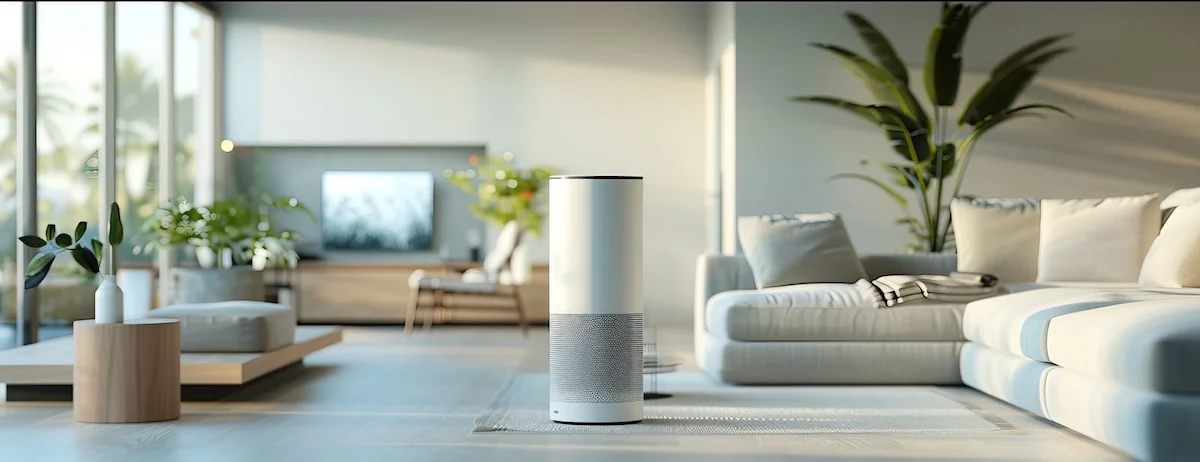
The Coway Airmega 400S is the best air purifier for large rooms for most households, with an honest Coway-rated coverage of 1,560 sq ft at 2 air changes per hour, a five-year warranty, and filters that last close to a year.
Pet owners with heavy odor should look at the Medify MA-112; budget shoppers should start with the Levoit Core 600S-P.
Quick Picks: Top Air Purifiers for Large Rooms
- Coway Airmega 400S: best overall, honest coverage and a five-year warranty
- Medify MA-112: best for pet owners and heavy odor, highest CADR here
- Levoit Core 600S-P: best budget pick for large rooms up to about 600 sq ft
- Blueair Blue Pure 211i Max: quietest, most design-forward option
- Honeywell HPA5200B: best for widely available, easy-to-find filters
Key Takeaways
- Coverage claims are usually measured at 1 ACH, roughly double the 2 ACH AHAM recommends for real allergy control.
- The Coway Airmega 400S has the smallest gap between claim and reality: 1,560 sq ft real vs. 3,120 sq ft marketed.
- All five picks get audibly loud on their highest speed, from about 31 dB up to 70 dB.
- One large-capacity unit generally beats two small purifiers in an open floor plan over 1,000 sq ft.
- Filter intervals range from 3 months (Honeywell) to about a year (Coway).
If your living room, open-concept kitchen, or finished basement is bigger than a standard bedroom, a small purifier won’t keep up.
Finding the best air purifier for large rooms means looking past the square-footage number on the box.
We compared five large-capacity models on CADR, real AHAM-rated coverage, noise, and upkeep so you can pick one sized for the space you actually have.
What Makes the Best Air Purifier for Large Rooms?
Manufacturers print big square-footage numbers calculated at 1 air change per hour (1 ACH).
That’s a low bar.
AHAM’s guidance recommends 2 ACH for meaningful allergen and odor control, and 4-5 ACH for smoke or heavy pet dander.
Most large-room air purifiers advertise coverage at 1 air change per hour, which is roughly double the AHAM-certified 2 ACH figure you should actually rely on when sizing a unit for a big room.
Cut the marketed square footage roughly in half for a realistic picture.
We’re treating “large room” as any space, or open floor plan, over about 400-500 sq ft.
Some large-room models also add UV-C as a bonus sanitizing layer on top of the HEPA stage; our best UV light air purifiers guide covers which ones do it well.
CADR (Clean Air Delivery Rate) tells you how much filtered air a unit produces per minute, and it’s more useful than square footage alone.
Our CADR explainer covers how the number is tested.
Our air purifier buying guide covers the full sizing, filtration, and cost picture if you’re starting from scratch.
How Much CADR Do You Actually Need for a Large Room?
Aim for a smoke CADR of at least 250-300 for a 400-600 sq ft space, and 300+ for an open floor plan closer to 800-1,000 sq ft.
All five picks clear that bar, but by different margins:
- Medify MA-112: CADR roughly 950-1,019, the highest here
- Coway Airmega 400S: CADR 328 smoke / 328 dust / 400 pollen
- Levoit Core 600S-P: CADR 391 smoke / 398 dust / 436 pollen, AHAM-verified
- Blueair Blue Pure 211i Max: CADR 435 smoke / 453 dust / 450 pollen, AHAM-verified
- Honeywell HPA5200B: CADR 226-260, the lowest of the five
Why this matters: a higher CADR means the unit keeps up even on a lower, quieter fan speed, which is what you’ll run it on most of the day.
One Big Purifier or Two Smaller Units for an Open Floor Plan?
For a large open floor plan over roughly 1,000 sq ft, a single large-capacity purifier usually beats splitting your budget across two smaller units.
One high-CADR machine placed centrally, or near the pollutant source, moves more total air than two small units running low to stay quiet.
Why this matters: two small purifiers mean two sets of filters competing for airflow, adding cost without a real performance gain.
The exception is a long, narrow layout where airflow can’t reach both ends; there, two units at opposite ends makes sense.
How Loud Are These Purifiers on Their Highest Setting?
Large-room air purifiers move more air than bedroom units, which means more fan noise.
On auto or low-medium, all five picks are quiet enough for a living room.
On top speed:
- Blueair Blue Pure 211i Max: roughly 23-53 dB, the quietest range here
- Coway Airmega 400S: noticeably louder on higher speeds, an audible motor pitch
- Levoit Core 600S-P: quiet on low, more noticeable at higher speeds
- Medify MA-112: up to roughly 70 dB on its highest of four speeds, the loudest here
- Honeywell HPA5200B: Turbo Clean is loud enough that most owners save it for short bursts
Every purifier in this lineup gets noticeably loud on its highest fan speed, so plan to run large-room units on auto or medium for most of the day and reserve max speed for smoke events or deep-cleaning sessions.
How Much Upkeep Do Large-Room Air Purifiers Need?
Bigger purifiers pull more air through their filters, so filters clog faster than in a small bedroom unit, especially with pets or wildfire smoke around.
The Coway Airmega 400S has the longest filter life here, close to a year, thanks to a washable pre-filter catching larger particles first.
The Honeywell HPA5200B sits at the other end: its carbon pre-filter needs changing roughly every 3 months.
The Levoit Core 600S-P falls in the middle, replaced every 6-8 months, while the Blueair Blue Pure 211i Max’s filter lasts up to 9 months.
Large units on higher speeds also draw more electricity, though most models here, including the Honeywell HPA5200B, carry ENERGY STAR certification, which caps power use relative to CADR output.
How the Top 5 Compare
Here’s how the five best air purifiers for large rooms stack up on the specs that predict real-world performance.
| Product | Best For | AHAM Coverage (2 ACH) | Filter Replacement | Noise Range |
|---|---|---|---|---|
| Coway Airmega 400S | Overall pick | 1,560 sq ft | ~1 year | Low-loud on high |
| Medify MA-112 | Pets & odor | ~1,200-1,500 sq ft* | 6-8 months | Quiet-70 dB on high |
| Levoit Core 600S-P | Budget large rooms | 606 sq ft (AHAM) | 6-8 months | Quiet-moderate |
| Blueair Blue Pure 211i Max | Quiet, premium spaces | ~674 sq ft | ~9 months | 23-53 dB |
| Honeywell HPA5200B | Easy-to-find filters | ~360 sq ft | 3 months (pre-filter) | Quiet-loud on Turbo |
*Medify sells multiple MA-112 versions with different listed specs; confirm the exact listing before buying.
Coway Airmega 400S – Overall, the Best Air Purifier for Large Rooms

Coway Airmega 400S
- [Coverage] Designed to clean spaces up to 3,120 sq. ft. in 60 minutes
- [HyperCaptive Filtration System] Combination of a pre-filter, active carbon filter, and HEPA Filter reduces 99.97% of…
- [APP and Voice Control] IoCare mobile app includes indoor and outdoor air quality monitoring, filter notification…
$679.99

Check Today’s Price on Amazon
A large-capacity HEPA purifier built around Coway’s washable pre-filter and Max2 combined HEPA/carbon filter.
Why we picked it:
- Coway-rated for 1,560 sq ft at 2 ACH, one of the most honest ratios in this category
- Washable pre-filter extends the main filter’s life to close to a year
- Five-year warranty, tied with the Honeywell for the longest coverage here
Real-world scenario:
An open-concept living room and kitchen with hardwood floors and a cat that sheds year-round.
The 400S runs quietly on auto and you wipe the washable pre-filter monthly instead of buying new ones.
Pros:
- Honest real-world coverage
- Long filter life
- Real-time AQI display and app control
- Five-year warranty
Cons:
- Audible motor pitch on higher speeds
- App has occasional connectivity hiccups
Best for:
Premium-floor homeowners and pet owners who want one dependable large room air purifier without frequent filter swaps.
Medify MA-112 – Best for Pet Owners and Heavy Odor

Medify MA-112
- MAXIMUM COVERAGE: Cleans the air in extra large spaces, 5,948 sq ft in one hr, 2,974 sq ft in 30 mins (CADR 1,019). For…
- DUAL TRUE HEPA H13 FILTRATION: Filters lab tested to remove 99.97% of airborne particles including pollen, dust…
- ULTRA QUIET: Choose from 4 fan speeds, with the lowest operating virtually silent, at a maximum noise level of 58 dB…
A dual H13 HEPA purifier with the highest raw CADR of any product in this comparison.
Why we picked it:
- CADR of roughly 950-1,019 moves more air per minute than any other pick here
- Dual H13 HEPA filtration handles heavy dander and odor loads well
- Quiet on low and medium despite the large motor
Real-world scenario:
Two dogs, a 1,200 sq ft basement rec room, and a musty smell that won’t quit.
On medium speed, the MA-112 clears it within a day or two.
Pros:
- Highest air-moving capacity here
- Strong against smoke, dander, and odor
- Quiet on low/medium
Cons:
- Loud, around 70 dB, on its highest speed
- Multiple versions with different listed specs
Medify sells several MA-112 variants with different listed coverage numbers, so confirm the exact model version before you buy to avoid paying for capacity you won’t get.
Best for:
Pet owners and anyone dealing with persistent odor in a large or heavily used space.
Levoit Core 600S-P – Best Budget Pick for Large Rooms
Sale

Levoit Core 600S-P
- 𝐖𝐇𝐘 𝐂𝐇𝐎𝐎𝐒𝐄 𝐀𝐇𝐀𝐌 𝐕𝐄𝐑𝐈𝐅𝐈𝐃𝐄 𝐀𝐈𝐑 𝐏𝐔𝐑𝐈𝐅𝐈𝐄𝐑𝐒: AHAM (Association of Home Appliance Manufacturers) is an…
- 𝐋𝐄𝐕𝐎𝐈𝐓’𝐒 𝐌𝐎𝐒𝐓 𝐏𝐎𝐖𝐄𝐑𝐅𝐔𝐋 𝐀𝐈𝐑 𝐏𝐔𝐑𝐈𝐅𝐈𝐄𝐑: A powerhouse at purifying your air in any room. It scans for tiny…
- 𝐔𝐋𝐓𝐑𝐀-𝐏𝐎𝐖𝐄𝐑𝐅𝐔𝐋 𝐏𝐔𝐑𝐈𝐅𝐈𝐂𝐀𝐓𝐈𝐎𝐍 𝐅𝐎𝐑 𝐄𝐗𝐓𝐑𝐀-𝐋?𝐑𝐆𝐄 𝐒𝐏𝐀𝐂𝐄𝐒: The Levoit Core…
$269.99
Check Today’s Price on Amazon
A True HEPA purifier with AHAM-verified CADR and smart app integration, priced below the other large-capacity picks.
Why we picked it:
- AHAM-verified smoke CADR of 391, with an AHAM-rated room size of 606 sq ft
- VeSync app shows live PM2.5 readings, works with Alexa and Google Assistant
- Best value-to-CADR ratio of the five picks
Real-world scenario:
A busy parent with a 900 sq ft living/dining combo and ten minutes a day to think about air quality.
Auto mode adjusts itself; the app flags exactly when the filter needs swapping.
Pros:
- Strong CADR for the category
- Useful real-time air quality app
- Effective against pet dander per user feedback
Cons:
- Optional ionizer can be a turn-off, though it’s switchable
- Marketed coverage is optimistic vs. real-world performance
Best for:
Busy professionals and parents who want solid large-room coverage without the higher price of the top picks.
Blueair Blue Pure 211i Max – Quietest and Most Premium
Sale

Blueair Blue Pure 211i Max
- Powerful Air Purification for Large Rooms: The Blue Pure 211i Max cleans large living rooms, open floor plans…
- Removes Dust, Smoke, Pet Dander & Allergens: Blueair’s HEPASilent dual filtration technology captures airborne…
- Smart Air Purifier with App Control: Built-in air quality sensors automatically adjust fan speed when pollution…
$244.99
Check Today’s Price on Amazon
A HEPASilent smart purifier with WiFi app control, combining mechanical and electrostatic filtration in a fabric-wrapped, design-forward housing.
Why we picked it:
- AHAM-rated for roughly 674 sq ft with a CADR of 435 smoke / 453 dust, a real step up in coverage over the standard 211+
- Three particle sensors (PM1, PM2.5, PM10) and WiFi app control adjust fan speed automatically and let you schedule, monitor, and get filter alerts remotely
- Washable fabric pre-filter extends the main filter’s life to up to 9 months
Real-world scenario:
A refinished hardwood living room where you don’t want a purifier that looks or sounds like an appliance.
It sits quietly in the corner and only ramps up when its sensors detect a spike, like dinner smoke.
Pros:
- Quiet operation across its range
- Excellent odor removal
- WiFi app control with scheduling and remote monitoring
- Washable pre-filter reduces main filter turnover
Cons:
- Second-lowest AHAM-rated coverage of the five, ahead of only the Honeywell, better suited to around 674 sq ft than a full 1,000+ sq ft open floor plan
- Fan mode switching is less convenient without the app
- Genuine replacement filters can sell out in peak season
Best for:
Premium-floor homeowners who prioritize quiet operation and design over maximum square footage.
Honeywell HPA5200B – Best for Easy-to-Find Replacement Filters
Sale

Honeywell HPA5200B
- Exceeds HEPA standards*: Advanced HEPA filtration captures over 99.99% of airborne dust, pollen, pet dander and smoke…
- Reduces all smoke types and odors: this large air purifier helps remove tiny particles and allergens from indoor air…
- Helps reduce allergens: This HEPA pet air purifier has 4 cleaning levels including Turbo Clean. It helps capture the…
$172.79
Check Today’s Price on Amazon
A True HEPA purifier from an established filtration brand, with widely stocked replacement filters.
Why we picked it:
- Filters are sold in more stores than any niche brand in this comparison
- ENERGY STAR certified for efficient day-to-day operation
- Five-year warranty and a long track record of reliability
Real-world scenario:
You don’t want to order a specialty filter online every few months.
The HPA5200B’s pre-filter, carbon filter, and HEPA filter are all available at most big-box stores.
Pros:
- Filters are easy to find locally
- Reliable, well-documented multi-year performance
- Quiet, efficient auto mode
Cons:
- Lowest CADR of the five, best for rooms closer to 360-500 sq ft
- Sealed housing prevents internal vent cleaning
- Carbon pre-filter needs replacing every 3 months
Best for:
Busy professionals who’d rather grab a filter at the store than track down a specialty part.
Common Mistakes When Buying a Large Room Air Purifier
- Trusting the box’s square-footage claim: it’s almost always calculated at 1 ACH.
Cut it roughly in half for a realistic estimate. - Buying on CADR alone, ignoring noise: a high-CADR unit you turn off because it’s too loud filters zero air.
- Placing the purifier in a corner behind furniture: airflow gets blocked and the unit works harder for less coverage.
- Underestimating filter upkeep for a big room: a large-capacity unit processes far more dust, so filters clog faster in pet or smoke-heavy homes.
- Splitting an open floor plan across two undersized units: two small purifiers on low rarely outperform one properly sized unit.
What Happens If You Choose Wrong
- If you buy on marketed square footage alone → you’ll get a unit that “covers” your room on paper but never keeps up with real dust, dander, or smoke.
- If you buy on CADR without checking noise → you’ll run it on low to keep it quiet, erasing the coverage advantage you paid for.
- If you skip filter maintenance in a large room → airflow drops and you’ll notice dust and odor creeping back before the replace-filter light comes on.
- If you split your budget across two undersized units → you’ll pay more in filters over time for coverage still weaker than one properly sized large room air purifier.
How We Research
We compared manufacturer CADR and AHAM coverage data against the 2 ACH sizing standard, cross-referenced noise and filter-life claims with verified owner feedback.
We also reviewed EPA guidance on portable air cleaners to frame realistic expectations for a large space.
For our full method and scoring rubric, see our review methodology.
Choose Your Large Room Air Purifier in 60 Seconds
If you only read one section of this guide, read this one: for most large rooms over 500 square feet, the Coway Airmega 400S delivers the most reliable real-world coverage without the noise or maintenance headaches of the other four picks.
- If you want the most balanced, reliable pick → buy the Coway Airmega 400S
- If you have pets and persistent odor → buy the Medify MA-112
- If you’re on a budget → buy the Levoit Core 600S-P
- If you want the quietest possible operation → buy the Blueair Blue Pure 211i Max
- If you want filters you can grab at any big-box store → buy the Honeywell HPA5200B
- If your room is a 1,000+ sq ft open floor plan → buy the Medify MA-112 or Coway Airmega 400S
Who This Is For / Not For
This is for you if:
- You have a living room, open floor plan, or finished basement over 400-500 sq ft
- You have pets, allergies, or nearby wildfire smoke exposure
- You want one properly sized unit instead of several small ones
This is NOT for you if:
- You’re purifying a single bedroom under 250 sq ft, see our best air purifier for bedroom guide
- Your budget is very tight and a large-capacity unit isn’t realistic, see our budget air purifier guide instead
Frequently Asked Questions
How big of an air purifier do I need for a 500+ sq ft room?
For a room over 500 sq ft, look for a smoke CADR of at least 300 and AHAM-rated coverage at 2 ACH, not the marketed 1 ACH figure, that matches or exceeds your square footage.
The Coway Airmega 400S, for example, is Coway-rated for 1,560 sq ft at 2 ACH, comfortably covering a 500-800 sq ft living room with room to spare for pets or occasional smoke.
A unit rated for exactly 500 sq ft at 2 ACH will run constantly on a louder speed to keep up, while one rated well above your room size can hold a quieter setting.
As a rule of thumb, buy for roughly 1.5-2x your actual square footage for quiet, all-day operation rather than a unit that’s constantly working near its limit.
This is also why “up to 3,000+ sq ft” box claims are misleading: they’re measured at a lower filtration standard than most people actually want for allergy or pet-related air quality.
What CADR rating should I look for in a large-room air purifier?
Target a smoke CADR of 250-300 for spaces up to 600 sq ft, and 300+ for open floor plans closer to 800-1,000 sq ft.
CADR measures how many cubic feet of filtered air a purifier produces per minute for smoke, dust, and pollen separately, and it predicts real-world performance better than square-footage claims.
In this guide, the Medify MA-112 has the highest CADR at roughly 950-1,019, while the Honeywell HPA5200B has the lowest at 226-260 depending on particle type.
A higher CADR means the unit maintains strong filtration even on a quieter, lower fan speed, which matters because most people run purifiers on low or auto most of the day.
If choosing between two similarly priced units, prioritize the one with the higher CADR relative to your room size over the one with a bigger headline square-footage number, since CADR is independently testable while coverage claims aren’t standardized the same way across brands.
Why do manufacturer square-footage claims vary so much from real-world coverage?
Most manufacturers calculate their headline square-footage number at 1 air change per hour, a low, easy-to-hit bar.
AHAM’s certification and industry guidance recommend 2 ACH for allergy-level performance and up to 4-5 ACH for heavy smoke or pet dander, which cuts realistic coverage roughly in half compared to the marketing number.
This gap varies noticeably by brand: the Coway Airmega 400S has one of the smallest gaps in our comparison (1,560 sq ft real vs. 3,120 sq ft marketed), while the Honeywell HPA5200B has the widest (roughly 360 sq ft real vs. 1,700 sq ft marketed).
Some brands, like Medify, also sell multiple product versions under similar names with different specs, adding another layer of confusion for shoppers comparing listings.
The safest approach is to look for AHAM Verifide-certified CADR numbers when available and calculate your own 2 ACH estimate rather than trusting the box copy directly.
Is one powerful air purifier better than running two smaller units in a large room?
For most large, open, or connected spaces, yes, one properly sized large-capacity purifier outperforms two smaller units and is simpler to maintain.
A single high-CADR machine placed centrally, or near the main pollutant source like a kitchen or pet area, moves more total filtered air than two small purifiers each running quietly on low.
Two small units also mean double the filters to track and replace, adding cost without a proportional performance gain.
The main exception is an unusually shaped space, like a long, narrow apartment or a room split by a half-wall, where airflow genuinely can’t reach both ends from one point.
There, two smaller units placed at opposite ends will outperform one unit that can’t circulate air to the far corner.
For a standard rectangular living room or open floor plan, though, sizing one unit correctly with the 2 ACH standard is the simpler, more effective approach, and it’s the one we’d recommend defaulting to unless your layout truly requires otherwise.
How loud are large-room air purifiers on their highest setting?
Large-room air purifiers are noticeably louder on their highest speed than bedroom-sized units, because moving more air requires a bigger fan.
In our comparison, noise ranged from about 23 dB on the Blueair Blue Pure 211i Max’s lowest setting up to roughly 70 dB on the Medify MA-112’s top speed, close to a normal conversation or a running dishwasher.
The Blueair Blue Pure 211i Max stayed quietest across its full range (23-53 dB), the best choice if noise is your top priority, while the Coway Airmega 400S and Honeywell HPA5200B’s Turbo Clean mode both drew complaints about pitch and volume on high.
In practice, most owners run these units on auto or low-medium for daily background use and only switch to max speed briefly, for a smoky dinner, a muddy dog, or a deep-clean session.
If bedroom-adjacent placement or nighttime quiet is a priority, check a model’s low-speed dB rating specifically rather than assuming “quiet” applies at every setting.
How often do large-room air purifier filters need replacing?
Filter replacement intervals for large-room air purifiers range from about every 3 months to roughly once a year, depending on the model and pollutant load.
The Honeywell HPA5200B needs its carbon pre-filter changed about every 3 months, with the main HEPA filter lasting closer to a year.
The Levoit Core 600S-P typically needs a filter swap every 6-8 months, while the Blueair Blue Pure 211i Max’s filter lasts up to 9 months under normal conditions.
The Coway Airmega 400S has the longest interval in this group, close to a full year, because its washable pre-filter catches larger particles before they reach the main HEPA/carbon filter.
Homes with pets, smokers, or frequent wildfire smoke exposure should expect the shorter end of these ranges, since more particulate matter clogs the media faster.
Checking your purifier’s air quality indicator or app, where available, is more reliable than following the generic replacement schedule blindly, and it can save you money by preventing early, unnecessary swaps.
Can an air purifier be too big for the room it’s in?
Not really, at least not in a way that causes problems.
Oversizing an air purifier for a room means it can hold a low, quiet fan speed while still clearing the air quickly, which is generally the goal rather than a drawback.
A purifier rated well above your actual square footage simply cycles the room’s air faster than the 2 ACH minimum, giving you a buffer for pet days, cooking smoke, or seasonal allergy spikes without needing a loud, high setting.
The only real downsides to oversizing are cost and physical footprint.
Large-capacity units like the Medify MA-112 or Coway Airmega 400S take up more floor space than a small bedroom purifier, and they cost more upfront.
There’s no filtration or air-quality penalty for having more capacity than you strictly need.
If your budget allows it, sizing up slightly rather than buying exactly to the 2 ACH minimum is a reasonable way to future-proof against a room feeling smaller than expected once furniture is factored in.
Do large-room air purifiers use significantly more electricity than smaller models?
Large-room air purifiers do draw more power than compact bedroom units, especially on higher fan speeds, but the difference is smaller than most people expect, particularly with ENERGY STAR-certified models.
ENERGY STAR sets efficiency standards for air cleaners based on Clean Air Delivery Rate relative to power draw, so a certified large-capacity unit like the Honeywell HPA5200B is engineered to move more air per watt than an older or uncertified model of similar size.
Running a large purifier on auto mode, which most models here include, also reduces energy use significantly compared to running it on high around the clock, since the fan only ramps up when the sensor detects a real spike in particulates.
Over a year, the electricity difference between a large-room purifier on auto and a small bedroom unit is generally modest, especially compared to the ongoing cost of filter replacements.
Checking for ENERGY STAR certification is the simplest way to avoid an inefficient unit.
The Bottom Line
The best air purifier for large rooms comes down to matching real AHAM-rated coverage, not marketed square footage, to your space.
The Coway Airmega 400S is our top overall pick for its honest numbers, long filter life, and five-year warranty.
Pet owners with heavy odor should look at the Medify MA-112, budget-conscious buyers get strong value from the Levoit Core 600S-P, quiet operation points to the Blueair Blue Pure 211i Max, and the Honeywell HPA5200B suits anyone who wants filters available at any store.
Whichever you choose, size for 2 ACH rather than the number on the box.
Still unsure?
Start with the Coway Airmega 400S.
Buying this fall?
The Coway Airmega 400S, Levoit Core 600S-P, and Blueair Blue Pure 211i Max all appear in our air purifier Black Friday guide, which also covers the Airmega 400 vs. 400S naming trap.
Want to keep exploring?
Check out our Air Purifiers category for more buying guides, or dig into specific picks like our best air purifier for pets and best air purifier for wildfire smoke guides.
Curious about filtration itself?
Our HEPA vs True HEPA explainer breaks it down.
And if humidity is a concern alongside air quality, our best dehumidifier for bedroom guide is worth a look.
Head back to the EverydayHomeComfort homepage for more home comfort guides.