Ad. When you purchase through links we provide, we may receive an affiliate commission. Here's how it works.
Air Purifier Buying Guide: How to Choose the Right One
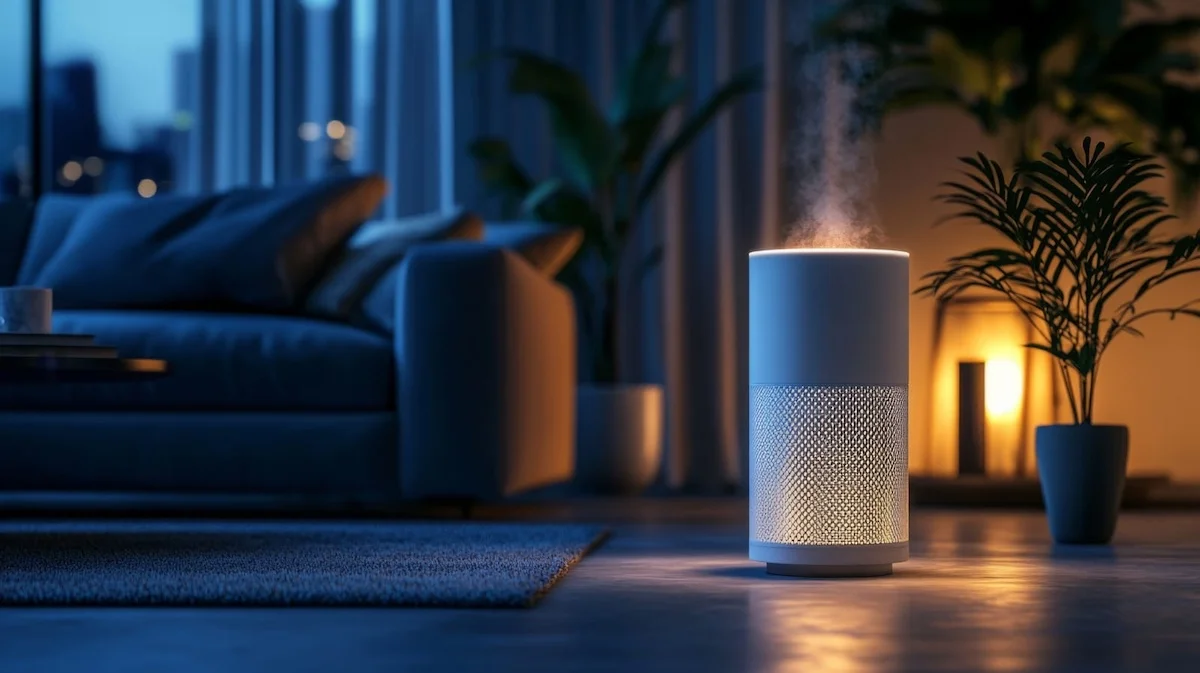
This air purifier buying guide comes down to two numbers: your room’s square footage and the unit’s CADR (Clean Air Delivery Rate) rating.
Match a smoke CADR of at least two-thirds your room’s square footage, confirm the filter is certified True HEPA, and budget for filter replacement cost, not just the sticker price.
Use this air purifier buying guide as a checklist before you shop: the takeaways below cover the core numbers, the rest of the guide walks through how to apply them to your specific home.
Key Takeaways
- Match CADR to your room: aim for a smoke CADR rating equal to at least two-thirds of your room’s square footage.
- True HEPA filters capture 99.97% of particles at 0.3 microns; “HEPA-type” and “HEPA-like” filters are not verified or certified to that standard, so they don’t guarantee the same performance.
- Running cost adds up: replacement filters plus electricity are an ongoing yearly cost on top of the purchase price, so check filter price and lifespan before you buy.
- For pet dander, allergies, or wildfire smoke, prioritize CADR and an activated carbon layer over app features or design.
- A single purifier cleans one room well. Open floor plans and multi-story homes usually need more than one unit.
What an Air Purifier Actually Does
An air purifier pulls room air through a filter (or set of filters) and pushes the cleaned air back out, physically trapping particles like dust, pollen, pet dander, and smoke as they pass through.
It doesn’t add oxygen, eliminate odors baked into fabric, or scrub gases like carbon monoxide.
According to EPA guidance on air cleaners, portable air cleaners work best alongside source control (removing what’s causing the problem) and ventilation, not as a standalone fix.
How Air Purifiers Clean Your Air
Think of it like a coffee filter for microscopic particles, except air keeps moving through it continuously.
The faster a unit can push air through that filter, the faster a room actually clears, which is exactly what CADR measures (see our full CADR explainer for the technical breakdown).
Most units use two or three stages:
- Pre-filter: a coarse mesh or foam layer that catches large particles like pet hair and dust before they reach the main filter.
- HEPA filter: a dense, pleated filter that traps fine particles down to 0.3 microns, including pollen, dander, and smoke particulate.
- Activated carbon layer (optional): a layer of carbon that adsorbs odors, smoke smell, and some gases that a HEPA filter alone won’t remove.
- Ionizer or UV-C (optional): marketed as a bonus disinfecting feature, but worth checking for ozone output before running one continuously (more on this below).
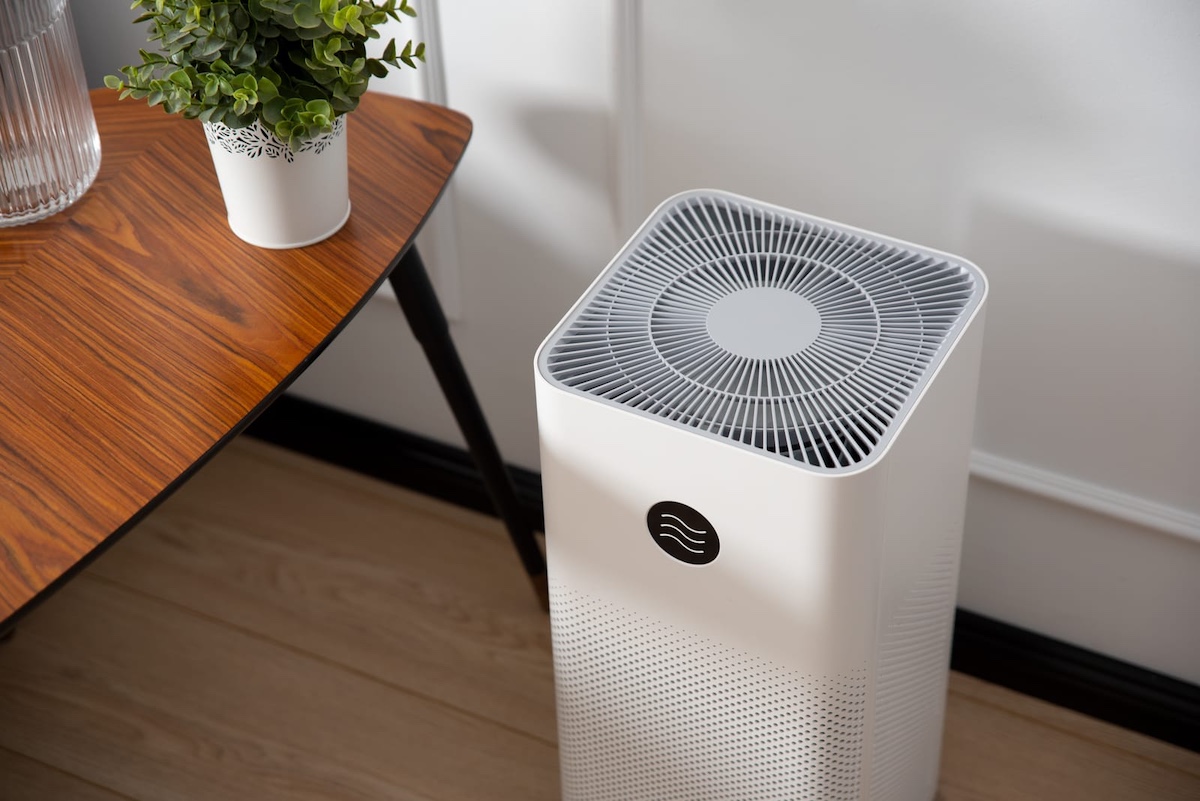
Why This Air Purifier Buying Guide Focuses on Your Home, Not Just Specs
Specs only matter in the context of the room they’re cleaning.
Here’s what that looks like in practice:
- 850 sq ft apartment with a shedding dog:
Placing a CADR 250 purifier in the roughly 375 sq ft main living area, where the dog spends most of its time, clears that room’s air every 20 to 25 minutes.
Drop to a CADR of 100 in that same room and it takes 50-plus minutes per cycle, meaning dander and odor never fully clear between naps on the couch. - 12×14 ft nursery or bedroom (about 170 sq ft):
That room needs only around 115 CADR to clear in under 30 minutes, so a large living-room-sized unit is often just extra noise and cost for a bedroom. - 2,400 sq ft open-plan home with two levels:
One purifier, even a powerful one, can’t equalize air across floors or closed doors.
Plan on one unit per main living zone rather than a single oversized unit parked in the hallway.
Typical CADR, ACH, and Room Size Ranges
| Room Size | Recommended Smoke CADR | Air Changes Per Hour (ACH) |
|---|---|---|
| Under 150 sq ft (small bedroom, office) | 100-150 | ~4-5x/hr |
| 150-300 sq ft (bedroom, living room) | 150-250 | ~4-5x/hr |
| 300-450 sq ft (large living room, studio) | 250-350 | ~4-5x/hr |
| 450-700 sq ft (open-plan living/dining) | 350-500, or two units | ~4-5x/hr |
| 700+ sq ft / whole floor | Multiple units | ~4-5x/hr |
As a rule of thumb, aim for a smoke CADR rating that’s at least two-thirds of your room’s square footage, which delivers roughly 4 to 5 air changes per hour, the range most commonly recommended for allergy and asthma relief.
This CADR standard comes from AHAM (Association of Home Appliance Manufacturers), the industry body that certifies the rating.
Common Air Purifier Myths and Misunderstandings
These are the myths that most often lead people to the wrong air purifier, and what’s actually true instead:
Myth: “A higher CADR number is always better.”
It’s an easy assumption, since bigger numbers feel safer.
In reality, past your room’s actual air-change need, extra CADR mostly means a bigger, louder, more expensive unit.
Matching CADR to room size beats maximizing it.
Myth: “HEPA-type filters work the same as True HEPA.”
Marketing language blurs the line between the two.
Only filters verified and certified to trap 99.97% of particles at 0.3 microns, the standard defined on HEPA filtration, can call themselves True HEPA. “HEPA-type,” “HEPA-like,” and “99% HEPA” filters aren’t held to that standard and can perform well below it.
Myth: “Ionizers and UV-C purifiers are always safe to run continuously.”
Some ionizing and ozone-generating purifiers can produce ozone at levels the EPA flags as a lung irritant.
If you want to run a unit continuously, choose an ozone-free or CARB-certified model instead.
Myth: “One purifier can clean an entire house.”
Buying just one unit feels efficient, but air doesn’t circulate freely between closed-off rooms or floors.
Whole-home coverage means multiple units placed in the rooms you actually spend time in, not one oversized purifier in a hallway.
How to Evaluate an Air Purifier When Buying
These are the criteria that matter most when you’re buying an air purifier, in the order we’d check them:
- CADR rating for smoke, dust, and pollen: check all three sub-ratings, not just one.
Smoke CADR is usually the lowest of the three and the best gauge of fine-particle performance. - Filter certification: confirm “True HEPA” or AHAM Verifide on the spec sheet, not just “HEPA-style” or “HEPA-like.”
- Noise level at the speed you’ll actually use: check the dB rating on medium or the sleep setting, not just the loudest setting, especially for bedrooms.
- Filter replacement cost and schedule: filters typically need replacing every 6 to 12 months, and that recurring cost is often the real long-term expense.
- Maintenance and coverage fit for your space: washable pre-filters cut upkeep, and open floor plans need either one high-CADR unit centrally placed or multiple smaller units.
Filter replacement cost typically outweighs the purchase price over two to three years, so check the price and expected lifespan of replacement filters before you buy, not just the sticker price of the unit.
Air Purifier Buying Guide: Decision Framework
This is the part of the air purifier buying guide most readers bookmark: translate everything above into a direct choice.
- If you have pets or allergies in an open-plan space → look for CADR 300+ with a washable pre-filter and True HEPA.
See our best air purifiers for pets guide. - If you’re short on time and want low daily upkeep → pick a unit with a washable pre-filter and a filter-change indicator light.
See our best air purifiers for bedrooms guide. - If you have a large or multi-room home → plan for one unit per main living zone rather than a single oversized unit.
See our best air purifiers for large rooms guide. - If wildfire smoke season is your main concern → prioritize a high smoke CADR plus a thick activated carbon layer.
See our best air purifiers for wildfire smoke guide. - If budget is the deciding factor → a compact 100-150 CADR unit sized to a single bedroom covers most needs without paying for capacity you won’t use, and a single air purifier only cleans the room it’s in, so budget for more than one unit if you need whole-home coverage.
See our budget-friendly air purifier picks.
How We Researched This Guide
We reviewed technical guidance from the EPA and AHAM, the standards body behind CADR and HEPA certification, cross-referenced ENERGY STAR’s certified air cleaner criteria, and compared structure and gaps across leading buying guides alongside our own published air purifier reviews and comparisons.
For our full method and scoring rubric, see our review methodology.
Practical Examples: Choosing an Air Purifier for Your Home
Here’s what choosing an air purifier looks like in practice for three common situations:
- Pet owner in an 850 sq ft apartment: with a shedding dog, prioritize a CADR of 250+ for the roughly 375 sq ft main living area and a washable pre-filter that catches fur before it reaches the main filter.
- Busy parent furnishing a nursery or bedroom: a compact 150-200 CADR unit with a quiet sleep mode and a simple filter-change light keeps the room clean without adding another thing to remember. If the nursery also runs dry once the heat kicks on, an air purifier and humidifier combo covers both jobs from one nightstand, though a standalone purifier still cleans air more thoroughly.
- Homeowner with a large open-plan main floor: rather than one oversized unit, place a 300+ CADR purifier in the main living zone and a smaller unit in the primary bedroom.
Frequently Asked Questions
What CADR rating do I need for my room size?
Match CADR to your room’s square footage: aim for a smoke CADR rating of at least two-thirds your room’s size, which lands you in the 4-5 air changes per hour range most commonly recommended for allergy and asthma relief.
A 150 sq ft bedroom needs roughly 100 CADR, a 300 sq ft living room needs around 200 CADR, and a 500 sq ft open-plan space needs 350-plus CADR or two smaller units working together.
Always check the smoke CADR specifically rather than dust or pollen.
It’s usually the lowest of the three ratings and the hardest for a unit to achieve, so a purifier that handles smoke well will comfortably handle dust and pollen too.
If your room falls between two size bands, round up rather than down.
Undersizing means the unit runs at max speed constantly, which is louder and shortens filter life faster than a properly sized unit running on medium.
Is a True HEPA filter different from a HEPA-type or HEPA-like filter, and does it matter?
Yes, and it matters more than most spec sheets make it seem.
True HEPA is a certified standard, verified to trap 99.97% of particles at 0.3 microns, the hardest particle size to capture.
“HEPA-type,” “HEPA-like,” and “99% HEPA” are marketing terms, not certifications, and filters using them aren’t held to that 99.97% benchmark.
In practice, this means two purifiers can look similar on a store shelf while performing very differently on fine particulate like smoke and pet dander.
Before buying, look for the words “True HEPA” explicitly on the spec sheet or box, or check for AHAM Verifide certification, which independently confirms the CADR and filtration claims a manufacturer makes.
If a listing only says “HEPA-type” or avoids the word “True,” treat that as a signal to look elsewhere or dig into third-party lab data before trusting the claim.
Check our article hepa vs true hepa to go deeper into the topic
Do I still need a portable air purifier if I already have a good HVAC filter?
In most cases, yes, especially in bedrooms or homes without central air.
An HVAC filter only cleans air that actually passes through your ductwork while the system is running, which for many households is a fraction of the day, not continuously.
A portable air purifier runs in the specific room you’re in, cleaning that air continuously regardless of your HVAC cycle.
For the best of both, EPA guidance recommends combining an upgraded HVAC filter (MERV 13 or higher, if your system supports it) with a portable purifier in the rooms where you spend the most time, like a bedroom or home office.
If you only do one, prioritize the portable purifier for the room you sleep in, since that’s where continuous, targeted air cleaning matters most for allergy and asthma symptoms overnight.
How many air purifiers do I need for a whole house versus one room?
Plan on roughly one unit per main living zone rather than a single oversized purifier for the whole home.
A typical small to mid-size home often needs two to three units: one for the main living area, one for the primary bedroom, and possibly a third for a specific hot spot like a home office, nursery, or basement.
Air doesn’t circulate freely between rooms with closed doors, so a powerful living-room unit won’t meaningfully clean a bedroom down the hall.
Multi-story homes generally need at least one unit per floor at minimum.
Rather than buying the biggest single unit you can afford, it’s usually more effective and often cheaper overall to buy two or three appropriately-sized units and place them where you actually spend your time: bedrooms, the main living space, and any room with a specific issue like pet odor or smoke.
Do air purifiers actually help with pet dander and odor, or just dust and pollen?
They help with both, but through different mechanisms.
Pet dander is airborne particulate, so a True HEPA filter traps it the same way it traps dust and pollen, down to 0.3 microns.
Odor is different: it’s caused by gases and volatile compounds that pass straight through a plain HEPA filter, so you need an activated carbon layer to adsorb and reduce smell.
For pet households, look for a unit with both a strong smoke/dust CADR and a substantial carbon filter layer, not just “HEPA” on the box.
One caveat: purifiers only catch what’s airborne.
Dander and odor that have already settled into carpet, couch cushions, or bedding need regular vacuuming and washing.
The purifier handles what’s in the air, not what’s already on your furniture.
Can an air purifier be too big or too loud for a small room?
Yes.
Oversizing means paying for capacity you don’t need, and a bigger fan generates more noise at any given speed than a smaller one does.
A unit sized for a 500 sq ft room, running in a 120 sq ft bedroom, will often need to sit on its lowest, quietest setting anyway, since even minimum speed can move more air than the room needs.
That means you’re not actually benefiting from the larger CADR rating you paid for.
Rather than buying the largest unit available “to be safe,” check the manufacturer’s dB rating at the speed you’d realistically run overnight, usually low or sleep mode, not the max-speed rating listed in bold on the box.
A properly sized unit running comfortably in the middle of its speed range will usually be quieter and just as effective as an oversized unit throttled all the way down.
How much does it really cost to run and maintain an air purifier per year, including filters and electricity?
Add up two ongoing costs beyond the purchase price: electricity and filter replacements.
Most purifiers run 30 to 80 watts on medium speed, so the electricity cost depends on your local rates and how many hours a day you run it.
ENERGY STAR-certified models use at least 25% less energy than the program’s baseline, which adds up if you run a unit continuously.
Filter replacements are usually the bigger recurring cost: expect to replace filters every 6 to 12 months, with the exact cost varying by brand and filter size.
Total annual running cost, electricity plus filters, is a real ongoing expense on top of the sticker price, so factor it into the purchase decision rather than comparing units on upfront price alone.
Before buying, check the replacement filter price and expected lifespan specifically.
A cheaper unit with expensive, frequently-replaced filters can cost more over two to three years than a pricier unit with cheap, long-lasting filters.
Are ionizing or UV-C air purifiers safe to use at home?
Standard HEPA-based mechanical filtration is safe with no byproducts, since it physically traps particles rather than altering the air chemically.
Ionizers and true ozone generators are a different story: some can produce ozone at levels the EPA considers a lung irritant, particularly with continuous use in a closed room.
If a purifier includes an ionizer feature, look specifically for “ozone-free” labeling or CARB (California Air Resources Board) certification, which confirms ozone output stays below safety thresholds. UV-C features, marketed as killing bacteria and viruses, have limited real-world effect at the airflow speeds and exposure times typical of home air purifiers, so treat it as a minor bonus rather than a primary reason to buy.
If you’re still curious which models implement UV-C well enough to matter, our guide to the best UV light air purifiers breaks down which ones position the bulb correctly and which just bolt it on for marketing
For most households, prioritizing solid HEPA and carbon filtration fundamentals over ionizer or UV-C add-ons is the safer, more effective choice.
Conclusion: Related Air Purifier Guides and Next Steps
Now that you know how to read a spec sheet, the fastest way to put this air purifier buying guide into practice is to jump straight to the guide that matches your situation.
We’ve broken down specific picks for each scenario below, alongside how an air purifier compares to running a dehumidifier and how it fits next to your robot vacuum’s pet-hair routine if shedding is your main issue.
- Fighting pet dander or allergies → Best Air Purifiers for Pets or Air Purifiers and Allergies
- Furnishing a nursery or bedroom → Best Air Purifiers for Bedrooms
- Living in a large or open-plan space → Best Air Purifiers for Large Rooms
- Dealing with wildfire smoke season → Best Air Purifiers for Wildfire Smoke
- Dealing with smoke or strong odors indoors → Best Air Purifiers for Cigarette Smoke
- Working with a tight budget → our budget-friendly air purifier picks
- Buying during Black Friday week → our air purifier Black Friday picks
For the full lineup of air quality guides, browse our air purifiers hub, or head back to the EverydayHomeComfort homepage for the rest of our home comfort library.