Ad. When you purchase through links we provide, we may receive an affiliate commission. Here's how it works.
Robot Vacuum vs Regular Vacuum: 5 Brutal Differences
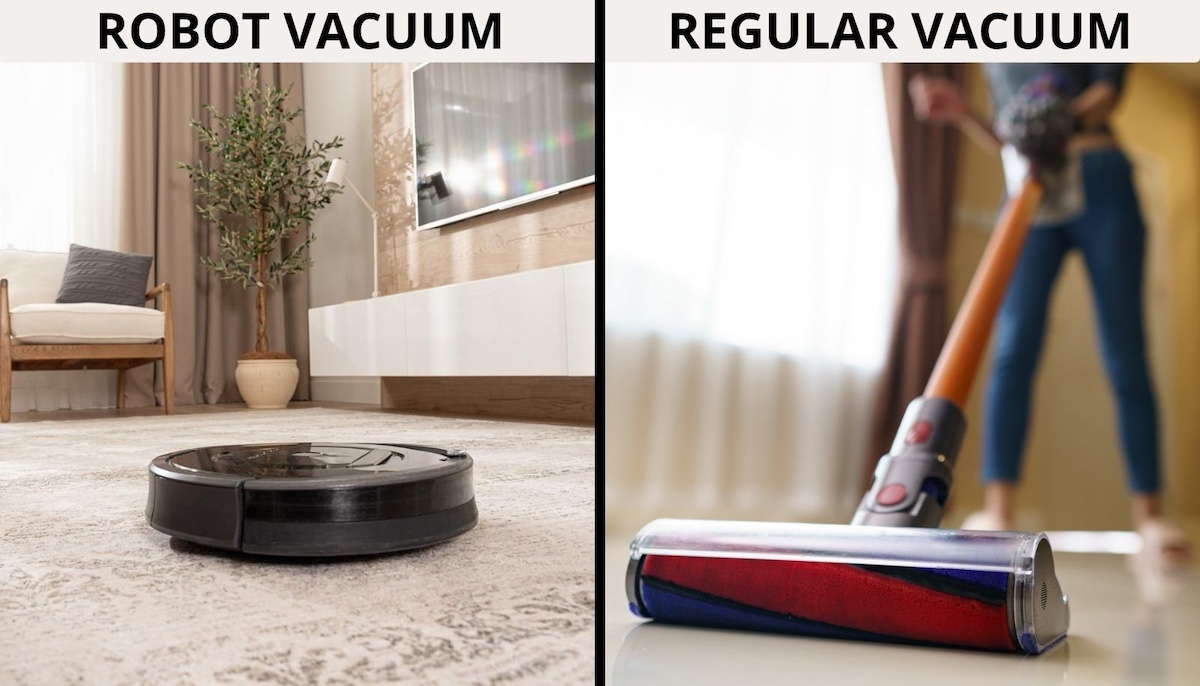
TL;DR: A robot vacuum handles daily maintenance automatically — ideal for busy households and hard floors.
A regular vacuum wins on deep cleaning power, thick carpets, and stairs.
Most homes benefit from both, but if you’re choosing one, your floor type and available time make the decision for you.
Quick Verdict
Choose a Robot Vacuum If:
- You want floors consistently clean without lifting a finger
- Your home is mostly hard floors, LVP, or low-pile carpet
- Your schedule leaves no time for weekly cleaning sessions
Choose a Regular Vacuum If:
- You have mostly thick carpet or high-pile rugs
- Your home has multiple floors with stairs
- You need targeted deep-clean power for spills, pet accidents, and upholstery
Main difference: A robot vacuum is a daily maintenance tool.
A regular vacuum is a deep-cleaning tool.
Bottom line: For most busy households, a robot vacuum running daily beats a regular vacuum used once a week — but it won’t replace a powered upright on thick carpet or stairs.
Key Takeaways
- Robot vacuums run 45–90 minutes autonomously, saving the average household 2–4 hours of manual vacuuming per month.
- Corded upright vacuums deliver 180–400 air watts of sustained suction — most robot vacuums operate at the equivalent of 20–80 air watts.
- On hard floors, a robot vacuum with rubber extractors outperforms a bristle-roll upright for daily hair and debris pickup.
- Robot vacuums cannot clean stairs and struggle with carpet pile height above 20–25mm.
- Running a robot vacuum 5 days a week reduces allergen buildup more effectively than a weekly deep vacuum — because frequency matters more than raw power for daily maintenance.
You’re deciding between a robot vacuum and a regular vacuum — and you want a straight answer, not “it depends.”
Here’s the honest version: robot vacuum vs regular vacuum isn’t a fair fight.
They’re built for different jobs.
The rest of this guide helps you figure out which job matters more in your specific home — and whether you actually need both.

Key Differences at a Glance
| Feature | Robot Vacuum | Regular Vacuum | Better For |
|---|---|---|---|
| Automation | Fully autonomous | Manual operation | Busy schedules and set-and-forget cleaning |
| Hard floor performance | Excellent (rubber extractors) | Good | Hardwood, LVP, and tile homes |
| Thick carpet performance | Limited (needs 10,000+ Pa) | Superior | Homes with plush or high-pile carpet |
| Stairs | Not possible | Essential | Multi-story and split-level homes |
| Suction power | 2,000–12,000 Pa | 180–400 air watts (sustained) | Deep cleaning and embedded debris removal |
| Noise level | 55–65 dB | ~80 dB | Running during sleep or work hours |
| Weekly time required | 5–10 min (setup + emptying) | 30–60 min active use | Time-constrained households |
| Filtration | HEPA available (mid–high-end) | HEPA widely available | Allergy or asthma sufferers (both are valid) |
| Under-furniture reach | Yes (3–4″ profile) | Attachment required | Low-profile sofas and bed frames |
| Multi-floor homes | Limited | Full coverage | Houses with multiple levels |
| Cost of ownership | Unit + filter/brush replacements every 3–6 months | Unit + bag/filter replacements | Comparable — decide on other factors |
Cleaning Performance: Robot Vacuum vs Regular Vacuum on Every Floor Type
On hardwood, LVP, and tile, a robot vacuum with rubber extractors is the clear winner for daily debris pickup.
Rubber extractors grip and channel pet hair and dust directly into the bin — they don’t scatter debris the way a spinning bristle brush roll does on hard surfaces. Run one five days a week and your hard floors stay genuinely clean, not just “vacuumed on Sunday” clean.
On low-pile and medium-pile carpet (up to 10mm), a mid-range robot vacuum handles daily maintenance without issue.
On high-pile or thick carpet (12mm+), you need at least 10,000 Pa — and even then, a corded upright with a motorized brush roll pulls more embedded debris per pass.
For more guidance on protecting your floors while keeping them clean, see our guide on how to clean hardwood floors and our best robot vacuum for carpet guide for picks matched to exactly this range.
Real-world scenario: In a 1,200 sq ft apartment with hardwood floors and a medium-pile area rug, a robot vacuum running daily keeps the hard floors consistently clean.
The rug still needs a proper upright session every two weeks to pull out embedded dust.
One tool can’t do both jobs at the same level.
If that’s your setup, we’ve put together a dedicated guide on the best robot vacuum for a small apartment that covers every spec that matters in tight spaces.
On premium floors — engineered hardwood, LVP, or polished tile — the right robot vacuum (with soft rubber extractors, not bristle brushes) is safer for daily use than a regular vacuum’s spinning brush roll.
Winner on hard floors: Robot vacuum.
Winner on thick carpet and stairs: Regular vacuum.
Time Savings — The Real Math for Busy Households
A full-home vacuum session takes 30–60 minutes of active effort.
A robot vacuum running its full cycle takes 5 minutes of your time: emptying the bin, pressing start, and clearing the floor of obstacles.
The rest is automatic.
If you vacuum manually twice a week, that’s roughly 52–104 hours per year of your time.
A robot vacuum running 5 days a week takes roughly 20–30 minutes of your time per month.
For busy households where time is the scarcest resource, a robot vacuum running daily will do more for your floors than a regular vacuum used once a week — frequency beats raw power for maintaining clean floors.
Real-world scenario: A two-person household with a dog in a 900 sq ft apartment.
The robot runs every morning while they’re at work.
Floors stay dog-hair-free Monday through Friday.
On Saturday, they do a 10-minute deep clean with a cordless stick on the rug.
Total active cleaning time per week: under 15 minutes.
Winner: Robot vacuum — not even close if your primary constraint is time.
Navigation, Setup, and What Your Home Needs to Be Robot-Ready
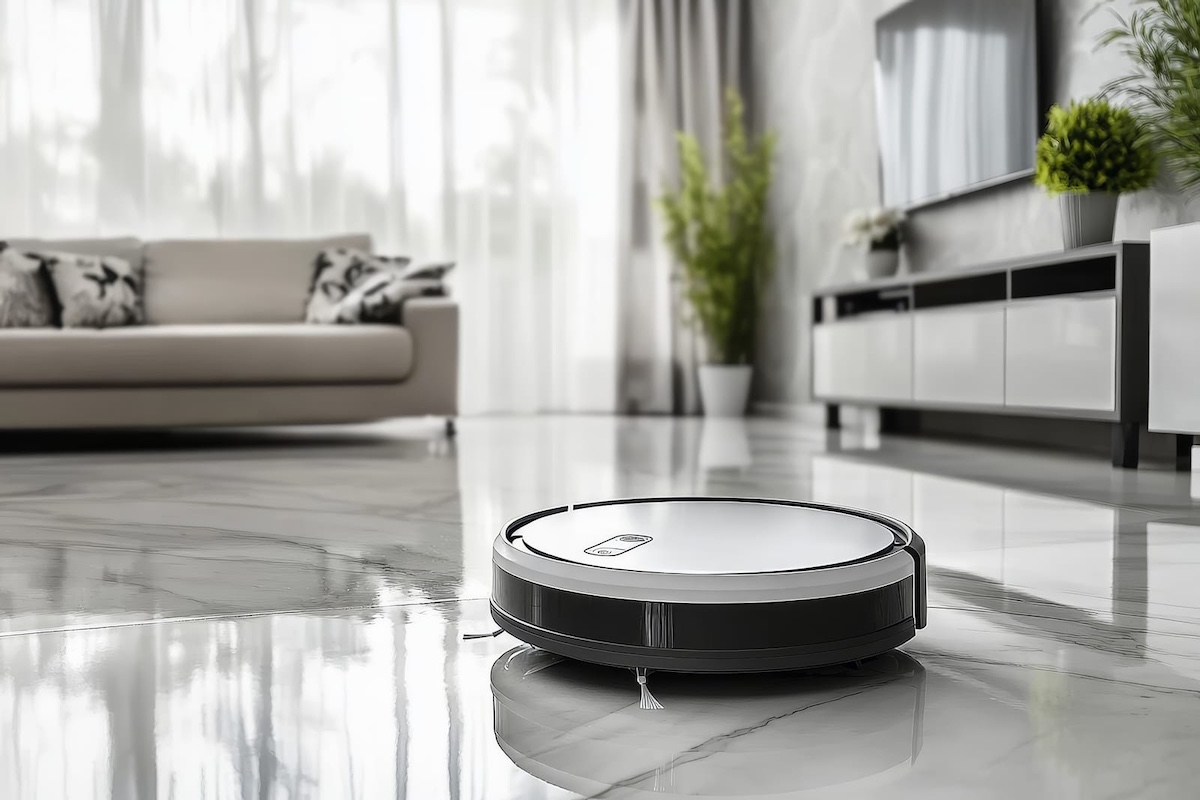
Most mid-range and premium robot vacuums use LiDAR laser mapping — they build a precise floor plan on the first run and clean efficiently from that point forward.
Budget models use random bounce patterns, which cover the floor eventually but less predictably.
For homes with multiple rooms or complex layouts, LiDAR mapping is the upgrade that actually matters.
If you’re living in a multi-level home, check our guide to the best robot vacuums for multiple floors.
Before a robot vacuum can work properly, your home needs some adjustment:
- Cables and phone chargers permanently off the floor
- Socks, small toys, pet bowls, and fringe rugs cleared before each run
- A dedicated dock location with 2+ feet of side clearance and 4+ feet of front clearance
- Pet waste checked for and removed before every run — a robot encountering pet waste causes a full cleaning disaster.
This is real, well-documented, and easy to prevent. - Dark rugs and dark floors checked for cliff-sensor compatibility — some models stall on charcoal or black surfaces
A robot vacuum only works as well as the environment it’s set up in — 15 minutes of floor prep and dock placement upfront prevents 80% of the navigation failures users experience in the first month.
Winner for low-clutter, open-plan homes: Robot vacuum.
Regular vacuum wins in cluttered, multi-story, or frequently rearranged spaces.
Robot Vacuum vs Regular Vacuum — Filtration and Allergen Control
HEPA filtration is available on both robot and regular vacuums — but real-world allergen performance is more nuanced than the filter grade alone.
A regular vacuum with a sealed HEPA system and strong suction extracts allergens from deep in carpet fibers more thoroughly per session.
The EPA recommends HEPA-filtered vacuums for homes with allergy or asthma sufferers — specifically because of their ability to capture particles ≥0.3 microns without re-releasing them.
This connects directly to broader indoor air quality: see our guide on air purifiers and allergies for how vacuuming and air purification work together.
However, robot vacuums have a frequency advantage.
Research shows that HEPA vacuum cleaning can reduce carpet allergens by over 80% — but the key variable is how often vacuuming happens.
A robot running 5 days a week prevents allergen accumulation more effectively than a HEPA upright used weekly, even with lower per-session suction.
If you or someone in your home has allergies or asthma, the best approach is a HEPA robot vacuum for daily maintenance combined with a sealed HEPA upright for weekly deep carpet cleaning.
For hard floors only: a HEPA robot vacuum is sufficient for daily allergen management.
Winner: Tie — each has a distinct role.
Maintenance and Long-Term Ownership
Neither vacuum is maintenance-free.
The difference is when that maintenance happens — and how much active attention it demands from you.
Robot Vacuum Maintenance
- Empty the dustbin every 1–3 sessions (or every 30–60 days with a self-emptying dock)
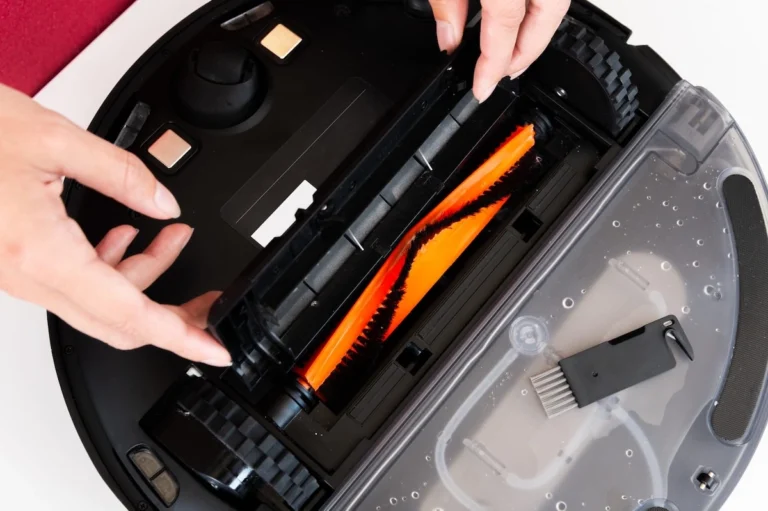
- Clean the brush roll every 1–2 weeks, hair wraps constantly, and check our robot vacuum maintenance schedule for the full weekly, monthly, and quarterly routine
- Replace filters every 1–3 months depending on use
- Clean sensors and charging contacts monthly
- Replace brush roll every 6–12 months
Regular Vacuum Maintenance
- Replace bags or empty the bin after each use or when full
- Replace HEPA filters every 6–12 months
- Clean the brush roll periodically; check belt on upright models every 12–24 months
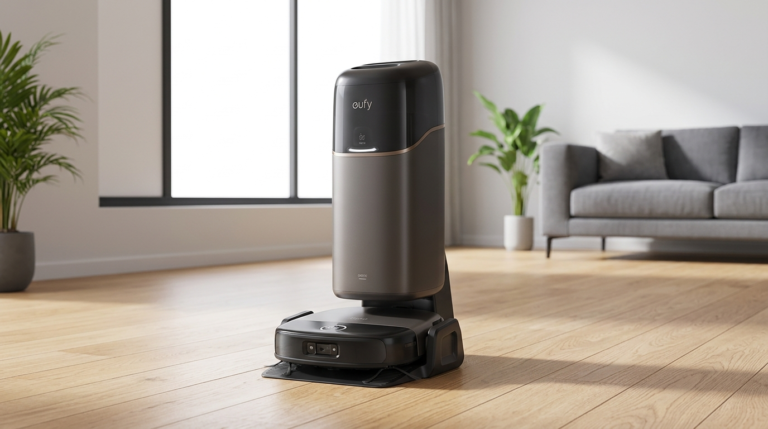
The self-emptying dock eliminates the most frequent robot maintenance task — you only handle the dock’s dustbag every 30–60 days.
That’s a real quality-of-life upgrade for time-constrained households.
For owners of premium floor: robot vacuum wheels can leave scuff marks if debris is trapped in the wheel wells.
Cleaning the undercarriage monthly prevents scratching on engineered hardwood.
Winner for low-effort ownership: Robot vacuum with a self-emptying dock.
Pros and Cons
Robot Vacuum
- Pro: Fully autonomous daily cleaning — runs while you sleep or work
- Pro: Cleans under furniture (3–4″ clearance profile)
- Pro: Quieter than a regular vacuum (55–65 dB vs. ~80 dB)
- Pro: Schedules and zone cleaning via app or voice assistant
- Pro: Keeps floors consistently clean between manual sessions
- Con: Cannot clean stairs — a regular vacuum is always required in multi-story homes
- Con: Requires floor prep before each run (cables, toys, pet waste)
- Con: Lower per-session deep-clean power on thick carpet vs. a corded upright
Regular Vacuum
- Pro: Superior suction for thick carpet and deeply embedded debris
- Pro: Handles stairs, upholstery, car interiors, and curtains with attachments
- Pro: No floor prep required — grab it, plug it in, go
- Pro: Full manual control over where and how you clean
- Con: Requires 30–60 minutes of active effort per full session
- Con: No automation — missed sessions mean dirtier floors
- Con: Bulkier to store; louder during operation
Common Mistakes
- Expecting a robot vacuum to replace a regular vacuum on thick carpet. Even premium robot vacuums at 10,000+ Pa don’t match a corded upright for embedded debris extraction on high-pile carpet.
If most of your floor area is thick carpet, the robot is a supplement — not a replacement. - Buying without checking dark-surface compatibility. Dark hardwood and charcoal rugs can trigger cliff sensors, causing the robot to stall or miss sections entirely.
Check the manufacturer’s dark floor compatibility specs before buying. - Underestimating the floor prep requirement. Robot vacuums don’t navigate around cables, socks, or pet toys — they ingest or tangle with them.
Buyers who skip floor prep return the product within 30 days thinking it “doesn’t work.” - Choosing a regular vacuum based on wattage or Pa specs alone. Motor wattage doesn’t directly equal cleaning performance.
Brush roll design, filtration sealing, and airflow path matter more on real floors than the spec on the box. - Assuming “HEPA filter” means sealed HEPA. An unsealed HEPA filter can still leak fine particles around the filter edges back into the air.
Look for “sealed HEPA system” in the specs — not just “HEPA filter.”
What Happens If You Choose Wrong
- If you buy a robot vacuum expecting it to handle thick carpet → you’ll run it twice a day and still find embedded debris and matted pet hair between the fibers.
Within a month you’re manually vacuuming on top of running the robot — twice the effort, not less. - If you buy a regular vacuum expecting to vacuum consistently with a packed schedule → you’ll vacuum less frequently than you plan.
Floors accumulate dust and pet hair between sessions.
The difference between “vacuumed Sunday” and “vacuumed daily by a robot” is visible by Wednesday. - If you buy a robot vacuum without prepping your home → navigation failures hit on the first run (cables tangled in the brush, rugs flipped, pet bowls knocked).
Most are one-time setup issues, but they cause buyers to return working units prematurely. - If you choose a robot vacuum for a multi-story home and expect it to cover every floor → you’ll be relocating the dock manually between floors every few days.
That defeats most of the time-saving benefit and gets old fast.
Which One Is Right for You?
- If your home is mostly hardwood, LVP, or tile → buy a robot vacuum
- If you have thick or high-pile carpet covering most of your floor → buy a regular vacuum (or keep both)
- If your home has stairs → you need a regular vacuum regardless of what else you choose
- If you have less than 30 minutes per week to spend on floor cleaning → buy a robot vacuum
- If you have premium floors and want daily protection without manual effort → buy a robot vacuum with soft rubber extractors.
See our best robot vacuum for pet hair and best budget robot vacuum guides for recommendations at every price point. - If you have severe allergies and mostly carpet → buy a sealed HEPA upright as your primary; add a robot vacuum for daily maintenance
- If you’re on a strict budget and can only own one → buy a regular vacuum; it handles more situations
- If you have a dog or cat and want floors consistently free of hair → a robot vacuum running 5 days a week is transformative
If you’ve landed on robot vacuum, our robot vacuum buying guide explains every spec that actually matters: navigation types, suction thresholds, HEPA filter standards, and how to match the right model to your floor type.
How We Compared Them
We analyzed manufacturer specifications and navigation technology documentation across robot vacuum and regular vacuum categories, cross-referencing EPA and AHAM guidelines on HEPA filtration and indoor air quality standards.
We reviewed suction performance data by floor type, real-world battery and coverage benchmarks, and verified user reports across multiple home configurations.
Our analysis is based on manufacturer data, published engineering studies, and aggregated user research.
For our full method and scoring rubric, see our review methodology.
Frequently Asked Questions
For most homes, no.
A robot vacuum handles daily maintenance on hard floors and low-pile carpet exceptionally well.
But it can’t clean stairs, and it doesn’t match a corded upright for deep-cleaning thick carpet or extracting embedded debris from high-pile rugs.
Most households that switch to robot-only cleaning eventually bring a cordless stick or upright back for weekly deep cleaning.
Yes — a robot vacuum with rubber extractors and clean wheel wells is safe for hardwood and engineered wood floors.
The risk comes from debris trapped in the wheel wells, which can cause micro-scratches over time.
Clean the undercarriage monthly and that risk disappears.
Robot vacuums are generally gentler on hard floors than a brush-roll upright at full power.
3–5 runs per week is the sweet spot for most households.
Daily runs are ideal for pet owners or high-traffic homes.
Once a week is not enough — floors accumulate dust and hair at the same rate they would without a robot, just with less effort on your part.
Mid-range models struggle with carpet above 15mm pile height.
Most can’t fully clean high-pile rugs above 20–25mm.
Premium models with 10,000+ Pa handle medium-pile carpet well, but even those don’t match a corded upright for deep extraction on plush or shag rugs.
Always check the manufacturer’s maximum carpet height spec before buying.
On hard floors, a robot vacuum with rubber extractors is excellent — it picks up pet hair daily without letting it accumulate.
On carpet, a regular vacuum with a motorized brush roll pulls more embedded hair per session.
The ideal pet-hair setup: robot vacuum running daily on hard floors, regular vacuum or cordless stick for carpet deep cleans weekly.
Many mid-to-high-end robot vacuums include HEPA filters, but filter quality varies.
A sealed HEPA system captures 99.97% of particles ≥0.3 microns without leaking around the filter edges.
An unsealed HEPA filter (just the filter media, not the whole system) can still release fine particles around the seal.
Look for “sealed HEPA system” specifically — not just “HEPA filter” — if filtration is important to you.
A full manual vacuum session runs 30–60 minutes.
If you vacuum twice a week, that’s 1–2 hours.
A robot vacuum covering the same area takes 5–10 minutes of your time weekly (bin emptying + floor clearing before a run).
The time savings are roughly 45–90 minutes per week for a typical household — or 40–75 hours per year.
Before the first run: establish a dock location with 2+ feet of side clearance and 4+ feet of front clearance; move cables off the floor permanently; create a habit of clearing socks, toys, and pet bowls before each run.
For pet owners: check for pet waste before every run — this is the most important step.
Dark rugs and dark floors may need compatibility verification against your specific model’s cliff sensor specs.
Final Recommendation
Robot vacuum vs regular vacuum comes down to one question: do you need automation or power?
For busy households where floors need daily maintenance and time is the real constraint, a robot vacuum is the higher-impact choice — it keeps floors consistently clean without requiring you to schedule anything.
For homes with thick carpet, stairs, or deep-cleaning needs, a regular vacuum is essential.
For most busy households, a mid-range robot vacuum running 5 days a week will outperform a regular vacuum used sporadically — not because the robot is more powerful, but because it actually runs.
If you’re undecided, start with a robot vacuum for your main living areas.
Keep or add a cordless stick vacuum for targeted cleaning, stairs, and rugs; if budget is a factor, our picks for the best cordless vacuums under $200 cover every use case in that range.
That combination covers 95% of what a home needs and takes the least time of any setup.
Check our best robot vacuum guide for more insights on which model is right for you.
Browse our full floor maintenance and care guides for more help choosing the right tools for your specific floors, or head to our home page to explore all our home comfort categories.
If a vacuum-mop combo interests you, see our best vacuum mop combos guide.