Ad. When you purchase through links we provide, we may receive an affiliate commission. Here's how it works.
vSLAM vs LiDAR: Robot Vacuum Navigation Explained
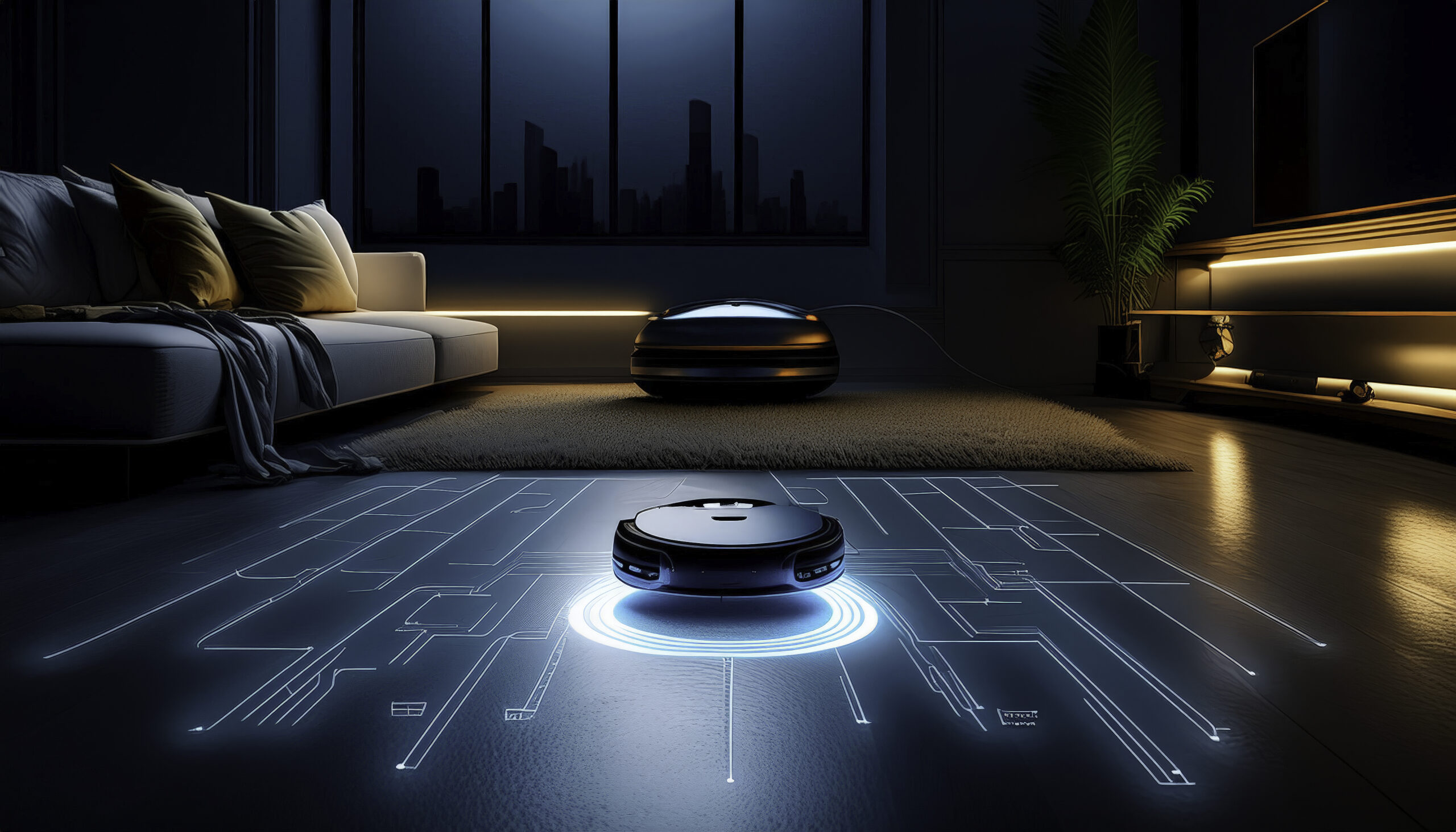
TL;DR: vSLAM vs LiDAR comes down to light and budget: LiDAR’s laser turret maps confidently in pitch darkness and across multi-floor homes, while vSLAM’s camera-based navigation costs less but struggles once the lights go out or a room has too few visual landmarks to track.
Most 2026 flagship robot vacuums now combine both, so the real question for most buyers is whether a hybrid system is worth the jump over a single-sensor model.
Quick Verdict
Choose LiDAR if:
- You have a multi-floor home or open-plan layout needing consistent, accurate mapping
- You run your robot overnight or in rooms with lights off
- You want the fastest cleaning paths with minimal re-cleaning
Choose vSLAM if:
- Budget is your top priority and you clean mostly in daylight
- Your home is a smaller apartment with fewer rooms to remap
- You want a lower-profile robot with easier under-furniture clearance
Main difference:
LiDAR uses laser time-of-flight measurements that work identically in total darkness, while vSLAM depends on a camera reading visual landmarks, so it needs light and distinct features to know where it is.
Bottom line:
If your home has dim corners, a basement, or multiple floors, LiDAR earns its higher cost. If you clean small, well-lit spaces and want to spend less, vSLAM gets the job done.
Key Takeaways
- LiDAR navigation uses a spinning laser turret to build a 360-degree map via time-of-flight measurement, and it performs identically in full darkness.
- vSLAM relies on a camera reading visual landmarks, so accuracy drops in low light and in rooms with few distinct features, like large open spaces with blank walls.
- Most 2026 flagship robot vacuums, including current Roborock and Dreame lines, now pair LiDAR with an onboard AI camera, making pure vSLAM-only navigation mostly a budget-tier feature.
- Newer LiDAR turrets on models like Dreame’s flagship line retract to roughly 88mm in height, addressing the classic complaint about turrets blocking cleaning under low furniture.
- A peer-reviewed review of visual-LiDAR fusion systems found that combining both sensor types consistently improves localization accuracy over either sensor alone.
EverydayHomeComfort Score
| Category | LiDAR | vSLAM |
|---|---|---|
| Mapping Accuracy | 9/10 | 7/10 |
| Low-Light Performance | 10/10 | 5/10 |
| Obstacle Recognition (standalone) | 6/10 | 7/10 |
| Cost Efficiency | 6/10 | 9/10 |
| Furniture Clearance | 7/10 | 9/10 |
| Overall Rating | 8/10 | 7/10 |
If you have ever watched a robot vacuum confidently glide around a coffee table in the dark, or seen one bump the same chair leg three times in a row, you have already met the difference between LiDAR and vSLAM.
Both are navigation systems that let a robot vacuum build a map of your home and figure out where it is inside that map, but they solve the problem in completely different ways, and the one your robot uses shapes how well it cleans your specific floor plan, lighting, and furniture layout.
If you are shopping the wider vacuum cleaners category on EverydayHomeComfort, navigation type is one of the first specs worth understanding before you compare models.
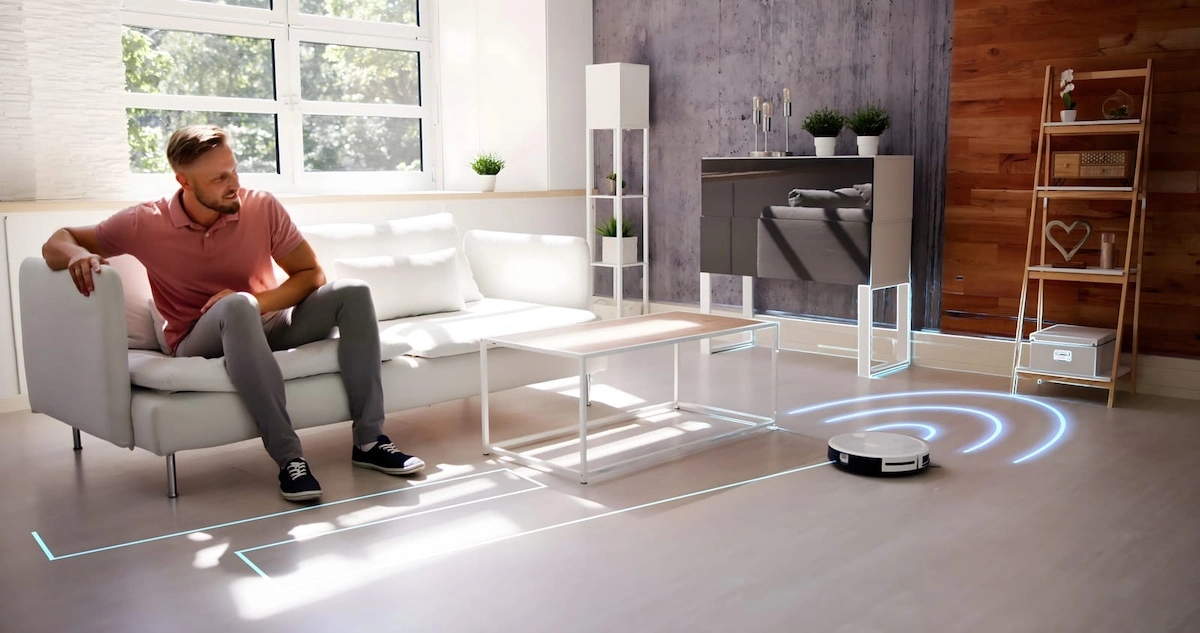
Key Differences at a Glance
| Spec | LiDAR | vSLAM | Better For |
|---|---|---|---|
| Low-light performance | Full darkness, no issue | Needs ambient light | LiDAR |
| Mapping speed and accuracy | Fast, precise point-cloud map | Slower, feature-dependent | LiDAR |
| Multi-floor home support | Consistent remapping per floor | More prone to drift over time | LiDAR |
| Object/obstacle recognition (alone) | Geometric only, no detail | Can identify shape and color | vSLAM |
| Cost tier | Mid-range to premium | Budget to mid-range | vSLAM |
| Furniture and turret clearance | Raised turret on older models | Low-profile, no turret | vSLAM |
| Reflective/glass surfaces | Can misread mirrors, glass | Reads visual surfaces reliably | vSLAM |
How LiDAR and vSLAM Actually Navigate Your Home
LiDAR stands for Light Detection and Ranging.
A spinning turret on top of the robot fires pulsed laser light in every direction and times how long each pulse takes to bounce back.
That time-of-flight measurement converts to a distance, and thousands of readings per second build a 360-degree point-cloud map in real time.
The US National Institute of Standards and Technology maintains ongoing measurement science work on LiDAR, underscoring how precise this ranging method is expected to be.
The robot then runs a simultaneous localization and mapping (SLAM) algorithm on that laser data to place itself inside the map it is building.
For how that laser strength translates to cleaning results, see our robot vacuum suction power explained guide.
vSLAM, short for visual SLAM, runs the same underlying SLAM math but feeds it camera images instead of laser data.
Cameras capture the room, and feature-extraction software picks out visual landmarks such as corners, edges, and furniture silhouettes.
As the robot moves, it triangulates its position against those landmarks and refines the map through a process called bundle adjustment.
Because a single camera is a fragile primary sensor, vSLAM robots almost always pair it with supplementary bump and cliff sensors.
Real-world scenario:
Two robot vacuums clean the same 1,000 sq ft home with mixed hardwood and carpet.
The LiDAR model builds a complete floor plan on its first run, including a large open living room with blank walls.
The vSLAM model handles furnished bedrooms fine but hesitates in that same open room, since there are too few visual landmarks to lock onto, and re-traces sections it already cleaned.
Winner:
LiDAR, for raw mapping speed and consistency, especially in larger or more open floor plans.
vSLAM vs LiDAR: Which Wins in the Dark?
This is where the vSLAM vs LiDAR debate gets settled for a lot of buyers.
LiDAR generates its own laser light and measures reflections, so it performs identically whether the room is fully lit or pitch black.
vSLAM needs ambient light to extract usable visual features from a camera image, and once that light drops, its accuracy drops with it.
Camera-only navigation becomes unreliable once ambient light is too low, a limitation iRobot’s own engineers have acknowledged in engineering commentary about Roomba navigation.
That is not a knock on any single brand. It is a physical constraint of reading a scene through a lens instead of measuring it with a laser.
Real-world scenario:
A pet owner runs their robot vacuum overnight to avoid tripping over it during the day.
In a basement rec room with the lights off, a LiDAR model completes its route on schedule.
A vSLAM-only model in the same dark basement slows down, second-guesses its position near unlit corners, and may leave the room only partially cleaned if it cannot confirm where it has already been.
Winner:
LiDAR, decisively, for any home with basements, closets, night-time cleaning schedules, or rooms with blackout curtains.
If camera-based navigation and its always-on lens gives you pause for privacy reasons, our guide on the best robot vacuum without internet covers models that avoid cloud-connected cameras entirely.
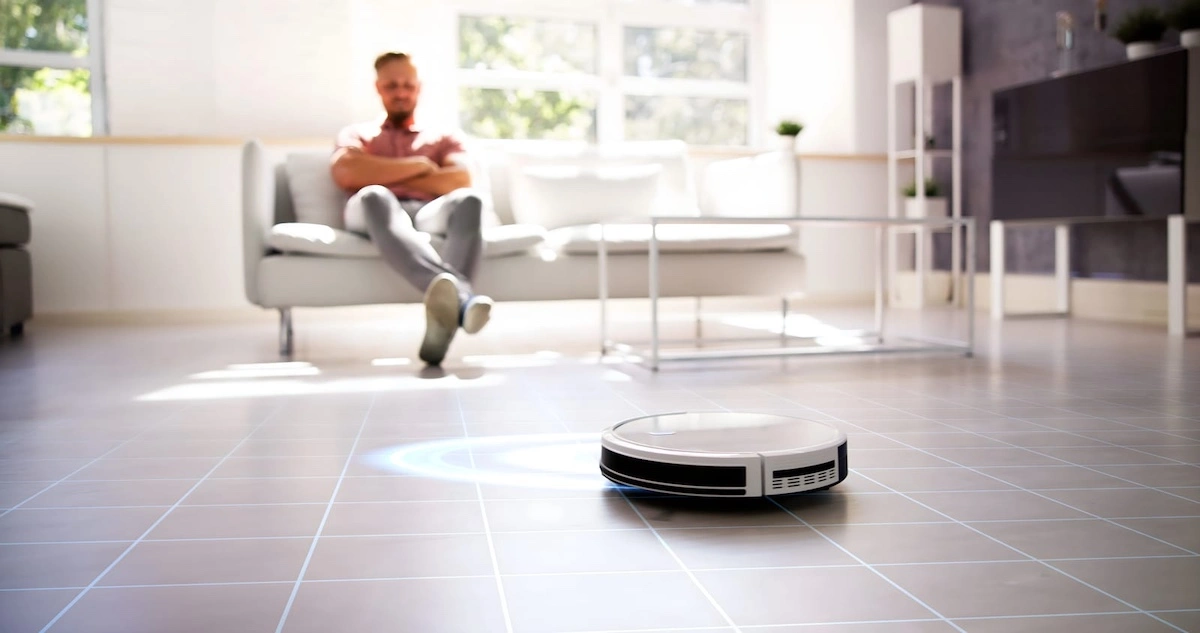
Obstacle Recognition and Mapping Accuracy
LiDAR excels at telling you that something is in front of the robot and precisely how far away, but on its own it cannot tell a charging cable from a table leg.
It sees geometry, not identity.
A standalone camera used for vSLAM picks up more visual detail, including color and shape, helping distinguish a sock from a pet accident, but that same camera loses reliability in dim rooms exactly when obstacle detection matters most.
Mapping accuracy over time follows a similar split.
LiDAR-based maps hold up well across repeated sessions and multiple floors, since each run re-anchors to the same laser reference points.
vSLAM maps are more prone to accumulated drift error on long runs, meaning small positioning mistakes compound without a known landmark to correct against.
Real-world scenario:
A busy parent with a two-story home saves separate maps for upstairs bedrooms and a downstairs open kitchen and living area.
The LiDAR model’s maps stay accurate for months without rebuilding.
The vSLAM model’s larger downstairs map more often needs a full remap after the robot loses its bearings mid-clean.
Winner:
Tie, with a caveat.
LiDAR wins on multi-floor mapping stability; vSLAM (when paired with a camera) can win on identifying what an obstacle actually is.
Households juggling both concerns, especially those with pets, should check our best robot vacuum for pet hair picks, most of which now include camera-based obstacle recognition layered on top of LiDAR mapping.
Cost and Furniture Clearance
vSLAM components are simpler and cheaper to manufacture than a spinning laser turret, which is why vSLAM navigation still shows up almost exclusively in budget and entry-level lines.
LiDAR’s laser assembly and added processing push unit costs higher, reflected in most LiDAR-equipped models sitting in the mid-range to premium tiers.
The classic downside of LiDAR has been the raised turret sitting on top of the robot, which can prevent cleaning under low furniture like sofas and bed frames.
Newer LiDAR turrets, including Dreame’s retractable design, drop to roughly 88mm in height specifically to solve this furniture-clearance complaint.
vSLAM robots, with no turret at all, remain the lower-profile option by default, which matters if your furniture sits especially close to the floor.
Real-world scenario:
A homeowner with a low platform bed and sectional sofa wants full under-furniture coverage.
A vSLAM robot or a retractable-turret LiDAR model both clear the gap; an older fixed-turret LiDAR model may get stuck or skip that zone.
Winner:
vSLAM on pure cost, LiDAR on capability per dollar once you factor in mapping reliability.
If cost is your main constraint, our best budget robot vacuum roundup shows what vSLAM-based navigation gets you at a lower price point.
Homeowners with premium hardwood who care most about scuff-free navigation should instead start with our best robot vacuum for hardwood floors picks.
Hybrid Navigation: The 2026 Reality
Framing this as a strict vSLAM vs LiDAR choice is increasingly a simplification.
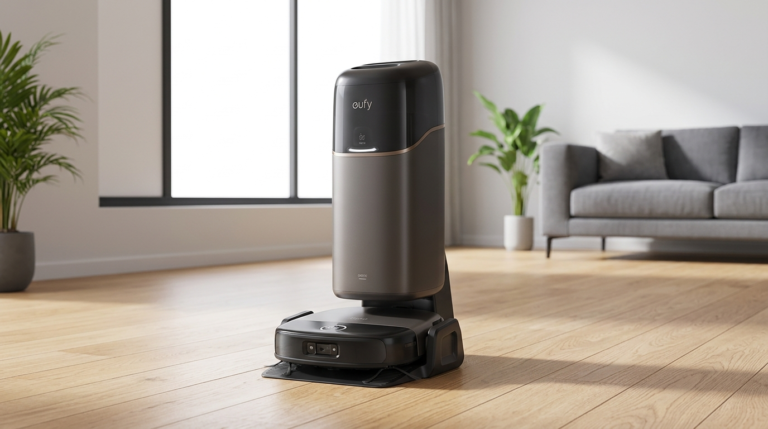
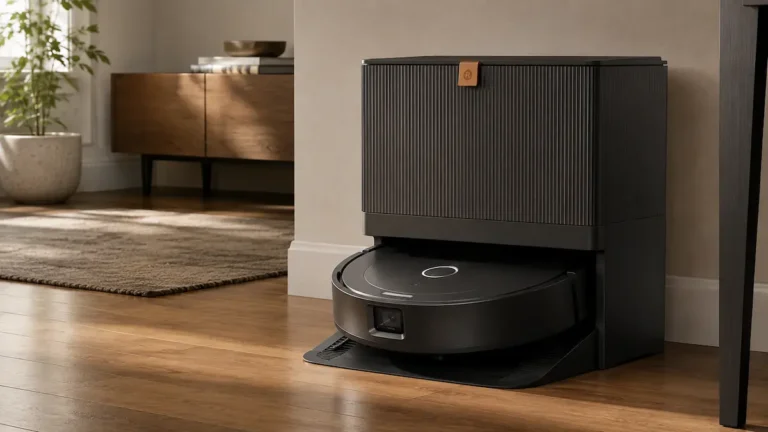
Most current flagship robot vacuums, including Roborock’s top-tier models and Dreame’s Ultra and Matrix lines, now pair a LiDAR turret for precise, light-independent mapping with an onboard AI camera for obstacle and object recognition.
LiDAR tells the robot how far away something is; the camera tells it what that something actually is, whether a charging cable, a shoe, or a pet.
Our Roborock vs iRobot comparison shows how this navigation gap has historically played out between two brands.
It is the same underlying question that shows up in smart home protocol choices, which we cover in Zigbee vs Z-Wave vs Matter: combined approaches often beat picking a single older standard.
A peer-reviewed review of visual-LiDAR fusion systems, hosted in the National Institutes of Health’s PMC archive, found that combining both sensor types consistently improves localization accuracy over relying on either sensor alone.
That is not marketing language, it is the same conclusion robotics researchers have reached independently of any single robot vacuum brand.
Real-world scenario:
A premium-floor homeowner with hardwood throughout wants zero bumps against furniture legs and zero missed pet toys left on the floor.
A hybrid model uses LiDAR to navigate the room precisely and the camera to spot and route around the toy, delivering both outcomes at once instead of forcing a tradeoff.
Winner:
Hybrid, when your budget allows it.
For most 2026 flagship purchases, the more useful question has shifted from “LiDAR or vSLAM” to “does this model layer a camera on top of its LiDAR,” which our best robot vacuum guide breaks down model by model.
LiDAR Pros and Cons
Pros:
- Works identically in full darkness with no dependency on ambient light
- Builds fast, precise 360-degree maps on the very first run
- Holds up better across multiple floors and repeated cleaning sessions
- Enforces virtual boundaries and no-go zones with more precision
Cons:
- Higher component cost pushes most LiDAR models into mid-range or premium pricing tiers
- Older fixed-turret designs can struggle with clearance under low furniture
- Can misread highly reflective or glass surfaces like mirrors and glass tables
vSLAM Pros and Cons
Pros:
- Lower component cost keeps entry-level robot vacuums affordable
- No raised turret, so the robot stays low-profile for tight furniture clearance
- Camera data can help distinguish object shape and color when lighting is good
Cons:
- Accuracy drops sharply in low light or full darkness
- Struggles in feature-poor rooms with blank walls and little furniture to lock onto
- More prone to accumulated map drift over long or repeated cleaning runs
Common Mistakes
- Assuming every Roomba still uses vSLAM only: several current iRobot models have added LiDAR, so check the spec sheet rather than relying on brand reputation.
- Choosing LiDAR without checking turret height: measure the clearance under your lowest sofa or bed frame first.
- Treating vSLAM vs LiDAR as a strict either/or in 2026: most flagship models are hybrid now, so ruling out a great robot over a single-sensor label can cost you the better option.
- Assuming vSLAM has no privacy considerations because it is “not AI”: a camera is still a camera; see our best robot vacuum without internet guide if that matters to you.
- Picking based on price alone for a multi-floor home: a cheaper vSLAM model can cost more in remapping and missed spots than the LiDAR premium would have cost upfront.
What Happens If You Choose Wrong
- If you choose vSLAM for a dim basement or a room with blackout curtains → the robot loses its position, re-maps inefficiently, and leaves patches uncleaned run after run.
- If you choose LiDAR without checking clearance under your furniture → the turret can get stuck under a low sofa or bed frame, needing a manual rescue mid-clean.
- If you choose based on price alone for a large multi-floor home → expect more frequent remapping, drift errors, and wasted runtime compared to a LiDAR model built for that scale.
- If you assume vSLAM always means basic obstacle handling → you may overpay for LiDAR-only navigation when a hybrid vSLAM-plus-camera model at a similar price would have caught more obstacles.
Which One Is Right for You?
- If you have a multi-floor home → choose LiDAR
- If you run your robot overnight or in dark rooms → choose LiDAR
- If budget is your main constraint and you clean well-lit rooms → choose vSLAM
- If your furniture sits very low to the ground → choose vSLAM or a retractable-turret LiDAR model
- If you want the most reliable obstacle avoidance and can afford it → choose a hybrid LiDAR-plus-camera model
How We Compared Them
We cross-referenced how LiDAR and vSLAM systems are documented in robotics literature, including a peer-reviewed review of visual-LiDAR fusion published through the National Institutes of Health, alongside publicly available specifications for current Roborock, Dreame, Ecovacs, and iRobot models.
We also reviewed publicly available engineering commentary, including iRobot’s own remarks on camera-based navigation performance in low light, to ground the comparison in documented behavior rather than marketing claims.
For our full method and scoring rubric, see our review methodology.
Frequently Asked Questions
Does Roomba use LiDAR or vSLAM?
It depends on the specific model.
iRobot built its reputation on vSLAM, using camera-based navigation across most of its historical Roomba lineup, and several current entry and mid-tier models still rely on it.
However, iRobot has introduced LiDAR-equipped models in its higher-end lineup as the technology has become more affordable to manufacture.
Its current flagship, the iRobot Roomba Combo 10 Max, is a case in point: it still relies on camera-based PrecisionVision rather than LiDAR.
The practical takeaway: never assume navigation type from brand name alone.
Check the specific model’s spec sheet for “LiDAR,” “laser navigation,” or “vSLAM” and “camera navigation” before buying. If low-light performance matters to you, such as overnight cleaning or a dim basement, confirm LiDAR is present rather than assuming it based on the brand’s older reputation.
A budget Roomba and a flagship Roomba released in the same year can use entirely different navigation hardware.
For comparison, most current Roborock and Dreame flagships ship with LiDAR as standard across their entire lineup, not just top-tier models, which is one reason those brands are frequently recommended for larger or dimmer homes.
Which robot vacuum navigation is better in the dark, LiDAR or vSLAM?
LiDAR is clearly better in the dark.
It generates and measures its own laser light through time-of-flight ranging, so it builds an accurate map whether a room is brightly lit or pitch black.
vSLAM depends on a camera reading visual landmarks in ambient light, and once light drops below a usable threshold, the camera cannot reliably extract the features it needs to track position.
This is not a minor edge case: it directly affects overnight cleaning schedules, basements, closets, and any room with blackout curtains.
If you run your robot vacuum while you sleep or in rooms that stay dark during the day, prioritize a LiDAR-equipped model.
For daytime cleaning in consistently bright rooms, the gap matters much less, since vSLAM has enough light to work with.
A concrete example: a pet owner running a nightly cleaning cycle in a dim basement rec room will typically see a LiDAR model finish its route on schedule, while a vSLAM-only model may pause, backtrack, or leave sections uncleaned near the darkest corners.
If overnight or low-light cleaning is part of your routine, treat LiDAR as close to a requirement rather than a nice-to-have.
Is LiDAR navigation worth the extra cost over vSLAM?
For most homes larger than a small apartment, yes.
LiDAR’s higher component cost buys faster mapping, more reliable performance in low light, and better long-term map stability across multiple floors, all of which reduce the amount of re-cleaning and manual troubleshooting you deal with over the robot’s lifespan.
If you live in a small, consistently well-lit space and clean primarily during the day, the cost premium is harder to justify, and a well-reviewed vSLAM model will likely perform close enough to LiDAR that the difference is not noticeable in daily use.
The calculation changes again if you are pet owner dealing with debris in dim corners or a homeowner with premium flooring who cannot tolerate bumps and scuffs, since both scenarios lean toward LiDAR’s more precise navigation being worth the price difference.
As a rule of thumb, homes over roughly 1,200 sq ft or spanning more than one floor tend to see the clearest return on LiDAR’s cost premium, since mapping stability compounds in value as square footage and floor count grow.
Can a vSLAM robot vacuum map a multi-floor home as accurately as a LiDAR model?
It can, but less reliably over time.
Both navigation types support saving separate maps for different floors, but vSLAM maps are more prone to accumulated drift error the longer and more often the robot runs, since small positioning mistakes compound between landmark corrections.
A LiDAR-based map re-anchors to precise laser reference points on every run, which keeps the map accurate for months with little manual intervention. In a multi-floor home, that difference shows up as occasional full remaps for a vSLAM system versus a “set it and forget it” experience with LiDAR.
If your home has more than two floors or unusually open layouts on any level, that stability gap becomes more noticeable and favors LiDAR.
For example, a three-story townhouse with separate maps for each level is a common scenario where a vSLAM system needs an occasional manual remap after losing its bearings, while a LiDAR system typically keeps all three maps accurate for months.
If your home fits that description, prioritize LiDAR, or at minimum confirm the specific vSLAM model you are considering has strong loop-closure correction reviewed positively by other owners, since that feature directly limits drift.
See our best robot vacuum for multiple floors guide for models built around this exact use case.
Do LiDAR robot vacuums struggle with mirrors or glass furniture?
Yes, this is a known limitation.
LiDAR relies on laser light reflecting predictably off surfaces, and highly reflective or transparent materials like mirrors, glass tables, and some glossy black furniture can scatter or fail to reflect the laser the way solid, matte surfaces do.
This can occasionally cause a LiDAR robot to misjudge distance near those surfaces.
It is a narrower problem than the low-light gap that affects vSLAM, since most homes have only a handful of mirrors or glass surfaces rather than entire rooms affected.
If your home has floor-to-ceiling mirrored closet doors or large glass coffee tables, expect the occasional hesitation or bump near those specific spots, and consider setting a virtual no-go zone directly in front of them through the robot’s app.
This is a narrow, situational caveat rather than a dealbreaker: a typical home has one or two mirrored surfaces at most, and modern LiDAR firmware increasingly compensates for reflective interference through sensor fusion with bump sensors.
If your home has an entire mirrored wall, such as in a home gym, that specific room is the one place worth double-checking manufacturer reviews before committing to a LiDAR model.
What is hybrid navigation, and do I need it?
Hybrid navigation pairs a LiDAR turret for precise, light-independent geometric mapping with an onboard camera for object and obstacle recognition, giving you LiDAR’s mapping reliability plus a camera’s ability to identify what an obstacle actually is.
You need it if you want both dependable performance in low light and detailed obstacle avoidance, such as correctly identifying and routing around a pet accident, a charging cable, or a stray sock rather than just detecting “something is there.”
Most current flagship robot vacuums from Roborock and Dreame now include this combination as standard.
If your budget only stretches to a single-sensor model, prioritize LiDAR for mapping reliability first, since geometric navigation affects every single cleaning run, while missing precise object identification is a narrower, occasional inconvenience.
A concrete example: a hybrid model will typically route around a pet accident on hardwood rather than driving through it, a distinction a LiDAR-only robot cannot make since it only sees an object’s outline, not what it is. If avoiding that exact scenario matters to your household, treat hybrid navigation as worth the added cost over a LiDAR-only model at a similar price point.
Will a LiDAR turret stop my robot vacuum from cleaning under my couch or bed?
It can, depending on the model’s turret height and your furniture’s clearance.
Older, fixed LiDAR turrets typically raise the robot’s total height enough to block access under very low furniture, which has long been the single biggest practical complaint about LiDAR navigation.
Newer designs, including Dreame’s retractable turret that drops to roughly 88mm, are built specifically to solve this by lowering the turret during cleaning and raising it only when needed.
Before buying a LiDAR model, measure the gap under your lowest piece of furniture, typically a sofa or bed frame, and compare it against the manufacturer’s listed robot height with the turret extended.
If your clearance is especially tight, a vSLAM model with no turret at all, or a confirmed retractable-turret LiDAR model, is the safer choice.
As a concrete benchmark, most standard sofas and bed frames clear 4 to 5 inches (about 100 to 127mm), which comfortably fits a retractable LiDAR turret at roughly 88mm but can be tight for older fixed-turret models running closer to 96 to 100mm in total height. When in doubt, measure before you buy rather than after.
Final Recommendation
In the vSLAM vs LiDAR decision, let your home’s lighting and layout do the deciding, not brand reputation.
Choose LiDAR if you have a multi-floor home, dark rooms, or a nighttime cleaning schedule, since its laser-based mapping simply does not depend on ambient light the way vSLAM’s camera does.
Choose vSLAM if you are working with a tighter budget, a smaller and consistently well-lit space, and furniture with very little ground clearance.
If your budget stretches further, a hybrid model that pairs LiDAR with an onboard camera gives you the best of both systems and is quickly becoming the standard for 2026 flagship robot vacuums.
Whichever direction you lean, check the specific model’s spec sheet before assuming its navigation type from the brand name alone, and start with our robot vacuum buying guide if you are still narrowing down your options.